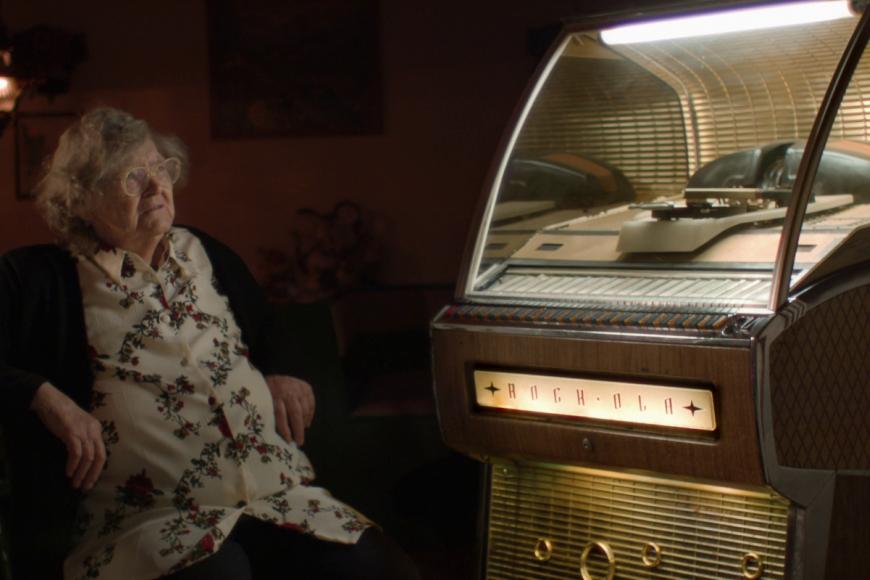
Grandma Berta’s beloved “Zollhaus” is on the verge of ruin. She has dedicated her whole life to this inn and farm. Now her granddaughter Monika, the filmmaker’s sister, is to take over the heavily indebted family farm in the Upper Palatinate. What makes Monika decide to give up her previous plans and move to the countryside to live with her grandmother? The director decides to follow her sister for one year during this apparent labour of Sisyphus.
Monika puts all her energy into the ailing farm and is constantly confronted with its history: Grandma Berta’s schnitzel was legendary. But only the jukebox is left of the merry evenings in a packed inn. Berta had to bury her husband, two of her sons and a grandson. She is not a woman of tender words and unsparingly direct, which soon leads to conflict. The director at first watches her indefatigable sister in stunned disbelief. But gradually she understands that Monika has found a new dream in the “Zollhaus”. This enables her to offer an intimate insight into the chronicle of a family. The film confronts us with the universal question when it is the right time to live one’s dreams and how quickly this time may pass.
Annina Wettstein
Credits
Director
Hannah Schweier
Cinematographer
Stefanie Reinhard
Editor
Romy Steyer
Producer
Stefan Sporbert
Co-Producer
ZDF
Sound
Johannes Kunz
Score
Ella Zwietnig
Narrator
Hannah Schweier
Winner of:
ver.di Prize for Solidarity, Humanity and Fairness
A visually stunning and at the same time sober reckoning of the zero sum game between climate change and nuclear disaster: no dramatisation at all and yet deeply disturbing.
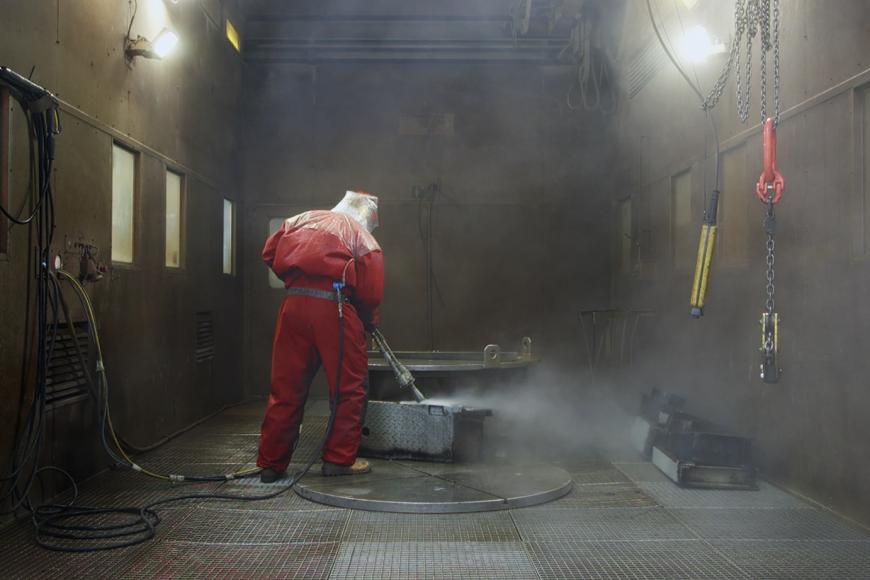
This detailed and sober look at the issue of nuclear power begins where Germany is currently standing: with shutting it off. It’s precisely because the film is anything but alarmist that the alarming aspect of the situation becomes clear. The nuclear nightmare is not over; a safe final nuclear waste repository is not in sight. And yet, boosted by the coal phase-out, many people seem to see “clean” nuclear energy as an option again. The terror of climate change trumps the terror of the nuclear worst case scenario. A zero sum game.
Carsten Rau succeeds masterfully in calmly probing the heated controversy. He talks to people who live with and off nuclear power. Engineer, scientist or innkeeper, he very deliberately frames them all with the same mixture of seriousness and nonchalance. The story is told without dramatisation, but with stunningly “beautiful” images that make the fascination with this technology quite comprehensible. When hip French nuclear engineers finally try to join the front line of climate protesters, we realise how false the talk of an “unavoidable option” is and always has been. The portrait of a society emerges that walked into a blind alley with open eyes and is slowly coming to realise that with every step it takes it is moving further away from the exit.
A Syrian Orthodox nun lives in an abandoned estate in south-eastern Turkey. Despite hostilities from the Muslim neighbourhood: she won’t be driven out.
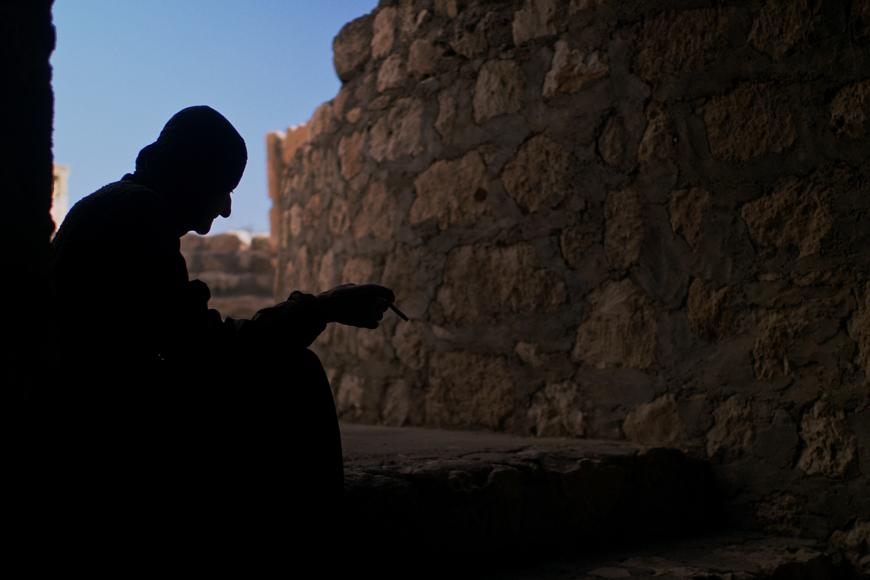
In a dilapidated village in south-eastern Turkey, a Syrian Orthodox nun endures alone with her animals. However strong the hostility of her predominantly Muslim neighbourhood may be: she won’t be driven out, for she has sworn to protect the church and not to leave the sacred place. This quietly filmed observation of everyday life focuses on an isolated woman who carries the pain of a whole community inside her.
The population of the village was tortured and driven away in the 1990s. The nun Dayrayto came here only afterwards. Today she rarely receives visits from passing believers. She usually spends her days doing maintenance work on the church and taking care of the animals. Right now she is worried about her old dog. Has he been poisoned? What to make of the provocations and threats she talks about? Dayrayto is always vigilant, even when she’s resting. From her elevated dwelling she looks far across the landscape, registering every vehicle, however distant. But she is in no way distracted by the presence of the film crew. The unobtrusive camera follows the nun – not at every turn, but as a constant, protective companion as she endures on her “bastion”. Loneliness, worries and fear shape this sparse life. They made her suspicious, but also fearless.
Along the river Oder: Virulent questions about homeland and community, everyday life and politics, asked with confident casualness, provide an account of the present.
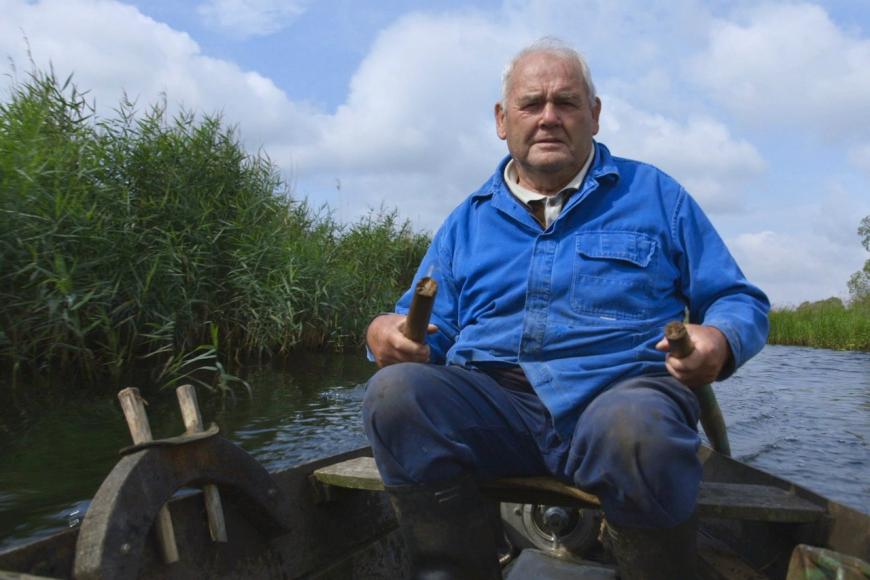
The river Oder: A historical and cultural landscape churned again and again by the tide of events of the past century. A tale told in concentric circles about a region which was and still is the scene of the beginning, end and open middle of voluntary and involuntary migrations. Virulent issues of daily life and politics that, asked with confident casualness, provide a robust account of the present.
Movements and stories in the border region between Poland and Germany – Andreas Voigt’s new film takes up the themes of his 1992 work “Borderland – A Journey”. The charged term “homeland” stirs up (trouble in) the minds and hearts of the people: What it once was and what has become of it! Sure, that’s not the top priority in their daily agenda. But how people appropriate this term and how that in turn structures their attitudes also determines how they figure out the taste of life in the here and now of Europe. The search for closeness is confronted with the insistence on distance. Communication about belonging becomes flimsy because the body language says something different than the spoken word. As a film that’s not about administering a politically correct separation diet, “Borderland” provokes experiences and enables encounters.
A concentrated analysis of human strengths and weaknesses using the example of the strange relationship between an Egyptian sports coach and his weightlifting student.
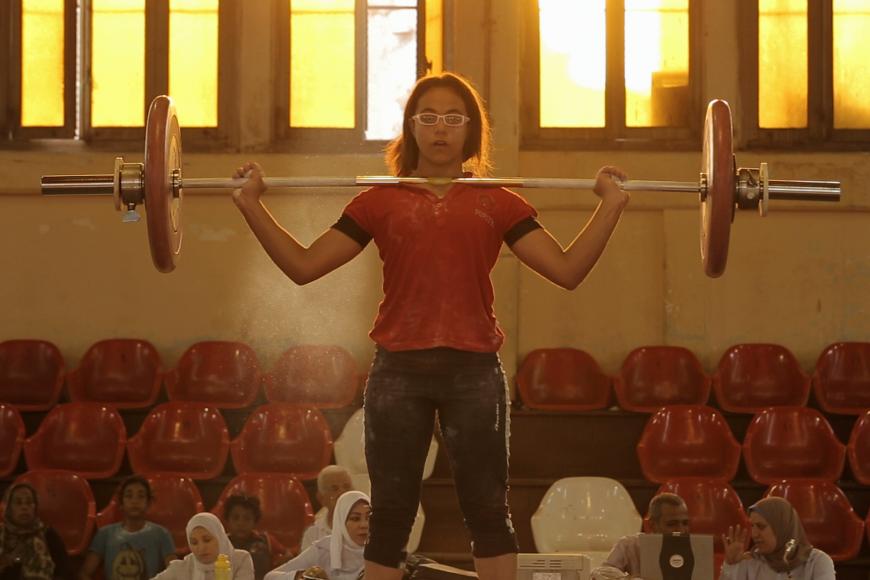
Captain Ramadan’s “gym” is located in a dusty residential area near the port of Alexandria. This is where the former professional athlete has coached young women in weightlifting for over twenty years – including his daughter Nahla, the first Egyptian world champion. An extraordinarily intimate portrait of this lone and fighter who raised Egypt’s young athletes to world class level with self-funding, which also puts the focus on a second protagonist: young Asmaa.
Mayye Zayed has followed the Captain’s student, who was fourteen at the start, for four years. Wearing a red Popeye t-shirt and backed by her coach, she fights her way to the global top league matches. The story of the inner highs and lows of the introverted young woman unfolds gently as the camera captures her emotional states precisely without many words. The dramaturgy of the chronological narrative follows the events in the best direct cinema manner, impressively adapting to the rhythm of life – and death. The result is the portrait of an unusual relationship and of a harsh environment that demands more than physical strength from the participants.
Borjana Gaković
Credits
Director
Mayye Zayed
Script
Mayye Zayed
Cinematographer
Mohamad Elhadidi
Editor
Sara Abdallah
Producer
Mayye Zayed
Co-Producer
Anke Petersen, Anna Bolster
Sound
Samir Nabil, Kristoffer Salting, Brian Dyrby
Score
Marian Mentrup
Broadcaster
Eva Klöcker, Claudia Tronnier
Funder
The Getty Images ARRAY Grant, Arab Fund For Arts & Culture (AFAC), HotDocs - Blue Ice Group Documentary Fund, International Media Support (IMS) , The Danish-Arab Partnership Programme The Danish Egyptian Dialogue Initiative (DEDI)
Socio-geographic explorations on the periphery of Addis Ababa, run through by a variety of borders and rifts – between agrarian and urban spatial practices, between economic and linguistic floes, between perspective and dilemma. A polyphonic audiovisual narrative of people who are forced to experience the impetuous urbanisation of African societies the hard way, recorded as a case study that expands into a complex allegory.
Addis Ababa (Finfinnee in the language of the rural Oromo people) is a rapidly growing East African metropolis. “Rift Finfinnee” evolves from the concrete observation of main and side effects of urbanisation in four extremely different settlements, located within sight of each other on the eastern outskirts of the Ethiopian capital, to an expansive composition about the dynamics of an urban turbo modernisation. The Great Rift Valley currently still (!) constitutes a both natural and symbolic barrier to limit the further tentacle-like expansion of the megacity into agricultural territory – across this and other rifts. This interim report on the situation at the rifts probes the field of tension created by unstable pasts, unreliable futures and a contested present.
A real-life satire about the incredible acquisition and impossible sale of a bunker mountain – a mixture of serious documentary and bone-dry humorous science fiction.
A jumble of emerging history is contrasted with the present efforts to optimise profit through ventures and ominous business ideas. In the midst of this labyrinth is a duo of artists who only want to make films. Their misfortune: the German film funding system allows only those who work in an artistic-documentary style to realise science fiction films. Cause enough to find true science fiction material on real German soil instead of looking for a fiction.
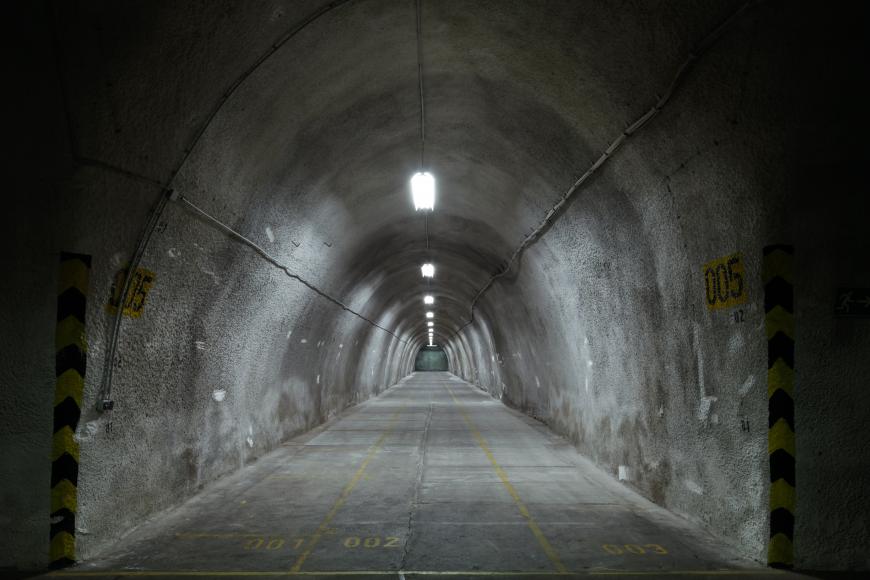
Rothenstein, south of Jena. A mountain, hollowed out and built on. Labyrinthine corridors cast in concrete spread over a distance of more than five kilometres. The film precisely constructs – stone by stone, image by image – a story which, composed as a mirror of German history, touches on archaeological finds from twelve thousand years ago and at the same time projects into the uncertainties of the future. Bizarre energy fields, myths and tales of dragons, plans of U.S. preppers fleeing from the end of the world meet facticities of National-Socialist exploitation and forced labour, stories of flight from the 1930s, and the military history of the GDR.
Borjana Gaković
Credits
Director
Bettina Ellerkamp, Jörg Heitmann
Cinematographer
Stephan Helmut Beier
Editor
Ginan Seidl, Bettina Ellerkamp
Producer
Jörg Heitmann
Sound
Ray Peter Maletzki
Production Company
silent green Kulturproduktionen GmbH + Co KG, home productions GmbH