Film Archive

Retrospective 2024

[Opening speech for the retrospective “Cuban Documentary Film”] [excerpt]

Santiago Álvarez
Cuban documentarist Santiago Álvarez speaks to GDR cultural officials and the “fighting” youth of Leipzig: about documentary film as a weapon against imperialism and colonialism.
Filmstill [Opening speech for the retrospective “Cuban Documentary Film”] [excerpt]

[Opening speech for the retrospective “Cuban Documentary Film”] [excerpt]

[Eröffnungsrede zur Retrospektive „Kubanischer Dokumentarfilm“] [Ausschnitt]
Santiago Álvarez
Retrospective 2024
Acoustical Film
GDR
1974
15 minutes
German,
Spanish
Subtitles: 
German (Overvoice)
In 1974, the GDR and the Leipzig festival celebrated the 25th anniversary of the Cuban Revolution with the “Cuban Documentary Film” retrospective. Santiago Álvarez, vigorous propagandist of documentary film as an art of war against imperialist cinema entertainment, spoke at soporific length at the opening.
One wonders whether, in addition to the invited officials, the “fighting” youth of Leipzig addressed by Álvarez were present at the event. The speech has survived only as an audio document, the images must be imagined. The recording was commissioned by the State Film Documentation, a government agency that was to preserve GDR reality for the future. In 1974, no one in the room could have imagined that this future would one day take place without the GDR.
Sylvia Görke

Credits DOK Leipzig Logo

Director
Santiago Álvarez
Producer
Staatliche Filmdokumentation
Retrospective 2024

15.000 Volt

Karlheinz Mund
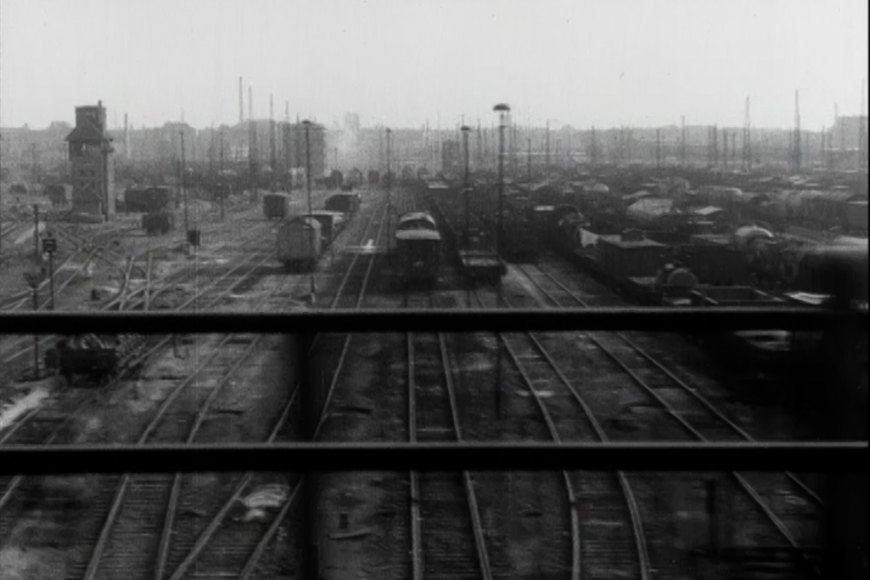
On the overhead wire 15,000 volts, underneath everyday working life on an electric locomotive. On the soundtrack a passenger who the GDR will throw overboard in 1976: Wolf Biermann.
Filmstill 15.000 Volt

15.000 Volt

15.000 Volt
Karlheinz Mund
Retrospective 2024
Documentary Film
GDR
1963
18 minutes
German
Subtitles: 
None
This graduation film by future DEFA documentarian Karlheinz Mund presents a piece of GDR working worlds in the best poetic and earthy Babelsberg school tradition: the everyday life of railway workers – with two women in the electric locomotive driver’s cab.
In 1963, Leipzig audiences were able to get to know Mund’s study in the festival’s university film presentation. At the end, the “Spring Song of the Railwaywoman” can be heard off-screen, sung by Wolf Biermann. The GDR still tolerated the rebellious tormentor. Those who heard him in this film at the time probably only found out later that the authorities had long had him in their sights. In 1963, East Berlin’s Humboldt University refused to grant him a degree in philosophy despite passing his exams. Listening to Biermann’s song today, the words become charged: spring storm, great rain, a land waiting …
Sylvia Görke

Credits DOK Leipzig Logo

Director
Karlheinz Mund
Cinematographer
Hans-Jürgen Reinecke, Gerhard Gläser, Werner Kohlert, Eberhard Teich-Grüber
Editor
Gisela Hoffmann
Producer
Roland Paul
Sound
Günter Grossmann
Score
Gerhard Rosenfeld
Narrator
Dorothea Richter
Retrospective 2024

Aida

Marwan Salamah
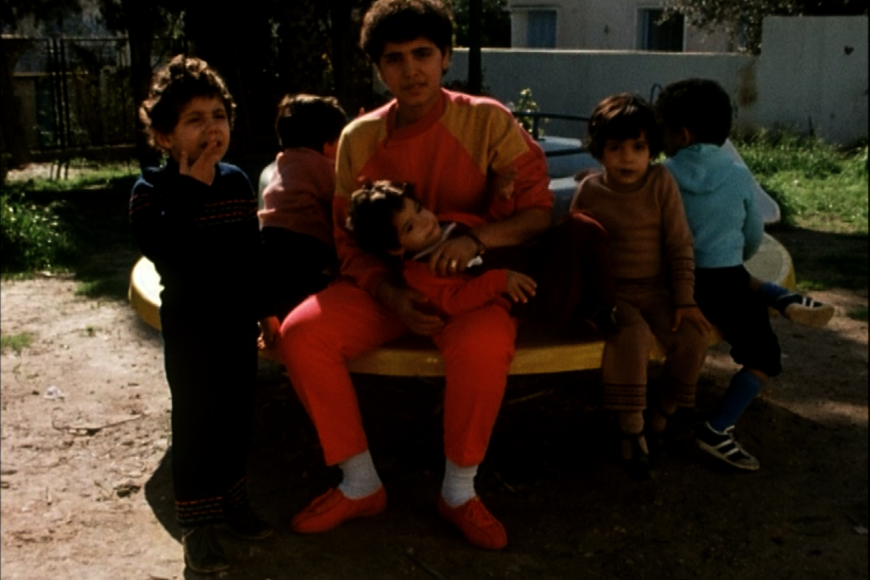
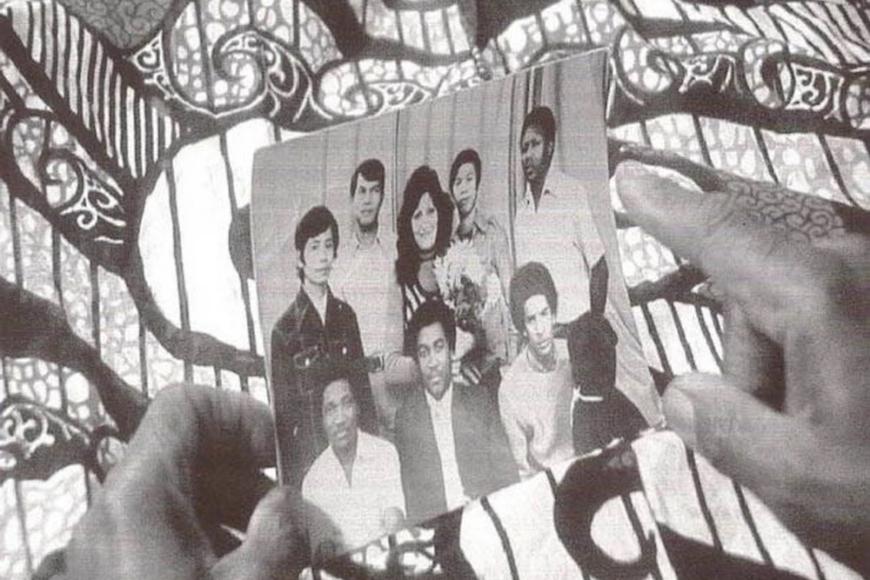
Marwan Salamah was delegated by the Palestine Liberation Organization to study in Babelsberg. As a one-man team, he realised this portrait of a young educator in a PLO orphanage in Tunis.
Filmstill Aida
Filmstill Aida

Aida

Aida
Marwan Salamah
Retrospective 2024
Documentary Film
GDR
1985
22 minutes
Arabic
Subtitles: 
German (Overvoice)
Words of the poet Mahmoud Darwish float through this film: “Tell me. Perhaps I will remember my home whose perfume is only on my lips.” A 17-year-old Palestinian introduces herself: Aida, the returning one. When her father was killed in battle, her mother was already dead, killed by a bomb. When she was eight, she was sent to a PLO orphanage in Beirut, then to an orphanage in Damascus, then to an orphanage in Tunis. Here she takes care of new orphans. The portrait of a girl expands: countless children who will forget their homeland and origin. There is nothing but war left in their drawings. The PLO had assigned its collaborator Marwan Salamah to study cinematography at Babelsberg. Here, he is also the director. In 1985, “Aida” won the Prize of the World Federation of Democratic Youth in Leipzig.
Sylvia Görke

Credits DOK Leipzig Logo

Director
Marwan Salamah
Script
Marwan Salamah, Elke Schieber
Editor
Karin Geiß
Producer
Hochschule für Film und Fernsehen der DDR
Retrospective 2024

Associations

John Smith
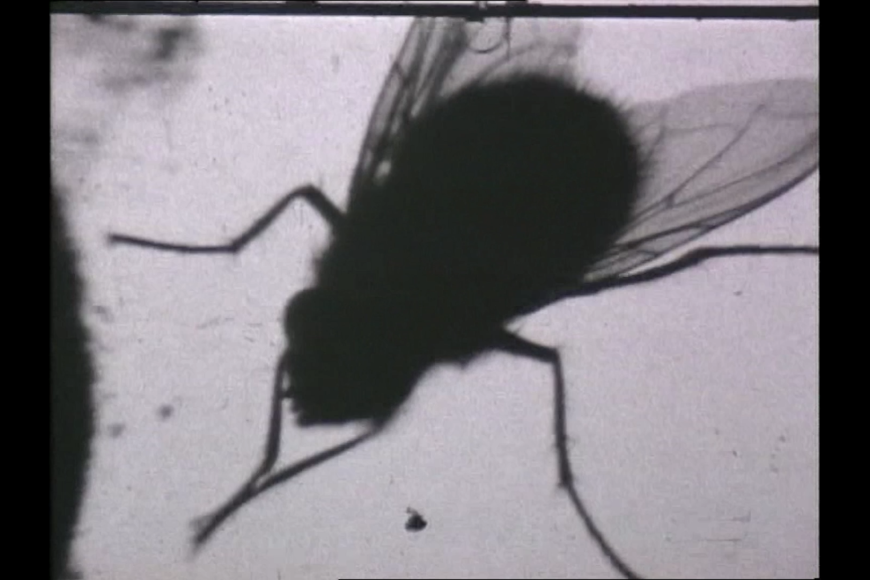
Nail polish, a general, a mule. John Smith recites from a text by the linguist Herbert H. Clark. The words evoke appropriate images, but mean something different.
Filmstill Associations

Associations

Associations
John Smith
Retrospective 2024
Documentary Film
UK
1975
7 minutes
English
Subtitles: 
None
It was only long after the end of the GDR that the Leipzig audiences had an opportunity to get to know the work of John Smith, the British master of the trenchant, short artist film that continues to expand enormously in the mind. The ideas of conceptual art and structural minimalism prevalent in the 1970s have influenced his works, which he sees as documentary films according to John Grierson’s definition, as “creative treatment of actuality.” In his view of the world details are highlighted which then cease to be taken for granted. In “Associations”, he recites a text by the linguist Herbert H. Clark. Words conjure up matching images, but mean something different. An experience that could also be had in the “actually existing socialism” of the GDR.
Sylvia Görke

Credits DOK Leipzig Logo

Director
John Smith
Retrospective 2024

Black Film

Želimir Žilnik
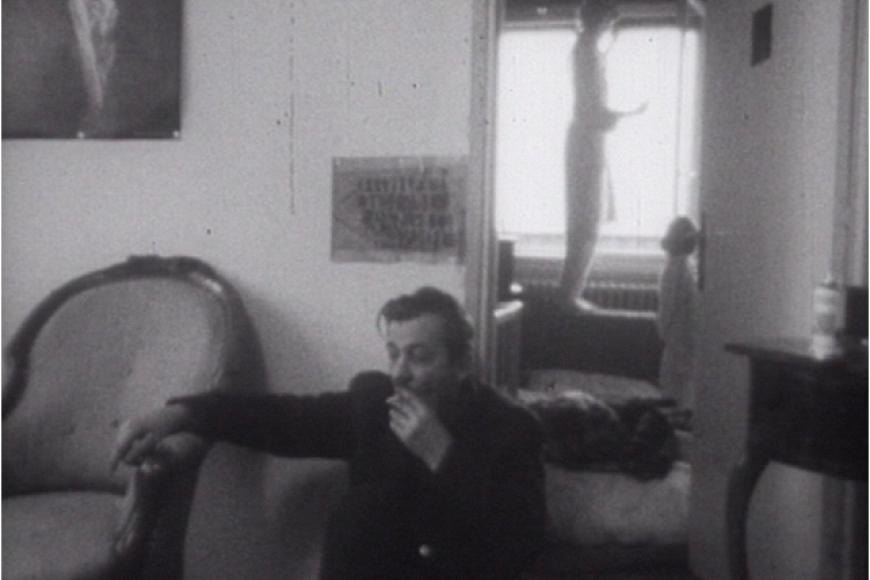
One night, the filmmaker roams through Novi Sad, picks up homeless people and takes them home. A self-experimentation with a camera, somewhere between social reportage and activism.
Filmstill Black Film

Black Film

Crni film
Želimir Žilnik
Retrospective 2024
Documentary Film
Yugoslavia
1971
17 minutes
Serbian
Subtitles: 
English
1971, Novi Sad, a winter’s night. The filmmaker meets six homeless men, is outraged by the negligent state and takes matters into his own hand. As shelter cannot be found at short notice, he invites the men to his apartment, turning his wife into the involuntary accomplice of his relief operation. The experiment fails, but the film is in the can.
Želimir Žilnik is one of those representatives of the Yugoslavian Black Wave who won the hearts of the West. It is true that at home he found state-funded production opportunities for self- and bureaucracy-critical films like this one. He was even allowed to present them at domestic festivals. But he still experienced Yugoslavian censorship. Strangely enough, however, not with “Black Film“.
Sylvia Görke

Credits DOK Leipzig Logo

Director
Želimir Žilnik
Cinematographer
Karpo Aćimović Godina
Editor
Kaća Stefanović
Producer
Neoplanta film
Sound
Dušan Ninkov
Retrospective 2024

Chile

Juan Forch, Jörg Herrmann
Exiled Chilean Juan Forch and Dresden-based silhouette film specialist Jörg Herrmann call for battle against Pinochet and his imperialist allies: with singing and organ music.
Filmstill Chile
Filmstill Chile
Filmstill Chile

Chile

Chile
Juan Forch, Jörg Herrmann
Retrospective 2024
Animated Film
GDR
1975
2 minutes
German,
Spanish
Subtitles: 
English
In 1973, General Pinochet, with the support of the US secret service, staged a coup against the democratically elected Marxist-Socialist President of Chile, Salvador Allende. Pinochet’s military junta murdered and tortured their way across the country. Juan Forch, Santiago-born journalist and filmmaker, managed to escape the terror via Mexico to the GDR and continued his opposition work from here until his return in 1979: as a director at the DEFA Studio for Animation Film in Dresden. With silhouette film specialist Jörg Herrmann he realised this animated agitation miniature, in which the dictator and his allies dance to the caustic artist’s tune – and to organ music.
Sylvia Görke

Credits DOK Leipzig Logo

Director
Juan Forch, Jörg Herrmann
Script
Juan Forch
Cinematographer
Peter Pohler
Editor
Heidrun Sünderhauf
Producer
DEFA-Studio für Trickfilme
Sound
Horst Philipp
Score
Addy Kurth
Animation
Juan Forch
Retrospective 2024

Something Self Explanatory (15x)

Harun Farocki, Hartmut Bitomsky
An educational film about the Marxist vocabulary of commodity and labour, wages and labour power, exchange and use value - demonstrated with political stance and aesthetic actions.
Filmstill Something Self Explanatory (15x)

Something Self Explanatory (15x)

Eine Sache, die sich versteht (15x)
Harun Farocki, Hartmut Bitomsky
Retrospective 2024
Documentary Film
FRG
1971
64 minutes
German
Subtitles: 
English
This Marxist education offensive cast into actions and images is part of a bigger cycle of so-called educational films that, following Bertolt Brecht’s concept of the didactic experimental play, use lucid illustration to fill abstract terms with practical meaning. In fifteen learning unites, Harun Farocki and Hartmut Bitomsky address the basic concepts of Karl Marx’s main political work, “Capital”, discussing a section that, according to their own statements, they do not consider self explanatory. “The intention is to make a person who is walking think about walking so that he falls down,” as the two filmmakers noted about their project. It remains to be seen whether such a fall also makes the penny drop among the audience.
Sylvia Görke

Credits DOK Leipzig Logo

Director
Harun Farocki, Hartmut Bitomsky
Cinematographer
David Slama, Carlos Bustamante
Editor
Hasso Nagel
Producer
Larabel Film Harun Farocki
Sound
Johannes Beringer
Retrospective 2024

Color Test. The Red Flag

Gerd Conradt
He carries a flag, and that flag is red: In 1968 Holger Meins takes part in this student flag run in West Berlin, in 1970 he joins the RAF and goes into hiding.
Filmstill Color Test. The Red Flag

Color Test. The Red Flag

Farbtest. Die Rote Fahne
Gerd Conradt
Retrospective 2024
Documentary Film
FRG
1968
13 minutes
without dialogue
Subtitles: 
None
An exercise on “colour” in Michael Ballhaus’s class at the DFFB in West Berlin went down in the history of cinema and subversion. In retrospect, this silent miniature became the harried document of a movement of departure that was to grow criminal powers. It was shot on 18 January 1968, five years after JFK’s statement of bloc affiliation, “Ich bin ein Berliner,” just before the murder of Benno Ohnesorg, a few months before the assassination attempt on Rudi Dutschke. Director-in-training Gerd Conradt and fourteen fellow students and friends organised a relay race to the Schöneberg town hall to raise the red flag there. The final leg was run by cinematography student Holger Meins, who was to become a terrorist with the Red Army Faction and starved himself to death in Wittlich prison in 1974.
Sylvia Görke

Credits DOK Leipzig Logo

Director
Gerd Conradt
Cinematographer
Charles Völsen
Producer
DFFB Deutsche Film- und Fernsehakademie Berlin
Retrospective 2024

For the Palestinians

Edna Politi
1974, Palestinian reality in Israel and the West Bank, economic and political oppression – documented by an Israeli who wants to make a convincing appeal: the urgent need for dialogue.
Filmstill For the Palestinians

For the Palestinians

Für die Palästinenser
Edna Politi
Retrospective 2024
Documentary Film
FRG
1973
85 minutes
Arabic,
German,
Hebrew
Subtitles: 
German (Overvoice), German
Words of the poet Mahmoud Darwish open this film: “I do not hate people, I do not assault anyone, but if I get hungry, I eat the flesh of my usurper. Beware, beware of my hunger, and of my anger.” This is followed by the title, then the subtitle: “An Israeli reports.” Her name is Edna Politi; she was born in Lebanon, emigrated to Israel and was accepted into the German Film and Television Academy in West Berlin in 1971. Politi’s student film is explanatory: Where does the Palestinian rage, the desperation come from? Soberly and carefully, she compiles everyday observations, facts and figures to draw attention to the mechanisms of the economic and political disenfranchisement of the Palestinian people. Her aim is to convince, not persuade.
Sylvia Görke

Credits DOK Leipzig Logo

Director
Edna Politi
Script
Edna Politi
Cinematographer
Edna Politi
Editor
Edna Politi
Producer
DFFB Deutsche Film- und Fernsehakademie Berlin
Sound
Gad Freudenthal
Score
Mohammed Askari
Retrospective 2024

Hello Cubans

Agnès Varda
The grande dame of French Nouvelle Vague spent the turn of the year 1961/62 in Cuba. She came back to Europe with a photo film full of cha-cha-cha and cheerful socialism.
Filmstill Hello Cubans

Hello Cubans

Salut les Cubains
Agnès Varda
Retrospective 2024
Documentary Film
France,
Cuba
1963
30 minutes
French
Subtitles: 
English
At the turn of 1961/62, Agnès Varda travelled to Cuba and saw a country that integrated Marx and Lenin into the everyday life of the Caribbean. Cha-cha-cha was part of it, but also cars à l’américaine. At her Parisian animation stand, Varda animated the black and white photos she had brought back home in an almost jaunty photo film. Chris Marker, her close friend from the Rive Gauche circle of the French Nouvelle Vague, had just paved the way for this cinematic form. They also shared an enthusiasm for the Cuban Revolution – and finally even a bit of Leipzig festival experience: In 1964, Varda’s moving photo montage won the Silver Dove. Despite or because of the subtle irony with which she looks at this somewhat improvised socialism?
Sylvia Görke

Credits DOK Leipzig Logo

Director
Agnès Varda
Editor
Janine Verneau
Producer
Société Nouvelle Pathé-Cinéma, Ciné-Tamaris
Narrator
Agnès Varda, Michel Piccoli
Retrospective 2024

I Am Ernst Busch

Sebastian Eschenbach, Peter Voigt
A disciple of Brecht, multi-artist Peter Voigt has mounted a filmic memorial to perhaps the strongest voice of anti-fascist propaganda: Ernst Busch, made of songs, stone and anger.
Filmstill I Am Ernst Busch

I Am Ernst Busch

Ich bin Ernst Busch
Sebastian Eschenbach, Peter Voigt
Retrospective 2024
Documentary Film
Germany
2000
58 minutes
German
Subtitles: 
None
Ernst Busch was hyped as an icon of the anti-fascist class struggle – by the GDR and perhaps a little by himself. He rose to fame as a film and theatre star in the 1920s and never made a secret of his leftist views. His history as a morale-boosting singer for the Communist International Brigades in the Spanish Civil War, his history of persecution under the Nazi regime made him a myth with an immaculate revolutionary pedigree. The portrait dedicated to him by the multi-talented director-poet Peter Voigt reveals the history of Busch’s downfall, for he also regularly went to battle against the SED party bureaucracy. Flattery, disparagement, withdrawn and re-issued party membership books … Sometimes the GDR was maddening.
Sylvia Görke

Credits DOK Leipzig Logo

Director
Sebastian Eschenbach, Peter Voigt
Script
Peter Voigt
Cinematographer
Christian Lehmann, Gunther Becher
Editor
Thomas Malz
Narrator
Klaus Löwitsch, Peter Voigt
Production Company
Tele Potsdam, SFB Sender Freies Berlin
Retrospective 2024

People at the Beach

Néstor Almendros
A poetic evocation of the beaches of Havana: people in the sun, in the water, in cafés, in embraces. Unofficial images and sounds of post-revolutionary Cuban relaxation.
Filmstill People at the Beach

People at the Beach

Gente en la playa
Néstor Almendros
Retrospective 2024
Documentary Film
Cuba
1960
12 minutes
without dialogue
Subtitles: 
None
The beaches of Havana, splashing around, tender gestures between lovers, the sun glistening on the water, hips swaying to music. With this light-handed etude, Néstor Almendros delivers a shimmering testimony of post-revolutionary relaxation – and an early proof of his virtuosity as a cinematographer.
The film was made at ICAIC – and disappeared there, too. The national film art institute founded in 1959 by order of the new government saw no place for such neorealistic extravaganzas in the new Cuban cinema and issued a screening ban. Néstor Almendros left Cuba in 1961 to become a world-renowned cinematographer in the US and Europe. His name was expunged from the ICAIC filmography published in the book accompanying the 1974 Cuban retrospective in Leipzig.
Sylvia Görke

Credits DOK Leipzig Logo

Director
Néstor Almendros
Script
Néstor Almendros
Cinematographer
Néstor Almendros
Editor
Néstor Almendros
Sound
Néstor Almendros
Retrospective 2024

Refrain

Krzysztof Kieślowski
Even in death, you can’t get rid of bureaucracy! In the day-to-day business of a Warsaw funeral parlour, mourning is mired in paperwork, routine and triviality.
Filmstill Refrain
Filmstill Refrain

Refrain

Refren
Krzysztof Kieślowski
Retrospective 2024
Documentary Film
Poland
1972
11 minutes
Polish
Subtitles: 
English
It is said of Krzysztof Kieślowski that he did not see himself as a political filmmaker. At least this early documentary casts doubt on this, for it depicts the cold stranglehold of bureaucracy. The setting is a municipal funeral home in Warsaw. Phone calls are made, documents checked and stamped. Business runs like clockwork, from the cradle to the grave.
Leipzig naturally maintained ties with older Polish documentarists like Jerzy Bossak, even after he relocated to Denmark. The fact that Kieślowski and other notable Polish film artists of his generation did not appear in the programmes before 1990 fits into the image of a life consumed by pettiness painted here. The real issue was probably animosities with the festival in Cracow.
Sylvia Görke

Credits DOK Leipzig Logo

Director
Krzysztof Kieślowski
Cinematographer
Witold Stok
Editor
Maryla Czolnik
Producer
Wytwórnia Filmów Dokumentalnych
Sound
Michał Żarnecki, Małgorzata Jaworska
Retrospective 2024

Report

Volker “Via” Lewandowsky
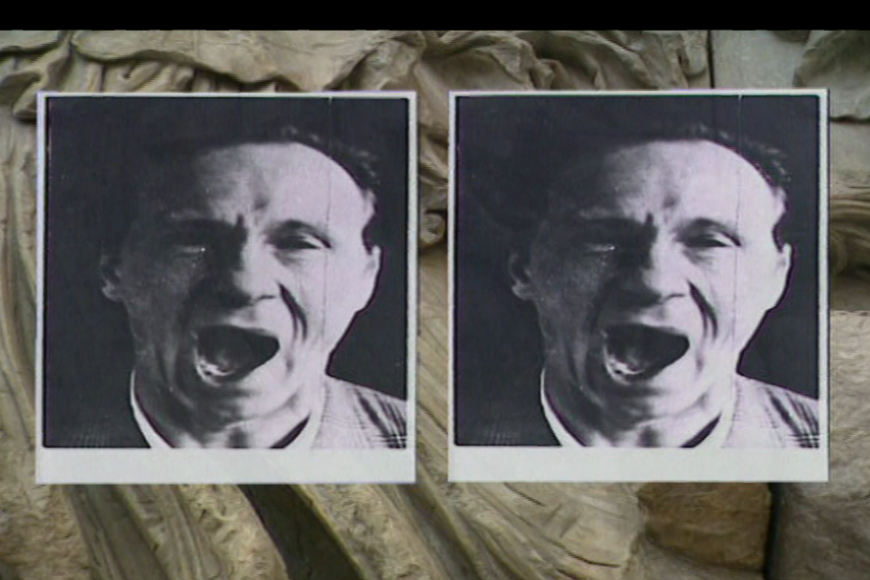
A collage about the lascivious inertia of power, full of allusions to the rotting Roman Empire. In 1987, the decay of the world-organising systems could already be smelled from the GDR underground.
Filmstill Report
Filmstill Report

Report

Report
Volker “Via” Lewandowsky
Retrospective 2024
Experimental Film
GDR
1987
7 minutes
without dialogue
Subtitles: 
None
The GDR formed an image of its citizens, hardy in everyday life and firm in principles, that it wished to see reflected in “their” art. Dresden-based artist Volker, called Via Lewandowsky, avoided the vanity of the GDR art scene and reflected something else back to his superior state: the indolence of the flesh, the gluttony of the systems that allegedly ordered the world. This Super 8 film from the late German Democratic subculture rubs against Heiner Müller’s stage text “Anatomy Titus Fall of Rome A Shakespeare Commentary”. The manuscript was (half) published in 1986 by the East Berlin Henschelverlag with the following proviso: “If the play is not accepted for production, this book must be returned immediately […].” Lewandowsky emigrated to West Berlin in 1989 before the fall of the Wall.
Sylvia Görke

Credits DOK Leipzig Logo

Director
Volker “Via” Lewandowsky
Retrospective 2024

Rostov – Luanda

Abderrahmane Sissako
In 1980, Mauritanian-Malian film student Sissako meets an Angolan on the train to Rostov-on-Don. Years later, the USSR has passed, he searches for him in his homeland – and finds traces of colonial and world history.
Filmstill Rostov – Luanda

Rostov – Luanda

Rostov – Luanda
Abderrahmane Sissako
Retrospective 2024
Documentary Film
Angola,
France,
Mauritania,
Germany
1997
58 minutes
French,
Portuguese (Portugal)
Subtitles: 
German
On a train to Rostov-on-Don in 1980, Malian-Mauritanian bursary holder Abderrahmane Sissako met the Angolan Afonso Baribanga, who had also been sent to the USSR. Both are supposed to learn Russian. Sissako studied film directing at the WGIK in Moscow, while Baribanga pursued a different career and eventually returned to Angola, where a post-colonial civil war was raging. Years later, Sissako sets off in search of his vanished friend, travelling to his own and Baribanga’s African homelands, where the old and new world powers have left devastating traces. In 1997, in a side section, DOK Leipzig presented the feature-length version of Sissako’s travelogue, which is steeped in contemporary and colonial history. The 2024 Retrospective presents an abridged version.
Sylvia Görke

Credits DOK Leipzig Logo

Director
Abderrahmane Sissako
Script
Abderrahmane Sissako
Cinematographer
Jacques Besse
Editor
Claudio Martinez
Producer
Movimento Production, ZDF Das kleine Fernsehspiel
Sound
Jean-Jacques Quintet, Paolo de Jesus
Retrospective 2024

Staßfurt – Windhoek

Lilly Grote, Julia Kunert
In August 1990, the still-GDR sends 425 Namibian refugee children back to their liberated “homeland”. Suddenly, after eleven years of hospitality, things had to move quickly. Beginnings and departures coincide.
Filmstill Staßfurt – Windhoek

Staßfurt – Windhoek

Staßfurt – Windhoek
Lilly Grote, Julia Kunert
Retrospective 2024
Documentary Film
GDR
1990
52 minutes
German
Subtitles: 
None
History in a hurry: Namibia becomes independent in March 1990, in July the Publicly Owned Enterprise DEFA becomes a GmbH, in October GDR becomes FRG East, in August a West and an East German filmmaker record one of the last GDR inconsistencies for DEFA. The state in pre-retirement sends 425 Namibian children, whom it had rescued from Angolan camps eleven years earlier, “home.” Hastily. But why? When Grote, Kunert and the children arrive, a Namibian minister explains that the East German supporters of these colonial war victims are now out of power. The new powers had no interest … In the Leipzig festival selection in 1990, and again in 1991, this film about German-Namibian foreignness and alienation cannot be found. The Retrospective 2024 makes up for this strange omission.
Sylvia Görke

Credits DOK Leipzig Logo

Director
Lilly Grote, Julia Kunert
Script
Lilly Grote, Julia Kunert
Cinematographer
Lilly Grote, Julia Kunert
Editor
Ingeborg Marszalek
Producer
DEFA-Studio für Dokumentarfilme GmbH
Sound
Lilly Grote, Julia Kunert