Film Archive

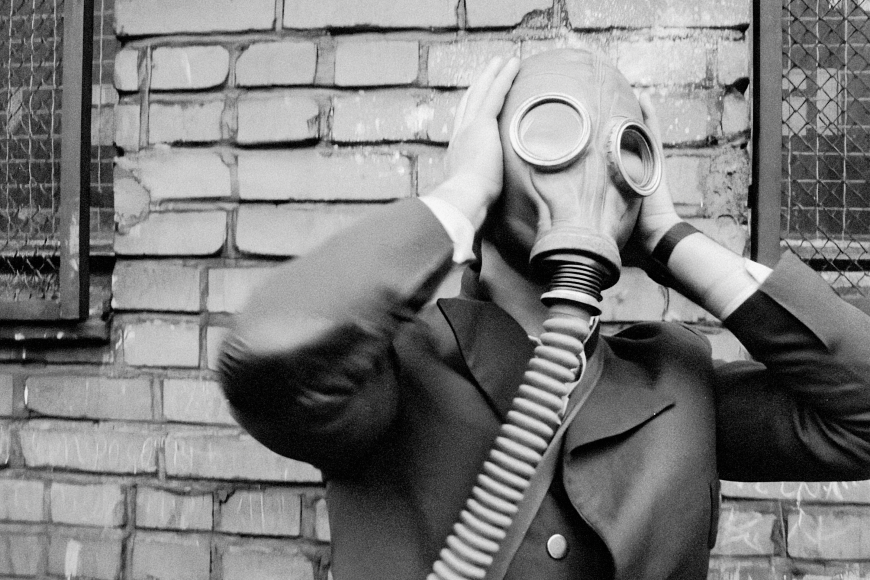
Filmstill A Year in the Life of the Country

A Year in the Life of the Country

Rok z życia kraju
Tomasz Wolski
Panorama: Central and Eastern Europe 2024
Documentary Film
Poland
2024
85 minutes
Polish,
English
Subtitles: 
English
In the early 1980s, Poland is in a state of emergency. The country’s democracy movement, represented by the free Solidarność trade union, is to be suppressed. To this end, President Wojciech Jaruzelski declares martial law on 13 December 1981. In collusion with the Soviet Union a threatening scenario is staged to justify the “stan wojenny”. As a result, Western nations like Great Britain and the USA impose economic sanctions on the Eastern Bloc state. This produces a complex field of tension in which the Polish population are confronted with existential shortages on the one hand but continue their struggle underground on the other – despite curfews, telephone surveillance and a media system controlled by the military.
In his found footage film, Tomasz Wolski brings the explosive, the everyday and the iconic together to provide an insight into a situation that is as absurd as it is dangerous. The extremely dynamic (and musical) montage illustrates the rapid and convoluted succession of events while at the same time intervening through comments, quite often with a notable sense of humour, for example, when Wolski helps a British news correspondent not always on top of events to a bit of retroactive glory: “Most fundamental is the … Hang on, sorry, sorry, could you … Photography and filming will be widely controlled …”
Carolin Weidner

Credits DOK Leipzig Logo

Director
Tomasz Wolski
Script
Tomasz Wolski
Cinematographer
Tomasz Wolski
Editor
Tomasz Wolski
Producer
Anna Gawlita
Sound
Marcin Lenarczyk
Score
Jerzy Rogiewicz
Nominated for: Leipziger Ring, MDR Film Prize
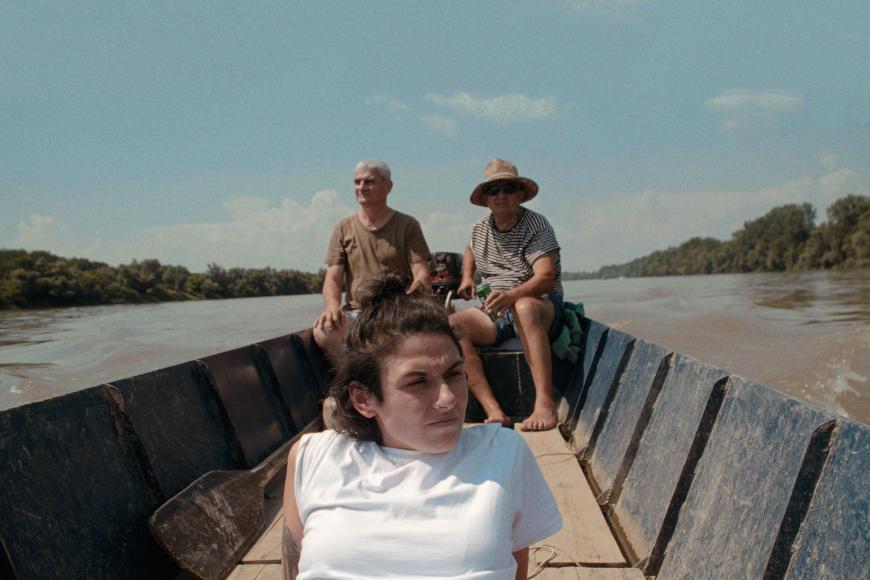
Filmstill A Year of Endless Days

A Year of Endless Days

Godina prođe, dan nikako
Renata Lučić
Panorama: Central and Eastern Europe 2024
Documentary Film
Croatia,
Qatar
2024
70 minutes
Croatian
Subtitles: 
English
Renata Lučić, both director and protagonist, returns to her hometown to visit her father in a small village in the Croatian part of Slavonia, near the Bosnian border. She has always hated the rural area on the banks of the river Sava, “those endless meadows and gardens,” as she reveals right in the opening sequence. Even as a child she knew that she would leave. Like her older brother, like her mother. And like 124,667 other women who “went West” after the war, usually to Germany or Austria, to work – and never to return.
She now hangs out in the almost abandoned and womanless village with her estranged father Tomislav and his best friend Joso. The men follow their routines, working in the forest or eating river fish they caught themselves. Emotional closeness and intimacy gradually form in at first seemingly trivial conversations and despite initial misunderstandings and distinctly different world views. The film project, which started as the story of an emigration, gradually turns into a sensitive study of loneliness, human relationships, friendship and love; about the beauty of the little things that leads to larger insights – not just for Renata.
Borjana Gaković

Credits DOK Leipzig Logo

Director
Renata Lučić
Script
Renata Lučić
Cinematographer
Marinko Marinkić
Editor
Karla Folnović
Producer
Tamara Babun Zovko, Matija Drniković
Sound Design
Ivan Zelić, Nina Ugrinović
Score
Mislav Lešić
Nominated for: MDR Film Prize
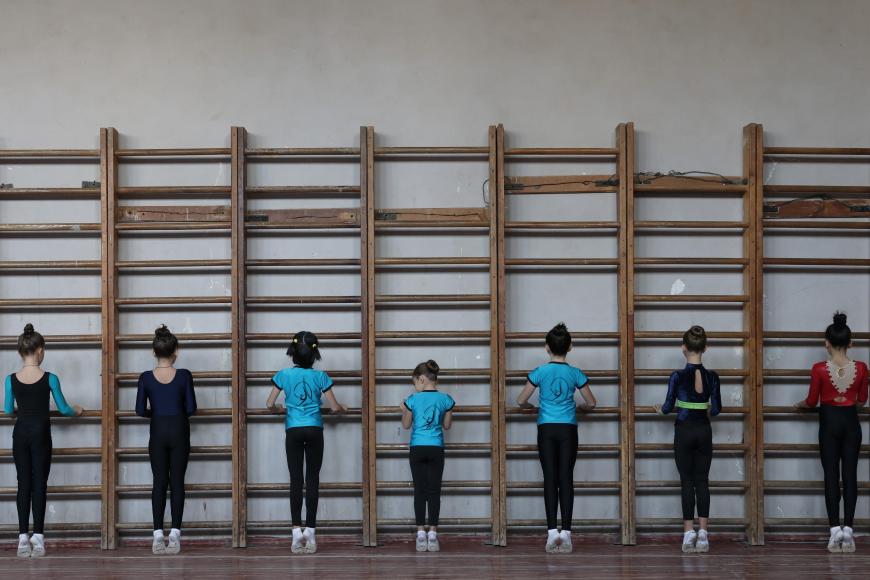
Filmstill Ever Since I Knew Myself

Ever Since I Knew Myself

Rats tavi makhsovs
Maka Gogaladze
Panorama: Central and Eastern Europe 2024
Documentary Film
Georgia
2024
87 minutes
Georgian
Subtitles: 
English
In her childhood, Maka attended her hated piano lessons in tears. When she asks her mother about it, she is told that this torment is extremely important for discipline. The conversation prompts an examination of whether current pedagogical routine in Georgia has strayed far from such a concept of education. A music school in which brutal emotional and verbal pressure is part of the curriculum; a ballet school where little girls must endure intense pain while stretching; a primary school class where even the most passionate recitation of a patriotic poem about the heroes of the motherland is cause for criticism. We plunge into a somewhat surreal, at times hilariously rigid world, reminiscent of a Palaeolithic dinosaur desperately trying to save itself in the present day.
“Steel is tempered by fire,” says the mother. Her words express the burden of responsibility for her beloved daughter and convey many warm, previously unspoken feelings. “But I am a human being first,” Maka replies. The loving daughter insists that the idea of humanity based on authoritarian power structures must be overcome, because it is still reproduced in the most private relationships, including those between parents and children.
Vika Leshchenko

Credits DOK Leipzig Logo

Director
Maka Gogaladze
Cinematographer
Maka Gogaladze
Editor
Maka Gogaladze
Producer
Maka Gogaladze
Sound Design
Vano Arsenishvili
-
Irma Gogaladze, Nino Nergadze
Nominated for: MDR Film Prize
Filmstill The Other One

The Other One

Ta druhá
Marie-Magdalena Kochová
Panorama: Central and Eastern Europe 2024
Documentary Film
Czech Republic,
Slovakia
2024
87 minutes
Czech
Subtitles: 
English
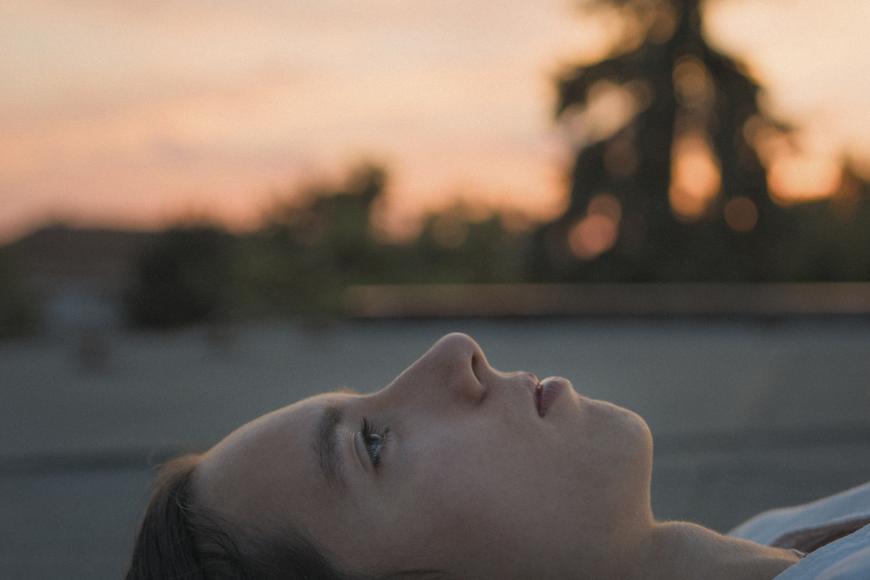
There is something very subtle about the moment when children become adults that it can hardly be put into words. In fact, hidden, almost imperceptible changes suddenly appear that act like tectonic shifts in the human psyche. In her documentary debut, Marie-Magdalena Kochová has managed to capture this subtle move. She documents the life of 18-year-old Johana, who lives with her parents and her younger sister in a small town in the Czech Republic.
The sister has autism. Her health condition is severe and unpredictable. Her hysterical fits and aggressive outbursts dictate the life of the whole family. All the schedules are synchronised so that someone is always with the youngest. The well-practised routine is threatened when Johana decides to apply for a study programme in psychology at the university after her school exams. This means that she will soon have to move to another city, leaving the entire burden on the parents. Kochová shows us a transitional period in anticipation of massive changes, which requires everyone involved to have firm confidence in their own decisions. The mental tension is palpable, but the camera maintains an equalising distance. Step by step, the beauty of a challenged life unfolds, where courage becomes the only measure.
Vika Leshchenko

Credits DOK Leipzig Logo

Director
Marie-Magdalena Kochová
Script
Marie-Magdalena Kochová
Cinematographer
Ludvík Otevřel, Kristina Kůlová, Marie-Magdalena Kochová
Editor
Simona Donovalová
Producer
Vít Poláček, Petr Kubica, Aleš Hudský, Barbora Drtílková
Co-Producer
Matej Sotník, Veronika Slámová, Tomáš Šimon, Lenka Medová
Sound
Alexandra Strapková
Score
Jonatán Pastirčák
Nominated for: MDR Film Prize
Winner of: MDR Film Prize
Panorama: Central and Eastern Europe 2024

House with a Voice

Kristine Nrecaj, Birthe Templin
A portrait of six Albanian “Burrneshas”, women in the social roles of men, who have been going against the grain of the country’s patriarchal structures with wit and courage for decades.
Filmstill House with a Voice

House with a Voice

wo/men
Kristine Nrecaj, Birthe Templin
Panorama: Central and Eastern Europe 2024
Documentary Film
Germany
2024
87 minutes
Albanian,
English
Subtitles: 
English
The six Albanian Burrneshas who tell their stories here want to decide for themselves how they want to live. They realised early on that the patriarchal society severely restricts their freedom. So they became Burrneshas and slipped into the social role of men in order to have agency, be independent and able to support their family economically, to escape forced marriages and harassment. And they have a lot of fun along the way, too. But breaking through gender barriers comes with a price. You stay a Burrnesha for life, sealed by an oath. The price of freedom is usually the renunciation of an openly lived sexuality, children and a family.
The impressive protagonists of this superbly photographed film show how much strength it takes to practise masculine gender stereotypes. Not all of them have enough energy to simultaneously assert and subvert clichés and male claims to power. For the new generation of feminists in Albania, the Burrneshas are role models, but also a warning. Because the goal of emancipation is far from achieved just because an avant-garde of courageous women manage to smuggle themselves into the heart of the patriarchy with a leap. If you are after the system, you must not copy the structures but abolish them.
Luc-Carolin Ziemann

Credits DOK Leipzig Logo

Director
Kristine Nrecaj, Birthe Templin
Cinematographer
Alfred Nrecaj
Editor
Evelyn Rack
Producer
Katrin Springer
Sound
Adrian Guri, Arne Herrmann
Sound Design
Anders Wasserfall
Score
Nico Pavlovic, André Feldhaus, Alfred Nrecaj, Arne Herrmann
World Sales
Tijana Djukic
Nominated for: MDR Film Prize