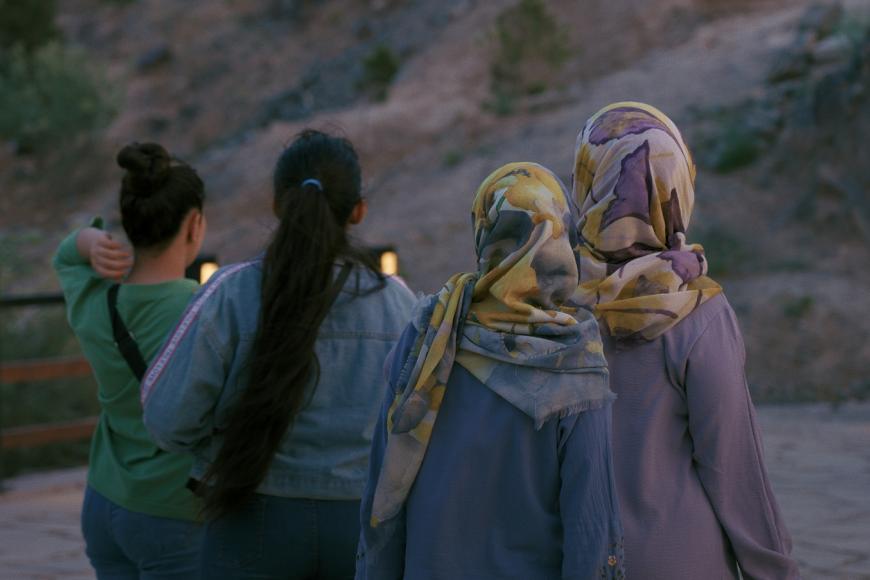
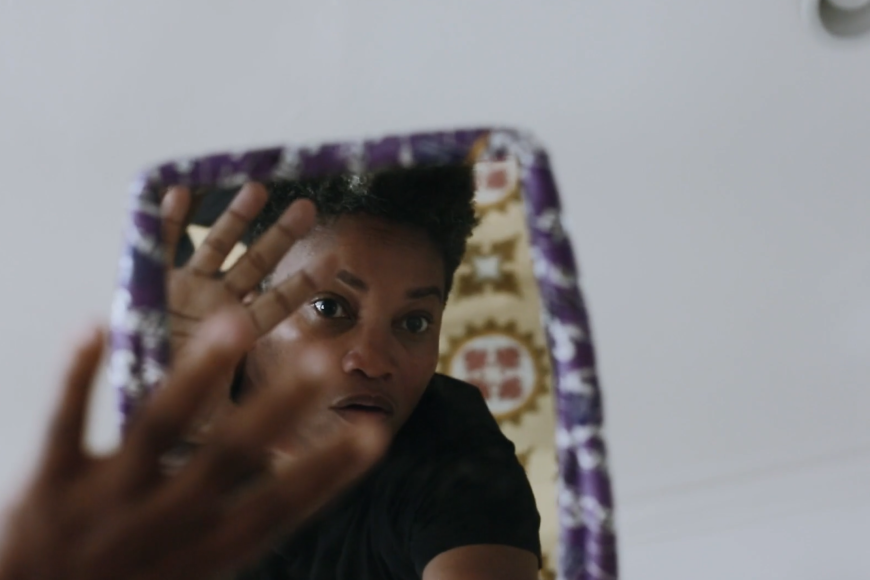
Family discussions flare up against the backdrop of the “Woman, Life, Freedom” protest movement in Iran: Elahe does not want to wear a hijab. An intimate and honest discussion.
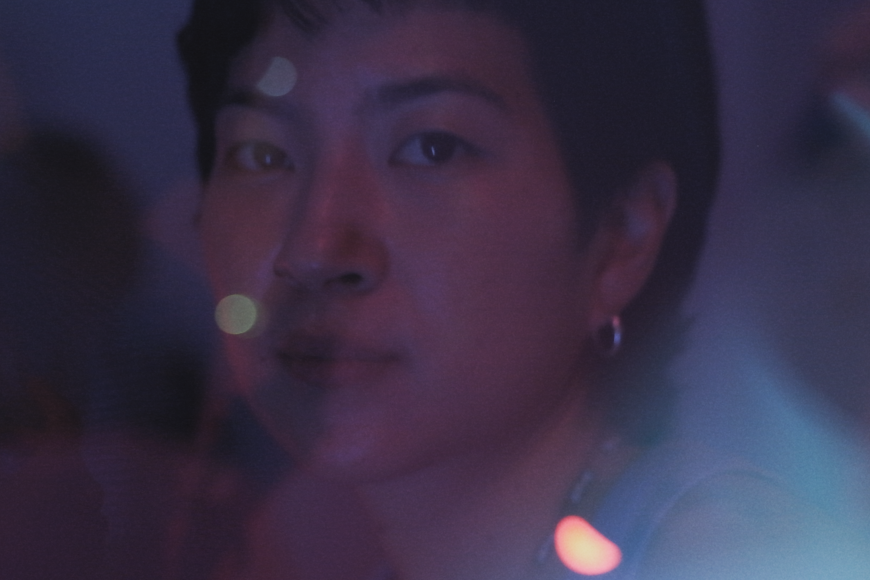
Filmmaker Elahe returns to her hometown of Mashhad in Iran to help her parents move house. Boxes must be packed, old stuff must be rummaged through together. Meanwhile everyone involved discusses what Elahe should wear at the upcoming big party, because Mr. Hossein, the respected and devout patriarch of the extended family, has invited his relatives to his garden. Elahe will not wear a headscarf, nor a hat, not even a borrowed baseball cap for this occasion. On previous visits, she was willing to make a lot of compromises in order not to shame anybody at home. But those days are over. The “Woman, Life, Freedom” movement encourages her to force a change. In Hossein’s garden the director has intimate and moving conversations with sisters and cousins. They have all had similar experiences with hijab and chador but found different ways of dealing with it. Elahe boldly confronts her family’s fears and wishes and films the honest discussions.
From ritual dance performances on the Indonesian island of Java, to colonialist film images, to an intervention at the Amsterdam Rijksmuseum: T.A. Kusno settles the score with colonialism.
The powerful interventions of the Indonesian artist, cultural studies scholar and filmmaker Timoteus Anggawan Kusno are internationally renowned. What distinguishes them are the empowering attitude and the breathtaking aesthetics he employs to re-interpret in different media the cultural traditions passed on in his homeland. With “Afterlives”, he delivers another unequivocal reckoning with the representations of history shaped by colonial annexation. The opening sequence is already a declaration: On the soundtrack we hear screaming, in which both pain and its liberating relief are manifest and united. On screen we see an explosion of colours: Jathilan, a ritual Javanese war game, is being performed. Men are dancing on horses made of plaited bamboo until they fall into a trance or the evil spirits are driven away. The impressive precision of the editing to tribal trance music by Setabuhan makes the colonialist archive images expose themselves – and fade. Those of (dance) performances in which the Javan tiger, killed multiple times in historic rituals, is symbolically reanimated come to the fore. In the Rijksmuseum Amsterdam, it now guards – in the shape of a re-interpreted colonial sculpture – the empty frames that once gave (representative) power to the governors-general of the Dutch East Indies.
Borjana Gaković
Credits
Director
Timoteus Anggawan Kusno
Script
Timoteus Anggawan Kusno
Cinematographer
Aditya Kresna, Krisna E. Putranto, Timoteus Anggawan Kusno
Saddled with one of the most generic names in the English language, British filmmaker John Smith takes a wry, deceptively straightforward look at how this has affected his life and career.
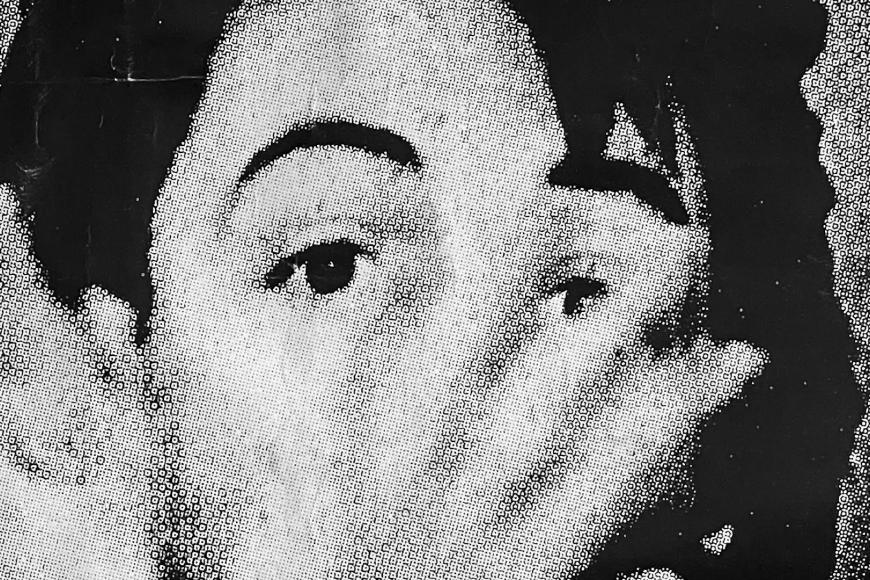
“What’s in a name? That which we call a rose by any other name would smell as sweet.” The Bard’s canonical quote looms large over British experimental filmmaker John Smith’s latest short; one of the film’s opening gags even has Smith assert that one of his schoolmates, a certain William Shakespeare Smith, was allegedly bullied as much as he was. Saddled with one of the most generic monikers in the English language, the director talks about how this has affected his life and career over the last seven decades, pairing his deadpan voiceover with photographs, documents, snippets from his films and other pertinent images to often hilarious effect. His wry cataloguing of name-related humiliations also takes great pleasure in the tangential, as class, the state of the world today and mortality come to the fore again and again, with the intertitles providing an extra layer of self-deprecation that pushes the whole endeavour towards autofiction. Political, bracingly witty and quietly moving, “Being John Smith” ultimately suggests that humour combined with rigour and intelligence can transcend even the most fixed of categories; what could be sweeter than that?
Why do we love to celebrate birthdays with cakes? A witty exploration of a specific culinary cultural history, with surprising parallels to fast food and propaganda.
Starting from the children’s party where Zhang Shengjia celebrated his ninth birthday at a KFC fast food restaurant in 2006, the Chinese artist and filmmaker’s essayistic archive film unfolds a cheerful cultural history of the birthday cake from a Chinese perspective. The convention reached China from Western Europe and North America in the early 20th century and merged with local birthday traditions. The constantly growing influence of Western consumer culture since Deng Xiaoping’s economic reforms of the 1980s was exemplified in 1990 when almost 13,000 customers were registered on the opening day of the country’s very first McDonald’s restaurant in Shenzhen. The laconically commented foray through a colourful selection of archival film, advertising and photo footage from several decades takes us from the first Chinese emperor eating birthday cake and early pioneers of cake design to the commercialisation and politicisation of cuisine and food culture.
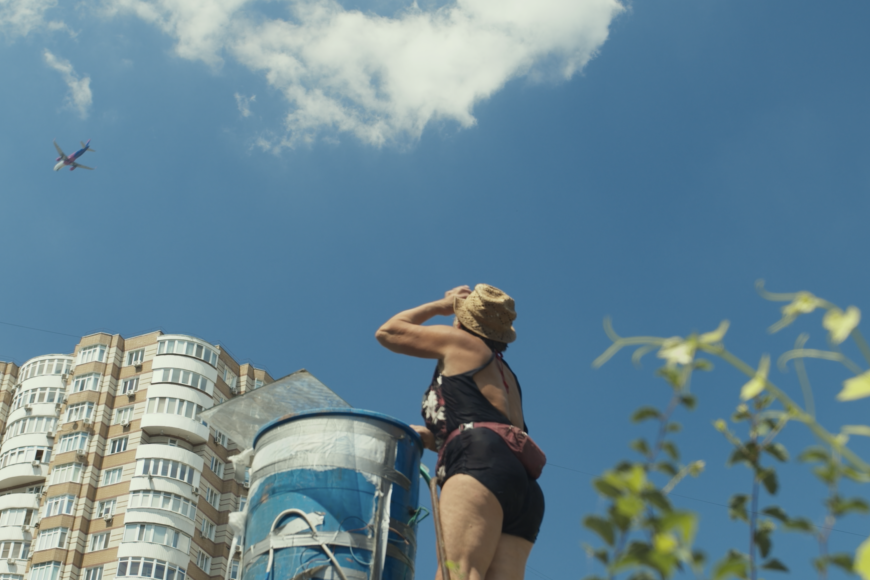
Surrounded by high-rises, Natalia has created her own, not-so-small paradise: Goats roam free, shrubs and fruit trees bloom, the chickens busily lay eggs. Natalia meets repeated attempts to buy the plot with brusque derision. Even when the city and country are attacked by Russia in the wintry February of 2022, she retains her apparent carefree resistance: While all the lights around go out at night, there is a warm and cozy glow from Natalia’s house. Only Kitty, with whom she lives, expresses concern, organises his flight from Ukraine and prophylactically shows the spots that would be safest in an air raid. Adelina Borets’ portrait of an incorruptible woman finds its own unique tone, shows a simple everyday life throughout the seasons that presents itself as self-determined and buoyant despite the worsening situation. Borets adopts Natalia’s manner as natural, gives her space. The dimensions of the war unfold step by step, at Natalia’s own pace and by skilful cuts and pans. “Flowers of Ukraine” is a film about a disaster. But it is also a love song to life – and pickled tomatoes.
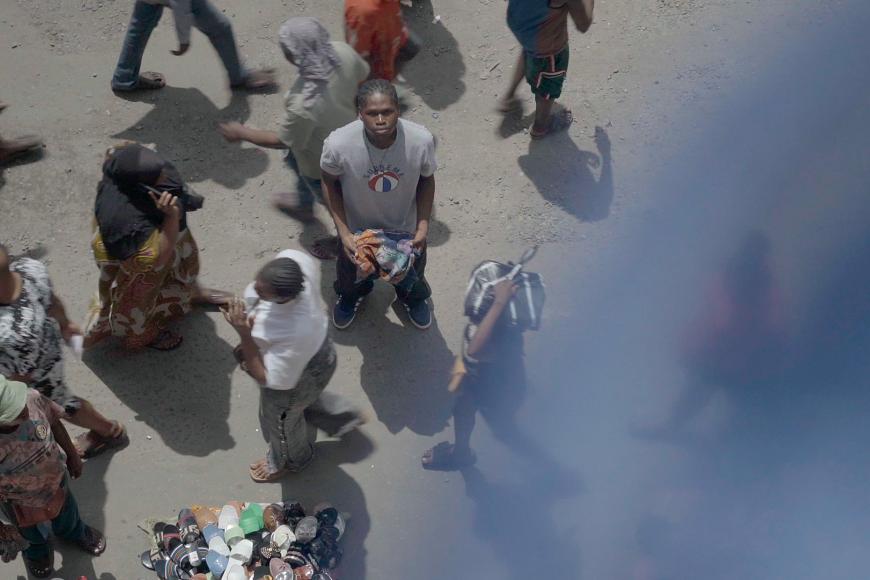
The Fluid Lagos Collective explores what water means to them and the city: through the eyes of a boatman, his passenger and through bodies made of water – sometimes sluggish, sometimes flowing.
In three chapters, this film takes us through the Nigerian megacity of Lagos and explores its fluid side. The tour begins with boatman Osan, constantly moving, balancing on his waterway. In split screens we see the human body as a vessel containing water. Then we are chauffeured through the flowing traffic to the Lagos market and finally perform a water dance above the rooftops of the city. Interspersed are mobile phone videos of a young man on Tarkwa Bay Beach: The waves are good, the sun is shining. May the water bless us! “Fluid Lagos” was created in three collective workshops conceived and moderated by filmmaker Nora Mandray. Inspired by documentary practices, the participants developed a hybrid film form in which different voices and perspectives combine to talk about water, about a place and its arteries.
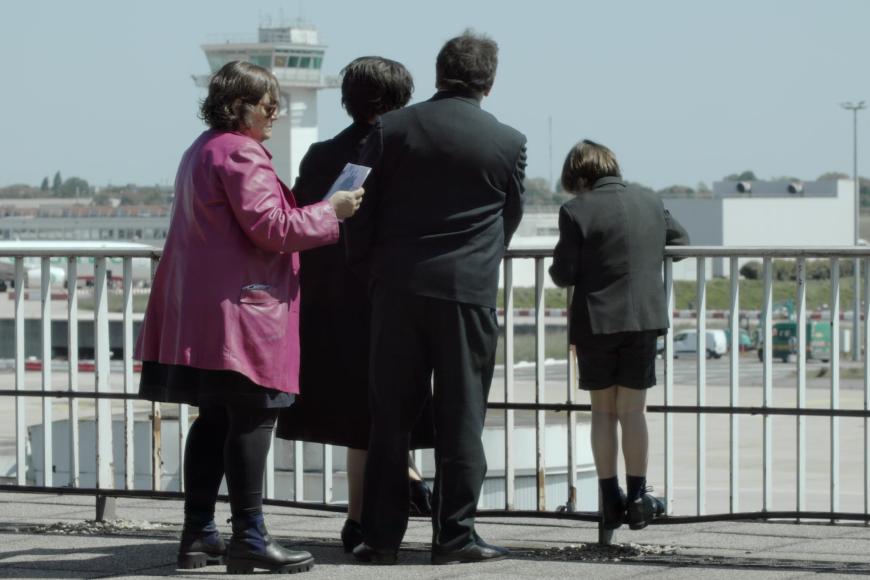
Cabrera’s cousin discovers himself in Chris Marker’s “La Jetée”: a photo of him and his parents on the observation deck of Orly airport. They had arrived there from Algeria in 1962.
Many people probably know Chris Marker’s story of a time trip from a dystopian future back to the present, in which the hero experiences a traumatic event again, only through Terry Gilliam’s extroverted remake “12 Monkeys”. The original, Marker’s experimental science fiction classic “La Jetée”, however, was groundbreaking rather because of its minimalist narrative form: The 28-minute black and white photo novel with a single moving shot has made film history. Dominique Cabrera now takes a very personal approach to putting the influential work in a historical context: The year of its creation, 1962, was also the year when Algeria gained independence from French colonial rule and hundreds of thousands of French people with roots in Algeria, the so-called Pieds-noirs, left their homeland to enter exile via Orly airport. In France, a new, uncertain existence awaited them – including Cabrera’s family. Six decades later, her cousin, who happened to be present on the pier of Paris-Orly when Marker took photos for his film, is convinced that he recognises himself in the fifth shot of “La Jetée”. This is the prelude to one of the most thrilling and at the same time loving time trips one can imagine – and the beginning of a detective and cinephile research with ever more astonishing twists.
Christoph Terhechte
Credits
Director
Dominique Cabrera
Cinematographer
Karine Aulnette
Editor
Sophie Brunet, Dominique Barbier
Producer
Edmée Doroszlaï
Sound
François Waledisch, Nathalie Vidal, Elias Boughedir
Score
Béatrice Thiriet, Oscar Turbant, Élise Bertrand
Nominated for:
Prize of the Interreligious Jury,
FIPRESCI Prize
Winner of:
Golden Dove (International Competition)
Luciano lives in an impoverished neighbourhood in Argentina: everyday life with mother and sister, job hunting, hormone injections. A sensitive film about gender, origins and getting on with life.
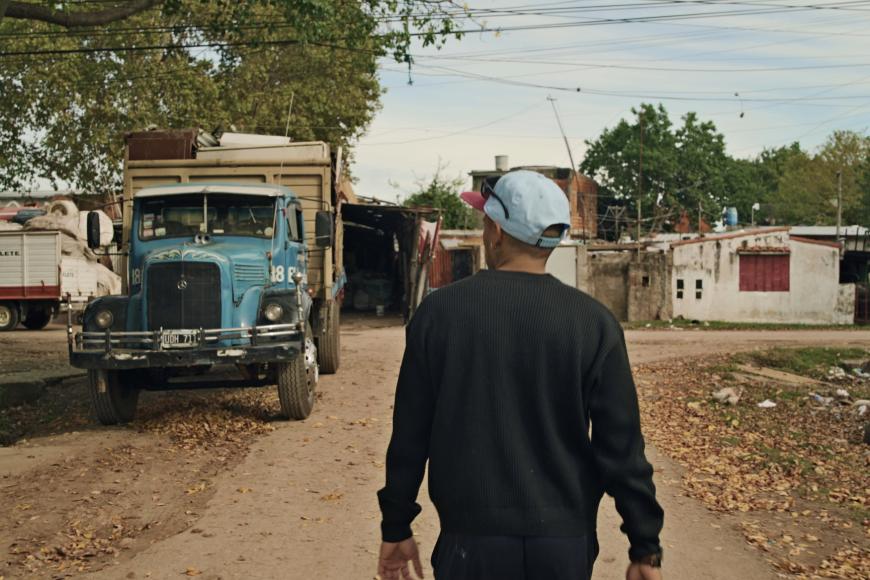
Luciano cuts a slight figure as he wanders through the narrow streets of the improvised Barrio Tablada on the edge of Rosario, taking care of his mother and sister and the makeshift home they share, finding occasional work on building sites as the search for a proper job continues, lifting weights at the gym. Manuel Besedovsky lays out the different episodes of this precarious, if not atypical existence with such deliberate deemphasis that it feels almost like a plot twist when Luciano meets with a consultant to talk about the various options for constructing a penis. And yet this part of Luciano’s experience has actually been there all along – another thread woven often imperceptibly into the fabric of the film with gentleness and care. Handing CVs out, hormone injections, smoking joints with buddies from the neighbourhood, talking to his mother about the daughter that is no longer there, some slightly awkward rapping, thinking about having children – the most radical thing about this portrait is how each challenge, each diversion, each encounter is presented with the same sense of normality with which Luciano experiences it. Class, gender identity and their seldom-seen intersection shown as nothing more than getting on with life.
James Lattimer
Credits
Director
Manuel Besedovsky
Script
Manuel Besedovsky
Cinematographer
Tomás Pasini
Editor
Marina Sain (EDA)
Producer
Pablo Romano, Juan Diego Kantor, Guillermo Willy Berman, Nicolás Capola, José Salvia
Sound
Verónica Brunello, Jimena Chaves
Sound Design
Fernando Romero de Toma (ASA)
Score
Guillermo Pesoa
World Sales
Alfredo Calvino
Nominated for:
Silver Dove,
Prize of the Interreligious Jury,
FIPRESCI Prize
The Catalan architect Miralles died far too young. His filmic portrait is airy and dense, abrupt and flowing, unconditionally stubborn, itself reminiscent of a Miralles design.
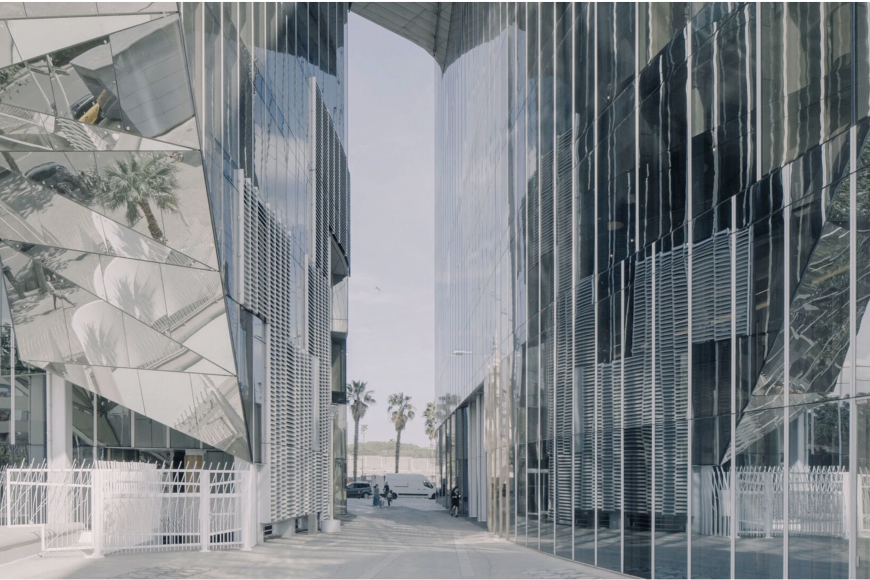
More than twenty years have passed since the death of Catalan architect Enric Miralles. He left iconic traces with his buildings, not just in and around Barcelona – the Scottish parliament in Edinburgh is also based on his designs. Maria Mauti chooses a poetic approach to her impressive protagonist, in eleven variations. They take us from the Igualada cemetery to a community centre in Hostalets de Balenyà, a gym in Huesca or the Torre Marenostrum office skyscraper in Barcelona. The architect’s home with its open and at the same time labyrinthine character is given a major role, becoming the starting point and epicentre of a unique mind. Maria Mauti carefully scans the still lively architectures, stages them. In Huesca, the smell of a sweating soccer team seems to mingle with the omnipresent cool raw concrete, while a group of Spanish cowboys and cowgirls shake their leather boots in the futuristic community centre. Despite the tragic note that comes from the work of the prematurely deceased, “Miralles” is not without a certain wit. This poised essay which combines personal and theoretical statements achieves a multi-layered quality that is in itself evocative of a Miralles design: airy and dense, abrupt and fluid, always idiosyncratic.
Carolin Weidner
Credits
Director
Maria Mauti
Cinematographer
Ciro Frank Schiappa
Editor
Núria Esquerra
Producer
Antonio Chavarrías, Alba Bosch
Sound
Eva Valiño, Bernat Fortiana, Leo Dogan, Lucía Herrera
World Sales
Yvette De los Santos
Nominated for:
Silver Dove,
Prize of the Interreligious Jury,
FIPRESCI Prize
A fictitious explorer reports on gold-mining and its commercialization in Venezuela. Paradoxically, the gold diggers live off nature – and destroy it at the same time.
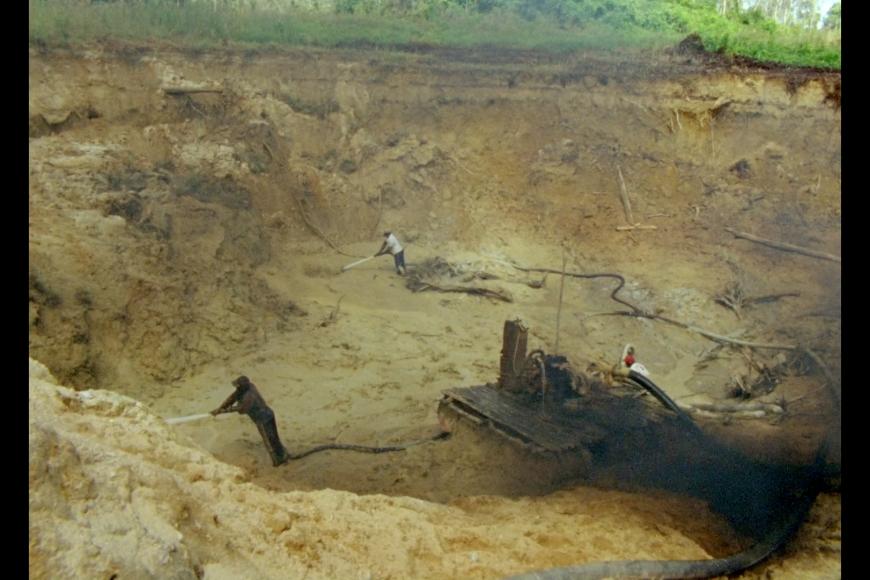
In the deliberately chosen style of an old-fashioned field report, a fictional explorer describes his observations on gold-mining in Venezuela. His mission takes him along the Orinoco, from remote jungle mines to industrial zones. His focus stays on the workers and their environment. The titular Moriche palm tree, an edible and crop plant growing along the river, serves as an example for the relationship between humans and nature and their use of raw materials. Paradoxically, the gold-diggers live in harmony with Mother Earth as their nourisher and healer, but at the same time destroy her. As in so many other places in the world, their very survival depends on an economic system inherited from colonialism. The rapid pace of capitalism is in glaring contradiction to the arduous extraction of the gold dust, produced only by slow processes of erosion. As the narrator drifts along the river and meditates on different contexts, the images work their way through the layers of the complex subject. The immersive poetic journey alternates between observational Bolex shots, hand-drawn illustrations and abstract visualisations of photochemical reactions. Accompanied by a sound design both distinct and elaborate, the lustre of the gold literally glitters from the screen.
Annina Wettstein
Credits
Director
Chris Gude
Script
Chris Gude
Cinematographer
Chris Gude
Editor
Felipe Guerrero, Chris Gude
Producer
Chris Gude, Felipe Guerrero, Maite Bermúdez, Adriana Agudelo
Sound Design
Felipe Guerrero, Chris Gude
Score
Maximilian Gude
World Sales
Michaela Čajková
Narrator
Jorge Gaviria
Nominated for:
Prize of the Interreligious Jury,
FIPRESCI Prize,
Silver Dove
Monica scours archive material for answers to the question of how queer life in Berlin and the wish to be accepted by their Christian-Indonesian parents can be reconciled.
“My therapist said it’s like an Abschied,” Monica Vanesa Tedja says. Monic embarks on a journey from Berlin to Indonesia to return to the bosom of the family for a short while. The camera is in the luggage, and an important question: Can the devout Christian parents who are so happy about the visit accept their child’s non-binary, queer concept of life and identity instead of blocking it out? In the beginning we see private archival footage of a supposedly perfect childhood. Monic talks about their own dreams and fears. We listen to tense phone calls with the mother and exchanges with friends, we learn details from therapy sessions. This film is not about harsh confrontations but rather about a quiet departure, about changing relationships, the significance of biological and chosen families, about letting go and arriving – perhaps where you least expect it.
Seggen Mikael
Credits
Director
Monica Tedja
Script
Monica Tedja
Cinematographer
Monica Tedja, Charmaine Poh, Asarela Orchidia Dewi, Jonas Römmig
Editor
Monica Tedja
Producer
Monica Tedja, John Badalu, Astrid Saerong, Gugi Gumilang
The director stages her parents, dancing, in the family home. A playful approach to family, transience and to illness. Associative, loose and intelligent.
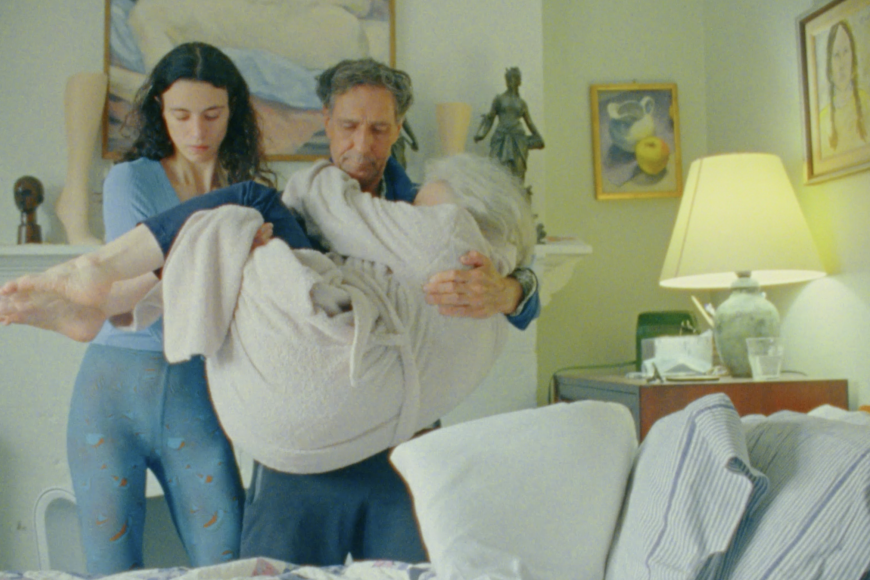
Director Nora Rosenthal brings a very specific focus to this portrait of her parents, Heidi and Alan: She shows them dancing. But these are far from “easy dances.” Rosenthal realises quickly that her own inflated expectations threaten to make her ambitious project fail. She hires two professional dancers – mirror images and, as it were, interaction partners for Heidi and Alan – to spread the enormous pressure on robust shoulders and with whom they can waltz or even do a disco number. Abstractly playful, yet empathetic, “Nine Easy Dances” addresses heavyweight subjects like transience and illness, opens the door to the family archive and tries to tell a story whose end already hangs in the air. A multilayered endeavour, associative, free and intelligent.
Artist Léonard Pongo has been exploring the landscapes of the Democratic Republic of Congo for ten years. For him, the country with its art, traditions and philosophy is not a resource, but a source.
For ten years, Belgian photographer and artist Léonard Pongo has been documenting the landscapes of the Democratic Republic of Congo. In his latest work, he enters into a sensual dialogue with them. The precise camera often focuses on light reflections that literally draw us into the moving images, while at the same time revealing the cinematographic apparatus behind them. In combination with the elaborate sound design and the restrained, beautiful music of “Bear Bones, Lay Low”, the solo project of the Belgium-based Venezuelan Ernesto González, the portrait of a landscape emerges which the captivating montage composition turns into a visual, auditive and meditative pleasure. Nonetheless, “Tales from the Source” is not a traditional “nature film” but an aesthetic positioning inspired by Congolese traditions, art and philosophy which – as the artist himself emphasises – represents the Congolese landscape “as a source rather than a resource.” The result is best described as an experience rather than a representation.
Things of a Lifetime, Intimate Archeological Exercises
Céline Ségalini
Céline arranges objects in the house of her deceased grandmother. It is an attempt to understand her better – her relationship to her own identity and France’s colonial history.
Things of a Lifetime, Intimate Archeological Exercises
Les choses d’une vie, exercices d’archéologie intime
Céline Ségalini
International Competition Documentary Film 2024
Documentary Film
France
2024
50 minutes
French
Subtitles:
English
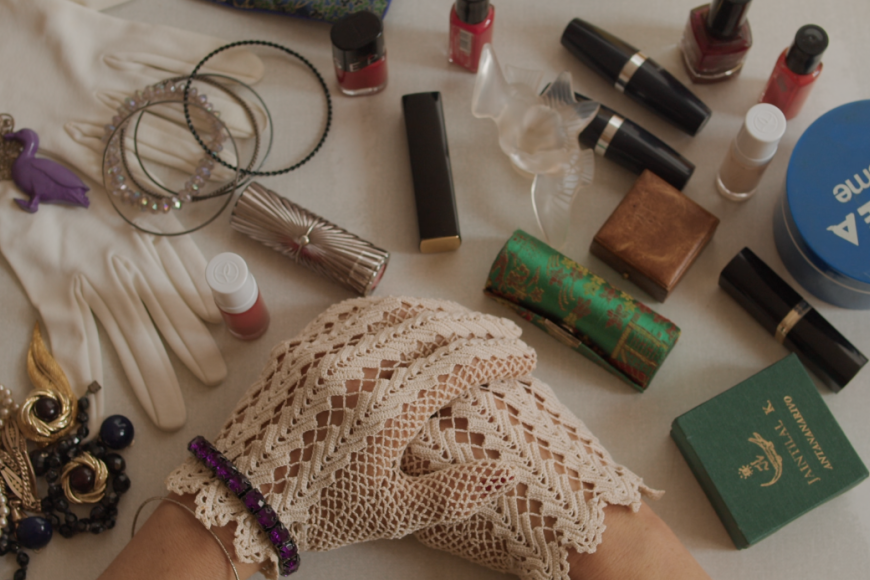
The filmmaker’s grandmother moved into this house in 1971. When Rolande Ségalini died, everything remained as it was during her lifetime. But what to do with all the accumulated things? As her granddaughter Céline begins to film this material legacy, she realises that her grandmother has remained an enigma to her to this day. Room by room, she inventories, classes, counts, sorts the possessions retrieved from wardrobes, drawers, cabinets and boxes and arranges the objects into new still lives. It is an attempt to understand the deceased woman better and find out more about her. Step by step, the heiress discovers various connections to France’s colonial history. The film unfurls the facets of a discreet relationship with one’s origin – searching, questioning, interpreting, at the same time investigating the construction and external perception of identity, the practice of passing. The things of a life, displayed like the findings of an archaeological dig, are laid out ready to be analysed. They express a desire: to be recognised as a white Frenchwoman.
Seggen Mikael
Credits
Director
Céline Ségalini
Cinematographer
Pierre Nativel, Christophe Leroy, Céline Ségalini
Editor
Anne-Laure Viaud
Producer
Marc Faye, Magali Hériat
Sound
Christophe Leroy
Sound Design
Loïc Villiot
Nominated for:
Silver Dove,
Prize of the Interreligious Jury,
FIPRESCI Prize
The 1937 “Parsley Massacre” in the border region between Haiti and the Dominican Republic has traumatised the islanders. An attempt to come to terms with it by artistic means.
In 1937, Dominican dictator Rafael Leónidas Trujillo ordered the murder of the Haitian population of the Dominican Republic. Tens of thousands were brutally killed. A language test made the difference between life and death: The Creole-speaking Haitians who could not pronounce the Spanish word “perejil” had to die, which is why this genocide went down in history under the innocuous name of “Parsley Massacre.” Until today, the region is marked by deep traumatisation, racism and classism, which are linked to the colonialist past of this two-state island. Haitian filmmaker Pierre Michel Jean approaches this rarely examined subject with great delicacy and succeeds in creating a history lesson that combines different historiographies – from factual research to problematic narrative constructions through to the haunting testimonies of the last survivors – in a kind of montage of knowledge. At the same time, his documentary addresses the complexity of collective guilt and the important question of who can and should say “mea culpa” today, more than eighty years later. A performance workshop organised by theatre director Daphné Ménard, which brings together artists from both states, and the memories of the elderly Henry Noncent form the heart of this filmic monument whose empathy makes it compelling.
Borjana Gaković
Credits
Director
Pierre Michel Jean
Cinematographer
Pierre Michel Jean, Louvenson Saint Just, Réginald Louissaint Jr
Editor
Marie Bottois
Producer
Maud Martin, Lysa Heurtier Manzanares
Sound
Jeannis Bazelais, Macaisse Bellegarde
Sound Design
Brice Kartmann, Marie Moulin
Nominated for:
Prize of the Interreligious Jury,
FIPRESCI Prize,
Leipziger Ring,
Silver Dove
Winner of:
Prize of the Interreligious Jury,
Silver Dove Feature-Length Film (International Competition Documentary Film)
A US Navy satellite communication system on Sicily. Valentina lives here with her parents but wants to become more independent. A tender story of emancipation at a site of global politics.
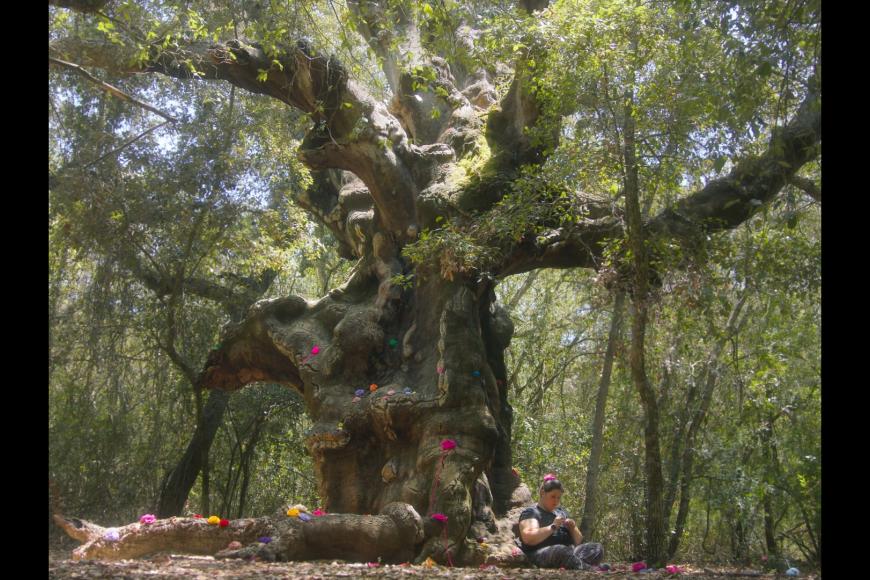
26-year-old Valentina still lives with her parents. She has always put their welfare before her own needs. The two, on the other hand, keep harping on how clumsy and unambitious she is. The sensitive young woman finds reassurance in the artful crocheting of woollen blossoms and among the thousand-year-old cork oaks of the nature reserve surrounding her hometown. The small Sicilian town of Niscemi is of the highest global political importance: Since 2016, the US Navy has been operating a ground station with huge parabolic antennas here for their satellite communication system MUOS. The system also serves to locate Russian military in the Ukraine and turns the region into a potential target for attacks. The locals have been protesting for years. Due to the strong electromagnetic waves the health risks are enormous. The remarkable sound design underlines the danger and conveys a sense of unease that grows with all the other threats: massive environmental destruction caused by intensive agriculture, drought, fires. Valentina is deeply shaken. Against her parents’ wishes, she takes part in anti-MUOS rallies, wants to become independent at last, drive a car, get a job. This tender story of emancipation is enchanting with its subtle narrative and dream-like interventions. Valentina will be remembered for a long time!
Annina Wettstein
Credits
Director
Francesca Scalisi
Script
Francesca Scalisi
Cinematographer
Stefania Bona
Editor
Marzia Mete
Producer
Mark Olexa
Co-Producer
Chiara Galloni, Ivan Olgiati
Sound
Balthasar Jucker
Sound Design
Adrien Kessler, Olga Kokcharova
Score
Olga Kokcharova
World Sales
Raluca Iacob
Nominated for:
FIPRESCI Prize,
Prize of the Interreligious Jury