Rimini – Sarajevo. Mirela, who grew up in Italian exile, returns to Bosnia with many unanswered questions. A sensitively captured search for identity and belonging.
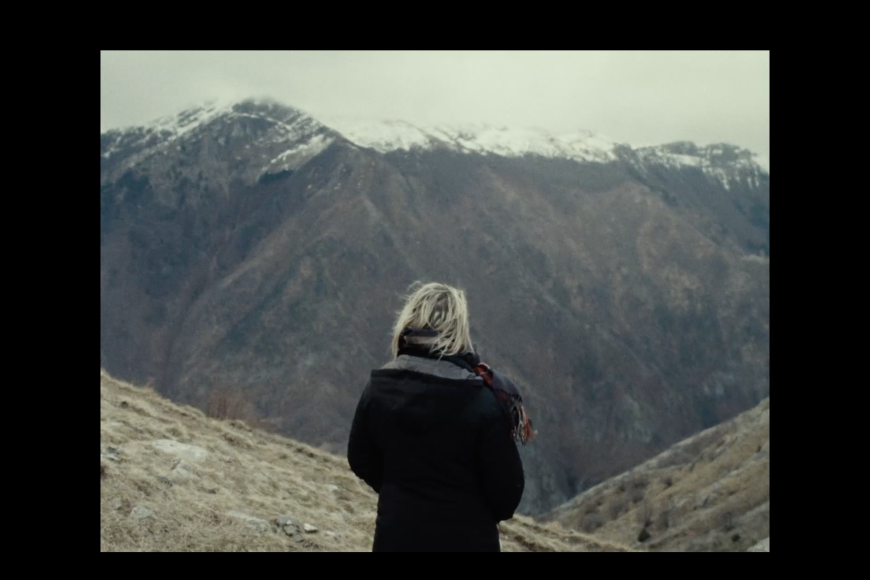
Sarajevo–Rimini. This route once took ten-year-old Mirela to safety from the Bosnian War in 1992, when she was evacuated to Italy by a United Nations convoy along with a group of other orphans. Their stay was to be temporary, but no one came to pick her up. So Mirela began a new life on the Adriatic coast. As an adult, she returns to her homeland in search of a mother whom she last saw as a four-year-old, a journey accompanied by many questions: Why was she among the few who were sent to exile? Would it have been better to have stayed in Sarajevo, free of guilt? Mirela finds no clear answers. But from the traces she gathers and the threads that cross in her life, “Dom” weaves a sensitive meditation about identity and belonging.
Déni’s mother has bought him a piece of land in the Chechen settlement in Georgia. He could at last build a treehouse there, but he is expected to marry. Can he start a new life here?
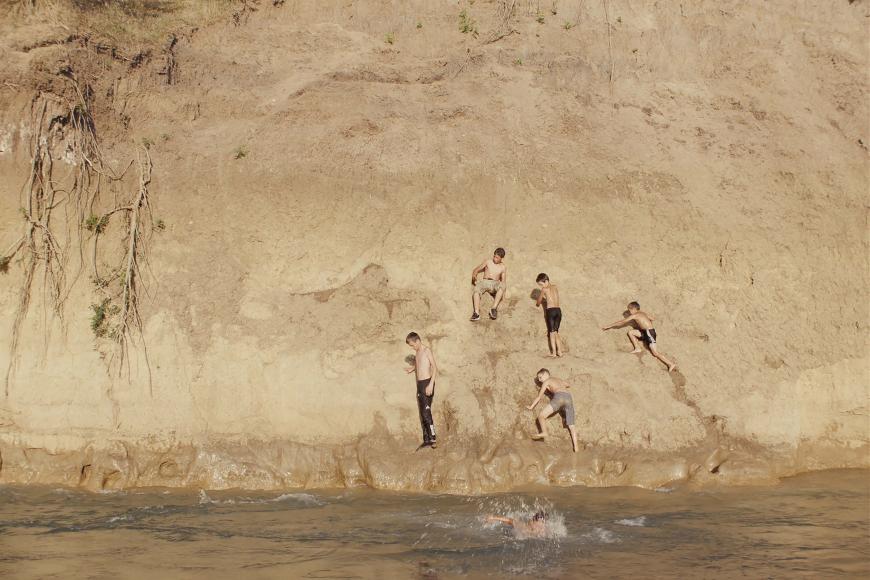
A piece of land awaits Déni Oumar Pitsaev in the Pankisi Gorge, a Chechen enclave in the Georgian part of the Caucasus. His mother bought it for him, hoping to bring her son, who was socialised in Western Europe, back to his Chechen roots. When he arrives, he realises that the gift comes with strings attached: Relatives and friends from the neighbourhood constantly ask when the 40-year-old Déni with his receding hair intends to start a family. When he counters with his own vision – building a treehouse for adults ten metres from the ground, a childhood dream – he triggers complex debates about the relationship between the individual and society and what historical conditions it is subject to: The region is deeply scarred by the effects of the Chechen War, the wounds extending even to his estranged relationship with his father. In all this, Pitsaev’s manner of confrontation is always extremely delicate, never turning into an attack. With expert curiosity, he approaches a world that is both completely alien and home to him.
Felix Mende
Credits
Director
Déni Oumar Pitsaev
Cinematographer
Sylvain Verdet, Joachim Philippe
Editor
Laurent Sénéchal, Dounia Sichov
Producer
Alexandra Mélot
Co-Producer
Anne-Laure Guégan, Géraldine Sprimont
Sound
Marie Paulus, André Rigaut, Joseph Squire
Sound Design
Marie Paulus, André Rigaut, Joseph Squire, Hélène Clerc-Denizot, Emmanuel De Boissieu
Karol Śliwka’s design has made graphic design history. But who was the person behind the iconic lines and shapes? An agile, thoroughly accessible portrait.
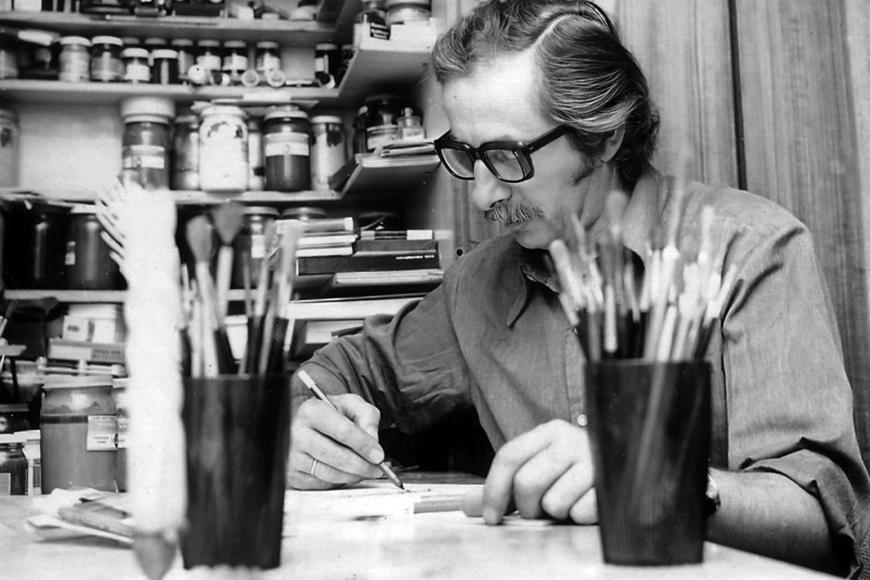
When Karol Śliwka (1932–2018) opens his drawer, dozens of tools jump out: scissors, compasses, rulers, and knives. For Śliwka’s equally famous and elegant graphic designs are purely handmade. They are displayed on consumer goods and advertising posters, even became iconic symbols of the United Nations. His career was far from predestined: Having suffered a serious eye injury in a childhood accident and bound to take over his parents’ farm, Karol Śliwka’s turn to art could be seen as an act of rebellion. It has paid off, as proved not only by the numerous awards he won during his long career. Via home videos, “Signs of Mr. Plum” also gives us insights into his joyful marriage to an opera singer. Bartosz Mikołajczyk and Urszula Morga skilfully connect Karol Śliwka’s designs with contemporary history, capturing the mood of the 1960s and 1970s with a light hand and quick editing. Graphic design and biography merge into an accessible and highly amusing mixture.
On 9 February 2022, four friends in Kyiv discuss the situation: There are 120,000 Russian soldiers at the borders – what will happen? An equally historical and private moment.
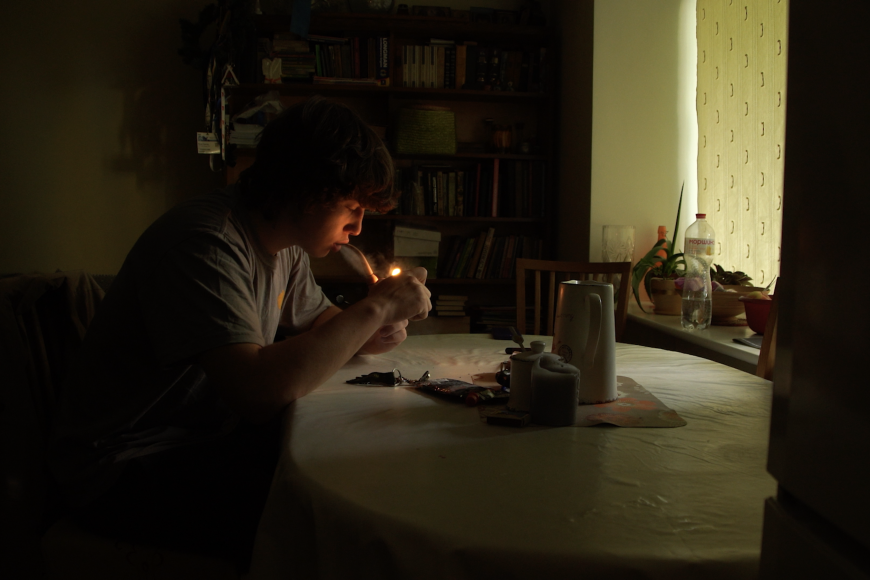
In the evening of 9 February 2022, four young men sit around a table in Kyiv. The friends are discussing the situation: 120,000 Russian soldiers are stationed right at the Ukrainian border. What is going to happen? In “The Birds Are Silent”, director and cinematographer Leo Dzhyshyashvili captures an equally private and historical moment. What is striking is the clarity with which Andriy, Olexandr, Ivan and Sasha assess the consequences of the imminent attack: Potential decisions about their own future are mixed with concerns about relatives and the bewilderment at being thrown into a situation that provokes both helplessness and disgust. But there is a glimmer of hope – perhaps the imagined horror scenarios are nothing but a waste of energy? Cut. Some of the debaters have become soldiers; one has barricaded himself in the bathroom with a narrow mattress and a meal. Within eight minutes, Dzhyshyashvili has tied together a before and after that make you shudder.