Film Archive

Filmstill Amarelo Banana

Amarelo Banana

Amarelo Banana
Alexandre Sousa
International Competition Animated Film 2025
Animated Film
Portugal,
Hungary
2025
12 minutes
English
Subtitles: 
None
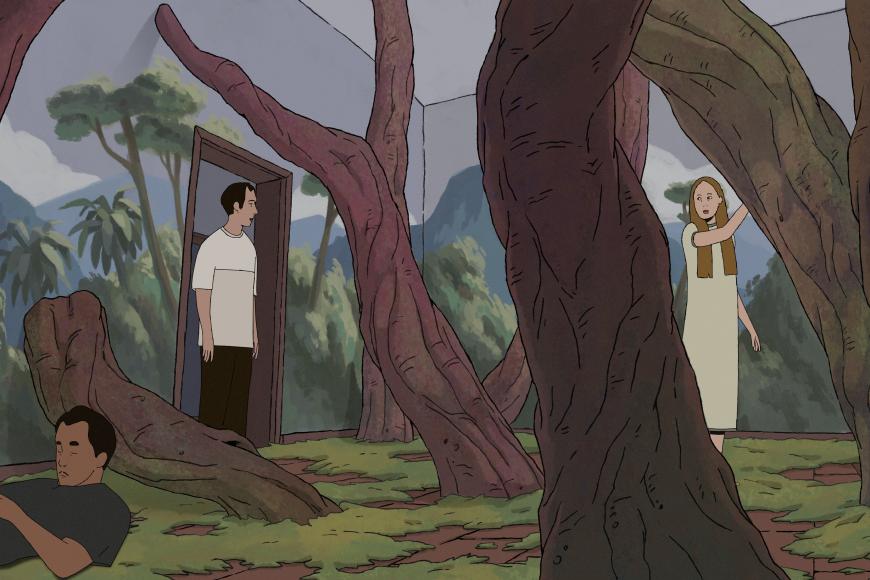
“Are you with us or against us?” Nothing less lies in the air, unspoken. No nuances, no discussions, hardly any choice. Did the tired man expect such life decisions after work? Unlikely. He just wanted to chill out and watch mindless television when suddenly an alien world on the screen catches up with him in the comfort of his home: A cult-like community lives next door, their behaviour ape-like, their faith fanatical, determined to convert him. Their flat is decorated with forests and deserts. Anyone who tries to look behind the painted wallpaper, to separate scenery from reality, commits treason and deserves banishment or death. Plato’s Cave Analogy in a radicalised version for the 21st century.
Freedom and truth or stability and a sense of belonging? Is the price of accepting a distorted reality just to be allowed to live too high? And most of all: Is there an alternative worth living? The world outside, behind the window, remains vague, its threats only implied. In this parable about passivity, curiosity and free choice, Alexandre Sousa touches on the urgent questions of our time: questions of isolation, echo chambers and the impossibility for humans to stay unpolitical. Do we even have a chance to resist?
Irina Rubina

Credits DOK Leipzig Logo

Director
Alexandre Sousa
Script
Alexandre Sousa
Editor
Alexandre Sousa
Producer
Jonas César, Tiago Ribeiro, Natália Andrade
Co-Producer
Bella Szederkényi, Bálint Gelley
Sound
André Aires
Sound Design
André Aires
Score
André Aires
Animation
Cristina Neto, Nina Glavaski, Alexandre Sousa
World Sales
Joaquim Pinheiro
Nominated for: mephisto 97.6 Audience Award
Filmstill Balentes

Balentes

Balentes
Giovanni Columbu
International Competition Animated Film 2025
Animated Film
Italy,
Germany
2024
69 minutes
Italian,
Sardinian
Subtitles: 
English
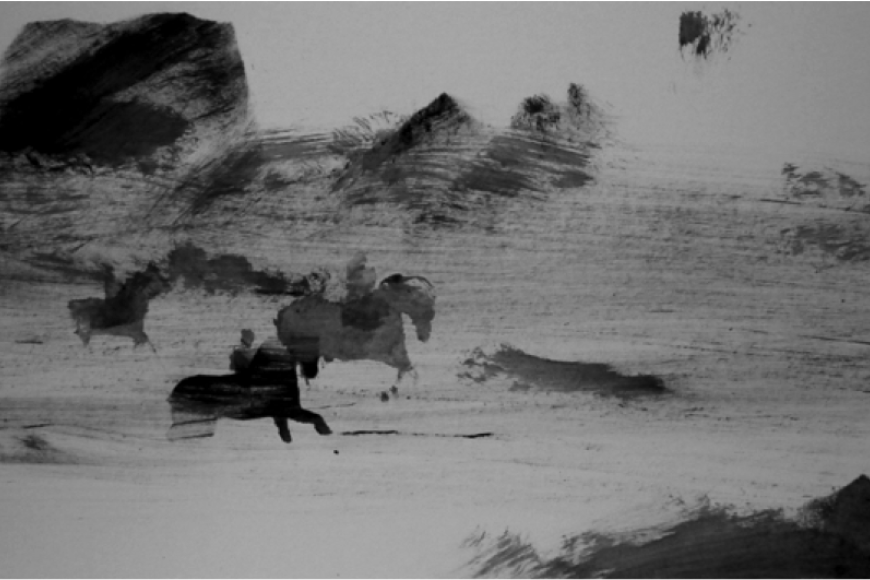
Sardinia, 1940. The harmless term “horsing around” takes on a very serious and ultimately tragic meaning for 14-year-old Michele and his 11-year-old friend Ventura. When they learn that the peasants have sold their best horses for serious money to the state and thus to the military for the approaching war, the two boys take a decision that is as naïve as it is intuitive: They free the herd in a daring nighttime operation. Their happiness is short-lived. Betrayed by a villager, they are caught on the way home and Ventura is shot dead. A senseless death? Or a sign of special bravery, as the ambiguous Sardinian film title suggests?
Director Giovanni Columbu, a Sardinian himself, has dedicated his late animation debut to his grandmother who once told him the story. He took the liberty of adapting it with brushstrokes on paper, his style drawing primarily on the charms of historical painting schools, animation techniques and cinema genres. Columbu’s associative visual language, marked by shades of black, white, and grey, is animated by impulsive hatchings, countless dots, and generous elisions. The soundtrack, too, sets rather sparse nuances – subtle illustrations that draw on Sardinian cultural traditions while opening a space for universal metaphors.
Andreas Körner

Credits DOK Leipzig Logo

Director
Giovanni Columbu
Script
Giovanni Columbu
Editor
Giovanni Columbu
Producer
Giovanni Columbu
Co-Producer
Flavia Oertwig
Score
André Feldhaus, Filippo Ripamonti, Alessandro Olla, Hans Zeller, Pietro Mascagni
Animation
Giovanni Columbu
Key Collaborator
Daniele Maggioni
Filmstill Blinded by the Lights

Blinded by the Lights

Blinded by the Lights
Francis Yushau Brown
International Competition Animated Film 2025
Animated Film
Ghana
2025
13 minutes
English
Subtitles: 
English
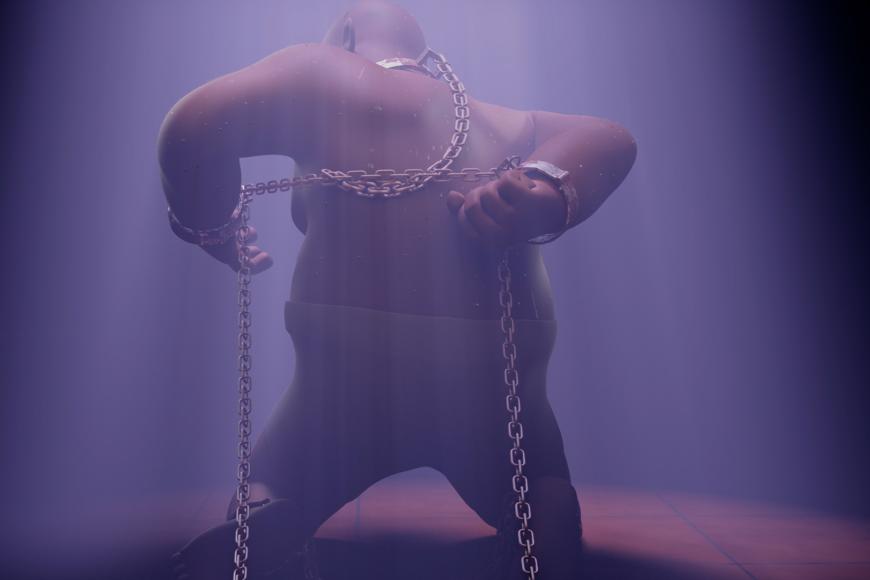
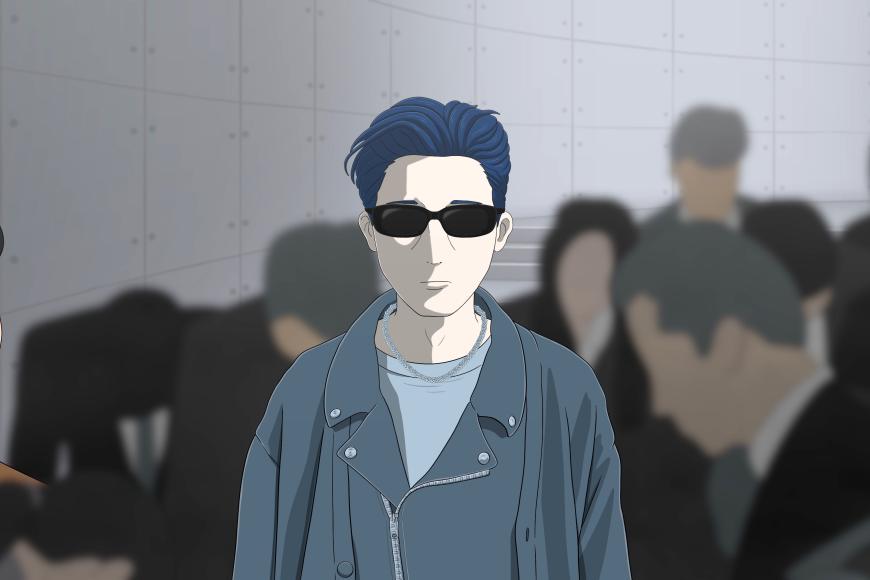
A man throws off the shackles of slavery, lays the traditional Kente cloth aside, puts on a business suit – and starts to walk towards the future. Or towards what he thinks is the future, because this is not a pleasant walk: To the cheers of the people, the man pushes into the backroom of an Asian restaurant where he flogs plots of land, moves to the next backroom, money case in hand, to bribe the pastor and ultimately ends up on stage to give a state-supporting speech as President – against corruption, of course. The career of our nameless protagonist – whose sunglasses-covered face, interestingly, we get to see only in the limelight – takes him right through the streets of an African metropolis, past protests being suppressed, through a dilapidated infrastructure, criminal gangs, and even natural disasters.
Nobody has thrown off the shackles of slavery in Francis Yushau Brown’s relentlessly critical film. Instead, a few individuals have chained themselves to nepotism and keep the rest of the population poor and backwards. His film is a 3D indictment brimming with rage, including of the Western and Far Eastern (neo) colonizers. And far above hover the enraged gods, waiting for the people to put an end to this situation at last.
Marie Ketzscher

Credits DOK Leipzig Logo

Director
Francis Yushau Brown
Script
Francis Yushau Brown
Editor
Charles Sam
Producer
Ruth Ojougboh
Sound
Gomez Beatx
Sound Design
Gomez Beatx
Score
Gomez Beatx
Animation
Francis Yushau Brown, Charles Seyi Kilanko, Kingsford Appiah, Jason Bonsu Sarpong
Nominated for: mephisto 97.6 Audience Award
Filmstill Clot

Clot

Klonter
Levi Stoops
International Competition Animated Film 2025
Animated Film
Belgium
2025
15 minutes
Dutch
Subtitles: 
English
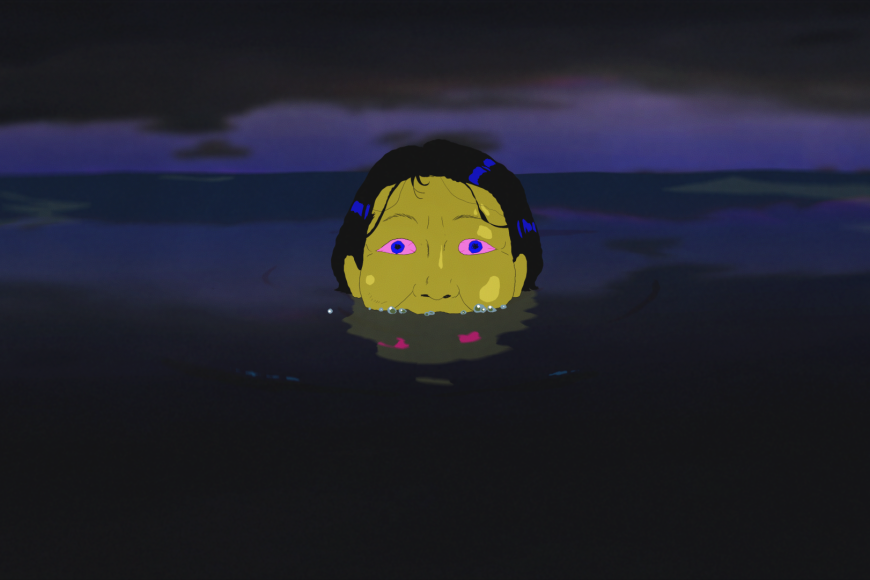
Contemplating your naked body, drenched in tomato sauce, on a frozen pizza – that is the epitome of alienated wage work. Especially if it is the mass product whose quality has to be checked hundreds of times a day at the assembly line. Is it this alienation, the multiple daily consumption of precisely this meal or simply the absence of significant human relationships that make Frankie feel terminally ill and ready to say goodbye to an existence he feels is worthless and empty? Nobody cares, until his body transforms into a wild planet where evolution happens in fast-forward mode: the genesis of life, miniature Frankies performing absurd penis dances, cannibalism, Darwinism, mutual destruction, the eradication of other species – and finally the Frankie planet itself burning out.
Levi Stoops makes us laugh out loud – and yet we feel the bitter taste of self-destruction on our tongue. Will Frankie have the courage to risk a change of life after this apocalyptic experience? Or does the system have him so firmly in its claws that wholesome nature documentaries of exotic flowers are comfort enough – instead of cooking shows where the stone-baked pizzas are tossed into the air with verve?
Irina Rubina

Credits DOK Leipzig Logo

Director
Levi Stoops
Script
Levi Stoops
Editor
Levi Stoops
Producer
Annemie Degryse
Sound
Paulo Rietjens
Sound Design
Paulo Rietjens
Score
Wiet Lengeler
Animation
Camiel Hermans, Sarah Menheere, Karolien Raeymaekers, Neyrouz Jemour, Jana Leeuwerck
World Sales
Annabel Sebag
Nominated for: mephisto 97.6 Audience Award, Gedanken Aufschluss Prize
Winner of: Gedanken Aufschluss Prize
Filmstill Death Does Not Exist

Death Does Not Exist

La mort n’existe pas
Félix Dufour-Laperrière
International Competition Animated Film 2025
Animated Film
Canada,
France
2025
72 minutes
French
Subtitles: 
English
When Marc confesses his love to his girlfriend Hélène, all she answers is “Later!” The timing of his confession could not be worse, as there is a whole other dimension to Hélène’s reply. Both belong to a group of activists who have just burned their mobile phones and tackled the ultimate important questions in the forest. Questions of fear, power, courage, loyalty, and doubts. Following this, they attack a rich and influential retired couple in their posh mansion, representing those guilty of the dilemma of this world in their eyes. The armed attack ends in a bloodbath. In the midst of the shootout, though, Hélène is struck with a strange kind of paralysis and soon afterwards sucked into the surrealistic maelstrom of a fatal second chance.
Canadian director and writer Félix Dufour-Laperrière says, he writes “with colours in mind, with transformations, dreamlike sequences, mental images that take shape on screen.” Hand-drawn templates unfold in a powerful symbolic 2D animation of flowing figures and silhouettes that neither shrinks from aggressively formulated messages nor from the exuberant magic of the format.
Andreas Körner

Credits DOK Leipzig Logo

Director
Félix Dufour-Laperrière
Producer
Nicolas Dufour-Laperrière
Animation
Félix Dufour-Laperrière
Filmstill Endless Cookie

Endless Cookie

Endless Cookie
Seth Scriver, Peter Scriver
International Competition Animated Film 2025
Animated Film
Canada
2025
97 minutes
English
Subtitles: 
English
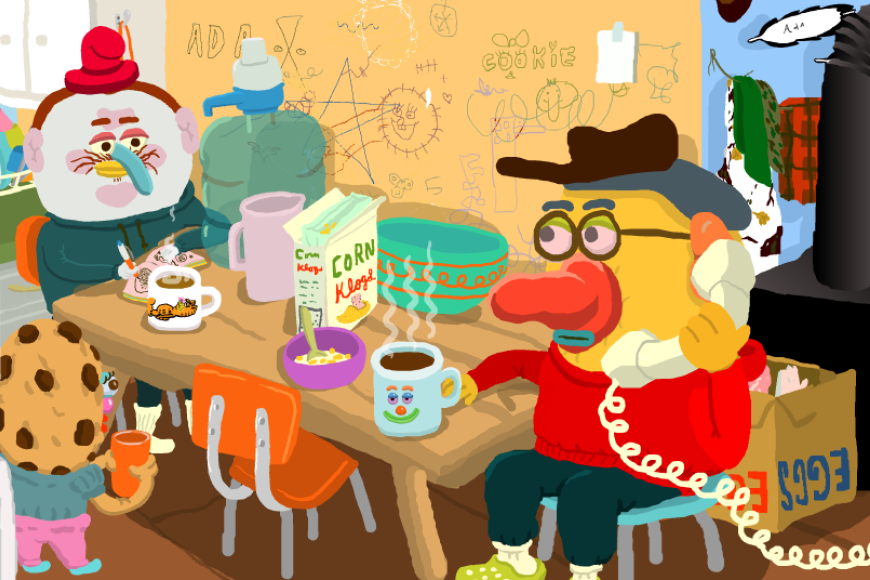
“The past is an endless cookie.” The past is omnipresent in this fabulously original family portrait. We feel it in the very first minutes, when filmmaker Seth from Toronto calls his half-brother Pete, who is a member of the Indigenous Cree people: The globe on which the distance between the two is visualised snips away the little sign “Dominion of Canada” to reveal the world Shamattawa underneath – the name of the First Nations community where Pete lives. The past is still present because of the injuries the Cree suffer(ed) from the white majority, including police violence and land grabbing. Nonetheless, humour is the Scrivers’ defining stylistic tool – from subtle jokes to self-irony to the detailed, lovingly surreal look of all the characters which they bestow even on racist police officers.
The brothers initially wanted to tell seven stories. At the end there are hundreds – because every sound recording is interrupted by the daily life of an extended family, every anecdote leads to the next. No matter whether the subject is building a teepee, supermarket shopping or butchering animals. This never-ending family chronicle, which also proposes a special chronicle of Canada, was produced over nine years. The result is a distinctive cookie one can chew on for a long time.
Marie Ketzscher

Credits DOK Leipzig Logo

Director
Seth Scriver, Peter Scriver
Script
Seth Scriver, Peter Scriver
Editor
Sydney Cowper
Producer
Daniel Bekerman, Chris Yurkovich, Alex Ordanis, Jason Ryle, Seth Scriver
Sound Design
Andrew Zukerman
Animation
Seth Scriver
World Sales
Phoebe Liebling
Winner of: Golden Dove Feature-Length Film (International Competition Animated Film)
Filmstill EX-tract

EX-tract

EX-tract
Marcel Barelli
International Competition Animated Film 2025
Animated Film
Switzerland
2025
3 minutes
French
Subtitles: 
English
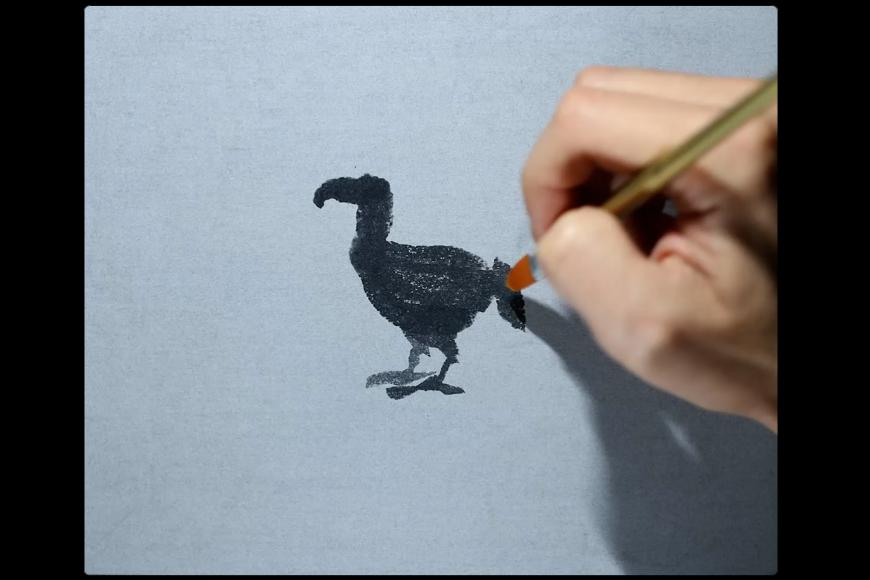
“Can we be moved by the disappearance of rhinos if we have never experienced the feeling of a butterfly walking on our hand?” Marcel Barelli asks not without pathos, but hitting the mark, in his animated manifesto. He is quoting Daniel Pauly’s Shifting Baseline Syndrome Theory: We humans always measure normality by our own experience and not by historical changes and therefore tend to accept environmental destruction. This is not the only allusion in Barelli’s compact three-minute-film: He references the “sixth extinction”, the current human-caused extinction of the species, and the hourglass symbol of the Extinction Rebellion movement. His film, however, which should definitely be understood as a call for active resistance, embeds these reflections artistically.
With his evaporating water animation on paper, Barelli has chosen a simple and consistent animation technique whose ephemeral character perfectly captures species extinction and oblivion. Archive material is added. Unlike the “Cinétracts” pamphlet films from 1968 that he admires, but just as forceful, he has chosen a contemporary, personal approach. He touchingly weaves his theses into his own biography: Family pictures point to a time when Barelli himself “played with dinosaurs and ate chicken”.
Marie Ketzscher

Credits DOK Leipzig Logo

Director
Marcel Barelli
Producer
Nicolas Burlet
Animation
Marcel Barelli
Nominated for: mephisto 97.6 Audience Award
Filmstill Floating

Floating

Floating
Jelena Milunović
International Competition Animated Film 2025
Animated Film
Serbia,
Croatia,
Germany
2025
7 minutes
Serbian
Subtitles: 
English
When the woman in curlers opens the door, Papa is blown away: Like a breath of air, a storm or tornado, he is blown in and back out. Even in his own apartment he is ungraspable: He grows and shrinks, becomes fragile or threatening, knocks everything down. And then he literally flies away, hurling eggs at passers-by. Caught in all this is his daughter, who at first can only helplessly stand by and who finds it increasingly difficult to visit him – the steps grow higher, the floor turns into chewing gum. Finally, she looks up at the sky and sees him hover there.
What to do when one’s father suffers from mental illness? How to deal with it when the responsibility (of care) switches sides so early in life? Jelena Milunović explores this, using bold, very tender and not always obvious parables. She sets strong colour accents: The depressed episodes are in claustrophobic black and white, the ecstatic highs are colourful free-hand drawings. And the red balloon, which briefly appears in the beginning as a metaphorical vehicle of hope, might point the way to bringing the two of them back together.
Marie Ketzscher

Credits DOK Leipzig Logo

Director
Jelena Milunović
Script
Jelena Milunović
Producer
Miloš Ivanović
Co-Producer
Draško Ivezić, Jelena Milunović, Filmuniversität Babelsberg KONRAD WOLF
Sound Design
Luka Barajevic
Animation
Jelena Milunović, David Lovrić
Nominated for: mephisto 97.6 Audience Award
Filmstill Force Times Displacement

Force Times Displacement

Force Times Displacement
Angel Yun Wu
International Competition Animated Film 2025
Animated Film
Taiwan
2025
12 minutes
without dialogue
Subtitles: 
None
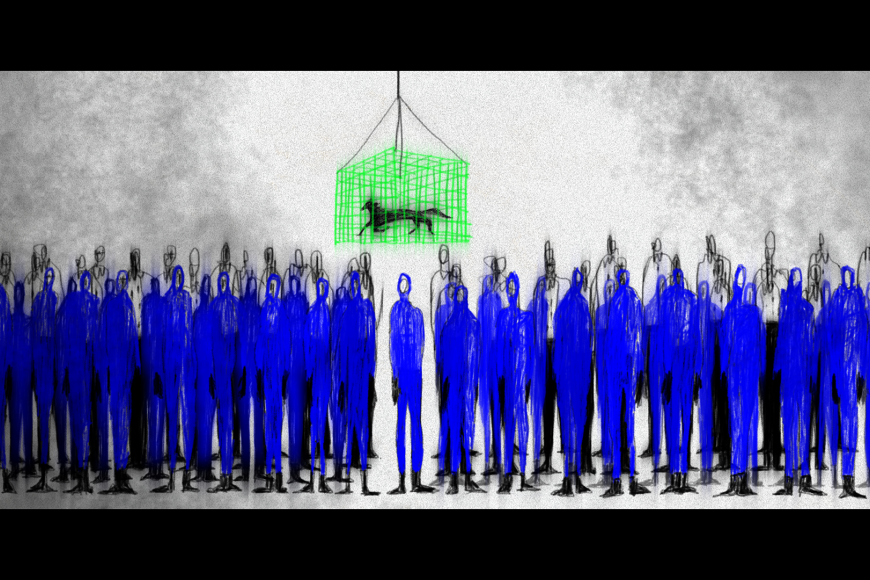
Is that a belly or a cell that is in visible turmoil? In any case, in Angel Wu’s film the capitalist hamster wheel is a living organism – though it is not quite clear whether we live in it or it in us. When a young factory worker makes a wooden fetish, prays to it, and then eats it, he is physically and visibly consumed with ambition and work mania. Without further ado, the people around the fire turn into a column of factory workers with a number-crunching management, the free-roaming zebra is put into a cage that is quickly shipped off as a container. But Wu does not just stage this development as a simple series of recognisable capitalism markers but also retains the cryptic, haptic quality of her magnificent mixed media reflection on the content level.
Is the fetish an anvil that symbolises human malleability? Does the worker long for something else? Are the delicately drawn insights into the interior of the machine visions of hell or simply an Anthropocene in its final stage? Based on the physical formula “work equals force times distance,” Wu not only combines 2D animation, photography, collage, and drawing – as well as Taiwanese music featuring some unsavoury retching. Rather, she condenses reflections on working life in (Asian) societies and our imprisonment within it.
Marie Ketzscher

Credits DOK Leipzig Logo

Director
Angel Yun Wu
Script
Angel Yun Wu
Cinematographer
Angel Yun Wu
Editor
Angel Yun Wu
Producer
Angel Huang
Co-Producer
Singing Chang
Sound
Fen Cheng
Sound Design
Jin-De Lin
Score
Fen Cheng
Animation
Angel Yun Wu, Ji-Tian Li, Vanto Chien, Hao Ping Wang
Nominated for: mephisto 97.6 Audience Award
Filmstill Four Percent

Four Percent

Four Percent
Monika Masłoń
International Competition Animated Film 2025
Animated Film
Germany,
Poland,
Argentina
2025
14 minutes
English
Subtitles: 
German
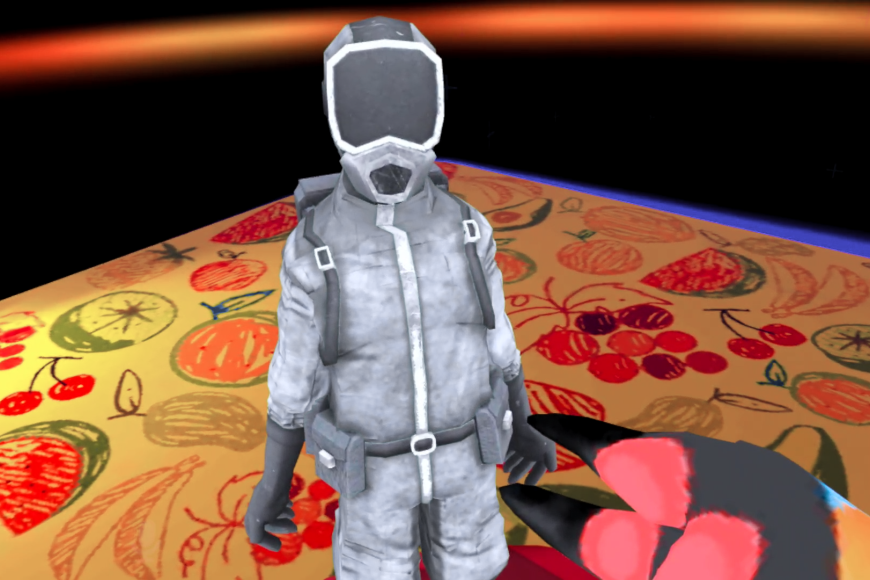
Is it not unlimited freedom, the most radical form of self-realisation, to exist in every conceivable setting as a flying mythical creature, a sad mouse or a furry figure with an extended naked spine as a tail? In her film, Monika Masłoń moves through different spaces as an avatar, exploring the subject of touching and being touched on VR platforms. Anything our phantasy can imagine can be created from pixels here. The limits of existence can be extended infinitely by a click. But what about human – or avatarian – closeness? Can an emotional signal like shaking hands be simulated in this VR world, despite the complete absence of physical bodies? When I see my avatar being touched, can my body memory suggest that I feel this tactile event even though there is no other physical body?
Masłoń examines these questions with a delicate sense of humour and in exchanges with other avatars. But then we enter a VR space that feels more intimate: She has taken us on a personal date. How does the impossibility of physical touch in a long-distance relationship differ from that in VR? Can a VR date create more physical presence and still the longing for the beloved person better than other forms of communication?
Irina Rubina

Credits DOK Leipzig Logo

Director
Monika Masłoń
Cinematographer
Monika Masłoń, Pablo Quarta
Editor
Monika Masłoń
Producer
Monika Masłoń
Co-Producer
Pablo Quarta, Peter Zorn
Sound Design
Alejandro Weyler
Nominated for: mephisto 97.6 Audience Award
Filmstill God Is Shy

God Is Shy

Dieu est timide
Jocelyn Charles
International Competition Animated Film 2025
Animated Film
France
2025
15 minutes
French
Subtitles: 
English
The train ride is deadly boring. The landscape rushes past as a buzzing surrealist kaleidoscope of colours and Ariel and Paul pass the time by drawing their worst nightmares for each other. For Paul it is his mother swimming towards him on the open sea to drag him underwater, for Ariel it is the confrontation with a psychotic woman in the bathtub. What starts out as a game turns uncanny when fellow traveller Gilda joins them – and begins to tell them that the eeriest thing ever happened to her. She hypnotised her demented husband in his sleep. The one who answered her had been none other than God. An indignant God, a disgruntled God and finally a downright angry God, for she had absolutely refused to stop asking her sleeping husband: “Why do we exist?”
With an incredibly precise sense for the moment when the profane suddenly develops the potential for horror, Jocelyn Charles takes us on a magnificent psycho-trip. The director leaves it to the audience to determine whether to watch the 2D animation as spot-on genre entertainment or whether to take in the undertones: the hubris of humans who constantly play God and want to solve every mystery, for example. A hubris that does not remain without consequences.
Marie Ketzscher

Credits DOK Leipzig Logo

Director
Jocelyn Charles
Script
Jocelyn Charles
Producer
Joséphine Mancini
Animation
Tamerlan Bekmurzayev, Jocelyn Charles, Hugues Valin
World Sales
Anaïs Colpin
Nominated for: mephisto 97.6 Audience Award
Filmstill How a River is Born

How a River Is Born

Como nasce um rio
Luma Flôres
International Competition Animated Film 2025
Animated Film
Brazil
2025
8 minutes
without dialogue
Subtitles: 
None

The dew drips promisingly from the leaves. Ayla wakes up in a beautifully flowering, lush landscape. A new mountain range arises in the distance. The summits: a smiling woman’s head. Ayla sets out towards it. The hills are the supportive nipples, the downy hair on the forearms is the grass she tenderly strokes with her fingers. When she sees a small dense forest on the horizon, she knows where she must go to find the ultimate fulfilment.
Luma Flôres shows Ayla’s self-exploration as an exquisite sensual and tender journey in intense colours. The discovery of her own body and lust are intertwined with the discovery of another, also female body. The intense sensuality remains metaphorical but vivid to the end – for example, when Ayla discovers her lover’s lap as a natural fountain in which she first dips her fingers and then her whole head and body. When the two are at last united in the water and sleep with each other, the animation changes from concrete representation to abstraction – which in turn bursts in the sky like fireworks. Flôres resolves her metaphorical dance only in the final moments of the film: The two women kiss, drift on the water. The fine art of love, but also the simplest, most natural thing in the world.
Marie Ketzscher

Credits DOK Leipzig Logo

Director
Luma Flôres
Script
Luma Flôres
Cinematographer
Maíra Moura Miranda
Editor
Karol Azevedo
Producer
Flávia Santana
Sound
Andrea Martins
Sound Design
Andrea Martins
Animation
Bia Peres, Camila Vianna, Fernanda Costa, Janaína Zanusso, Larissa Rangel, Mateus Di Mambro, Kelvin Lima, Ambrósio Pentú, Atmo, Guilherme Zabu, Henrique Ferreira, Louise Bonne, Sofia Travassos
Key Collaborator
Clara Oliviera Flores
Nominated for: mephisto 97.6 Audience Award
Filmstill Jinsei

Jinsei

Mumei no jinsei
Ryuya Suzuki
International Competition Animated Film 2025
Animated Film
Japan
2025
93 minutes
Japanese
Subtitles: 
English
The original title of this film can be roughly translated as “A Nameless Life” and there is really no other way to sum up the story. We will never learn the protagonist’s real name, but in the one hundred lonely years that we accompany him for 90 minutes of cinema, we see ever new facets of him. The film opens with a seemingly innocent montage of taxi rides in 1994. But as nonchalantly as the scenes are strung together here, it is important to pay attention to the subtleties if you want to stay on top of things during the ensuing century-long trip. The journey begins in the northern Japanese province and takes us through the J-pop world of Tokyo’s hip Harajuku district to a post-apocalyptic future where Fernand Léger and Stanley Kubrick shake hands.
Ryuya Suzuki is considered an outsider in contemporary Japanese animation. He is the sole author, director, animator, editor, and musician here. “Jinsei” is entirely his vision, a film about life and death, fate and rebellion, about power and powerlessness, unsparing and emotional. The 2D animation is imaginative, surprising, usually minimalist, always irritating, occasionally contemplative and then explosive. A hellish ride through human abysses, produced with so much attention to detail that new spaces open up every time you watch it.
Christoph Terhechte

Credits DOK Leipzig Logo

Director
Ryuya Suzuki
Script
Ryuya Suzuki
Cinematographer
Ryuya Suzuki
Editor
Ryuya Suzuki
Producer
Kenji Iwaisawa
Sound
Shuji Suzuki
Sound Design
Shuji Suzuki
Animation
Ryuya Suzuki
World Sales
Keiko Yoshida
Filmstill Kyiv Cake

Kyiv Cake

Kiievi tort
Mykyta Lyskov
International Competition Animated Film 2025
Animated Film
Estonia
2025
22 minutes
Ukrainian,
Russian
Subtitles: 
English
The stag in the bedroom painting vigorously stomps on the grass and the father wakes up. His wife and baby are still asleep. In worn-out boxer shorts that reveal one lost-looking testicle, he begins his daily battle with the electric metre which only closes its snapping jaws when it is fed enough banknotes. Mykyta Lyskov’s film is a scathing, incredibly funny and deeply sad portrait of the precarious pre-2022 life of a Ukrainian family. He uses anthropomorphic and surrealist exaggeration to bring home their poverty, and countless cultural references to raise questions of belonging and national pride.
In Lyskov’s film, everything stays bleak, as if 1990 was not so long ago: endless canyons of prefabricated buildings, garbage, lack of perspective. No wonder then that the father guards his passport like a veritable treasure and flutters away as a small yellow-blue bird to work in Western Europe. He leaves behind his wife, who ingeniously keeps the greedy electric metre at bay, while the son grows up to become a hooligan. It is absolutely outrageous that this family, sort of re-united around the kitchen table in this hopeless hodgepodge, is forced to watch as a bomb coming out of nowhere demolishes the building opposite. It is fantastic that Lyskov captures this for us with so much exuberant rage.
Marie Ketzscher

Credits DOK Leipzig Logo

Director
Mykyta Lyskov
Script
Mykyta Lyskov
Editor
Mykyta Lyskov
Producer
Kalev Tamm
Sound Design
Horret Kuus
Animation
Aili Allas, Tarmo Vaarmets, Mykyta Lyskov, Shara Arus
Nominated for: Gedanken Aufschluss Prize, mephisto 97.6 Audience Award
Filmstill Lights, Haze

Lights, Haze

Lights, Haze
Tata Managadze
International Competition Animated Film 2025
Animated Film
Georgia,
Portugal,
Belgium,
Finland
2024
8 minutes
Georgian,
English
Subtitles: 
English
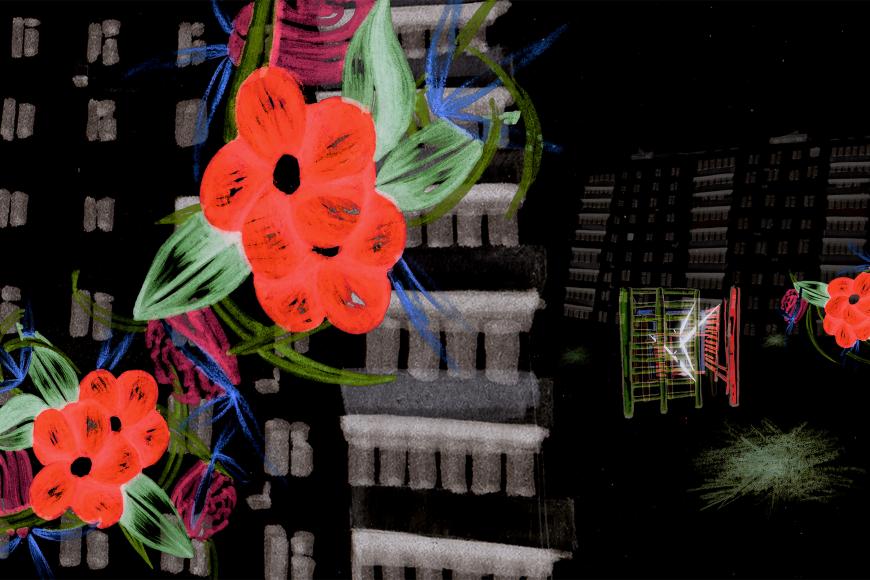
Only light lifts the outlines of the world from darkness. In cyanotype, light-sensitive material is used to make white drawings materialize on a blue background. Tata Managadze challenges the light-sensitivity of our mind. She uses reflections and mirrors to expose the sensitive, gossamer-thin material of association in ways that make ephemeral memories and emotions visible. The poem at the beginning tells us how soothing and at the same time brutal her protagonist – light – can be. Like children in a playground, we are seduced by and forever searching for the dance of lights. Flower patterns on the dishes in the sink begin to spin when our eyelids grow heavy and sleep is approaching. Everything moves. In the transitory state between waking and dreaming, a different kind of life stirs in the prefabricated building estate: The stars of the restaurant leap from the sign and scratch traces into the wall. Or are these scars that must still heal? Perhaps scars from the Soviet era?
Again and again, well-known fragments are re-assembled. This non-narrative animated documentary takes us on a spiral of remembrance to an untraceable origin, building a bridge to our childhood ability to find magic in the most mundane things.
Irina Rubina

Credits DOK Leipzig Logo

Director
Tata Managadze
Producer
RE:Anima European Joint Master in Animation
Sound
Jose Salgado, Irakli Margishvili
Sound Design
Jose Salgado, Irakli Margishvili
Score
Jose Salgado
Animation
Tata Managadze
Nominated for: mephisto 97.6 Audience Award
Filmstill Lina

Lina

Lina
Remo Rauscher
International Competition Animated Film 2025
Animated Film
Austria
2025
19 minutes
German
Subtitles: 
English
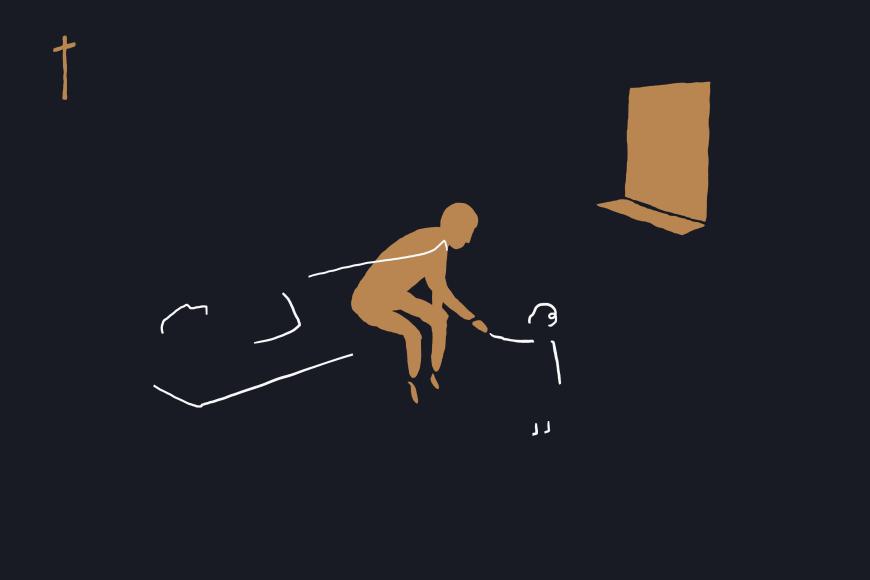
“Apparently, it had to happen to me before I learned it was ‘normal’.” This statement by a protagonist sums up how our society deals with stillborn children or children who die young: Star children are omnipresent (one in four mothers has lost a child) and yet absent. We lack the vocabulary, the sensitivity, and the tranquillity to enable parents to mourn.
Remo Rauscher’s animated documentary confronts us with this inability, letting twenty people in mourning or who deal with mourning speak: Thinking out loud, struggling for words, regarding the pain from different perspectives, discovering dignity and strength in it and helping us to overcome the taboo. They object to being an “error in the system”, to accepting the speechlessness. In Rauscher’s film, the darkness is ambivalent and palpable on all levels: It is absorbing and caring. It is generous and gives us moments of beauty, humility, and hope. The 2D animations in muted colours on a dark background are always abstract, sketchy, and restrained – an expression of tact and respect. They draw attention to themselves only once in a while, while the voices are given a lot of space and can unfold without fear. This film opens a space to mourn that society is unable to offer yet.
Irina Rubina

Credits DOK Leipzig Logo

Director
Remo Rauscher
Producer
Remo Rauscher
Animation
Remo Rauscher
Nominated for: mephisto 97.6 Audience Award