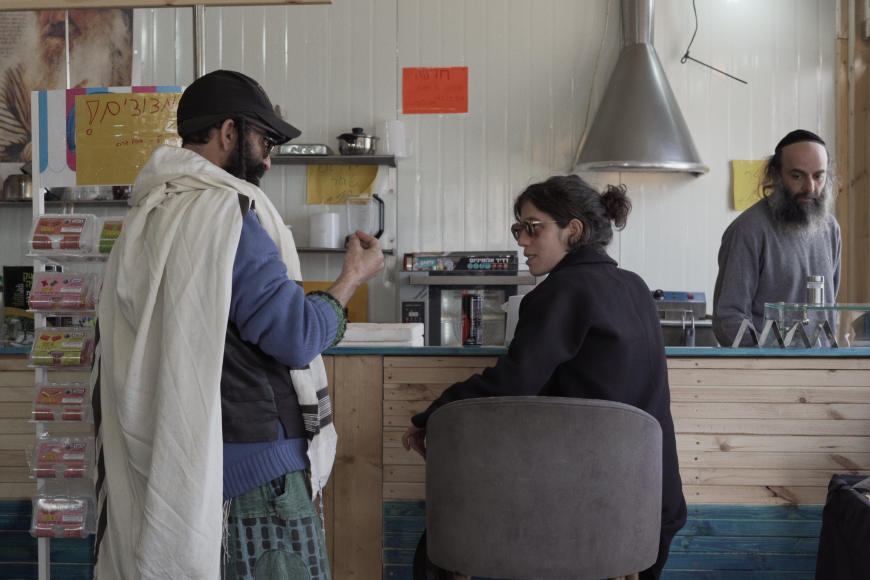
Maya Steinberg is a secular Israeli. Her father, however, had a late religious awakening. He will not appear in her film. Instead, the young director approaches his faith and her lack of understanding for it through a visit to the gravesite of rabbi Shimon bar Yochai in Galilee, where she spends a few weeks, observing believers, Orthodox and ultra-Orthodox, and wondering: Is there a place here for women? And can there be a place for queer women?
AIVA is an artist, animated by algorithms. But above all she is the soberingly limited male tech vision of what more diversity in the arts could look like.
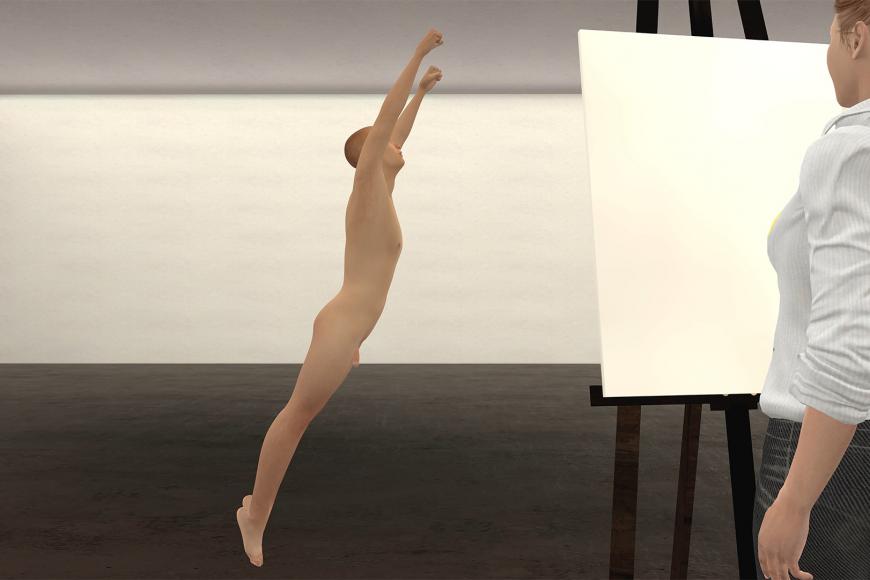
AIVA is an artist, animated by algorithms. But above all she is the soberingly limited male tech vision of what more diversity in the arts could look like. In her paintings AIVA prefers the vertical, to some acclaim. A naive and cliché-ridden “art documentary” lets us participate in her work. Precisely observed, with sparse gestures and trenchant wit, Veneta Androva reflects a current status quo in her computer-animated future fiction.
A media-historical interrogation of the German fascination with the colonialist construct of “Red Indians” which leads right up to its instrumentalization by the “New Right”.
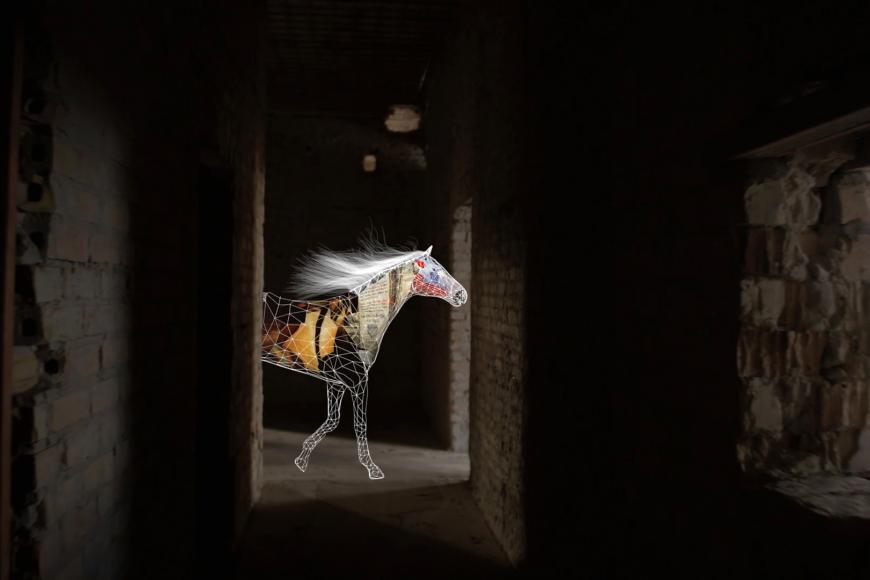
Partly rhetorical, partly ironic and partly profound, the film deals with the Germans’ strange, three-hundred-year-old relationship to their stereotypical ideas of America’s native population. This includes the question of how the audience themselves feel about this ominous object of fascination. The backdrop and starting point of a floating journey through the history of various stereotypes are the ruins of the former U.S. embassy in East Berlin, where an exhibition on the subject took place in 1986.