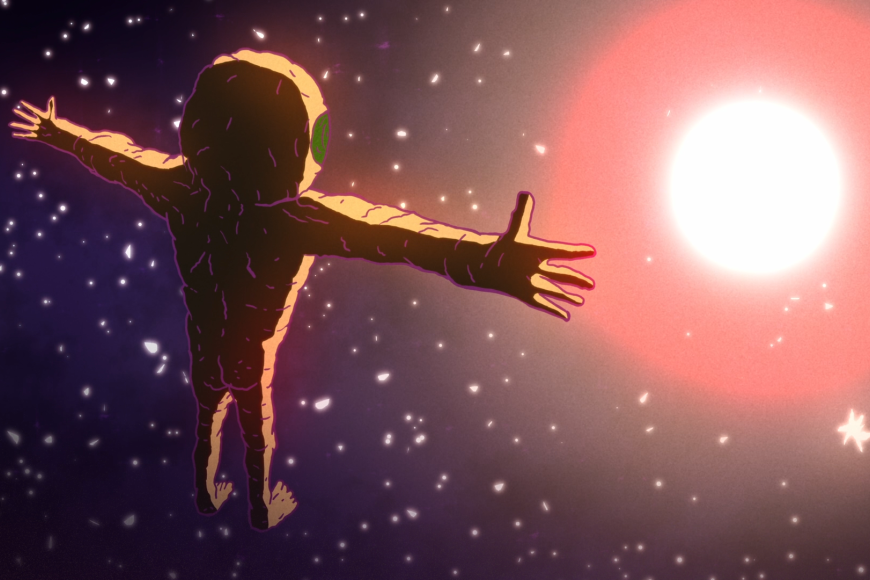
Frankie feels terminally ill, but nobody cares. Then his body transforms into a wild planet where evolution fast forwards from creation to destruction.
Contemplating your naked body, drenched in tomato sauce, on a frozen pizza – that is the epitome of alienated wage work. Especially if it is the mass product whose quality has to be checked hundreds of times a day at the assembly line. Is it this alienation, the multiple daily consumption of precisely this meal or simply the absence of significant human relationships that make Frankie feel terminally ill and ready to say goodbye to an existence he feels is worthless and empty? Nobody cares, until his body transforms into a wild planet where evolution happens in fast-forward mode: the genesis of life, miniature Frankies performing absurd penis dances, cannibalism, Darwinism, mutual destruction, the eradication of other species – and finally the Frankie planet itself burning out. Levi Stoops makes us laugh out loud – and yet we feel the bitter taste of self-destruction on our tongue. Will Frankie have the courage to risk a change of life after this apocalyptic experience? Or does the system have him so firmly in its claws that wholesome nature documentaries of exotic flowers are comfort enough – instead of cooking shows where the stone-baked pizzas are tossed into the air with verve?
Irina Rubina
Credits
Director
Levi Stoops
Script
Levi Stoops
Editor
Levi Stoops
Producer
Annemie Degryse
Sound
Paulo Rietjens
Sound Design
Paulo Rietjens
Score
Wiet Lengeler
Animation
Camiel Hermans, Sarah Menheere, Karolien Raeymaekers, Neyrouz Jemour, Jana Leeuwerck
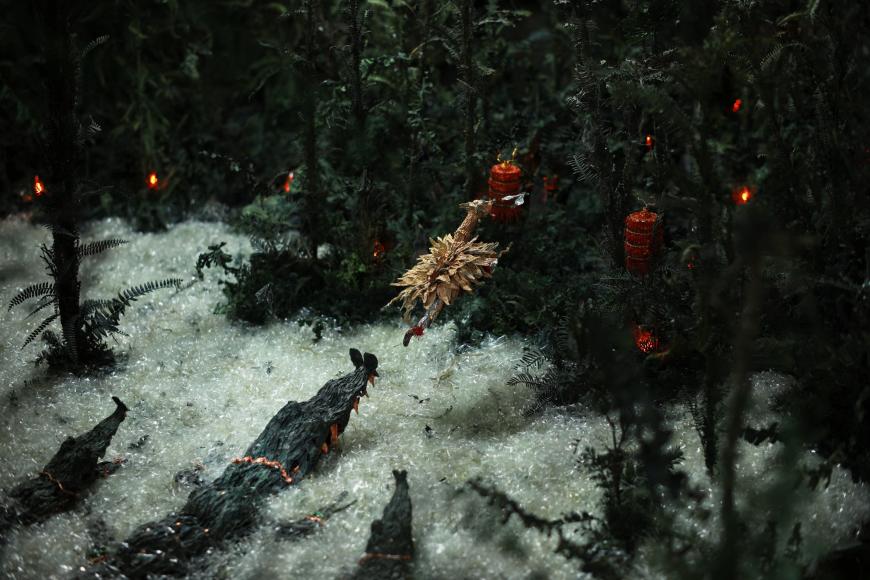
A shaman, half human, half animal, performs a breakneck dance in the jungle. Ingeniously, he tries to fool the crocodiles in the river to reach the other bank.
A Malay fairy tale tells of Sang Kancil, the wily mouse deer that crosses a river by persuading the crocodiles in it to form a bridge for him. Inspired by this story, Zhang Xu Zhan, one of Taiwan’s most distinguished young artists, in his latest stop-motion animation depicts the crossing of the river as a breakneck shaman dance in the deep jungle where acrobatic skill replaces cunning. Spurred on by drummers on the bank, guided by ringing bells, the costumed creature, half human, half animal, leaps from crocodile back to crocodile back, always in danger of losing more than feathers.
Despite the overwhelming complexity of the animated scenery, the hand-made papier-mâché figures recall the seductive power of traditional Javanese Wayang shadow theatre. Its fixed backdrops are transformed here into an extremely fluid world of continuous transformation and metamorphosis reflected in oddly shaped mirror shards, giving us an idea of what it would be like to see through compound eyes.
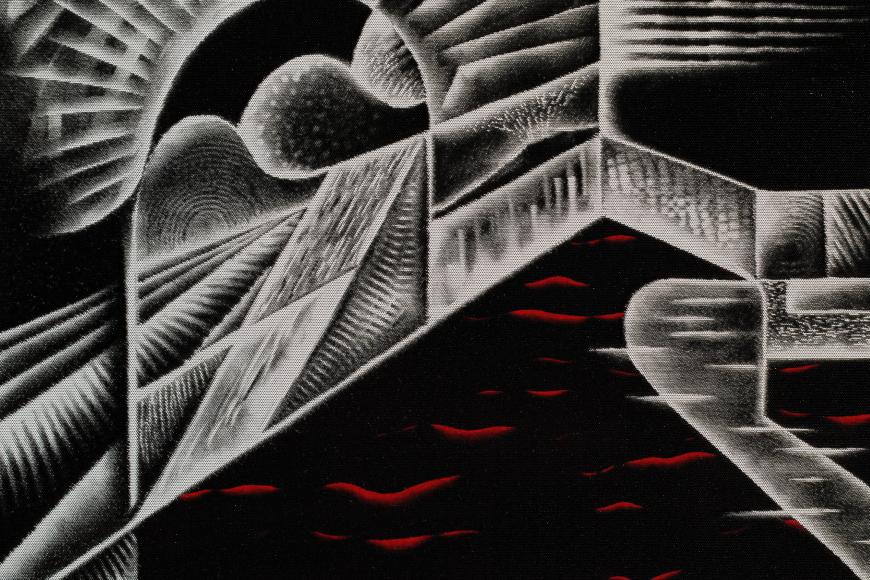
Dark spots eat their way into graphically idealised images of home. With unsparing objectivity, Rubina describes why Russian can no longer be the language of security for her.
How brutal is it when your own language casts you out of your home because it has been turned into the language of crimes against other people? In her autobiographical animation, Irina Rubina analyses why Russian can no longer be the language of security for her and why German – historically riddled with guilt and therefore insecure – does not offer a new home yet. The stark factuality of the director as narrator is enormously unsettling because it describes the irreversibility of this emotional state precisely. On the visual level, dark spots eat into idealised images of home, until the planes become deadlocked in abstraction. The pictures were created on a so-called pinscreen. Reliefs can be “painted” and animated by the pins’ shadows on this screen on which around 200,000 pins are arranged in lines. The alternation of light and shadow and their immediate proximity lend drastic expression to the inner turmoil and ambivalence.
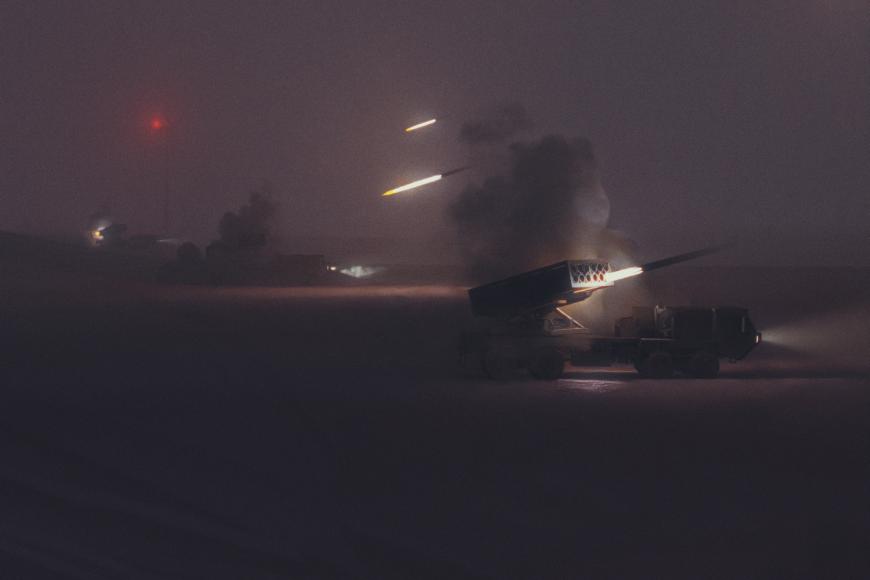
A man on an e-scooter on the outskirts of the city. Only the rifle over his shoulder irritates. The mood of high alert is deceptive. The disaster has already happened.
On the outskirts of the city, the new modern buildings are silent and the motorway bridge drones. Birds are circling in the sky, a young man, concealed by his hoodie, is riding his e-scooter along a park path. The only irritating element is the rifle over his shoulder.
Anton Cla’s film depicts a mood of high alert, while the disaster has in fact already happened. Unexplainable scenes that could not be more disconcerting and grow increasingly drastic unfold calmly. The screaming silence is decisively enhanced by the imperceptibly accumulating mixed drone of the daily sounds of a mechanised world: motorway, tramway, clicking indicators, pulsating emergency signals. What the soundscape adamantly refuses to deliver is a loud discharge that would release the tension. The suburban landscape is steeped in a red theatrical warning light, blurs restrict the view. The 3D computer design masks neither the artificiality nor the computer-based deformations of the images of a normality that has become a combat zone – the machine matrix seems to rule already.