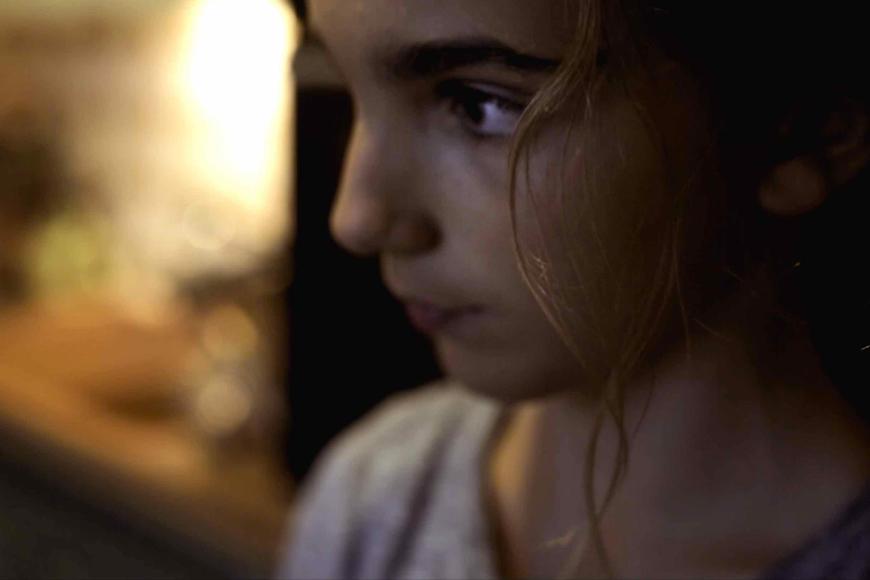
An intimate conversation between father and daughter about a fermenting family secret amidst experimental image and sound recordings of work on a winery in southwest France.
An old family secret is fermenting in the father’s winery in southwest France. The grandfather had been executed by the Résistance in 1944 because he had collaborated with the Nazis. For decades, no one talked about it, daily work continued, from cultivation to harvest, from the wine press to maturation, an eternal cycle. The daughter comes to visit with a camera and a microphone. She remixes the sounds of farming, asks questions, builds openings in the experimental interstices between image and sound for the father to come to himself. Maybe what was buried and ploughed under can be reflected today – if they succeed in breaking the cycle for a moment.
The father has answers. He knows the patriarchal system of agriculture, where neighbours are envious and unpleasant things are quickly interred so they will not be passed on to the children. And yet what was interred has not dissolved completely, over generations. Insects buzz over the soil, something underneath attracts them. A small frog is caught in the wine press with the grapes. And the filmmaker’s daughter looks for a new tune on the old family piano.
Jan Künemund
Credits
Director
Lucie Dèche
Cinematographer
Lucie Dèche
Editor
Caro Beuret
Producer
Guillaume Bordier
Sound Design
Lucie Dèche
Nominated for:
Prize of the Interreligious Jury,
FIPRESCI Prize
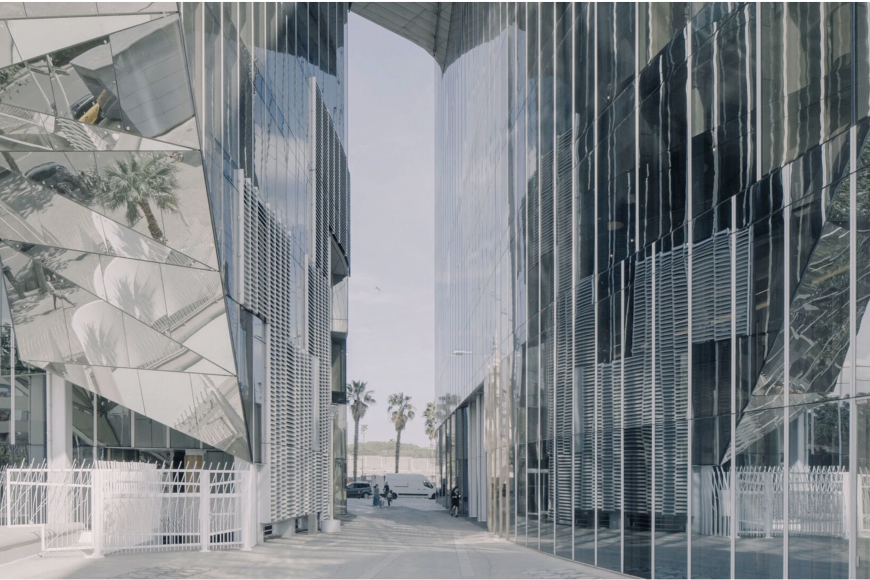
The Catalan architect Miralles died far too young. His filmic portrait is airy and dense, abrupt and flowing, unconditionally stubborn, itself reminiscent of a Miralles design.
More than twenty years have passed since the death of Catalan architect Enric Miralles. He left iconic traces with his buildings, not just in and around Barcelona – the Scottish parliament in Edinburgh is also based on his designs. Maria Mauti chooses a poetic approach to her impressive protagonist, in eleven variations. They take us from the Igualada cemetery to a community centre in Hostalets de Balenyà, a gym in Huesca or the Torre Marenostrum office skyscraper in Barcelona. The architect’s home with its open and at the same time labyrinthine character is given a major role, becoming the starting point and epicentre of a unique mind. Maria Mauti carefully scans the still lively architectures, stages them. In Huesca, the smell of a sweating soccer team seems to mingle with the omnipresent cool raw concrete, while a group of Spanish cowboys and cowgirls shake their leather boots in the futuristic community centre. Despite the tragic note that comes from the work of the prematurely deceased, “Miralles” is not without a certain wit. This poised essay which combines personal and theoretical statements achieves a multi-layered quality that is in itself evocative of a Miralles design: airy and dense, abrupt and fluid, always idiosyncratic.
Carolin Weidner
Credits
Director
Maria Mauti
Cinematographer
Ciro Frank Schiappa
Editor
Núria Esquerra
Producer
Antonio Chavarrías, Alba Bosch
Sound
Eva Valiño, Bernat Fortiana, Leo Dogan, Lucía Herrera
World Sales
Yvette De los Santos
Nominated for:
Silver Dove,
Prize of the Interreligious Jury,
FIPRESCI Prize
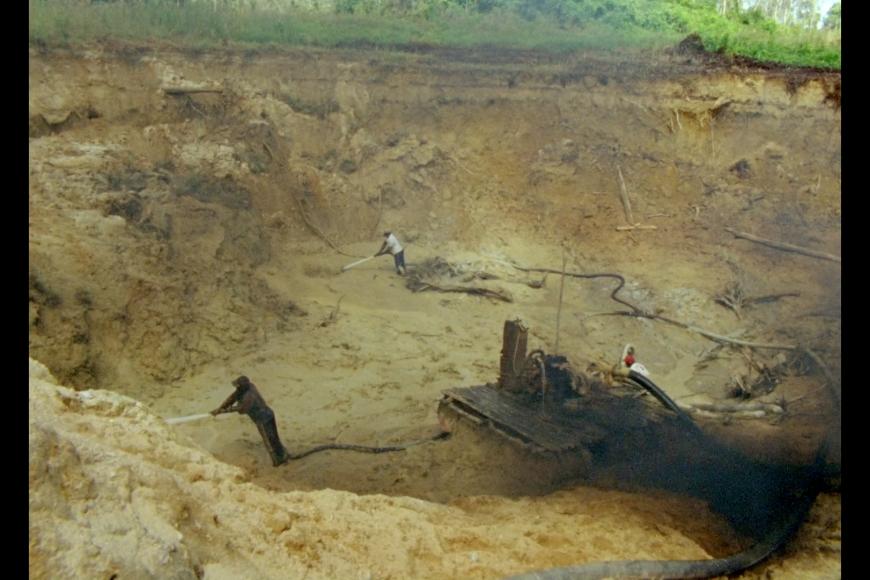
A fictitious explorer reports on gold-mining and its commercialization in Venezuela. Paradoxically, the gold diggers live off nature – and destroy it at the same time.
In the deliberately chosen style of an old-fashioned field report, a fictional explorer describes his observations on gold-mining in Venezuela. His mission takes him along the Orinoco, from remote jungle mines to industrial zones. His focus stays on the workers and their environment. The titular Moriche palm tree, an edible and crop plant growing along the river, serves as an example for the relationship between humans and nature and their use of raw materials. Paradoxically, the gold-diggers live in harmony with Mother Earth as their nourisher and healer, but at the same time destroy her. As in so many other places in the world, their very survival depends on an economic system inherited from colonialism. The rapid pace of capitalism is in glaring contradiction to the arduous extraction of the gold dust, produced only by slow processes of erosion. As the narrator drifts along the river and meditates on different contexts, the images work their way through the layers of the complex subject. The immersive poetic journey alternates between observational Bolex shots, hand-drawn illustrations and abstract visualisations of photochemical reactions. Accompanied by a sound design both distinct and elaborate, the lustre of the gold literally glitters from the screen.
Annina Wettstein
Credits
Director
Chris Gude
Script
Chris Gude
Cinematographer
Chris Gude
Editor
Felipe Guerrero, Chris Gude
Producer
Chris Gude, Felipe Guerrero, Maite Bermúdez, Adriana Agudelo
Sound Design
Felipe Guerrero, Chris Gude
Score
Maximilian Gude
World Sales
Michaela Čajková
Narrator
Jorge Gaviria
Nominated for:
Prize of the Interreligious Jury,
FIPRESCI Prize,
Silver Dove
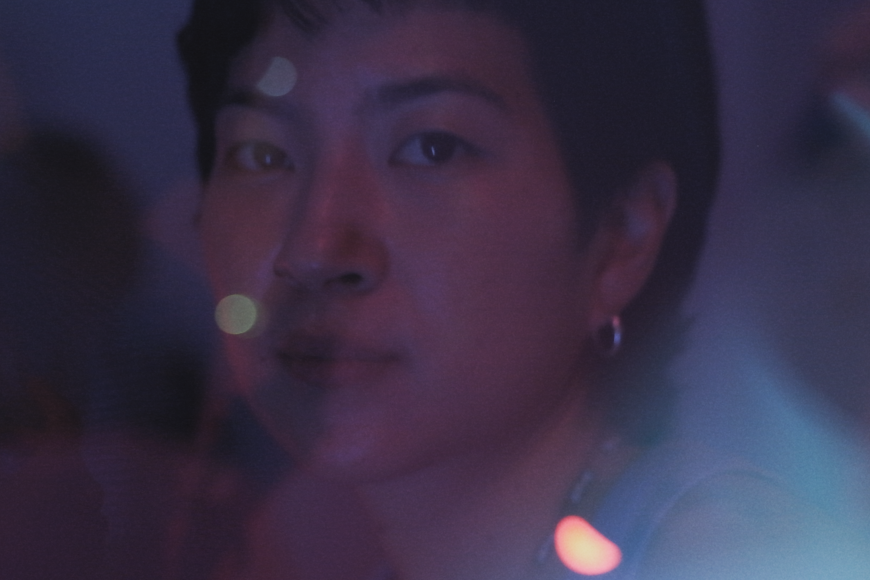
Monica scours archive material for answers to the question of how queer life in Berlin and the wish to be accepted by their Christian-Indonesian parents can be reconciled.
“My therapist said it’s like an Abschied,” Monica Vanesa Tedja says. Monic embarks on a journey from Berlin to Indonesia to return to the bosom of the family for a short while. The camera is in the luggage, and an important question: Can the devout Christian parents who are so happy about the visit accept their child’s non-binary, queer concept of life and identity instead of blocking it out? In the beginning we see private archival footage of a supposedly perfect childhood. Monic talks about their own dreams and fears. We listen to tense phone calls with the mother and exchanges with friends, we learn details from therapy sessions. This film is not about harsh confrontations but rather about a quiet departure, about changing relationships, the significance of biological and chosen families, about letting go and arriving – perhaps where you least expect it.
Seggen Mikael
Credits
Director
Monica Tedja
Script
Monica Tedja
Cinematographer
Monica Tedja, Charmaine Poh, Asarela Orchidia Dewi, Jonas Römmig
Editor
Monica Tedja
Producer
Monica Tedja, John Badalu, Astrid Saerong, Gugi Gumilang