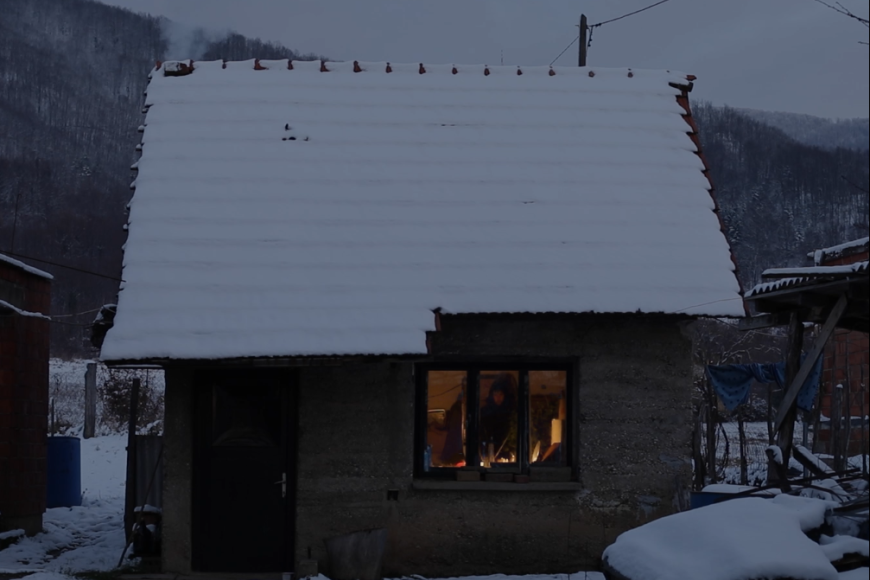
In this cinematic conjuring, Ante Zlatko Stolica remembers childhood fears triggered by a deaf woman in his grandmother’s village. The ghost of Janja, an allusion to the Slavic fairy tale character of Baba Yaga, haunts his dreams, lurks in dark places and joins forces with other horror characters. Still lifes, horror films and a gloomy soundscape evoke the unease that still disturbs the director, even after Janja’s death.
In this existentialist animated folly, figures suffering from the absurd wander through a good dozen laconic momentary miniatures, looking for what can’t be found: meaning.
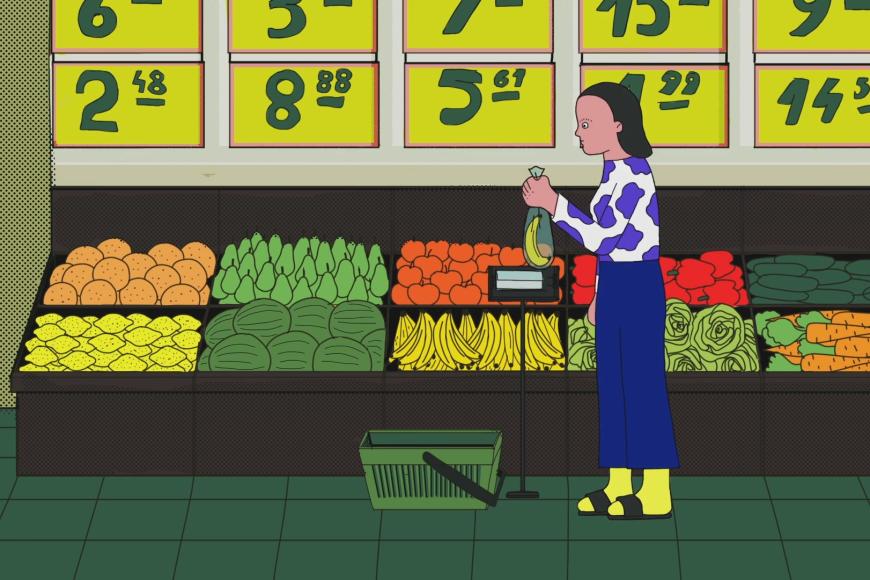
A man in socks takes a shower and melts. A claw machine in which nothing can be grabbed is fed coins. A mermaid makes sculptures of feet. A woman packs a banana into a plastic bag, then into another and another and … Figures suffering from the absurd wander through a good dozen laconically drawn momentary miniatures, ceaselessly looking for what can’t be found: meaning. Katarzyna Miechowicz’s animated folly prickles, even existentially.
A rural life in western Serbia that demands the utmost from Dragica. Cows need to be milked, tomatoes harvested. The daily tasks leave almost no time to pause
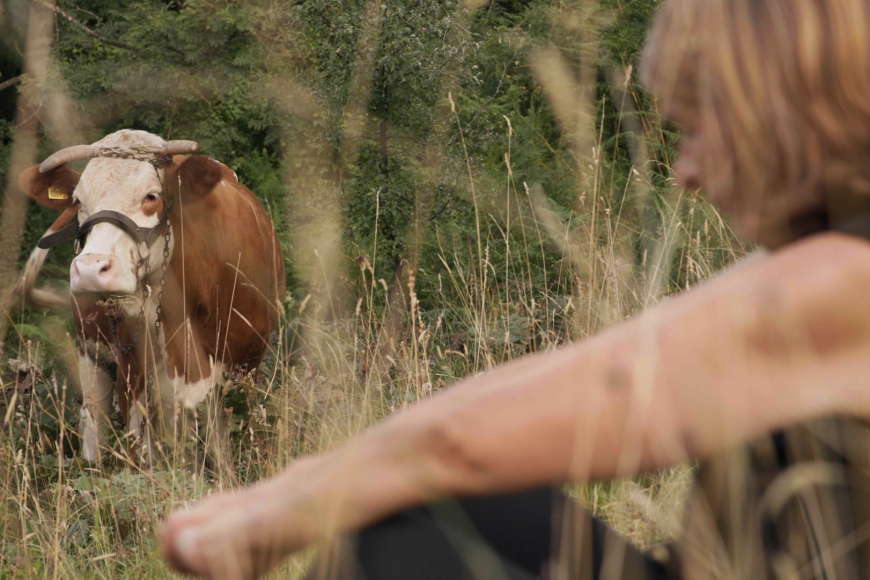
Dragica does not lack for work. The house and cattle in western Serbia demand toil from dawn to dusk. She milks, harvests, prepares porridge for her handicapped daughter. Her own mother recently passed away. Now Dragica wears black and shaves her old father. Can there be an alternative to this daily self-sacrifice? Almost casually, Isaac Knights-Washbourn leaves space for such reflections: While chopping tomatoes, the woman opens up to a guest from town.
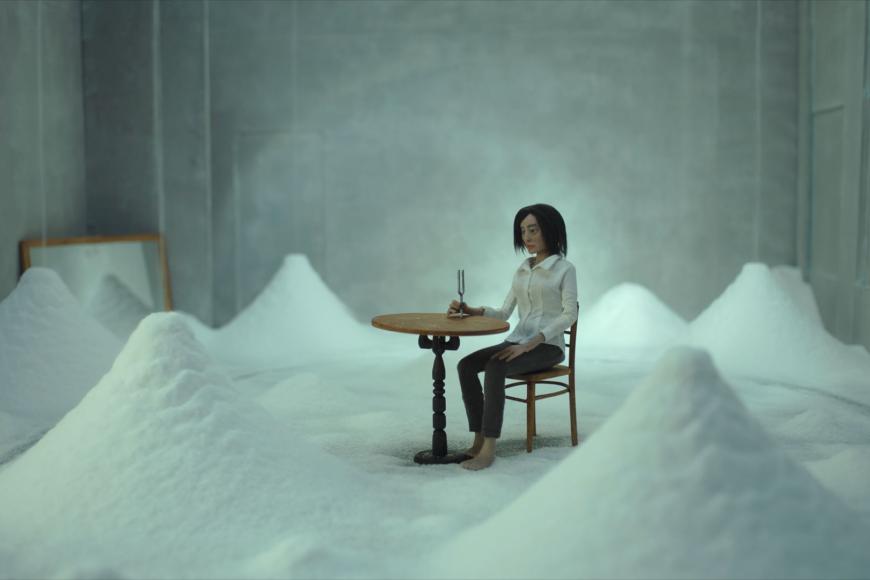
In the “White Horse” café, waitress and guests apathetically go through their routines. Meanwhile, the reality surrounding them seems to destabilise more and more: between white noise and the sound of tuning forks, between daydreams of galloping knights and ever-growing mountains of drizzling packet sugar. Ivana Bošniak Volda and Thomas Johnson Volda pile up layers of these images and sounds, until they crack – and clear the way to breathe.
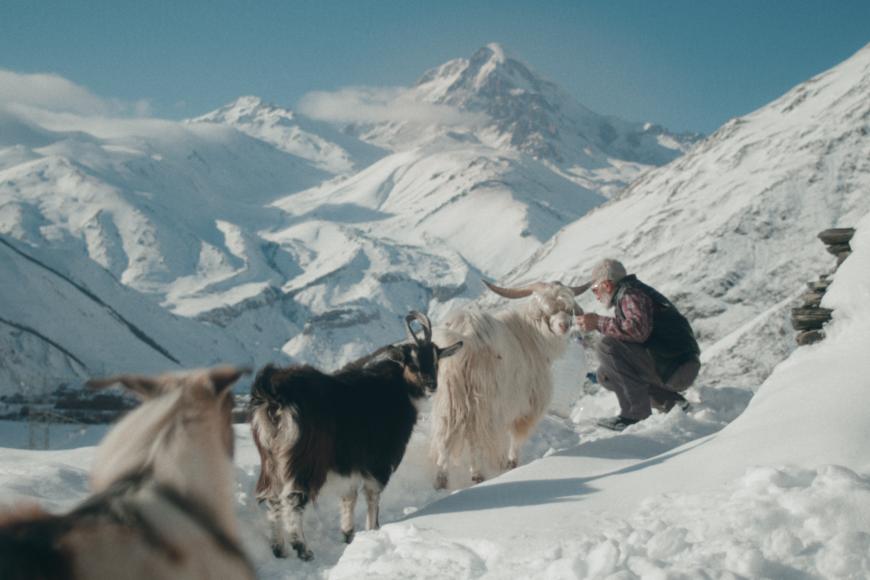
For the over eighty-year-old Vakho, the ice-covered mountainous region in the Georgian Caucasus is a self-chosen exile – out of deeply felt guilt about the death of his brother.
According to mythology, Prometheus was bound to the rocks of Mount Kazbek, more than 5,000 metres high and covered in ice. For Vakho, this mountainous region in the Georgian Caucasus is a self-chosen exile – out of deeply felt guilt. 48 years ago, he lost his brother in tragic circumstances that had previously come to him in a dream: “I couldn’t let go of the past”, the man, now in his eighties, explains in this visually impressive debut short film portrait.