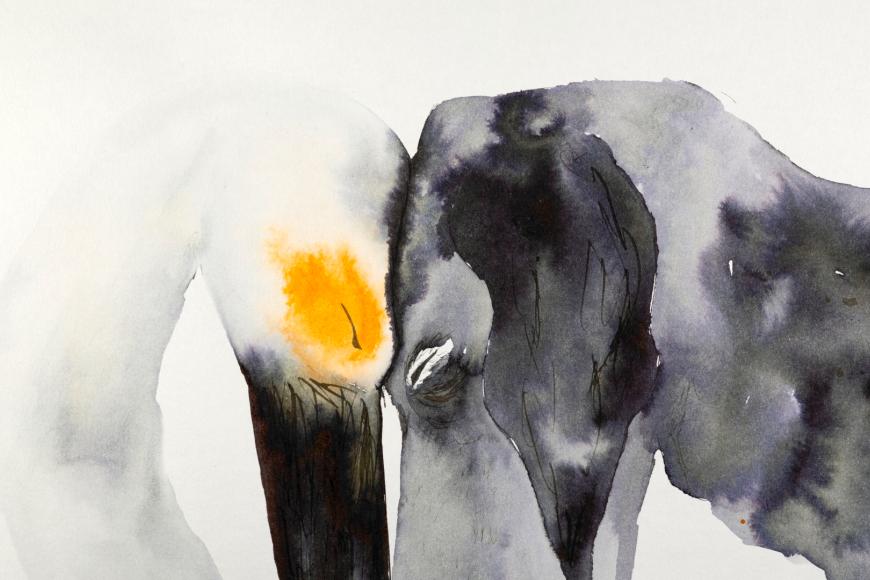
A bicycle accident causes a crack in the protective shell Alice has grown to be able to bear the oppressive confinement of her daily life. Can she finally dance her way out?
It is Alice’s 27th birthday today. She lives in her old room in her parents’ apartment. Her mother coddles her like a little child. Her kid brother gets on her nerves. The only space for self-realisation and living out her sexual desires is in her imagination, if at all. For economic reasons, she and many other young people are denied the chance to live an independent life in their own four walls. So Alice has to endure the confinement.
On the night of her birthday, she goes pub-crawling with a buddy and dances, free at last for a few moments, at a party on the roof of a high-rise. Looking at the nocturnal city and sobering up after all the exuberance, though, her dilemma re-surfaces again: Where is her private space where body and soul can unfold unobserved? Haunting, colourful, with a fantastic soundtrack and full of eroticism, the film describes the depressing situation of a whole generation.
Franka Sachse
Credits
Director
Flóra Anna Buda
Script
Flóra Anna Buda
Editor
Albane du Plessix
Producer
Emmanuel-Alain Raynal, Pierre Baussaron, Gábor Osváth, Péter Benjámin Lukács
Sound
Péter Benjámin Lukács
Score
Mári Mákó, Rozi Mákó
Animation
Zoltán Koska, Gábor Mariai, Luca Tóth, Borbála Zétényi, Flóra Anna Buda
A relationship on the rocks, naked under the scorching sun and disoriented on a vast holiday sea. In search of funny dolphins, Aurora and Jeremy are paddling for their lives.
She and him, naked on the holiday seas in the bright sun. It may sound idyllic, but it is hell for Aurora and Jeremy. In search of funny dolphins, the two are paddling without orientation in the limitless expanse of water, no land in sight. Complete with dangers from above and below in the shape of heat and sharks. And at the centre of events is a near-defunct relationship. The roles are well-practised and grating, uptight lust is satisfied only solo.
Instead of roaring waves, it is above all the relentless silence of the sea surrounding them that provides the tension of the film. It is occasionally released in brilliant miniatures, for example a witty argument, or clumsy physical comedy. Another time, we are shocked by action-filled horror moments triggering absurd chain reactions. Whether it is the glaring light on the brutally calm water and the clueless couple, the visual fumes of decay one can almost smell, or a super dynamic dive – Levi Stoops’ direction is magnificent and timed with utmost precision.
André Eckardt
Credits
Director
Levi Stoops
Script
Levi Stoops
Cinematographer
Camiel Hermans, Sarah Menheere, Karolien Raeymaekers, Levi Stoops
Editor
Levi Stoops
Producer
Annemie Degryse
Sound
Paulo Rietjens, Arnout Colaert
Sound Design
Paulo Rietjens
Score
Mick Lemaire
Animation
Camiel Hermans, Sarah Menheere, Karolien Raeymaekers, Levi Stoops
The breasts are in place, the feathers are smoothed, off to the date! Her daughter does not comprehend the ritual of desire yet … Erotically crude, with pointed beaks in the conflicts.
Breasts lifted, bottom tight, feathers smoothed. She is ready for her date. But her daughter clings and refuses to let her go to this as yet incomprehensible, repulsive ritual of desire. Very soon the fully-fledged adolescent will indulge in sexual lust herself … and experience disappointments. In the conflicted world of the two women, men evade partnership and fatherhood. The faithful bitch offers the only support.
As in her previous film, Carla Melo Gampert transfers her impressive but uncompromising analysis of family relationships to the lives of wading birds. Human traits show through in the anatomy, but the bird’s bodies including their feathers and sounds lend themselves perfectly to the apt exaggeration of emotions. Delicate strokes turn into cuttingly sharp movement lines of the animal characters, both in their erotically crude acts of love and their “hands-on” disputes. Soft splashes of watercolour glow incandescently in the heat of lust and warningly in the hopeless fury.
Inspired by a feminist science fiction story, the Spaniard Inés embarks on a journey of discovery through India. She is looking for Ladyland, the utopian land of women.
Dreamy animated images in detailed henna painting and atmospheric watercolours dominate a young Spanish artist’s moving journey of discovery. In a small bookshop in India, Inés comes across the feminist-utopian science fiction story “Sultana’s Dream.” It is about the terrible revenge on men, the bookseller explains. In the slim volume she wrote in 1905, Rokeya Hossain describes the fantasy realm of Ladyland – a land in which women are self-determined and live in peace, in which they run all government affairs and all forms of education are open to them. And the men? Their place in Ladyland, the bookseller continues, is where they belong: locked up at home.
Fascinated by the literary “painting” of this place and its inventor, Inés sets out in the footsteps of the writer and teacher Hossain, who championed education and equal rights for Indian girls and women as early as the beginning of the 20th century. The trip takes the Spaniard across contemporary India. Her companions are the dreams of Ladyland – and the utterly different realities of the lives of the women she meets on her journey.
Jana Kraft
Credits
Director
Isabel Herguera
Script
Gianmarco Serra, Isabel Herguera
Cinematographer
Eduardo Elosegi
Editor
Gianmarco Serra
Producer
Fabian Driehorst, Chelo Loureiro, Mariano Baratech, Diego Herguera, Iván Miñambres
Sound Design
Simon Bastian, Gianmarco Serra
Score
Gianmarco Serra, Tajdar Junaid
Animation
Izibene Oñederra Aramendi, Ana María Sabater Araújo, Paula Valiño Rivera, Sergio Pereira del Castillo, María José Alfonso Torrescusa
World Sales
Wouter Jansen
German Distributor
Vanessa Ciszewski
Artistic Design
Francisco Muñoz de Gregorio, María Manero Muro, Rajesh Thakare, Nelson Cabrera Curbelo, Upamanyu Bhattacharyya, Bhusan Katkar, Aravind Senan, Begoña Vicario, Troy Vasanth
Summer 2022 in eastern Ukraine: The police evacuate people from the war zone, bodycams record the dramatic events. In 2023, the film team talks to survivors.
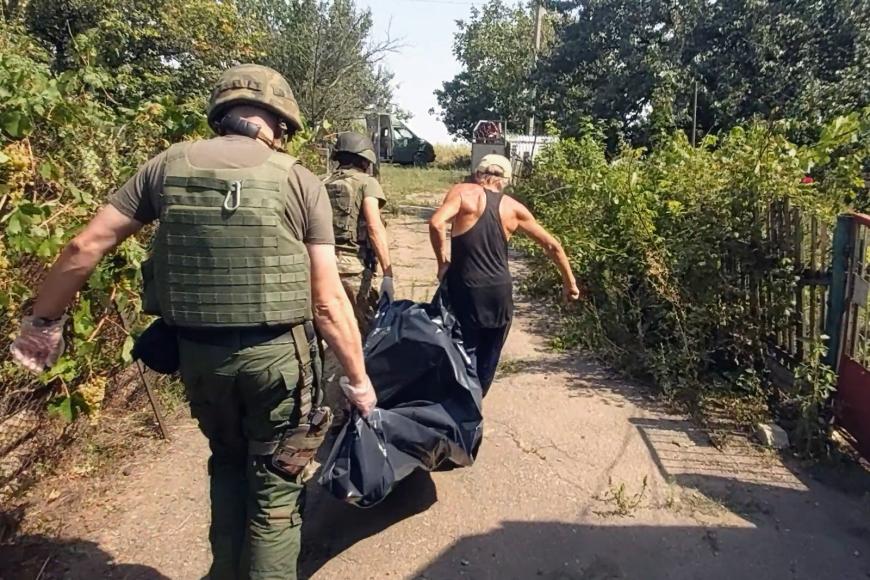
The small town of Marinka lies in the Ukrainian Donetsk Oblast. Almost 10,000 people lived there, even though the town was under constant attack by pro-Russian separatists since 2014. When the war escalated in the spring of 2022, however, Marinka came under heavy artillery fire and practically all residents had to leave the town by September. The local police helped get them out. One of the policemen is Vasyl, the protagonist of this film. In a white van, soon christened the “white angel” by the population, he and his colleagues pull civilians out of the line of fire, recover the wounded and the dead. Vasyl’s helmet camera records the dramatic events of their missions: evacuating scared people from their cellars, first aid for the seriously injured, the hasty gathering of personal belongings, the painful and permanent partings.
Six months after the end of Marinka, the Leipzig-based investigative journalist Arndt Ginzel and his crew return to eastern Ukraine. They find the survivors, rescued persons and rescuers, and let them comment the action cam images. They speak of losses, of pain and grief, but also of hopes and dreams. “White Angel – The End of Marinka” is more than a film about war. It is a document of humanity and the longing for peace.
Christoph Terhechte
Credits
Director
Arndt Ginzel
Cinematographer
Gerald Gerber
Producer
Martin Kraushaar
-
Guntram Schuschke, Beatrix Grundt, Claudia Huber , Nicole Schuschke, Christina Susanne Marx, Annina Wolf
Nominated for:
Goethe-Institut Documentary Film Prize,
MDR Film Prize