Film Archive

Jahr

Sections (Film Archive)

Land (Film Archive)

Filmstill ¡Huelga!

¡Huelga!

¡Huelga!
Ralph McGrew
Retrospective: Un-American Activities 2025
Documentary Film
USA
1967
54 minutes
English
Subtitles: 
None
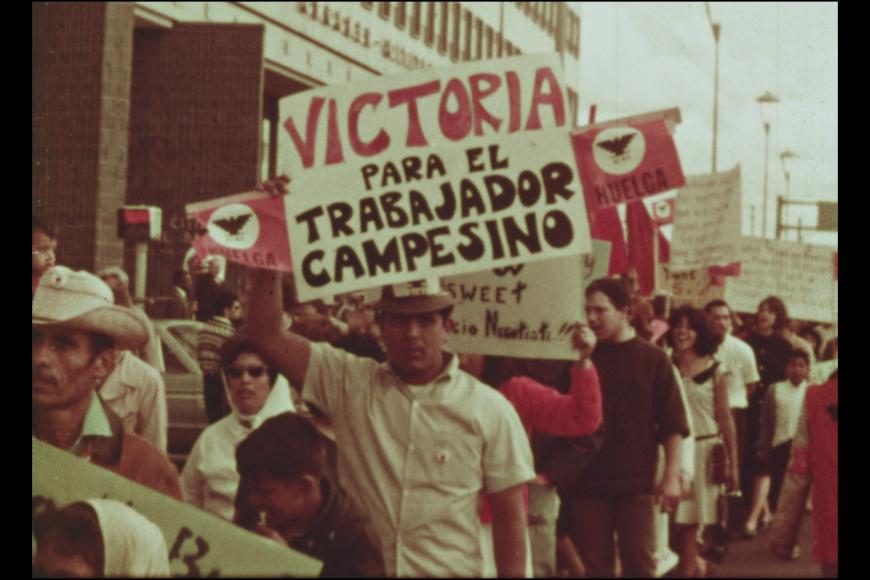
In 1965, the longest farm workers’ strike in US-American history unrolled in Delano, California. Led by Cesar Chavez, the as yet unorganised Mexican seasonal labourers fought successfully for better working conditions and the right to found a union of their own, the National Farm Workers Association (NFWA). “¡Huelga!” is the partisan portrait of an emerging solidarity group that not only stood up against the unregulated capitalism in the agricultural sector but also declared war on the racism of the white landowners. In addition to depicting the mechanisms of the strike, the mobile camera also makes a point of documenting the degrading living conditions of the people who kept one of the most powerful industries in the country going.
Tobias Hering, Tilman Schumacher

Credits DOK Leipzig Logo

Director
Ralph McGrew
Script
Mark Harris
Cinematographer
Richard Pearce, John Haney
Editor
Ralph McGrew, Dick Gilbert
Producer
Mark Harris
Score
Augustin Lira, El Teatro Campesino
Retrospective: Un-American Activities 2025

Break & Enter a.k.a. Squatters (Newsreel #62)

Newsreel
Self-organized solidarity communities: The New York squatter movement fights to prevent the poorer population sections from being driven out of the lucrative areas in Manhattan.
Filmstill Break & Enter a.k.a. Squatters (Newsreel #62)

Break & Enter a.k.a. Squatters (Newsreel #62)

Break & Enter a.k.a. Squatters (Newsreel #62)
Newsreel
Retrospective: Un-American Activities 2025
Documentary Film
USA
1971
41 minutes
English
Subtitles: 
English
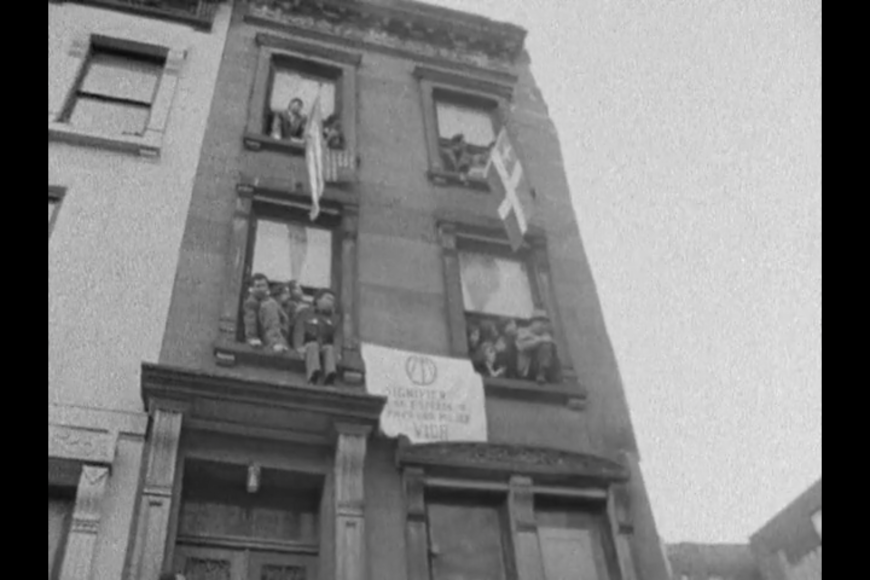
“Why should I move? I was born here.” While a senseless war is waged in Vietnam and million-dollar rockets are shot to the moon, there is not enough decent housing in New York – and worse, the poor are being forcibly evicted from their homes, says an angry protagonist of this activist film which introduces the New York squatter movement. Latin Americans in particular are forced to leave the lucrative Manhattan housing market, but the protesters do not accept this without putting up a fight. “Break & Enter” is a spontaneous and encouraging film document about self-organised communities based on solidarity.
Tobias Hering, Tilman Schumacher

Credits DOK Leipzig Logo

Director
Newsreel
Producer
Newsreel
Filmstill Different Sons

Different Sons

Different Sons
Jack Ofield
Retrospective: Un-American Activities 2025
Documentary Film
USA
1971
55 minutes
English
Subtitles: 
None
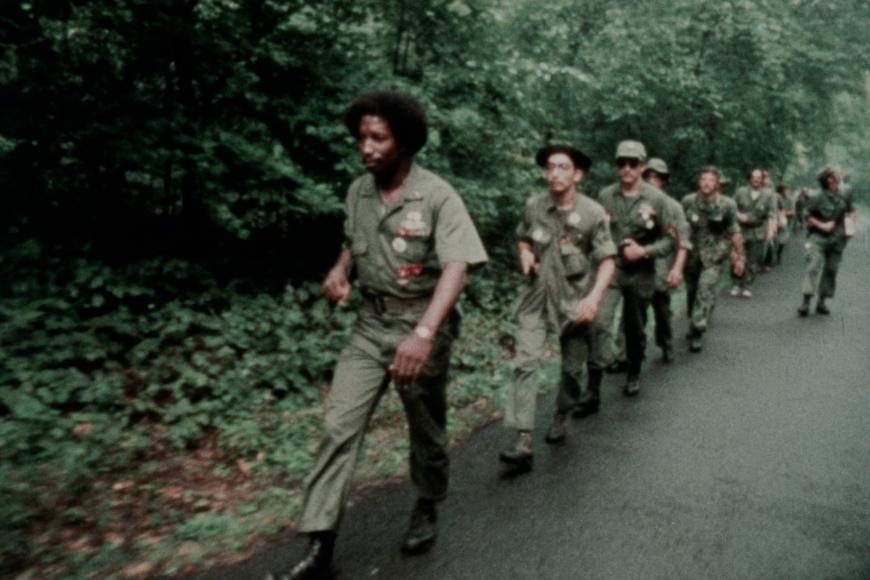
On 4 September 1970, a group of Vietnam veterans set out on a long march from Morristown, New Jersey, to Valley Forge, Pennsylvania. Their goal: to convince the local population along the way of the injustice that has been going on in Vietnam for years. They did this not just with speeches by the wayside, but with shocking, unannounced and publicly performed re-enactments. Complete with uniforms and plastic machine guns, supported by extras, they thus draw attention to their own war crimes in Indochina. Both camera and tape recorder stay close to all this, capturing the reactions of passers-by and city residents. Solidarity on the one hand, vicious insults on the other. A deep divide runs through the “home front”.
Tobias Hering, Tilman Schumacher

Credits DOK Leipzig Logo

Director
Jack Ofield
Cinematographer
Bob Ipcar, Lee Kenower, Bob Baldwin, Bob Fiore
Producer
Arthur Littman, Bob Sann, Wendy Megginson
Score
Phil Ochs
Filmstill Golub

Golub

Golub
Jerry Blumenthal, Gordon Quinn
Retrospective: Un-American Activities 2025
Documentary Film
USA
1988
55 minutes
English
Subtitles: 
None
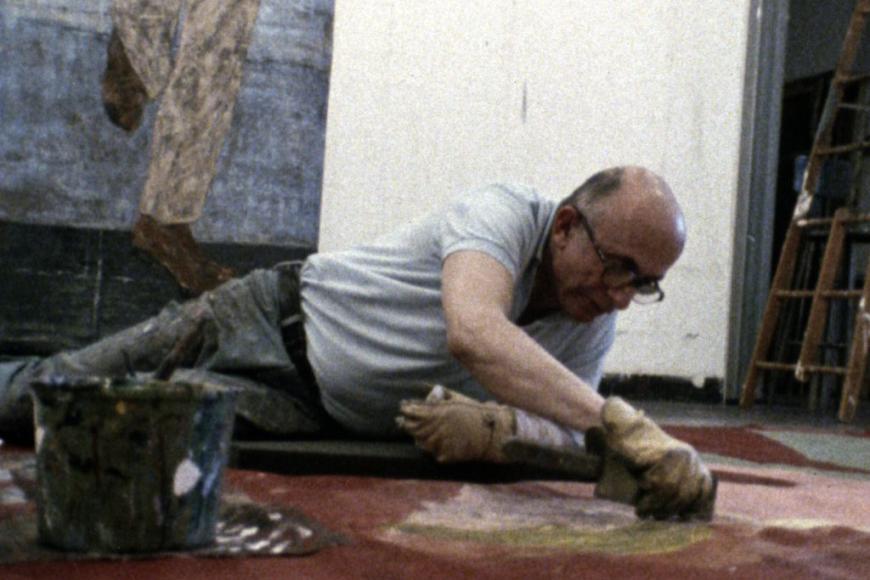
How are art and social reality connected? How can art respond to the horrors that happen in this world every day? At what point does art become political, at what point corrupted by the market? Leon Golub (1922–2004) works on huge canvases in his New York studio, uses press photos as models, distils gestures from them, applies paint, removes it, scrapes free what was hidden. The process has a violent side – like the martial motifs of his works. They show shootings, tortures or grotesque figures that enjoy their inhuman acts. These are motifs usually unearthed by investigative journalism in times of war. Now they are hung in an exhibition room supposedly free from the banal – and shock the viewer.
Tobias Hering, Tilman Schumacher

Credits DOK Leipzig Logo

Director
Jerry Blumenthal, Gordon Quinn
Cinematographer
Gordon Quinn
Editor
Jerry Blumenthal
Producer
Kartemquin Films
Filmstill Harlan County, USA

Harlan County, USA

Harlan County, USA
Barbara Kopple
Retrospective: Un-American Activities 2025
Documentary Film
USA
1977
103 minutes
English
Subtitles: 
German
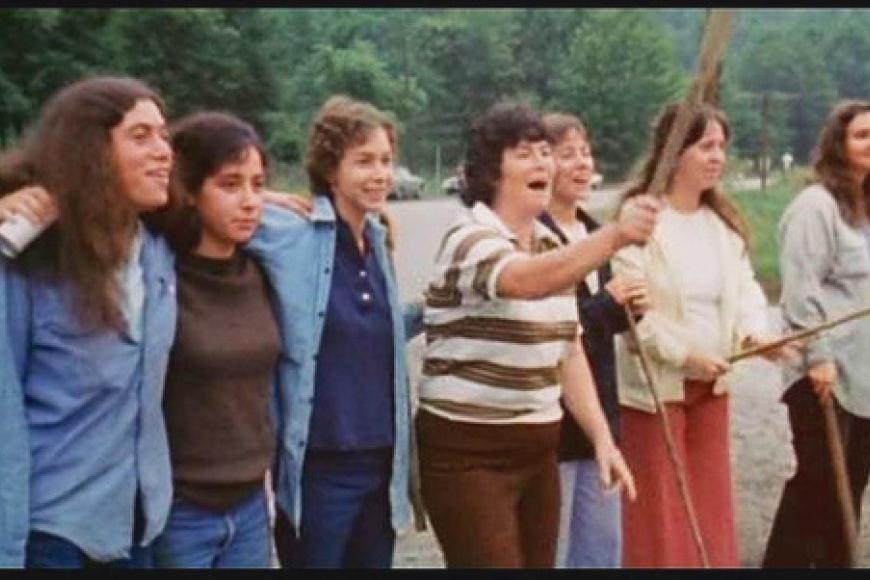
“Which side are you on?” sings Florence Reece, an icon of the miners’ movement in Harlan County, Kentucky, with a brittle voice into the microphone at a union rally. Barbara Kopple’s long-term observation of the 1973 Brookside strike might even be called a music film. Because aside from Reece’s classic strike anthem, song and speech, folklore and politics, rhythms of speaking and editing are combined throughout: a successful attempt at partisanship that appeals to all the senses, where slogans are absent – or put into song. “Harlan County, USA” was presented in a special screening at the Leipzig Dokumentarfilmwoche in autumn 1977, its fame having preceded it: It had already won the Oscar for Best Documentary Film in April of that year.
Tobias Hering, Tilman Schumacher
Credits DOK Leipzig Logo

Director
Barbara Kopple
Cinematographer
Kevin Keating, Hart Perry
Editor
Nancy Baker, Mary Lampson
Producer
Barbara Kopple
Sound
Joshua Waletzky, Barbara Kopple
Score
Hazel Dickens, Florence Reece, Merle Travis
Retrospective: Un-American Activities 2025

In the King of Prussia

Emile de Antonio
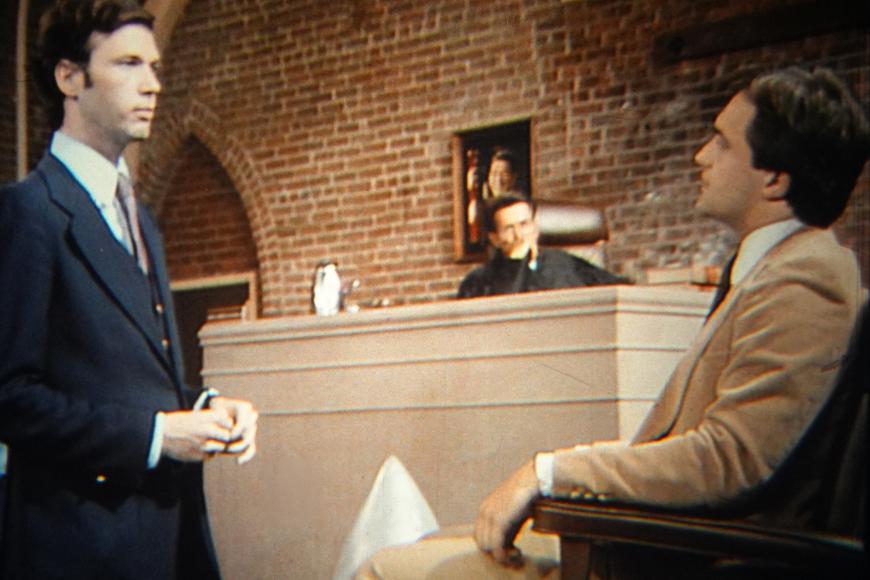
In 1980, a group of radical pacifists break into a factory where nuclear weapons are produced. The film focuses on the trial against the activists which takes the form of a re-enactment.
Filmstill In the King of Prussia

In the King of Prussia

In the King of Prussia
Emile de Antonio
Retrospective: Un-American Activities 2025
Fictional Film
USA
1982
90 minutes
English
Subtitles: 
German
To put it bluntly, one could say that most of de Antonio’s films are courtroom dramas. In this sense, “In the King of Prussia” is typical – and at the same time unusual, starting with the title. King of Prussia is a small town in Pennsylvania which became the scene of an action by radical Christian pacifists in September 1980. They broke into a factory where, unbeknownst to the public, parts of the nuclear missile Mark 12A were produced, and held a happening inspired by the Sermon on the Mount and Fluxus. The film is a re-enactment, but not of the action, rather of the trial against the so-called Plowshares Eight. In de Antonio’s first video production, shot in the trial breaks, the defendants played themselves. The role of the judge was played by New Hollywood star Martin Sheen.
Tobias Hering, Tilman Schumacher

Credits DOK Leipzig Logo

Director
Emile de Antonio
Script
Emile de Antonio
Cinematographer
Julian Abbio, Judy Irola
Editor
Mark Pines
Producer
Emile de Antonio, Vincent Hanlon
Sound
Jack Malkan
Score
Sidney Carter, Jackson Browne
Filmstill Millhouse: A White Comedy

Millhouse: A White Comedy

Millhouse: A White Comedy
Emile de Antonio
Retrospective: Un-American Activities 2025
Documentary Film
USA
1971
92 minutes
English
Subtitles: 
None
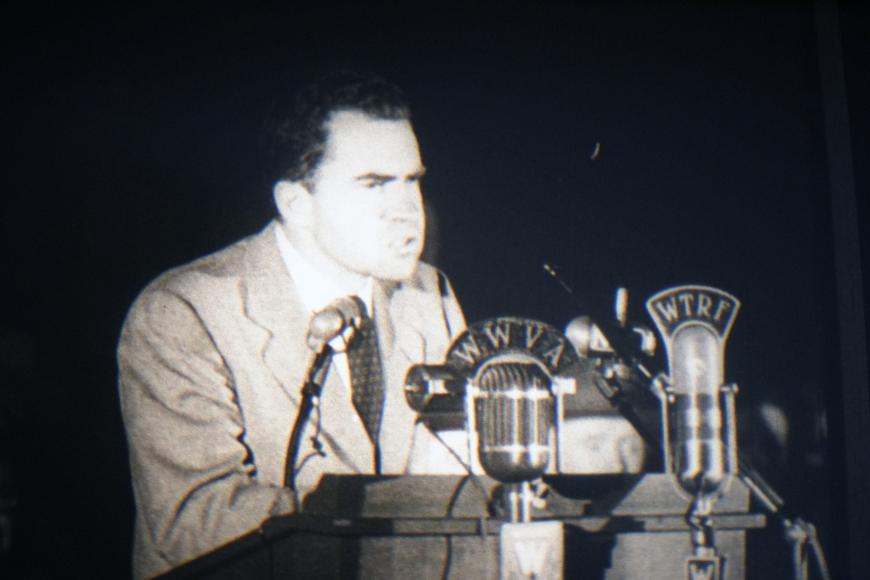
Three years before the Watergate affair brought down Richard Nixon, de Antonio exposed the President as a charlatan in this cruel and funny material montage. From an interview in the “Minutes” of the 1972 Leipzig Dokumentarfilmwoche: Question – “In each of your films, you expose a major American institution […]. Which did you choose for ‘Millhouse’?” De Antonio’s answer – “Nothing less than the traditional political process as a whole. The film is by no means a personal attack on Nixon. To expose a political opponent, all you need to do is rent a hall for him. The film attacks the American system, the credibility of this system, by turning on the perfect symbol of this system, the President.”
Tobias Hering, Tilman Schumacher
Credits DOK Leipzig Logo

Director
Emile de Antonio
Cinematographer
Ed Emshwiller, Richard Kletter, Bruce Shaw, Mike Gray, Dan O’Reilly
Editor
Mary Lampson
Producer
Emile de Antonio, Mark Lane
Retrospective: Un-American Activities 2025

My Country Occupied (Newsreel #151)

Heather Archibald, Tami Gold
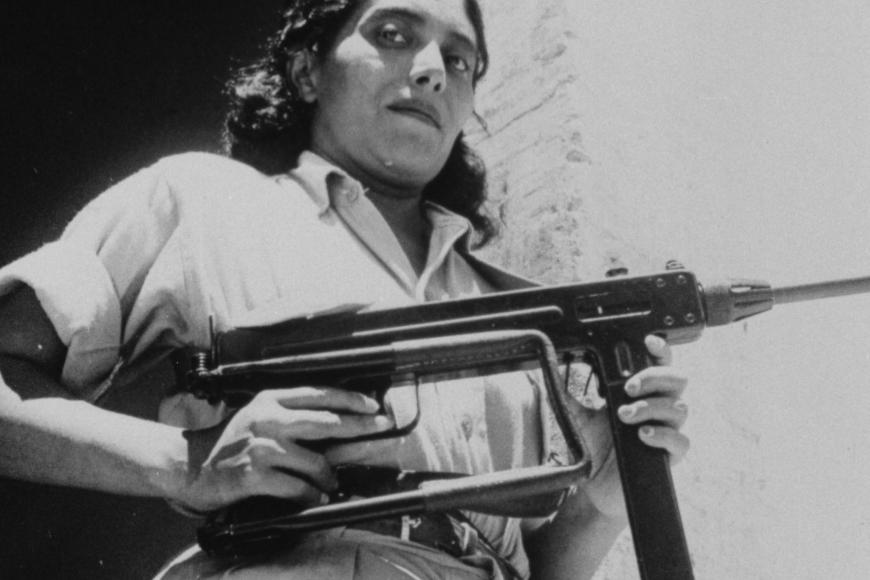
The female first-person narrator recalls her political awakening – from exploited day labourer to guerillera – and the fight against the United Fruit Company’s influence on her country.
Filmstill My Country Occupied (Newsreel #151)

My Country Occupied (Newsreel #151)

My Country Occupied (Newsreel #151)
Heather Archibald, Tami Gold
Retrospective: Un-American Activities 2025
Documentary Film
USA
1971
29 minutes
English
Subtitles: 
English
Set to high-contrast series of images in black and white that sometimes come to a standstill, the female first-person narrator recites an emphatic speech about her political awakening: her development from an exploited day-worker to a guerrillera fighting against the political and economic influence of the USA on Latin American states, in this case the globally active United Fruit Company and its dominance in Guatemala. “My Country Occupied” is a film in search of a political form, oscillating between rapidly edited agitprop in the spirit of Latin-American Third Cinema, polemically used found footage and rather catchy, folkloristic-looking passages about the country and its people.
Tobias Hering, Tilman Schumacher

Credits DOK Leipzig Logo

Director
Heather Archibald, Tami Gold
Producer
Newsreel
Filmstill Point of Order!

Point of Order!

Point of Order!
Emile de Antonio
Retrospective: Un-American Activities 2025
Documentary Film
USA
1964
97 minutes
English
Subtitles: 
None
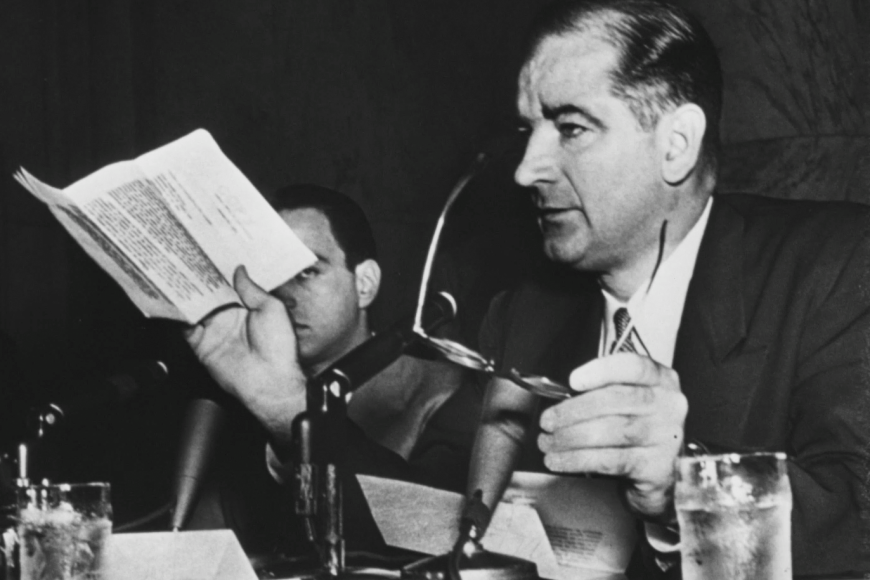
De Antonio was already forty when he became involved in filmmaking. He produced two early films of the New York Beat movement, “Pull My Daisy” (1959, Robert Frank, Alfred Leslie) and “Sunday” (1961, Dan Drasin), the latter also featuring in the 2025 Retrospective. He was also one of the founding members of the New American Cinema Group, along with Jonas Mekas, Shirley Clarke and others. “Point of Order!” became his directorial debut, the first cinema film compiled exclusively from television images. From 188 hours of material of the “Army–McCarthy hearings”, a tribunal broadcast live from the Senate in 1954 in which the notorious communist hunter Joseph McCarthy had to face an investigative committee, de Antonio distilled a farcical show trial at the end of which everyone involved looked like a convicted criminal.
Tobias Hering, Tilman Schumacher
Credits DOK Leipzig Logo

Director
Emile de Antonio
Editor
Robert Duncan
Producer
Emile de Antonio, Daniel Talbot
Filmstill Rush to Judgment

Rush to Judgment

Rush to Judgment
Emile de Antonio
Retrospective: Un-American Activities 2025
Documentary Film
USA
1967
125 minutes
English
Subtitles: 
None
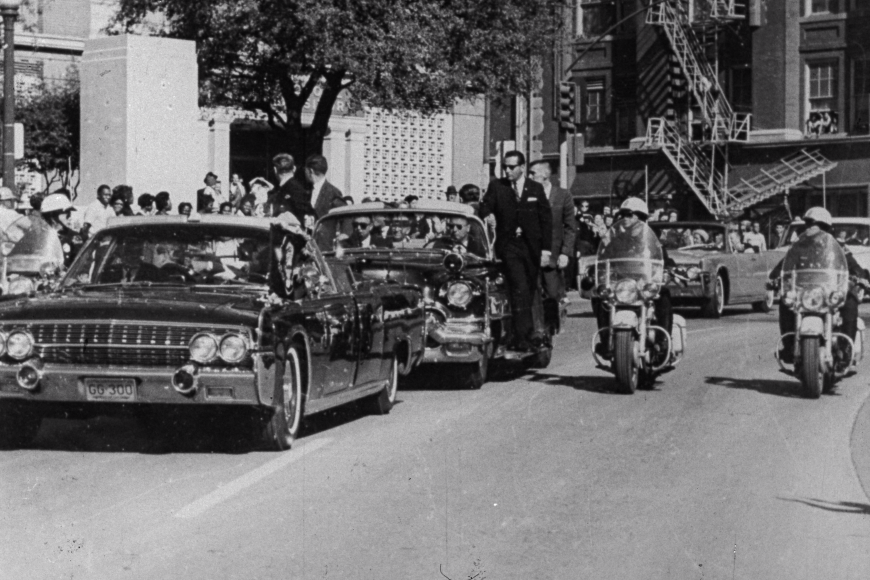
This critical analysis of the final report of the Warren Commission, who investigated the assassination of John F. Kennedy, is based on research by lawyer Mark Lane. Lane co-authored this film and published his eponymous book at almost the same time. De Antonio had studied with Kennedy at Harvard, which gave his film a personal dimension, despite his political distance to Kennedy. This may account for the argumentative, occasionally factual rigour that he and his editor Dan Drasin brought to the film. Ultimately, “Rush to Judgment” is a piece of belated legal assistance for Lee Harvey Oswald, who was declared to have acted alone and shot only two days after the assassination while in police custody, and whose legal interests were not adequately represented before the Warren Commission.
Tobias Hering, Tilman Schumacher

Credits DOK Leipzig Logo

Director
Emile de Antonio
Cinematographer
Robert Primes
Editor
Dan Drasin, Peter Dyke van Dyke
Producer
Emile de Antonio, Mark Lane
Sound
Paul Mielche
Retrospective: Un-American Activities 2025

The Chicago Maternity Center Story

Jerry Blumenthal, Suzanne Davenport, Sharon Karp, Gordon Quinn, Jenny Rohrer
The Chicago Maternity Center, which provided safe and affordable home births primarily to Black women, is threatened with closure. Resistance begins to form.
Filmstill The Chicago Maternity Center Story

The Chicago Maternity Center Story

The Chicago Maternity Center Story
Jerry Blumenthal, Suzanne Davenport, Sharon Karp, Gordon Quinn, Jenny Rohrer
Retrospective: Un-American Activities 2025
Documentary Film
USA
1976
60 minutes
English
Subtitles: 
German
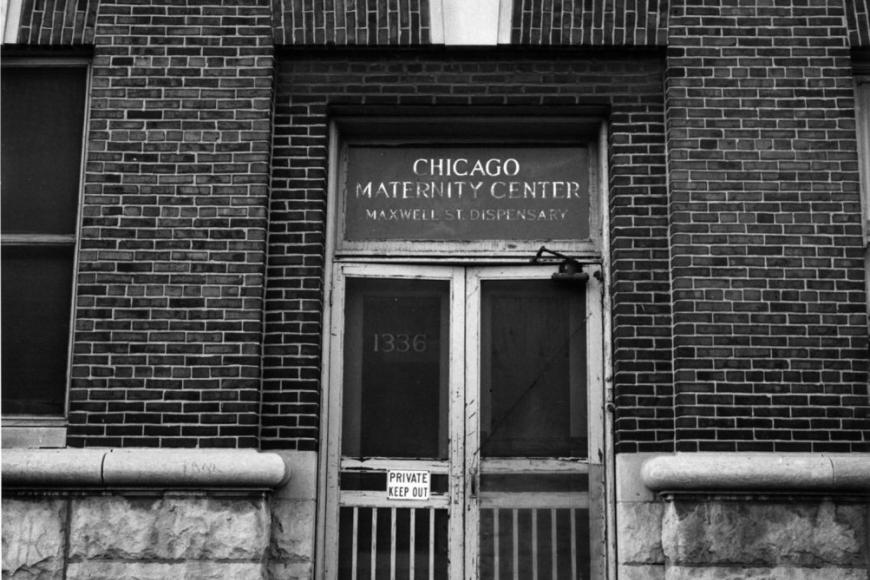
In 1974, the Maternity Center, located in a low-income Chicago neighbourhood, is acutely threatened by lack of financing from its funding body, North Western University. Resistance begins to form in the predominantly Black community, since this is an institution with a 75-year-old history that has provided countless woman with safe and affordable home-births. “The Chicago Maternity Center Story” uses this civil protest as a starting point to tell the story of the rampant commercialisation of medical care in the USA, including its sexist and racist connotations. A film that approaches the issue sometimes gently, sometimes with agitprop vigour.
Tobias Hering, Tilman Schumacher
Credits DOK Leipzig Logo

Director
Jerry Blumenthal, Suzanne Davenport, Sharon Karp, Gordon Quinn, Jenny Rohrer
Producer
Kartemquin Films