Film Archive

Sections (Film Archive)

Retrospective 2021

Night and Fog [German version FRG 1956]

Alain Resnais
Paul Celan, creator of the “Death Fugue”, shaped the West German reception history of Resnais’ film with the lyrical rhythm and tense switches of his translation.
Media Name: d7ef0d9f-69ba-42f9-81e8-ad7e90c57daf.jpg

Night and Fog [German version FRG 1956]

Nuit et brouillard [Synchronfassung BRD 1956]
Alain Resnais
Retrospective 2021
Documentary Film
France
1955
31 minutes
German
Subtitles: 
None
“Le sang a caillé, les bouches se sont tues,” Jean Cayrol writes. Paul Celan translates: “The blood has congealed, the mouths have fallen silent.” Alain Resnais’ archive film about the National Socialist concentration camps set new standards for the essayistic form. The score by Hanns Eisler had nothing to fear from changes to another language version. But the words of Jean Cayrol, more elegy than commentary? Paul Celan, creator of the “Death Fugue” and already associated with Cayrol as his translator, was asked to translate it into German. His lyrical rhythm, his tense switches deviating from the original text have shaped the West German reception history of Resnais’ film.
Sylvia Görke

Credits DOK Leipzig Logo

Director
Alain Resnais
Script
Paul Celan
Cinematographer
Sacha Vierny, Ghislain Cloquet
Editor
Alain Resnais, Henri Colpi
Producer
Anatole Dauman, Samy Halfon, Philippe Lifchitz
Score
Hanns Eisler
Narrator
Kurt Glass
Retrospective 2021

Night and Fog [German version GDR 1960]

Alain Resnais
Henryk Keisch’s new translation for DEFA made up for Paul Celan’s omissions. In his version of the text, the Soviet Union, left out of the FRG version, returned to the circle of Nazi victims.
Media Name: 7126c56a-bd01-4224-8b54-a0b2c2e024e8.jpg

Night and Fog [German version GDR 1960]

Nuit et brouillard [Synchronfassung DDR 1960]
Alain Resnais
Retrospective 2021
Documentary Film
France
1955
31 minutes
German
Subtitles: 
None
“Le sang a caillé, les bouches se sont tues,” Jean Cayrol writes. Henryk Keisch translates: “The blood has dried, the mouths have fallen silent.” When Resnais’ film was to be licensed for theatrical release in the GDR, it seemed obvious to resort to the West German dubbed version. But Celan’s translation failed to meet the approval of DEFA. They found fault with elisions that, for example, omitted the deportees from the Soviet Union. The official correspondence ended on an apodictic note: The acquisition was considered “irresponsible”. The writer and translator Henryk Keisch, loyal to the party line, was commissioned to write a new version – and of course made up for Celan’s omissions.
Sylvia Görke

Credits DOK Leipzig Logo

Director
Alain Resnais
Script
Henryk Keisch
Cinematographer
Ghislain Cloquet, Sacha Vierny
Editor
Alain Resnais, Henri Colpi
Producer
Anatole Dauman, Samy Halfon, Philippe Lifchitz
Score
Hanns Eisler
Narrator
Raimund Schelcher
Retrospective 2021

Paradise and Melting Pot

Herbert Viktor
Clean, neat, busy, enterprising – the Federal German view observes in Israel similarities to the FRG of the economic miracle years. A statement of sympathy.
Media Name: ef5c7bbb-f481-4dec-b901-ef2bdaeec257.jpg

Paradise and Melting Pot

Paradies und Feuerofen
Herbert Viktor
Retrospective 2021
Documentary Film
FRG
1958
78 minutes
German
Subtitles: 
None
Designed as a travelogue about Israel, Herbert Viktor emphasizes similarities to the FRG of the economic miracle years in his film: clean, neat, busy, enterprising. Haifa, for example, is described as having evolved from a “meeting place for Arabic caravans and robber bands” to the most modern port of the Levant. Viktor also pays tribute to the welcoming culture for the persecuted of the world, but omits to elucidate on the fates that lie behind them. The film, spiced up by staged intermezzi to become a statement of sympathy, was released in Federal German cinemas in 1959 under the patronage of Willy Brandt. It was not allowed on Israeli screens before 1962, when the death sentence against Adolf Eichmann had been upheld by the court of appeal.
Sylvia Görke

Credits DOK Leipzig Logo

Director
Herbert Viktor
Script
Herbert Viktor
Cinematographer
Heinz Hölscher
Editor
Ludolf Grisebach
Producer
Helmut Wisser
Sound
Reginald Beuthner
Score
Bernhard Eichhorn
Narrator
Herbert Viktor
Retrospective 2024

People at the Beach

Néstor Almendros
A poetic evocation of the beaches of Havana: people in the sun, in the water, in cafés, in embraces. Unofficial images and sounds of post-revolutionary Cuban relaxation.
Filmstill People at the Beach

People at the Beach

Gente en la playa
Néstor Almendros
Retrospective 2024
Documentary Film
Cuba
1960
12 minutes
without dialogue
Subtitles: 
None
The beaches of Havana, splashing around, tender gestures between lovers, the sun glistening on the water, hips swaying to music. With this light-handed etude, Néstor Almendros delivers a shimmering testimony of post-revolutionary relaxation – and an early proof of his virtuosity as a cinematographer.
The film was made at ICAIC – and disappeared there, too. The national film art institute founded in 1959 by order of the new government saw no place for such neorealistic extravaganzas in the new Cuban cinema and issued a screening ban. Néstor Almendros left Cuba in 1961 to become a world-renowned cinematographer in the US and Europe. His name was expunged from the ICAIC filmography published in the book accompanying the 1974 Cuban retrospective in Leipzig.
Sylvia Görke

Credits DOK Leipzig Logo

Director
Néstor Almendros
Script
Néstor Almendros
Cinematographer
Néstor Almendros
Editor
Néstor Almendros
Sound
Néstor Almendros
Retrospective 2022

Petra’s Adventure

Ingrid Reschke
Petra accurately notes down the events of a special day, tells us about a paperchase and a sailing boat ride. One of the first Film Academy productions, smoothly directed.
Filmstill Petra’s Adventure

Petra’s Adventure

Petras Erlebnis
Ingrid Reschke
Retrospective 2022
Documentary Film
GDR
1956
6 minutes
German
Subtitles: 
None
Petra looks back on an eventful day: Together with other kids she went on a paperchase, solved a few small tasks and coordinated with her assigned partner. There were some adventures, but also a classroom situation set up in a meadow where one’s knowledge of the local flora was tested. In the end, they all boarded sailing boats and glided off into an atmospheric evening. A protocol in letters, accurately drawn up at the Potsdam Pioneer House, serves as the framework for one of the first completed films of the newly founded German Academy of Film Art in Babelsberg.
Carolin Weidner

Credits DOK Leipzig Logo

Director
Ingrid Reschke
Script
Ingrid Reschke
Cinematographer
Kurt Marks
Producer
Deutsche Hochschule für Filmkunst
Retrospective 2024

Refrain

Krzysztof Kieślowski
Even in death, you can’t get rid of bureaucracy! In the day-to-day business of a Warsaw funeral parlour, mourning is mired in paperwork, routine and triviality.
Filmstill Refrain
Filmstill Refrain

Refrain

Refren
Krzysztof Kieślowski
Retrospective 2024
Documentary Film
Poland
1972
11 minutes
Polish
Subtitles: 
English
It is said of Krzysztof Kieślowski that he did not see himself as a political filmmaker. At least this early documentary casts doubt on this, for it depicts the cold stranglehold of bureaucracy. The setting is a municipal funeral home in Warsaw. Phone calls are made, documents checked and stamped. Business runs like clockwork, from the cradle to the grave.
Leipzig naturally maintained ties with older Polish documentarists like Jerzy Bossak, even after he relocated to Denmark. The fact that Kieślowski and other notable Polish film artists of his generation did not appear in the programmes before 1990 fits into the image of a life consumed by pettiness painted here. The real issue was probably animosities with the festival in Cracow.
Sylvia Görke

Credits DOK Leipzig Logo

Director
Krzysztof Kieślowski
Cinematographer
Witold Stok
Editor
Maryla Czolnik
Producer
Wytwórnia Filmów Dokumentalnych
Sound
Michał Żarnecki, Małgorzata Jaworska
Retrospective 2024

Report

Volker “Via” Lewandowsky
A collage about the lascivious inertia of power, full of allusions to the rotting Roman Empire. In 1987, the decay of the world-organising systems could already be smelled from the GDR underground.
Filmstill Report
Filmstill Report

Report

Report
Volker “Via” Lewandowsky
Retrospective 2024
Experimental Film
GDR
1987
7 minutes
without dialogue
Subtitles: 
None
The GDR formed an image of its citizens, hardy in everyday life and firm in principles, that it wished to see reflected in “their” art. Dresden-based artist Volker, called Via Lewandowsky, avoided the vanity of the GDR art scene and reflected something else back to his superior state: the indolence of the flesh, the gluttony of the systems that allegedly ordered the world. This Super 8 film from the late German Democratic subculture rubs against Heiner Müller’s stage text “Anatomy Titus Fall of Rome A Shakespeare Commentary”. The manuscript was (half) published in 1986 by the East Berlin Henschelverlag with the following proviso: “If the play is not accepted for production, this book must be returned immediately […].” Lewandowsky emigrated to West Berlin in 1989 before the fall of the Wall.
Sylvia Görke

Credits DOK Leipzig Logo

Director
Volker “Via” Lewandowsky
Retrospective 2024

Rostov – Luanda

Abderrahmane Sissako
In 1980, Mauritanian-Malian film student Sissako meets an Angolan on the train to Rostov-on-Don. Years later, the USSR has passed, he searches for him in his homeland – and finds traces of colonial and world history.
Filmstill Rostov – Luanda

Rostov – Luanda

Rostov – Luanda
Abderrahmane Sissako
Retrospective 2024
Documentary Film
Angola,
France,
Mauritania,
Germany
1997
58 minutes
French,
Portuguese (Portugal)
Subtitles: 
German
On a train to Rostov-on-Don in 1980, Malian-Mauritanian bursary holder Abderrahmane Sissako met the Angolan Afonso Baribanga, who had also been sent to the USSR. Both are supposed to learn Russian. Sissako studied film directing at the WGIK in Moscow, while Baribanga pursued a different career and eventually returned to Angola, where a post-colonial civil war was raging. Years later, Sissako sets off in search of his vanished friend, travelling to his own and Baribanga’s African homelands, where the old and new world powers have left devastating traces. In 1997, in a side section, DOK Leipzig presented the feature-length version of Sissako’s travelogue, which is steeped in contemporary and colonial history. The 2024 Retrospective presents an abridged version.
Sylvia Görke

Credits DOK Leipzig Logo

Director
Abderrahmane Sissako
Script
Abderrahmane Sissako
Cinematographer
Jacques Besse
Editor
Claudio Martinez
Producer
Movimento Production, ZDF Das kleine Fernsehspiel
Sound
Jean-Jacques Quintet, Paolo de Jesus
Retrospective 2023

Sitis

Rainer Schade
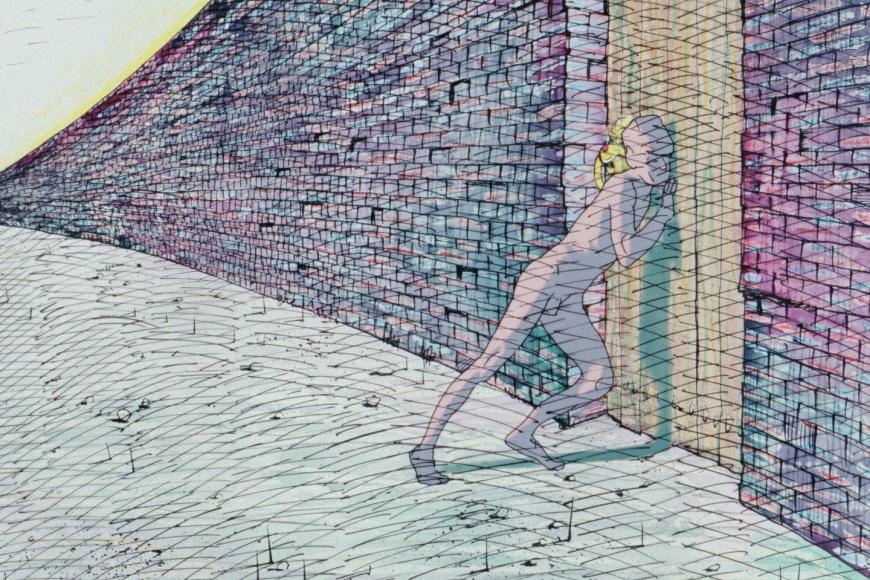
A man tries to overcome a wall throughout his life. In vain. When at last a door opens unexpectedly, it seems too late to take the path to freedom.
Filmstill Sitis
Filmstill Sitis

Sitis

Sitis
Rainer Schade
Retrospective 2023
Animated Film
GDR
1989
11 minutes
German
Subtitles: 
None
A wall stands in a barren, inhospitable landscape, insurmountable. While the birds are flying unhindered through the air, a human being struggles in vain to open a door in the wall. First as a small child, then as an adult, finally as an old man. When the door at last unexpectedly gives way, it seems too late. A dark allegory by the Leipzig-based painter and graphic artist Rainer Schade.
Katharina Franck, Andreas Kötzing

Credits DOK Leipzig Logo

Director
Rainer Schade
Script
Rainer Schade
Cinematographer
Helmut Krahnert
Editor
Anita Uebe, Renate Ritter
Producer
DEFA-Studio für Trickfilme
Sound
Heinz Kaiser, Thomas Weiß
Score
Simone Danaylowa
Animation
Ralf Kukula, Wolf-Ulrich Reichel, Erika Wahl
Retrospective 2023

Soviet Troops in Prague and Budapest (Panorama, 29.7.1968)

anonymous
A curious look at the socialist reform experiment in Prague, with sceptical undertones: Will everything end like it did in Hungary in 1956? Soviet tanks are already being deployed along the border of the ČSSR.
Filmstill Soviet Troops in Prague and Budapest (Panorama, 29.7.1968)

Soviet Troops in Prague and Budapest (Panorama, 29.7.1968)

Sowjetische Truppen in Prag und Budapest (Panorama, 29.7.1968)
anonymous
Retrospective 2023
Documentary Film
FRG
1968
15 minutes
German
Subtitles: 
None
Prague in July 1968. The West German television magazine Panorama reports on the situation in the ČSSR, drawing parallels to the developments in Budapest in 1956. Curious and sceptical at the same time, the feature explores the possibilities of an independent reform movement, but also soberly concludes that the Soviet Union will not tolerate this. The tanks are already waiting at the border.
Katharina Franck, Andreas Kötzing

Credits DOK Leipzig Logo

Director
anonymous
Producer
ARD
Retrospective 2024

Staßfurt – Windhoek

Lilly Grote, Julia Kunert
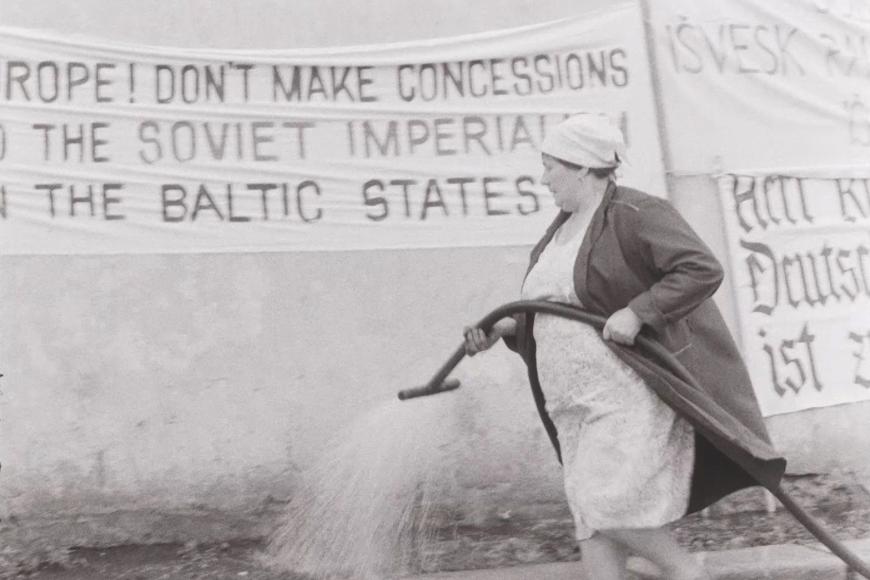
In August 1990, the still-GDR sends 425 Namibian refugee children back to their liberated “homeland”. Suddenly, after eleven years of hospitality, things had to move quickly. Beginnings and departures coincide.
Filmstill Staßfurt – Windhoek

Staßfurt – Windhoek

Staßfurt – Windhoek
Lilly Grote, Julia Kunert
Retrospective 2024
Documentary Film
GDR
1990
52 minutes
German
Subtitles: 
None
History in a hurry: Namibia becomes independent in March 1990, in July the Publicly Owned Enterprise DEFA becomes a GmbH, in October GDR becomes FRG East, in August a West and an East German filmmaker record one of the last GDR inconsistencies for DEFA. The state in pre-retirement sends 425 Namibian children, whom it had rescued from Angolan camps eleven years earlier, “home.” Hastily. But why? When Grote, Kunert and the children arrive, a Namibian minister explains that the East German supporters of these colonial war victims are now out of power. The new powers had no interest … In the Leipzig festival selection in 1990, and again in 1991, this film about German-Namibian foreignness and alienation cannot be found. The Retrospective 2024 makes up for this strange omission.
Sylvia Görke
Credits DOK Leipzig Logo

Director
Lilly Grote, Julia Kunert
Script
Lilly Grote, Julia Kunert
Cinematographer
Lilly Grote, Julia Kunert
Editor
Ingeborg Marszalek
Producer
DEFA-Studio für Dokumentarfilme GmbH
Sound
Lilly Grote, Julia Kunert
Retrospective 2023

The Baltic Way

Arūnas Matelis, Audrius Stonys
In 1989, a human chain stretched hundreds of kilometres across Latvia, Estonia and Lithuania to demand the independence of the Baltic states. Images of a unique demonstration.
Filmstill The Baltic Way

The Baltic Way

Baltijos kelias
Arūnas Matelis, Audrius Stonys
Retrospective 2023
Documentary Film
Lithuania
1990
10 minutes
Lithuanian
Subtitles: 
English
On 23 August 1989, the people in the Baltic states demonstrated their solidarity against the Soviet occupation and took to the streets for their sovereignty. They formed an over 600-kilometres-long human chain stretching through Lithuania, Latvia and Estonia. Touching images of a one-of-a-kind event, captured in a lyrical composition.
Katharina Franck, Andreas Kötzing

Credits DOK Leipzig Logo

Director
Arūnas Matelis, Audrius Stonys
Script
Arūnas Matelis, Audrius Stonys
Cinematographer
S. Griškevicius, J. Martonis, A. Petraits, Z. Pomecka, Z. Putilovas, R. Damulis
Producer
Lietuvos Kino Studija Nemencines
Sound
Viktoras Juzonis
Retrospective 2023

The Cathedral

Laila Pakalniņa
When Soviet troops invade to suppress the independence movement, barricades are erected in Riga. A bloody struggle begins. The cathedral becomes a place of refuge.
Filmstill The Cathedral

The Cathedral

Doms
Laila Pakalniņa
Retrospective 2023
Documentary Film
Latvia
1991
19 minutes
Latvian
Subtitles: 
English
The Latvian director’s graduation film from Moscow Film School does not deliver images loyal to the regime but is a testimony to her journalistic background. When the independence struggle is to be suppressed by military power, the people in Riga erect barricades. Laila Pakalniņa captured the dramatic events whose topicality is frightening.
Katharina Franck, Andreas Kötzing

Credits DOK Leipzig Logo

Director
Laila Pakalniņa
Script
Laila Pakalniņa
Cinematographer
Gints Bērziņš
Producer
Ināra Kolmane
Sound
Juris Riekstiņš, Ģirts Gaiķis
Retrospective 2024

The Mad Masters

Jean Rouch
Followers of the Hauka cult in Ghana enter the bodies of the colonialists and go mad to European marching music. An ethnofiction that remains disturbing and controversial to this day.
Filmstill The Mad Masters

The Mad Masters

Les maîtres fous
Jean Rouch
Retrospective 2024
Documentary Film
France
1955
28 minutes
English
Subtitles: 
None
This still controversial ethnofiction is one of Jean Rouch’s most famous films. It stages followers of the Hauka cult in Ghana incorporating their colonial masters to marching music imported from Europe. The disturbing work was released at the same time as the first Leipzig festival year, but would have gone beyond the scope of the “Culture and Documentary Film Week”. This was because the festival did not adopt an international focus until 1960. Nevertheless, Rouch floats through Leipzig’s festival history as an inspiring genius: He is regarded as the founder of Cinéma-Vérité, a documentary concept that was pursued with great interest in Leipzig, and he irritated the colonial gaze by encouraging African filmmakers to determine the images of their continent themselves.
Sylvia Görke

Credits DOK Leipzig Logo

Director
Jean Rouch
Cinematographer
Jean Rouch
Editor
Suzanne Baron
Producer
Les Films de la Pléiade
Sound
André Cotin
Narrator
Jean Rouch
Retrospective 2023

The Orange Alternative

Mirosław Dembiński
Can a dwarf be dangerous? When martial law is imposed, a protest movement forms in Poland that undermines the order of the regime with subversive artistic interventions.
Filmstill The Orange Alternative

The Orange Alternative

Pomarańczowa Alternatywa
Mirosław Dembiński
Retrospective 2023
Documentary Film
Poland
1988
24 minutes
Polish
Subtitles: 
English
“No freedom without dwarves!” What form of oppositional logic can take hold when nothing is logical anymore? “The Orange Alternative” has answers. When living conditions in communism reach the threshold of the surreal, the protest movement that sprang from student circles decides to subvert the order of the regime by Dadaist artistic interventions.
Katharina Franck, Andreas Kötzing

Credits DOK Leipzig Logo

Director
Mirosław Dembiński
Cinematographer
Maciej Odoliński
Editor
Bogusława Furga
Producer
The Polish National Film School in Łódź
Sound
Urszula Zaręba, Jan Silczak
Score
Piotr Wilczyński
Retrospective 2024

The Truth About Fidel Castro Revolution

Victor Pahlen
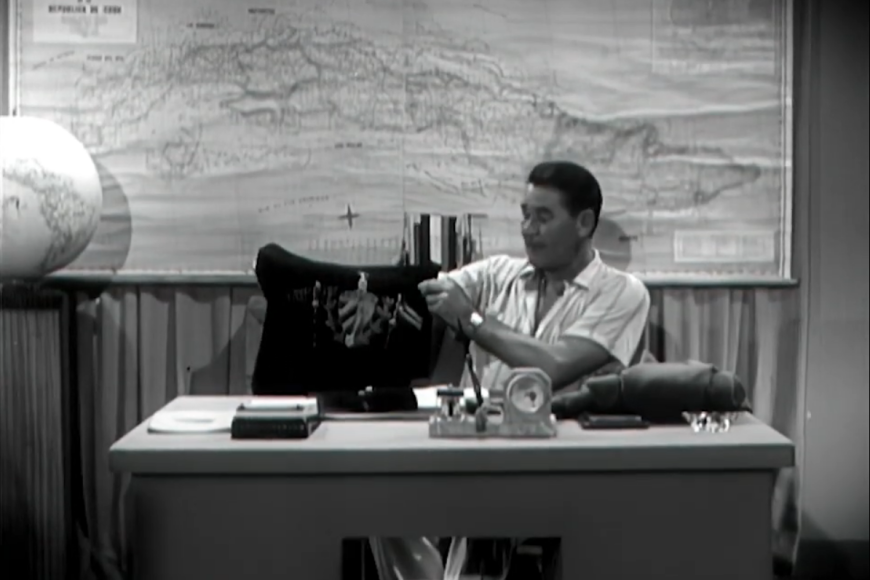
Hollywood star Errol Flynn loves Havana, its casinos and its cocktails. As an eyewitness to the Cuban Revolution, he also learns to love Fidel Castro, the “Cuban Robin Hood.”
Filmstill The Truth About Fidel Castro Revolution

The Truth About Fidel Castro Revolution

The Truth About Fidel Castro Revolution
Victor Pahlen
Retrospective 2024
Documentary Film
USA,
Cuba
1959
51 minutes
English
Subtitles: 
None
When Hollywood star Errol Flynn appeared on the Leipzig festival screen in 1960, he had been dead for a year. The audience saw him in his last role: as an aged lover – of Havana, casinos and cocktails, as the nemesis of the Cuban liberation movement, which had declared war on corrupt bon vivants like him. The movie swashbuckler rhapsodises about his Cuban counterpart Fidel Castro and nonchalantly moderates the history of the dictatorship and liberation of the island state, cigarette holder in hand.
Did Hollywood call Leipzig to recommend this film? It was probably Moscow, because its world premiere is said to have taken place there in 1959. But how did the self-confessed anti-communist Errol Flynn come to make this declaration of love? Maybe his new friend Fidel did not tell him the whole truth?
Sylvia Görke

Credits DOK Leipzig Logo

Director
Victor Pahlen
Script
Victor Pahlen
Producer
Victor Pahlen
Narrator
Errol Flynn