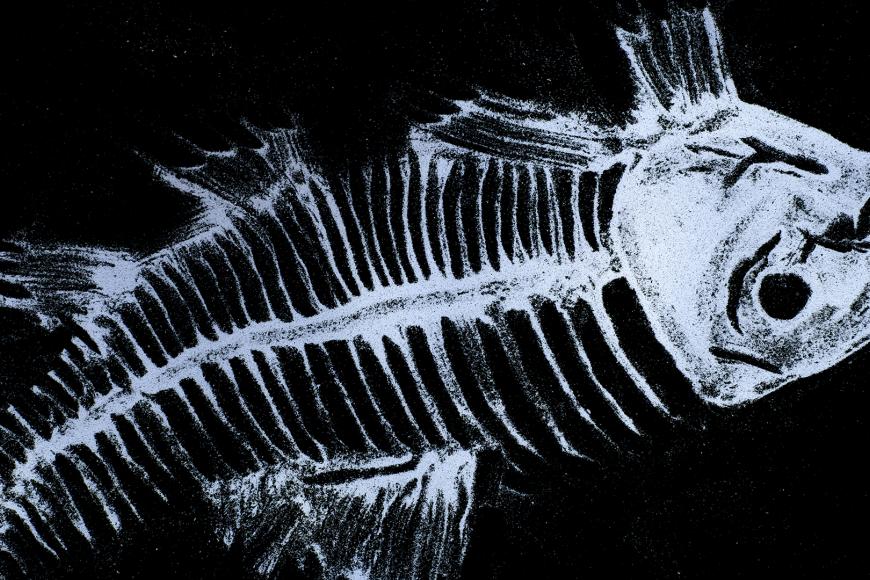
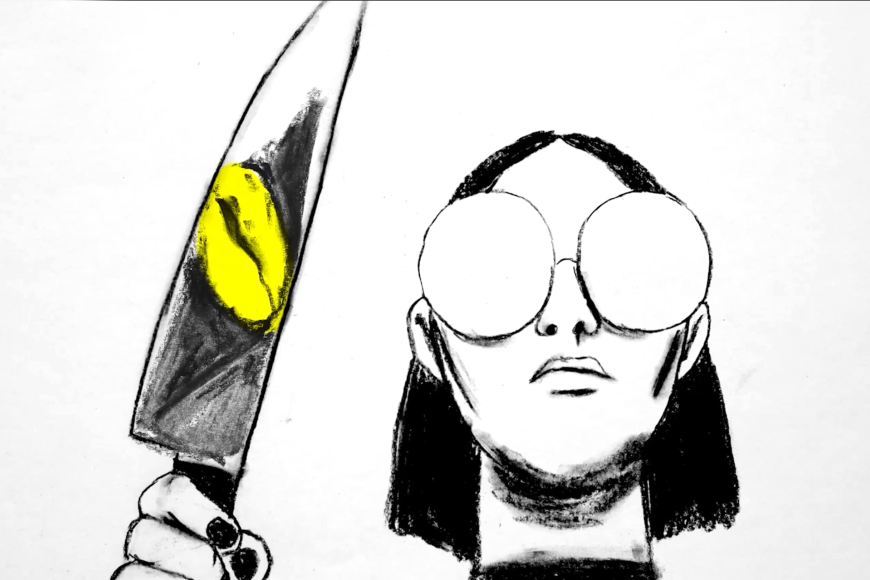
With darkness comes fear, and with fear the light disappears. During a dive together, sunken memories rise in “him”. And just like the process of sedimentation, when the lake “rots”, the open water becomes a swamp. Growing anxiety accelerates the breath to the rhythm of the increasingly intense lyrical language. Meanwhile the power of the vortices and expressive Swiss-German tone serve to tint and shape this captivatingly graphical sand animation.
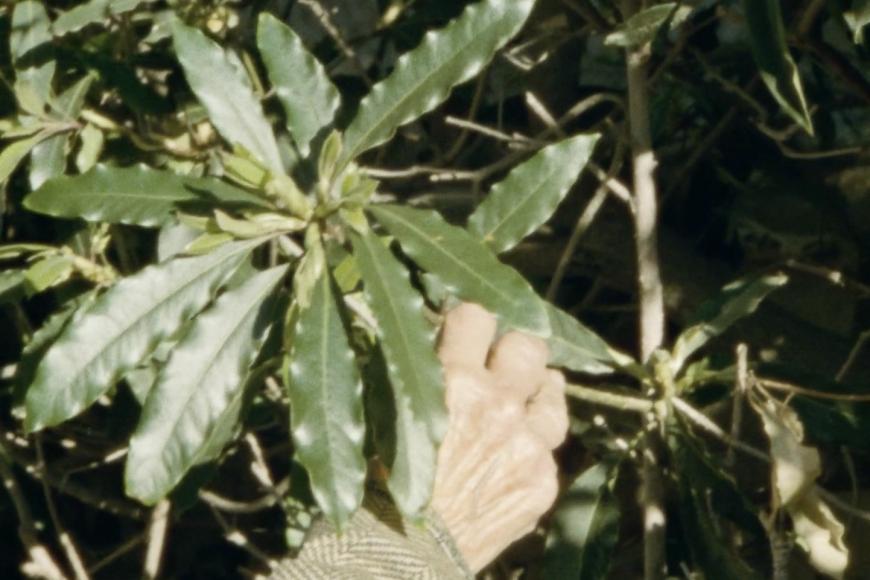
A minimalist eulogy to the painter Luchita Hurtado, who only experienced her breakthrough at the age of 97. A film in autumn colours about a woman in tune with nature.
A visual artist all her life, Luchita Hurtado only reluctantly experienced her breakthrough at the age of 97. “Green Turns Brown” is a minimalist eulogy to the publicity-shy painter. Shot on Super 8 film stock during the last months of her life, this film, which revels in autumn colours, paints the portrait of a woman in tune with nature who sees death not as the end but as the crossing of a border. “Life goes on.”
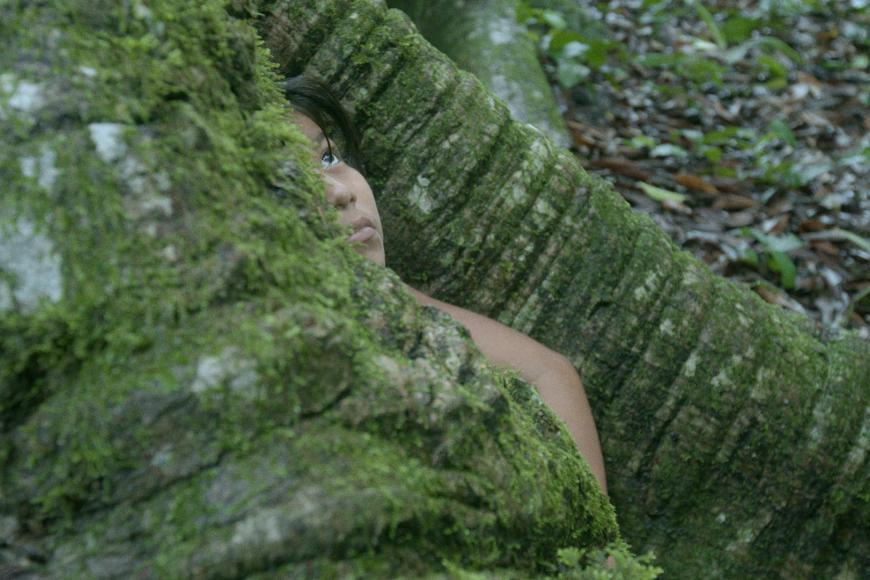
A voice speaking the Aztec language Nahuatl and a ritual song accompany the children’s games in the rain forest. They put their ears to the trees, listening to their stories.
A voice speaking the Aztec language Nahuatl and a ritual song accompany the children’s games in the Mayan rain forest. They put their ears to the trees which seem to speak to each other and to the universe. They listen to an ancient love story that continues today. A myth of Mesoamerican culture is invoked. Animated sequences and extreme backlighting visualize the tree’s inner life. What images may emerge in the children’s mind’s eyes?
Anke Leweke
Credits
Director
Fernando Colin Roque
Script
Chloé Belloc
Cinematographer
Fernando Colin Roque
Editor
Fernando Colin Roque, Chloé Belloc, Mathilde Lavenne
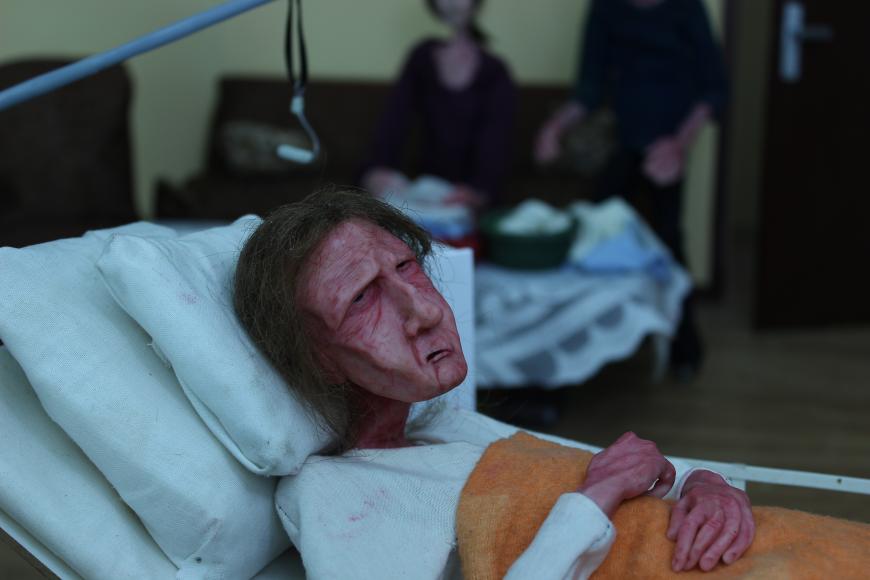
An old woman in her final days is the centre of attention within her family. But her selfhood fades away amid being cared for by her husband and daughter, who have problems of their own.
She is the centre of attention, but exhausted by life. An old woman in her final days, bedridden and too weak to speak to her husband and daughter. Her selfhood fades away while in the care of her relatives, who have problems of their own. But Julia Orlik brings the woman back into the foreground with her minimalist concept and touching puppet design.
André Eckardt
Credits
Director
Julia Orlik
Script
Julia Orlik
Cinematographer
Julia Orlik
Editor
Aleksandra Rosset
Producer
Agata Golanska
Sound
Bogdan Klat
Animation
Julia Orlik
World Sales
Marta Swietek
Winner of:
Golden Dove Short Animated Film (International Competition Short Film)
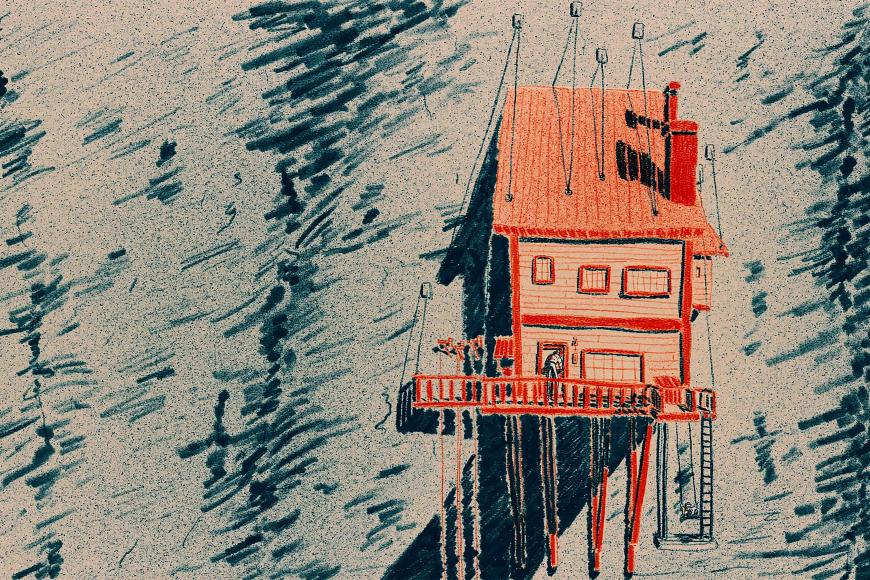
A house on the cliffs, a father, a son, and the ice business. With a sure sense of style, João Gonzalez turns his atmospheric animation into a family metaphor.
There is a house hanging from heavy ropes, firmly anchored to the rocks. Up there in the cliffs, far above the town below, a father lives with his son in the cold. In his 2D frame-by-frame animation, director João Gonzalez uses few colours, which makes the harsh shadows and extreme camera angles of his drawings all the more atmospheric. He has realised a metaphorical tale that can do without dialogue, relying on sound and images alone.
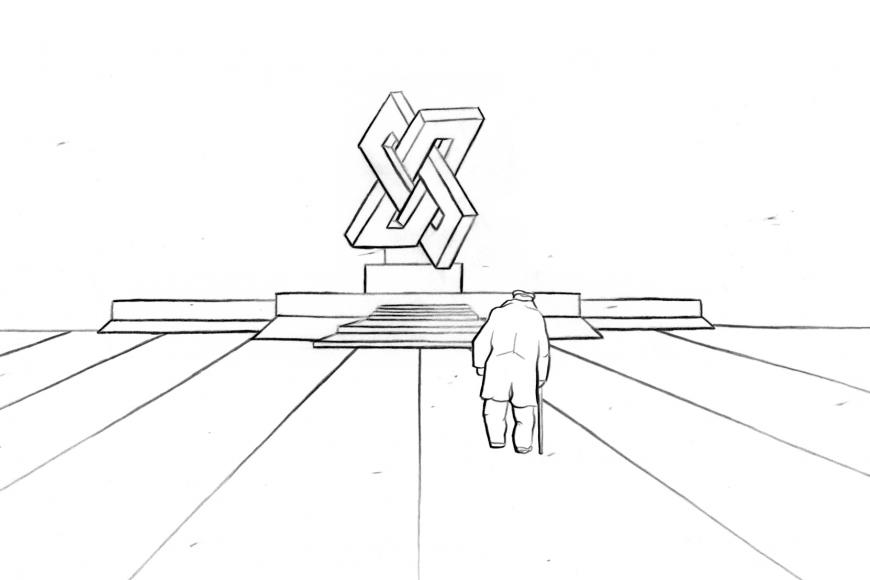
A complex exploration of transience, life and death, created by minimalist means and in animated form. Atmospheric, subtle and at the same time apocalyptic.
Marta Pajek (digitally) created a complex, atmospheric universe – with minimalist means and yet rich in detail. References to contemporary history meet visions of an intuited, dystopian future. We are made aware of (our own) transience in subtle, but almost brutal ways. Ageing bodies, ageing ideas. In the end, the grande dame of Polish cinema, actor Anna Polony, sings: “… when will we ever learn?”
Borjana Gaković
Credits
Director
Marta Pajek
Script
Marta Pajek
Editor
Marta Pajek
Producer
Piotr Szczepanowicz, Grzegorz Wacławek
Co-Producer
Maral Mohammadian
Sound
Michał Jankowski, Piotr Knop
Score
Aleksandra Gryka
Animation
Marta Pajek, Alex Boya
World Sales
Luce Grosjean
Winner of:
Golden Dove Short Animated Film (International Competition Short Film)
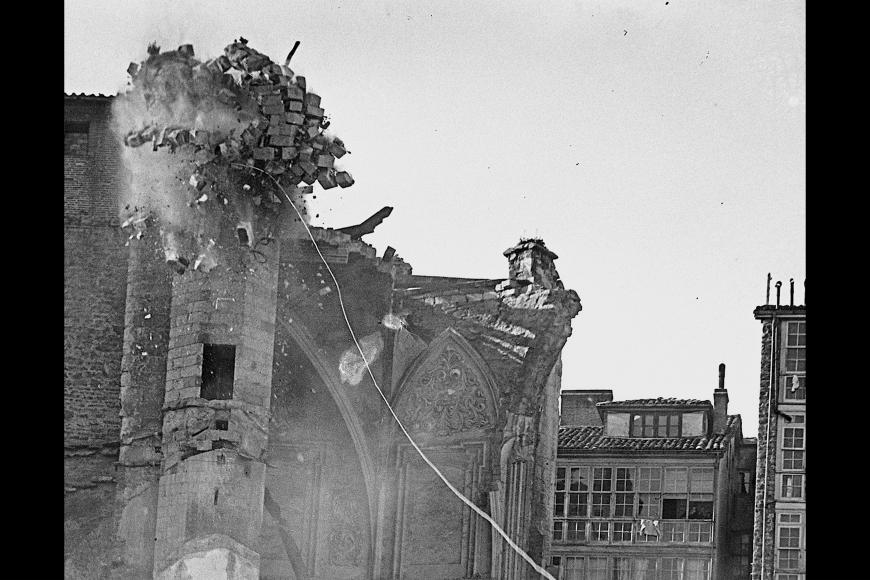
The six-decade transformation of a block of houses, shown by means of artfully featured archival shots, highlights the beauty and sadness of human-made decay.
In the blink of an eye – as the film is titled – 66 years pass by, seven centuries of stone crumble and a savings bank replaces a church. In six and two half chapters, Jorge Moneo Quintana succeeds in a feat of archival work, montage and sound design. The organic merging of images that show the site’s transformation submerge the audience into a pleasantly sober reflection on the beauty and sadness of decay.
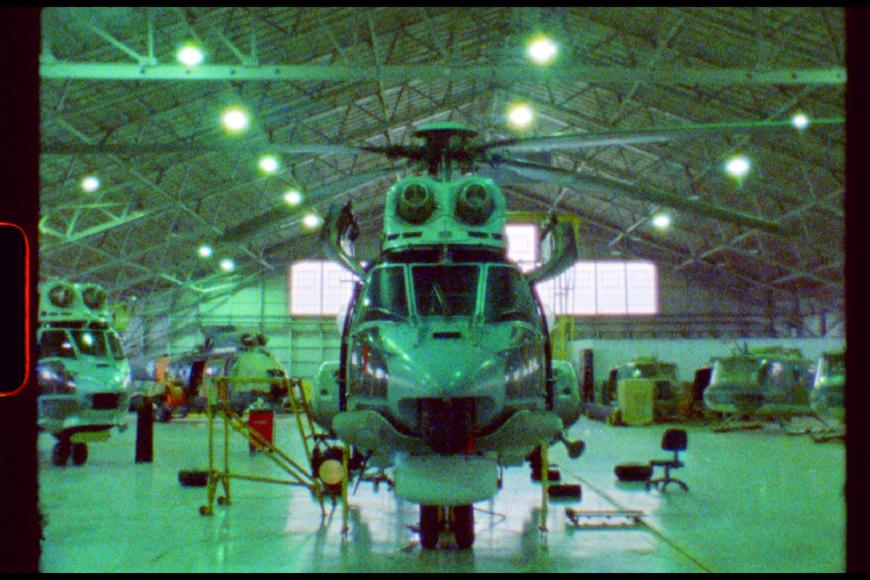
Shimmering 8mm images make our present seem like something from the past. For I.O, a girl from a future society, they are memories of the world before climate change.
Planes of all sizes, fun fairs, neon advertising, protesting people, men, women and children having fun, desert-like landscapes, urban views – the shimmering 8mm images develop a peculiar pull. They come from our present day but seem strangely distant, past. It’s the visual diary of I.O, a girl who lives in a future surveillance state and remembers the world before climate change.
Visual artist Fransix Tenda Lomba addresses the ideological function of the school in an animated collage: a walk through Congo’s historical education system.
The first animated film by visual artist Fransix Tenda Lomba is a kind of parcours through Congo’s historical education systems – and an analysis of the ideological function of the institution of the school. Using impressive collages and an always ironic commentary, the film – tellingly produced in Belgium – confronts its Western audience with their own ignorance about the region, challenging both their aesthetic and political thinking.
In a blurred video the grandparents and their kitchen live on – a nostalgic place in the distant Ukraine of childhood which the granddaughter virtually recreates and re-feels.
English, German Subtitles for deaf and hard-of-hearing
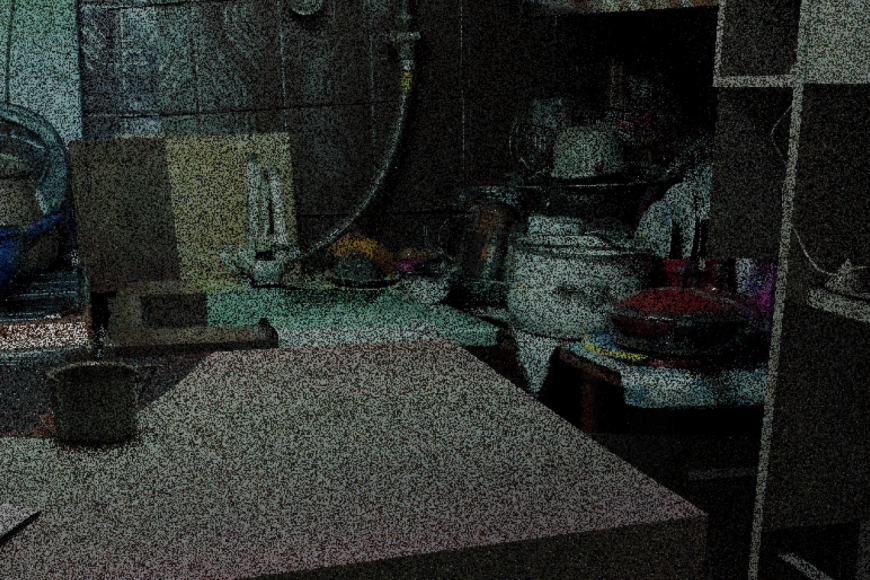
Click, click, she virtually recreates a cluttered, narrow kitchen on her computer. Lady Di smiles with creased photo edges from the refrigerator, a half-opened chocolate bar lies on the table. The technical-looking, detailed digital reconstruction runs like a fingertip along remembered images, tracing their nicks. The images feed off a blurred video in which the grandparents and their kitchen-cum-living-room live on – a nostalgic place in the distant Ukraine of childhood.
André Eckardt
Credits
Director
Nataliya Ilchuk
Producer
Nataliya Ilchuk, Le Fresnoy – Studio national des arts contemporains
Witali and Łukasz have graduated from the Orthodox seminary. To become priests, they must get married. But they prefer to live for the moment in their unorthodox flat share.
Witali and Łukasz have graduated from the Orthodox seminary. To take up priesthood, they must either start a family or become monks. But the two friends prefer to live for the moment, to muse, philosophize and sing. The camera looks on, full of empathy, giving the two men space and time to face their situation. A documentary observation turns into a thriller: Can their tender friendship withstand religious obligations and family expectations?
Anke Leweke
Credits
Director
Monika Proba
Script
Monika Proba
Cinematographer
Zvika Gregory Portnoy
Editor
Adriana Fernández Castellanos, Monika Proba
Producer
Ewa Jastrzebska, Jerzy Kapuscinski, Magdalena Borowiec, Tatiana Matysiak, Daria Zienowicz
Day and night, London taxi drivers are required to memorise 320 routes – a joke for the robot cars of the future. But there’s a lot more to the job than just getting people from A to B.
Since 1865, no cab driver in London has been able to omit “The Knowledge”. It requires the memorisation of 320 routes, an achievement that takes years, but has been made into a joke by the robot cars of the future. A flesh-and-blood cabby “interacts with people from all walks of life”, according to a brochure by Transport for London, and that’s “a lot more than just taking people from A to B”. Visually fascinating, Colson traces his interviewees’ mind maps of the city using the mapping technology of robot cars.
A portrait steeped in colours and music of a young singer quivering with life, her dedication to the traditions of southern Italy and her attempt to break out. Freedom. Rhythm. Tragedy.
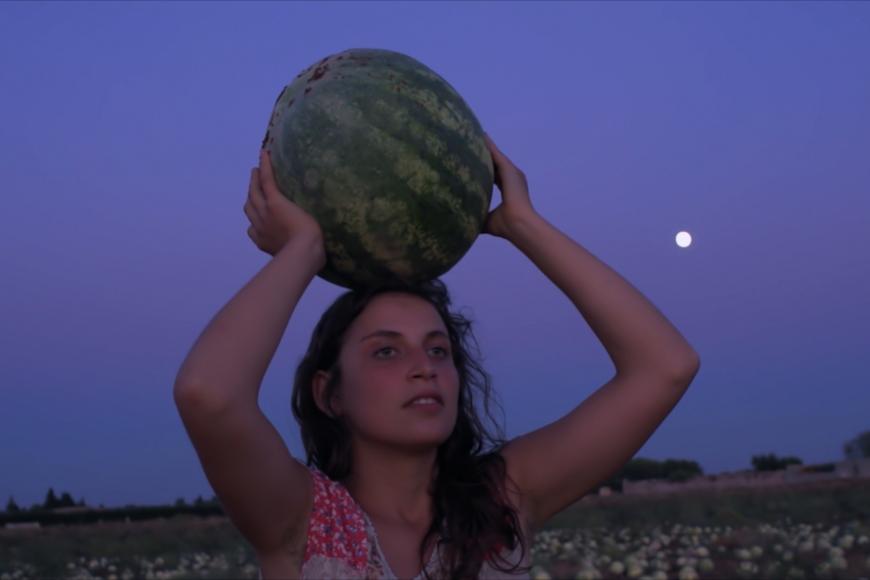
Enza, in her early twenties, is a singer and seeker studying the rhythms of life in Salento. She breathes music, collects old folksongs and thus connects the people, the present and the past. Rooted in Tarantism and in the tradition of the healers she uses singing as a means to fight alienation. Her portrait is a cinematic legacy vibrating with intensity. It reveals the thin line walked by those who refuse to be satisfied with relative freedom.
Cristobal the fisherman loves the sea and its inhabitants, which he encounters off the Mexican port of Lázaro Cárdenas. But the water is slowly turning into a toxic soup.
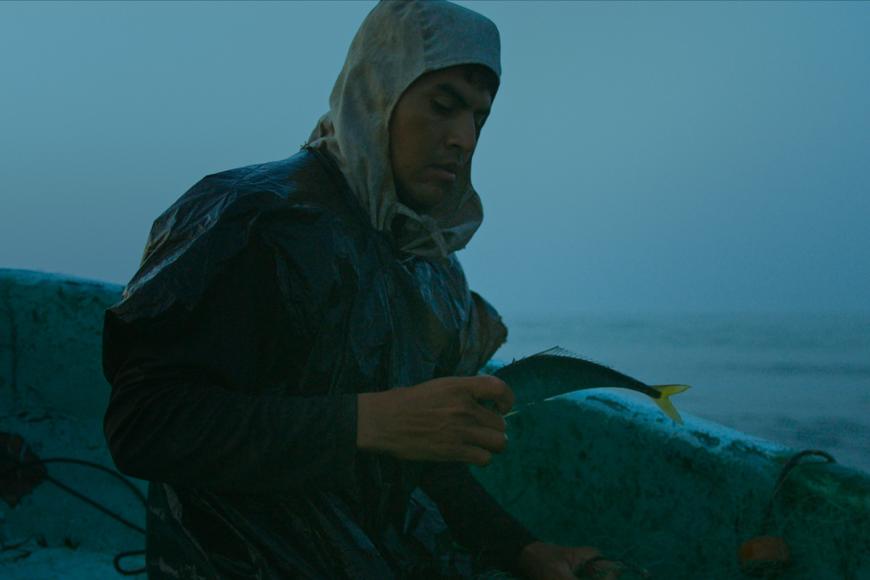
Cristobal, a young fisherman at work outside the Mexican port of Lázaro Cárdenas, shares his insights: Fishing is harder than working out. Also, he and the sea are connected by a progressing disease. At night he perceives what can only be grasped from the boat: the chemicals flowing into the water, the smell, the red lights of the steel mill. “Men of Salt” tells of a dilemma: What if you identify with an ecosystem that’s ceaselessly being abused?
Carolin Weidner
Credits
Director
Luis Armando Sosa Gil
Script
Luis Armando Sosa Gil
Cinematographer
Luis Armando Sosa Gil
Editor
Luis Armando Sosa Gil
Producer
Luis Armando Sosa Gil, Beuukubi Arenas
Sound
Luis Armando Sosa Gil, Carlos Cortés Navarrete, Oscar Victoria, Odin Acosta
Sound Design
Carlos Cortés Navarrete, Oscar Victoria, Odin Acosta
Scenes of a marriage as a minimalist, vibrating black and white animation: A woman and a man in a room. A fly rotates around the lightbulb and the couple around themselves.
A fly rotates around a lightbulb, a spoon turns in a cup. Everything moves in circles here, including the life of the couple. He looks at his mobile phone, she does the sun salutation. Even her somersaults don’t make him look up. The minimalist black and white animation begins to vibrate. The monotony gets out of rhythm. She imagines him as a fly and chases him. Scenes of a marriage, reflected in the yellow eyes of a gecko.
Anke Leweke
Credits
Director
Marta Magnuska
Script
Marta Magnuska
Editor
Ewa Golis, Marta Magnuska
Producer
Piotr Szczepanowicz, Grzegorz Wacławek
Co-Producer
Sabine Andersone
Sound
Michał Fojcik
Animation
Marta Magnuska, Kristīne Zvirbule, Mārtiņš Dūmiņš
Winner of:
Golden Dove Short Animated Film (International Competition Short Film)
In northern Colombia Dolly takes the railway to drive people from village to village every day – with a “Motorrodillo”, a surrogate train equally ingenious and improvised.
In rural northern Colombia, where the railway has long been discontinued, people help themselves with a fleet of “Motorrodillos” – motorcycle-driven miniature trains. Every day, Dolly and her colleagues take school kids, goods and travellers on rugged routes from village to village. If you meet oncoming traffic on the way, you get off the rails. If you find holes in the rails, you mend them yourself. The affectionate portrait of a self-organised transport system.
Marie Kloos
Credits
Director
Alba Jaramillo
Cinematographer
David Horacio Montoya
Editor
Francine Lemaître
Producer
Qutaiba Barhamji, Marie-Odile Gazin, Alba Jaramillo