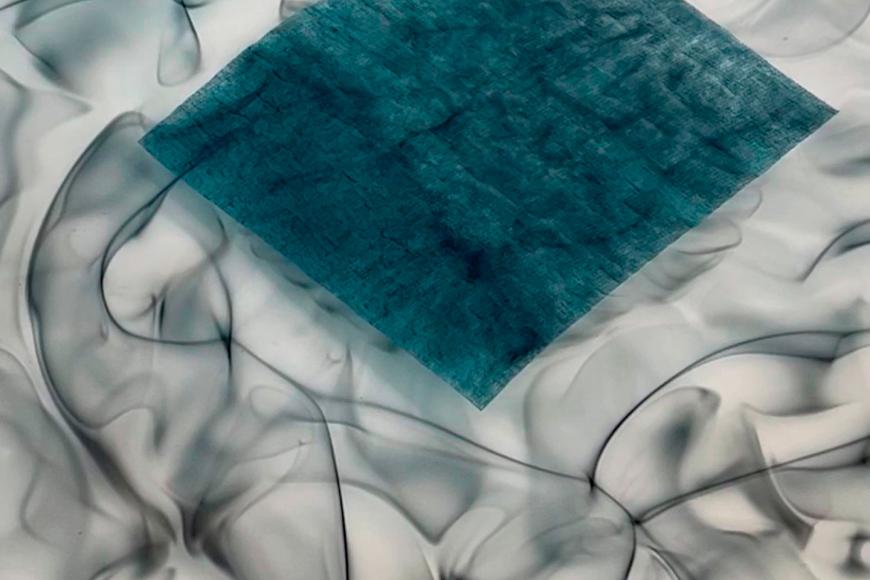
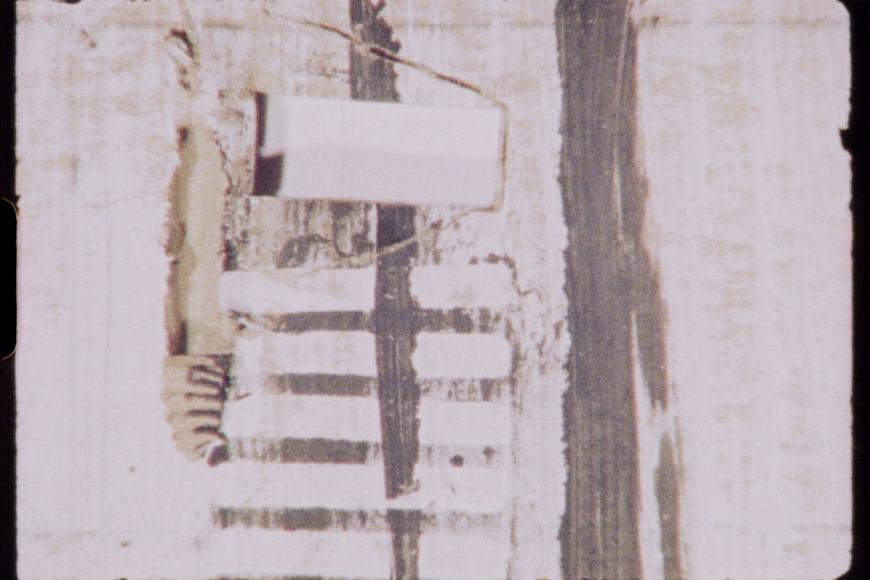
A tactile film that brings us into contact with the textures of colours and materials, irritatingly sensual and strangely familiar. A journey through a female body?
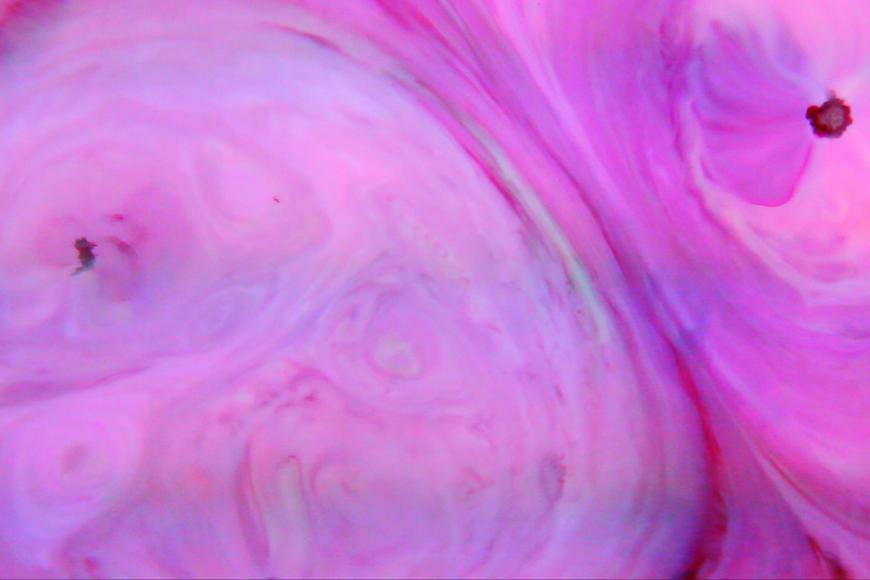
Something pulls us into the deep. We plunge deeper and deeper into the centre of the image, into swelling liquids, through lakes of circling colours, through the cracks in the paper. A tactile film that brings us into contact with colour and material textures – irritatingly sensual and strangely familiar. The sound opens the horizon of interpretation: It is a journey across a female body.
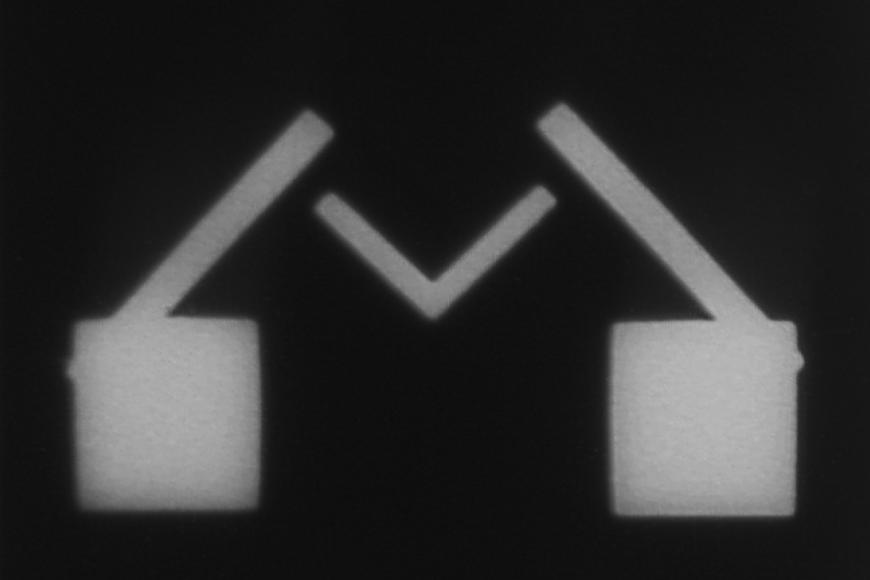
Two abstract creatures on a film strip that was scratched and painted on fall for each other in the dark. They come together and disappear in the distance.
In this work, too, the technique of working directly on the film strip by scratching and painting proves to be beautiful and timeless. The sound, created by analogue interventions on the optical soundtrack of the material is charming, jaunty and organic. Two abstract creature shapes fall for each other in the darkness, come together and fade into the distance.
Shimmering waves, geometrical gardens, and spiral-shaped sand dunes. The microscopic landscapes in crystal formations tell of the structures that run through our universe.
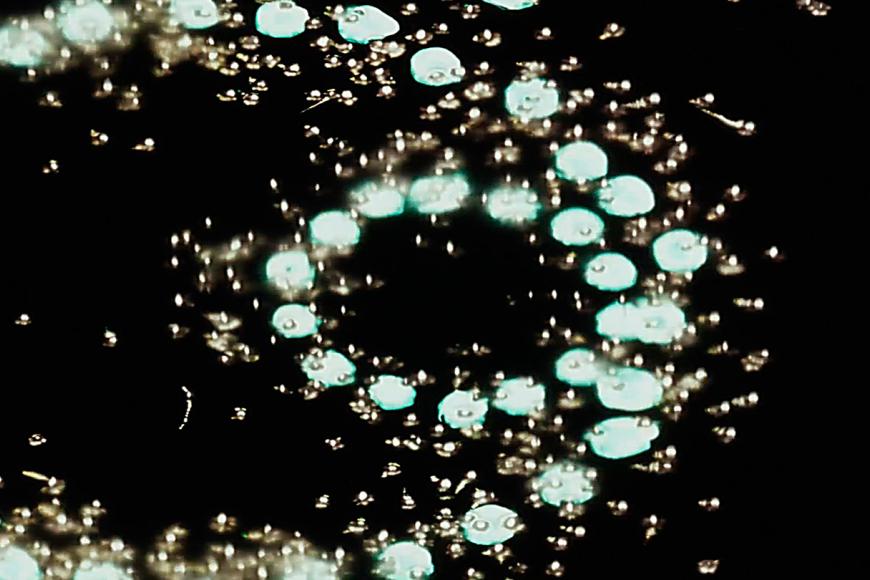
Iridescent waves, geometrical gardens and spiral-shaped sand dunes can be found in the microscopic structure of a crystal which this film brings to the screen in extreme enlargement. It portrays the shapes that connect the minuscule and the gigantic across all dimensions, showing us the material of our world – and its intrinsic beauty.
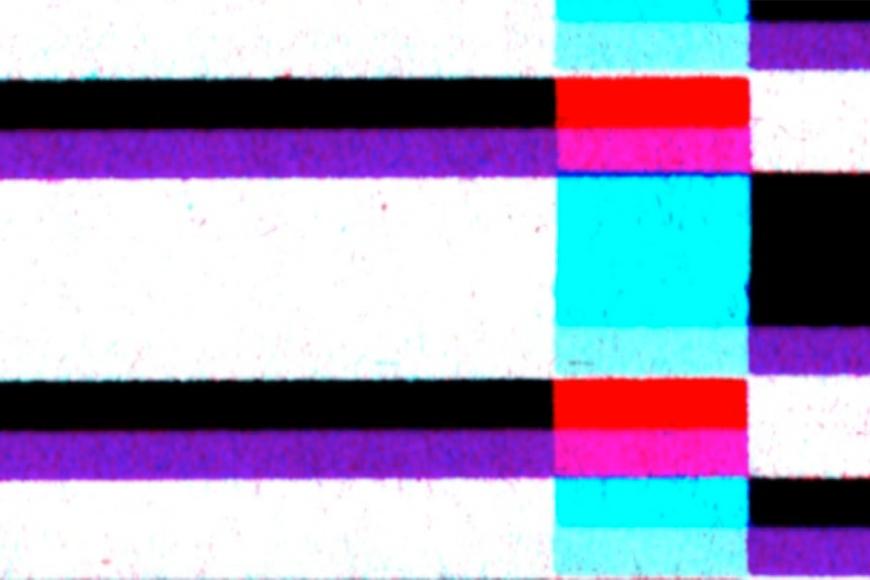
Examples from a DIY book about Op Art patterns form the basis of this hypnotic film. The images seem to move by themselves in front of our eyes. Their flowing and shimmering is driven by colour changes and cross-fades until the boundaries between actual and imagined movement become blurred. It is not only the soundtrack and title that herald the mischievous spirit of this work.
A gorgeous collection of tiny moving image moments full of wisdom, wit, and poetry. Viewed through a magnifying glass, the small things offer room for surprises – and great insights.
A brilliant and highly poetic collection of tiny moving image moments which offers aesthetic delights through cleverly chosen camera angles, framing, lighting, montage and the materials used. This archive of trifles remains silent. The eyes begin to hear, the sound is generated in the mind. Simply enchanting.
The image as an optical soundtrack: Movements become sounds, what you hear is what you see. – A tribute to the European avant-garde of the 20th century.
A contemporary answer to the avant-garde experiments of the 20th century. Once, artists like Oskar Fischinger drew graphic elements on the optical soundtrack of film strips to produce unexpected tones. Max Hattler turns the whole image into an optical soundtrack that directly translates into audio. Abstract movement becomes noise. What you hear is what you see.
The painter Ruttmann takes out a patent for a process to produce moving image: glass sheets mounted on top of each other are painted with oil paints and photographed from above with a camera.
Like many artists of his time, Walter Ruttmann discovered film as a medium of experimentation with revolutionary forms of expression. He gave up easel painting in 1918 and acquired the first German patent for an animation stand in 1920, thus creating the technical prerequisites for his “Opus” series: abstract elements of painterly gestures and cardboard moved by stop-motion.
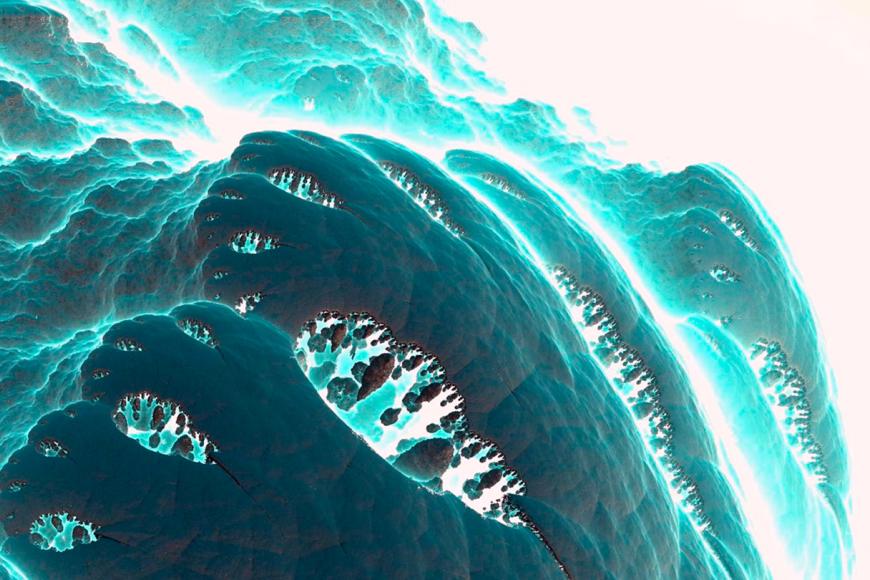
This film is a dive into the depths of fractal structures. Familiar and yet unknown, a landscape emerges that seems to have come from a parallel universe.
An infinitely growing fractal evolves into a hybrid shape that seems to consist of seawater frozen in time and liquid stone. Watching this, you find yourself in a field of tension: between an organic swirling that evokes repetitive movement sequences in nature and sterile, cold materials and patterns.
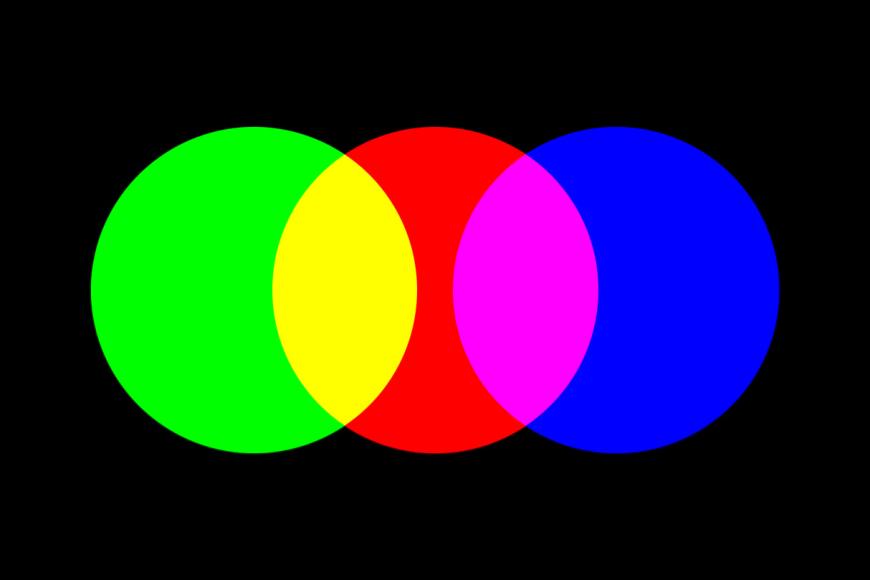
Flickering images produce irritating illusions, assault the eye, and attack the mind. A film that is generated in the brain. Best to just sit back and enjoy!
Be warned: This film consists of flashing images. It happens not only on the screen, but is generated in the brain. Flickering circles in complementary colours move, overlap, creating new shapes and colours. Interacting with the general structures of our eyes and nervous system, they trigger individually different irritations.
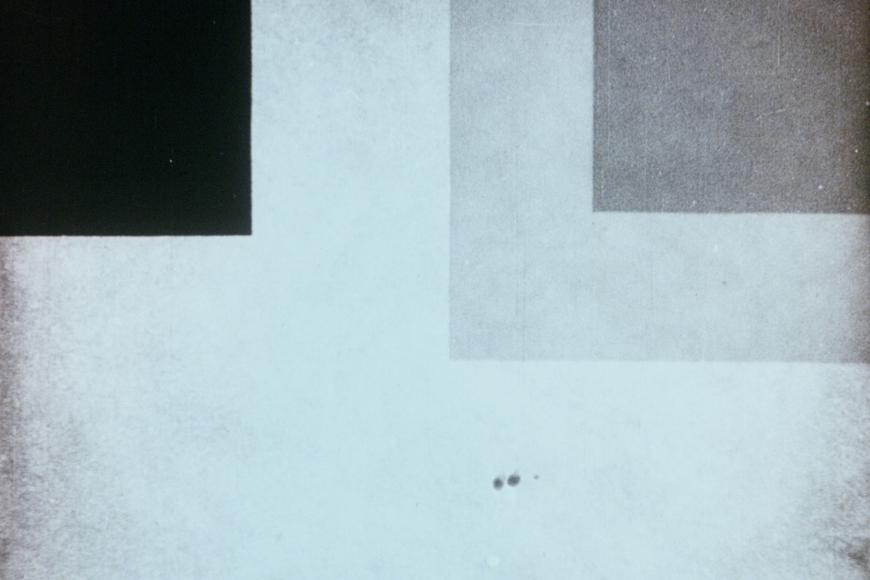
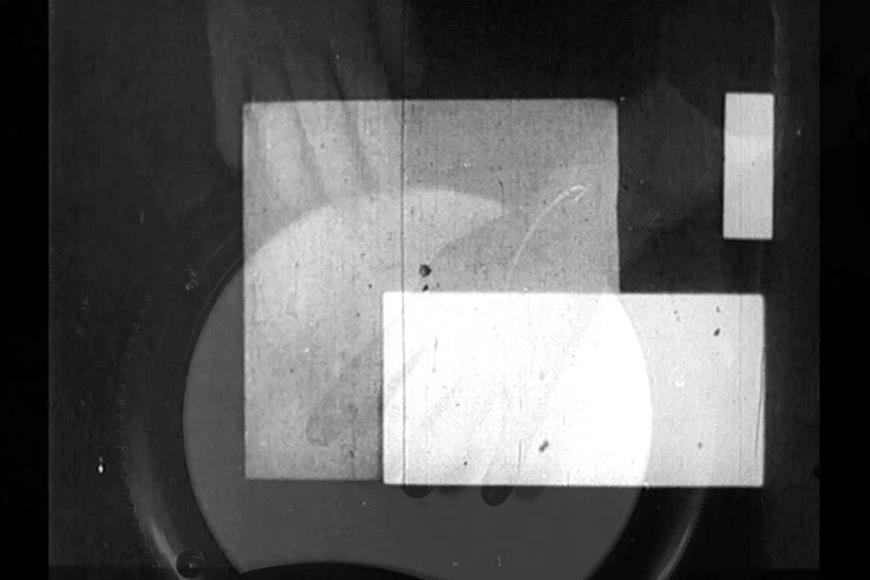
The figure 21 in the title of Hans Richter’s film is not necessarily indicative of the date of origin of this milestone in abstract moving images, which has been lost in the mists of history. The fact that “Rhythmus 21” was screened at the matinee “The Absolute Film” in Berlin in 1925, however, is documented. Rectangles move through space on fixed paths, growing and shrinking to create an illusion of depth.
This originally soundless film generates sound in our mind: Geometrical forms break free from their strict paths of movement and arrange themselves into a complex rhythm.
Delicate lines complement the rectangles that dominate Hans Richter’s film experiment “Rhythmus 21”. It almost seems as if a nod to Viking Eggeling had sneaked into the visual worlds of this important masterpiece. The shapes break free from their rigid paths of movement, boldly slanting away from their right angles. The rhythm of the visual elements is impetuous and self-determined.
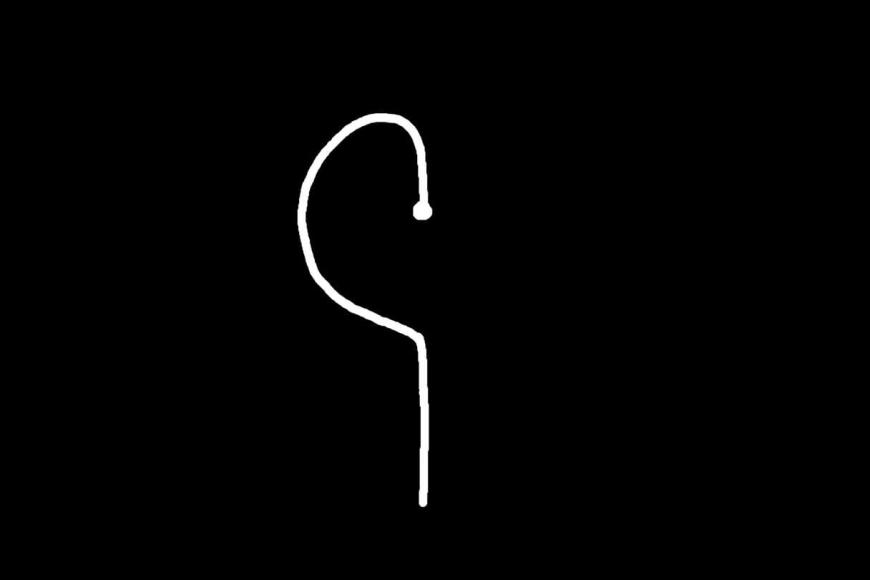
Can a geometric structure be seductive? The answer of this spare and yet utterly charming film is clear: Yes, it can! A simple white line on a black background bewitches us with its dynamic curves as we marvel, open-mouthed, at its suppleness and excellent timing. This line is a saucy star that would be a credit to every burlesque show.
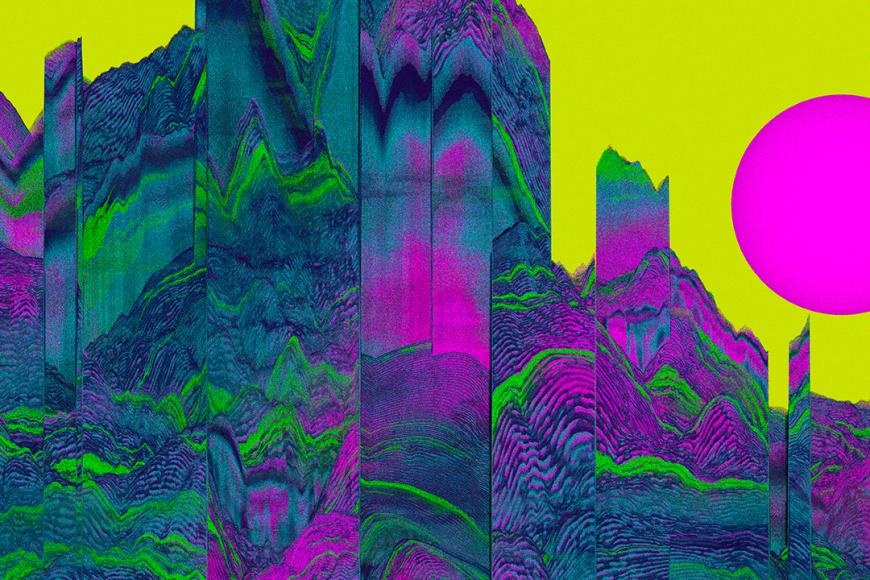
This film uses digital brushstrokes to trace traditional Chinese ink brush paintings, inventing a type of landscape painting of its own, strange and yet familiar.
The digital shapes growing into the sky in this video artwork are reminiscent of Chinese ink landscapes. They strive upwards, like the sound which seems to pull them up by invisible threads. Everything is steeped in acetic colours that lift the landscape out of the human realm. A journey to a strange and yet familiar world.
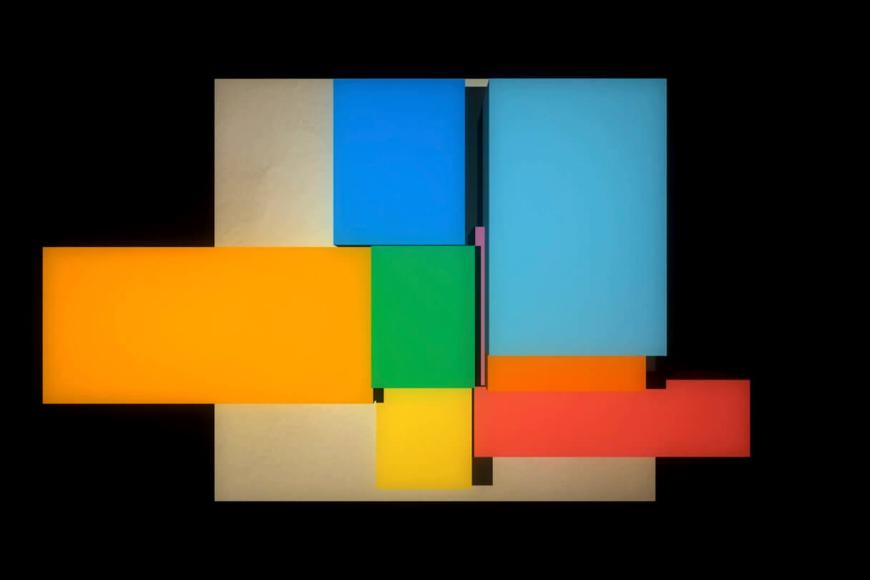
The rhythm-driven animation advances from a world where coloured blocks dominate movement into a space where gravity becomes the determining component.
This rhythm-driven animation is inspired by the 4th movement of the “Sonades de la calor del foc,” the “Sonatas of the Heat of the Fire”, created in 1984 by Catalan composer Josep Maria Mestres Quadreny. It passes through four poeticised spaces: The first is dominated by coloured blocs, the second by gravity, the third by silence, and the fourth takes us back to vibrant life at last.
A cinematic daydream made of corrugated cardboard and paint, shot with a Super 8 camera. Both the soundscape and the shapes, colours, and transitions shift between tough and tender.
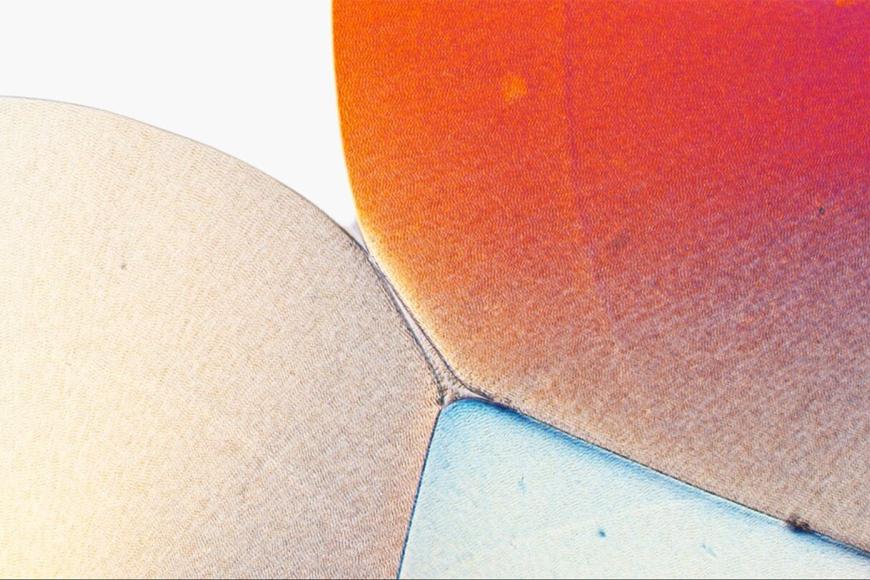
A cinematic daydream in corrugated cardboard and paint, shot with a Super8 camera. The soundscape consists of hills, some easily climbed, others requiring the last ounce of strength. The shapes, colouring, cross-fades and rhythms of this encounter with paper also shift between tough and tender and are made tangible both on the visual and the tonal level.