Topic
- Activism
- Animated Documentary
- Archival Footage
- Arts/Culture
- Coming of Age
- Eastern German
- Experimental
- Family
- History
- Human Rights
- Humour
- LGBTQIA2S+
- Politics/Current Affairs
- Portrait/Biography
- Psyche/Mind
- Religion/Spirituality
- Science/Technology
- Social Issues
- Sports
- Underrepresented Communities
- War/Conflict
- Youth
Filmtype
Länge
Custom type
Topic
- Activism
- Animated Documentary
- Archival Footage
- Arts/Culture
- Coming of Age
- Eastern German
- Experimental
- Family
- History
- Human Rights
- Humour
- LGBTQIA2S+
- Politics/Current Affairs
- Portrait/Biography
- Psyche/Mind
- Religion/Spirituality
- Science/Technology
- Social Issues
- Sports
- Underrepresented Communities
- War/Conflict
- Youth
Length
Light
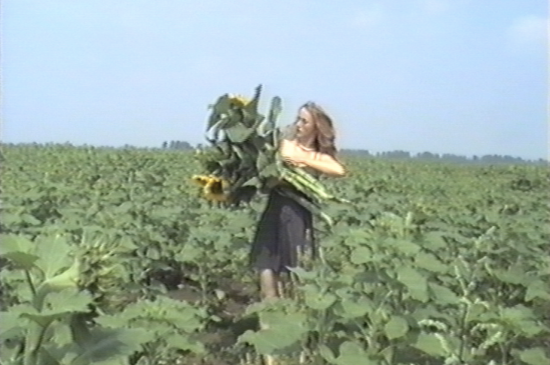
1995. It is the sixth summer since the fall of the Berlin Wall. Artists live, love and work on a farm in East Germany. They film each other with a video camera. They have seen the world, have wondered and learned, became homesick and returned. To where there was space. Fruit hangs from the trees, sparrows chirp, sculptures in the garden. Time and again the camera captures a young woman, her open gaze, her focus. The material which has become fragile today vibrates, gets stuck, freezes. Unperturbed, the narrative evokes the paean of summer, which will not be followed by a seventh for one of them. A white light shines into the present.
Jan Künemund
Contains mentions of death
Screenings & Tickets
Free entry
Credits
Contact
juliane.ebner@gmx.de
Silicon Saxony
Cranes on flat country. A Taiwanese chip giant is building Europe’s biggest semiconductor factory north of Dresden. The “building blocks of modern economy” play a central role against China, the USA, the rest of the world … Yet it is precisely in this place, where the new is grandly heralded, that a “forgotten future” lies buried. This was the centre of GDR semiconductor research, which strove to realise a social utopia by means of microelectronics. Some see the chip as a “weapon” in the fight for economic dominance and profit, others saw it as a political programme on the path to the “new human”. Jonas Meschede mixes neon-coloured images of a futuristic setting from the cleanrooms of the present with GDR science fiction and archive footage, unearthing what was buried. Once more, the promises of a golden future appear at the end. And the certainty that in the ground on which its gleaming factories are built what was declared dead only lies dormant.
Grit Lemke
Trailer
Screenings & Tickets
Credits
Contact
meschedeleon@gmail.com