Filmtype
Custom type
Topic
A Guy from Kleinmachnow
A queer auto-narrative about longing in three acts that addresses seemingly chaotic but systemically functioning cycles of attraction and revulsion, fear and desire, consumption and withdrawal, ecstasy and regret. While the film creates a timeless immediacy, the first-person narrator's commentary, in contrast, sounds like overthinking rather than an unquestioned moment of just-being-there. Whether at the club, by the lake or in the student cafeteria – one’s own judgement is always quicker than the question of how one is actually doing at that moment. But gradually something begins to change: An initially barely perceptible frequency shift sets in. The fragmented staccato of the first comments gradually gives way to a tale that gently settles in the interstices between dune, dream and reality.
Luc-Carolin Ziemann
Contains mentions of addiction, drug-use, mental health conditions, explicit sex scenes
Screenings & Tickets
Free entry
Credits
Contact
leonardjvolkmer@gmx.de
A Wish
André Eckardt
Screenings & Tickets
Credits
Contact
franz.impler@gmail.com
Abastecimiento
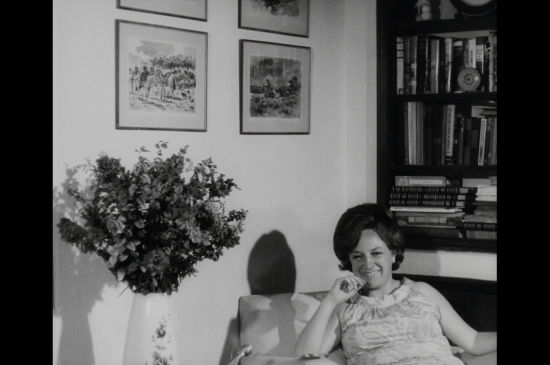
Raúl Ruiz was part of the militant cinema movement that put itself in the service of the Chilean Popular Front, but remained an outsider. He employed experiment and irony to dissect social contradictions. In “Abastecimiento”, Ruiz addresses the supply problems under the Unidad Popular government, confronting the views of a woman from a bourgeois background with those of the socialist Minister for Economic Affairs. He follows this with a depiction of the activities of the Juntas de Abastecimiento y Precios (JAP), locally organised committees for the control and just distribution of food and everyday goods. The provocative juxtaposition paints a picture of an impossible dialogue. The film was banned at the time and was believed lost for ages. It was only recently rediscovered. Leipzig was not the place for the feature film director who emigrated to Paris after the military coup, but Ruiz was a frequent guest at the Berlinale Forum.
Florian Wüst
Screenings & Tickets
Credits
Contact
marcelo.morales@patrimoniocultural.gob.cl
Angry Man
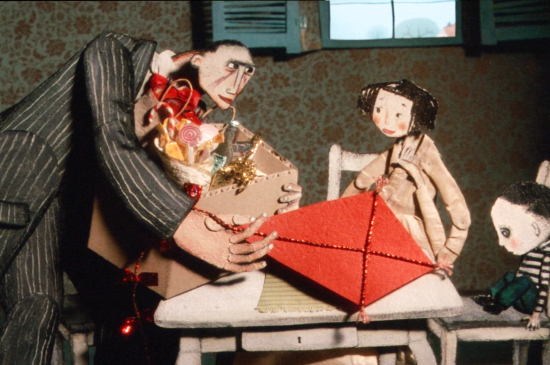
Boi tries to be quiet, but the glasses are shaking in his hand. You must not disturb Papa! Because when Papa is disturbed, the angry man in him wakes up and beats his beloved Mama. In “Angry Man”, there is no hiding from the violence that creeps into every fibre of daily life in the form of nervous anticipation or paralysing panic. Yet despite his fear, Boi does the only right thing: He goes to get help. But Killi’s film is not just the story of a brave boy who breaks the spiral of domestic violence: Her work radiates empathy in every direction, including even the father. Because he has a monster inside him – a drawn one that grows and creeps before it pushes its way out, where it erupts as a cut-out angry man. He needs help, too. “Angry Man”, the adaptation of a picture book by Gro Dahle and Svein Nyhus, conveys in a humanistic and credible manner that people can free themselves and change. All without a romanticising happy end.
Marie Ketzscher
Contains mentions of physical violence, mental health conditions
Screenings & Tickets
Credits
Contact
claus@trollfilm.no
Apocalypse Yesterday, Today, Tomorrow, and the Day After Tomorrow
Marie Ketzscher
Contains mentions of war scenes
Trailer
Screenings & Tickets
Credits
Contact
anastasiabonadyga@gmail.com
Awaken, My Children
Marie Ketzscher
Screenings & Tickets
Credits
Contact
lyza.jarvis@artun.ee