Topic
- Activism
- Animated Documentary
- Archival Footage
- Arts/Culture
- Coming of Age
- Digital Culture
- Eastern German
- Environment
- Experimental
- Family
- Gender
- History
- Human Rights
- Humour
- Labour/Economy
- LGBTQIA2S+
- Music
- Politics/Current Affairs
- Portrait/Biography
- Psyche/Mind
- Religion/Spirituality
- Social Issues
- Sports
- Underrepresented Communities
- War/Conflict
- Youth
Filmtype
Accessibility
Custom type
Topic
- Activism
- Animated Documentary
- Archival Footage
- Arts/Culture
- Coming of Age
- Digital Culture
- Eastern German
- Environment
- Experimental
- Family
- Gender
- History
- Human Rights
- Humour
- Labour/Economy
- LGBTQIA2S+
- Music
- Politics/Current Affairs
- Portrait/Biography
- Psyche/Mind
- Religion/Spirituality
- Social Issues
- Sports
- Underrepresented Communities
- War/Conflict
- Youth
Accessibility
A Fire There
Felix Mende
Trailer
Screenings & Tickets
Free entry
Credits
Contact
michaela@filmotor.com
A Song Without Home
„My life is a prison“, Adelina says. The young woman is smoking and looking into the camera, her parents sitting on the sofa to her right and left. In black and white and the narrow 4:3 ratio, this family scene feels oppressive: Adeline spent eleven years under house arrest here, with a father who refuses to accept her identity and a mother who seems loving but powerless. In Georgia, there is neither freedom nor security for trans persons like Adelina. Anti-queer attacks happen in broad daylight; the legal situation of the LGBTQ community has recently deteriorated further. When the protagonist at last leaves her parents’ village to go to Vienna, the style of Rati Tsiteladze’s debut film also changes. The lipstick glows red, the lights of the big city neon yellow. A different, freer life seems possible. But the freedom brings new challenges: financial and health problems, communicating in a foreign language – and loneliness. “A Song Without Home” is the intimate, impressionistic long-term portrait of a person who wants to define herself and clings to an unshakeable conviction: “No law can erase who we are.”
Jan-Philipp Kohlmann
Contains mentions of discrimination against LGBTQIA2S+ persons
Contains depictions of discrimination against LGBTQIA2S+ persons
Screenings & Tickets
Free entry
Credits
Contact
olyaslusareva@gmail.com
Atlas of Disappearance
Seggen Mikael
Contains mentions of murder, death
Trailer
Screenings & Tickets
Credits
Contact
internacional@agenciafreak.com
Auber 89
Anca Păunescu
Screenings & Tickets
Credits
Contact
raluca@lightdox.com
Blossoming
Carolin Weidner
Contains mentions of physical violence, suicide
Contains depictions of mental health conditions, death, child abuse
Screenings & Tickets
Free entry
Credits
Contact
ada@lumisenta.com
Child’s Mother
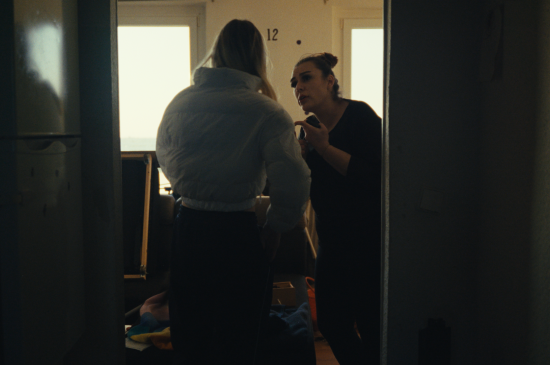
Anne (36) lives in Halle (Saale) and her life is in chaos. An apartment full of moving boxes, a yapping dog. She tells her mother on the phone that the electricity is about to be cut off again. Sometimes her daughter Leonie (14) drops by. Like her mother, she is at risk of slipping into drug addiction. Anne has already lost custody of her two younger children, too. The camera stays purely observational, captures loose scenes from the life of a woman who wants to take responsibility again. The film does not look for psychological explanations but shows Anne as she is. On her drives through the prefabricated housing estate, she seems isolated from her surroundings. Mother and daughter grow closer over an ice cream in a public square. Anne’s visit to her mother provides support but creates pressure, too. We grow ever closer to Anne, sharing her wish that she can become a role model for her daughter.
Anke Leweke
Contains mentions of addiction, death, drug-use
Screenings & Tickets
Credits
Contact
friedemann@inselfilm.de
Closure
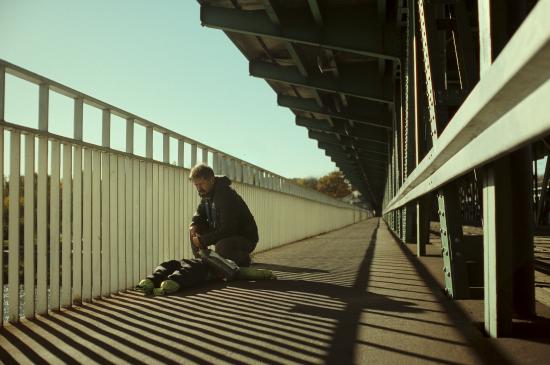
16-year-old Krzysztof was last seen on a bridge over Poland’s Vistula River in 2023. The CCTV camera briefly turned away, and by the time it returned, he had vanished. Following his disappearance, his father Daniel launches a relentless search in Poland’s largest river. As time piles up, the searches persist. Any tech that proves useful gets pulled into it, from drones to metal detectors, trackers, and even loaves of bread, sent floating down the current in the hope of locating the body. The camera matches these rhythms, dredging the river’s depths and combing its banks. The searches, showing the father’s restless energy and the sheer labour of this endeavour, mix with vérité scenes with his family, as well as news snippets about Krzysztof’s alleged sightings. Social media streams are scoured too, providing unsettling insights into the boy’s inner states. Director Michał Marczak – and by extension his camera – accompany Daniel, taking the audience along in a boat and into the heart of a family’s unresolved grief. As closure remains out of reach, Daniel starts assisting other searches, and sombre discoveries are made of other lives lost in the waters.
Sevara Pan
Contains mentions of violence against animals, mental health conditions, suicide
Contains depictions of death, mental health conditions, violence against animals
Photosensitivity warning: Contains flashes of light that may trigger seizures for people with visual sensitivities.
Trailer
Screenings & Tickets
Free entry
Credits
Contact
Concrete Land
James Lattimer
Contains mentions of physical violence, racism, death, war scenes
Photosensitivity warning: Contains flashes of light that may trigger seizures for people with visual sensitivities.
Screenings & Tickets
Credits
Contact
bk.asmahan@gmail.com
Detention
Carolin Weidner
Screenings & Tickets
Credits
Contact
samy@andanafilms.com
El primer año
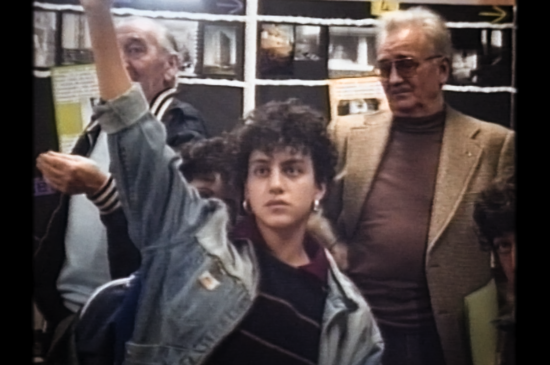
“El primer año” documents the first year of the Unidad Popular: the rude awakening of the ruling classes of Chile as they are faced with the democratically elected socialist government. From the immediate economic sabotage of the right wing through celebrating workers, the situation of the Mapuche, the agrarian reform, the nationalisation of coal and copper mining and Fidel Castro’s visit, up to the “March of the Pots” by bourgeois women crying for bread, of which they have plenty, the cycle of achievements and difficulties is complete. Besides their journalistic interest, Patricio Guzmán and his collaborators sought to capture the atmospheric aspect of the departure towards a fairer society under Salvador Allende, which is what makes “El primer año” such a moving document of its time. Chris Marker offered to produce a French version with the help of the SLON film collective, which is preceded by photographs by Raymond Depardon, accompanied by a foreword on the history of Chile. Guzmán continued his work on the chronicle of events until he was forced to leave the country after the military coup of 11 September 1973. It was only in Cuban exile that he was able to successively finish his masterpiece “La Batalla de Chile” (1975-79) together with Pedro Chaskel. Each of its three parts was acclaimed at the International Leipzig Documentary and Short Film Week and the Berlinale Forum.
Florian Wüst
Screenings & Tickets
Credits
Contact
alexandra@bfdistribution.cl
Garden of Hope
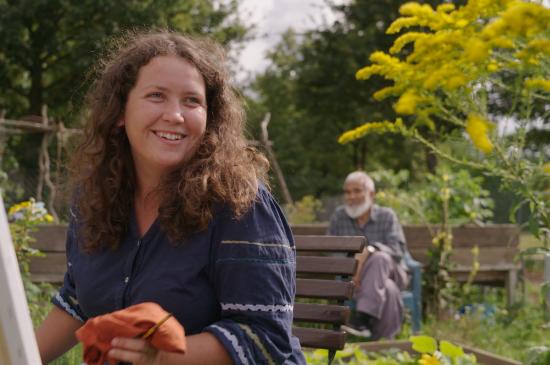
“We don’t fit together”, one of them says of the “motley crew” tending a garden plot in a pre-fab estate in Schwerin. At first, everyone “muddles through” alone: Omar from Syria, who struggles with being voiceless in a foreign land. Manfred, a widower who thinks of his wife every day and looks after everyone. Kateryna from Ukraine, who tries to paint over the war with colourful pictures. Fawze, who lost his homeland three times. Ronny, Wiebke and Max, who are trying to make a fresh start after a life of drugs and violence. Sabine, whose laughter and mischief flare up briefly and vanish again. Petra, who cannot afford to go to a concert after a lifetime of hard work. Richard, who hangs up mirrors not to be alone. Abdul from Afghanistan, master of okra. They communicate with their hands, feet and “russki jasyk”, swap tips on the right way to plant garlic and on tools, soon sit together under the chestnut tree, singing, fighting for the project … And from her balcony Mrs. Müller recites Goethe, following it up with a peace poem. DEFA veteran Dieter Schumann and his cinematographer Michael Kockot achieve what was once the origin and virtue of documentary film: giving the unheard a voice through precise observation, a voice based on closeness, trust and respect. The neighbourhood garden is a site of “small miracles”. One of them is this film.
Grit Lemke
Screenings & Tickets
Credits
Contact
mueller@neuevisionen.de
Heat
Carolin Weidner
Trailer
Screenings & Tickets
Credits
Contact
sales@taskovskifilms.com