Nobody’s too young for great cinema! At Kids DOK, we gather films for everyone from the age 3, 5 and 8 who is in the mood for funny and thought-provoking viewing experiences.
Boi tries to be quiet, but the glasses are shaking in his hand. You must not disturb Papa! Because when Papa is disturbed, the angry man in him wakes up and beats his beloved Mama. In “Angry Man”, there is no hiding from the violence that creeps into every fibre of daily life in the form of nervous anticipation or paralysing panic. Yet despite his fear, Boi does the only right thing: He goes to get help. But Killi’s film is not just the story of a brave boy who breaks the spiral of domestic violence: Her work radiates empathy in every direction, including even the father. Because he has a monster inside him – a drawn one that grows and creeps before it pushes its way out, where it erupts as a cut-out angry man. He needs help, too. “Angry Man”, the adaptation of a picture book by Gro Dahle and Svein Nyhus, conveys in a humanistic and credible manner that people can free themselves and change. All without a romanticising happy end.
Marie Ketzscher
Contains mentions of physical violence, mental health conditions
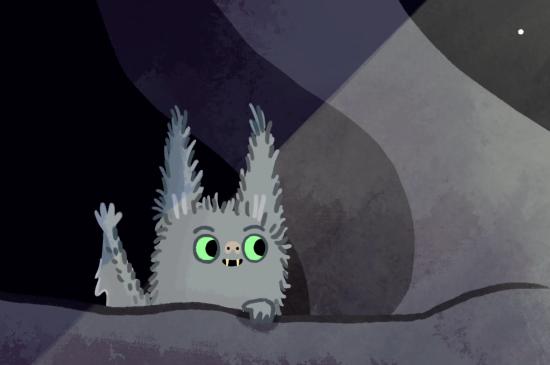
It looks like business as usual deep in the jungle – until one night a lantern lights up and magically attracts countless insects. They fall into a strange trance; even the bat family wake up. While the adults use the bright commotion to hunt, the young bat saves a glowworm, a fly and a moth. The next night, the dangerous light returns. The small bat is determined to try to save her new friends from its spell. A small adventure about friendship and mutual help.
Lina Dinkla
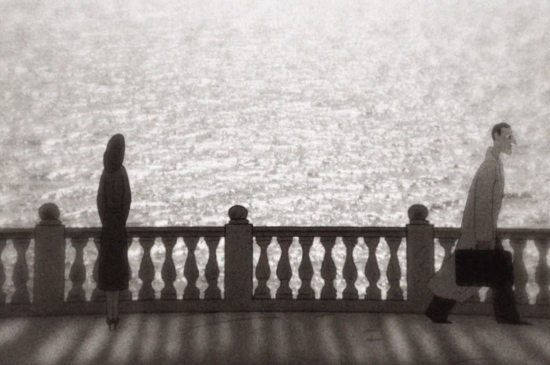
What is left when everything fades away? An old photographer tries to reconstruct people and events by means of old photographs, but they keep slipping away from him, vanishing in the dark, washed away by the waves. In his 2D animated film, rendered in black and white, Anton Dyakov not only shows how memories are lost, but also how they sometimes haunt and overwhelm us – for example in the shape of a disturbing archive fragment of blurred war photos. “Black Box” deals with loss and grief from a personal, yet universal perspective, while referencing the culture of remembrance in the digital age which is increasingly managing – or seeking to manage – without the haptic assurance of a printed photo.
Marie Ketzscher
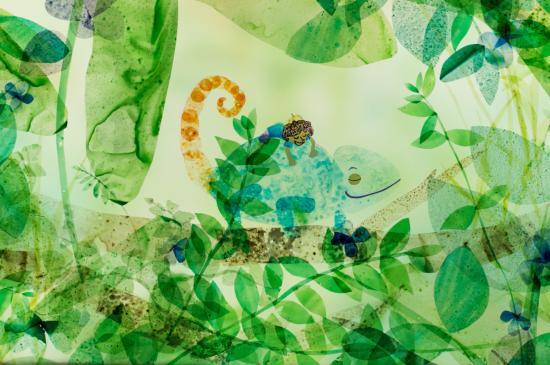
Camille, a very small girl, and the Chameleon who is afraid of heights are inseparable and love to play hide-and-seek in the forest. Camille loves to literally call the tune with her whistling. But one day she becomes too cocky and gives Chameleon an idea that will upset everything. Now they are lost in the green thicket. Can they get over their pride and find each other again?
Lina Dinkla
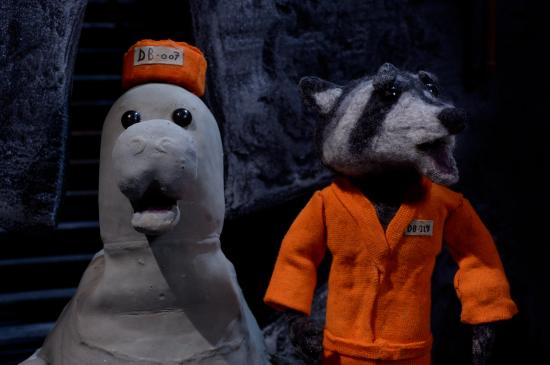
Sam, a grumpy raccoon, must share a prison cell with Bob, a loveable, but somewhat slow-witted manatee. Their chaotic prison break gradually reveals Sam’s soft core, while Bob remains unfailingly loyal to Sam. Will they manage to escape? Suddenly, that no longer matters so much, since together they have already experienced something much better: solidarity. A cute plasticine animation you will absolutely love.
Lina Dinkla
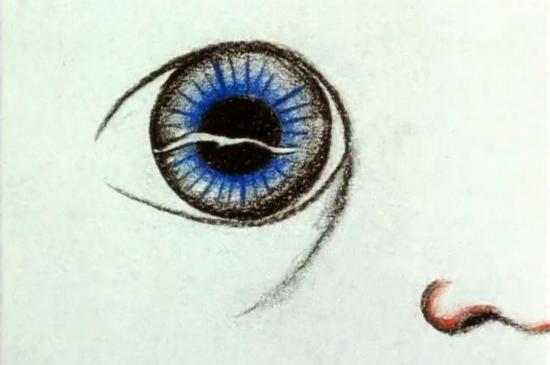
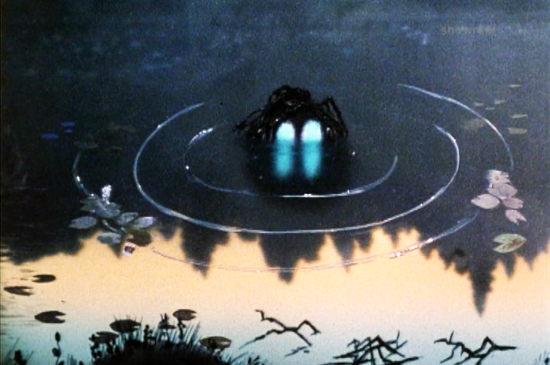
Pesticides wipe out the insects, the oil spills into the ocean, the forests burn: In 1994, director Laila Rakvåg let a bird fly over and through the ecological, human-made hotspots that plague us even today to a far worse extent. Sometimes the bird is able to land in beautiful natural surroundings, but the rest is never permanent, paradise is always on the brink of the next hellish transformation. The further the bird flies, the more human its features become: It becomes a baby that is then actually born – and carries the memories of the bird in its newly opened eyes. We are inseparably linked to nature; what we do to it, we do to ourselves: Rakvåg’s film is an activist plea for more empathy with our planet and a change of thinking, told from the perspective of an expectant mother.
Marie Ketzscher
A tiny fish swims through a huge underwater world. It is loud and hectic at times. He would love nothing better than to hide behind the other fish. Is he too small to see the world as the big ones see it? Drawn in enchanting blue and green watercolours, this animation shows that there is no such thing as too big or too small. And wouldn’t it be lovely if we could all fly up to heaven in a big bubble in the end?
Lina Dinkla
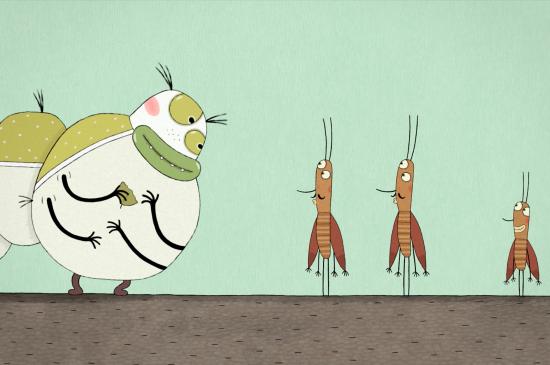
Three butterflies are absorbed in their graceful ballet routine, skilfully turning one pirouette after the other. They ignore the clumsy caterpillar that would really love to dance with them. Only the smallest butterfly reaches out a hand. What a surprise when the caterpillar pupates and hatches! Another episode of the KiKA show “Lenas Farm”.
Lina Dinkla
The stories, myths and reality of the Sámi people are always closely linked to reindeer: travelling with them, keeping them as livestock. Where does this close tie come from? Anita Killi takes up – or imagines – a creation myth: Alits, who roams the land and enjoys his idleness, is gifted the close tie to the reindeers in the shape of Joik (yodelling) by the daughter of the sun when she has to leave him again. The singing magically attracts the animals. Killi captures the yearning in these sounds with poetic imagery and in Sámi language: In the embraces of Alits and the daughter of the sun, but also in the moments when they roam the meadows. Everything is interconnected in this sensual and haptic concept of nature.
Marie Ketzscher
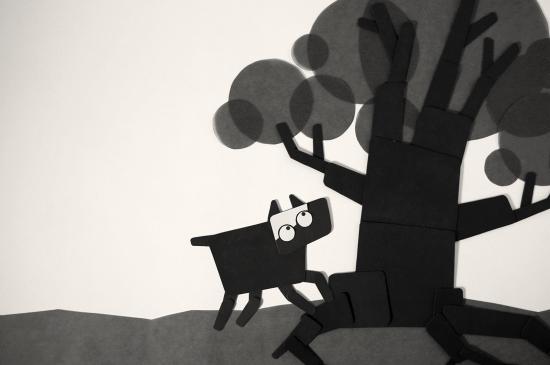
An animated film made entirely out of black and white paper – and told backwards, too! A white she-dog lives in the root cavity of a mighty tree. But what connects the two? Step by step, the film takes us back to their first encounter, when the dog was still a puppy. An equally unusual and strong friendship that withstands even a massive storm.
Lina Dinkla
Romantic, mystical, folkloristic: Theodor Kittelsen's (1857–1914) oeuvre as a painter is not just dedicated to nature but also to legends and trolls – and has influenced artists to the present day. Natasha Nikitina for example, whose film takes up Kittelsen's twelve-part series of pictures "Soria Moria Palace" and his eponymous book: The young hero Askeladden sees the golden palace of Soria Moria in the distance and sets out to reach it; an allegory of the golden future that can be earned with a lot of hard work and dedication. In her film, however, Nikitina focuses more on the atmospheric element, letting a troll in a rock wake up and fall asleep again, letting geese and other birds take flight, letting fog and dusk turn into night and back into a glowing morning. A tribute to the artist, but also to the myth-enshrouded Norwegian landscape in general.
Marie Ketzscher
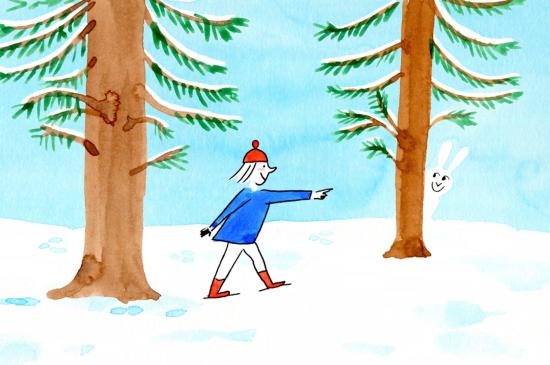
Anna is lured outside by a lively flurry of snow. As she wanders through the snow she comes across an unexpected playmate. A snow hare – or is it just her imagination after all? After playing, she settles down comfortably on the sofa with a hot cup of cocoa. A poetic film about the joys of winter, drawn in clear colours.
Lina Dinkla
International Leipzig Festival for Documentary and Animated Film
26 October to 1 November 2026
Leipziger Dok-Filmwochen GmbH
Katharinenstraße 17
04109 Leipzig
Germany
info [at] dok-leipzig [dot] de (info[at]dok-leipzig[dot]de)
+49 (0)341 30864-0