The short film reels bring together short films from the competitions in cross-section programmes.
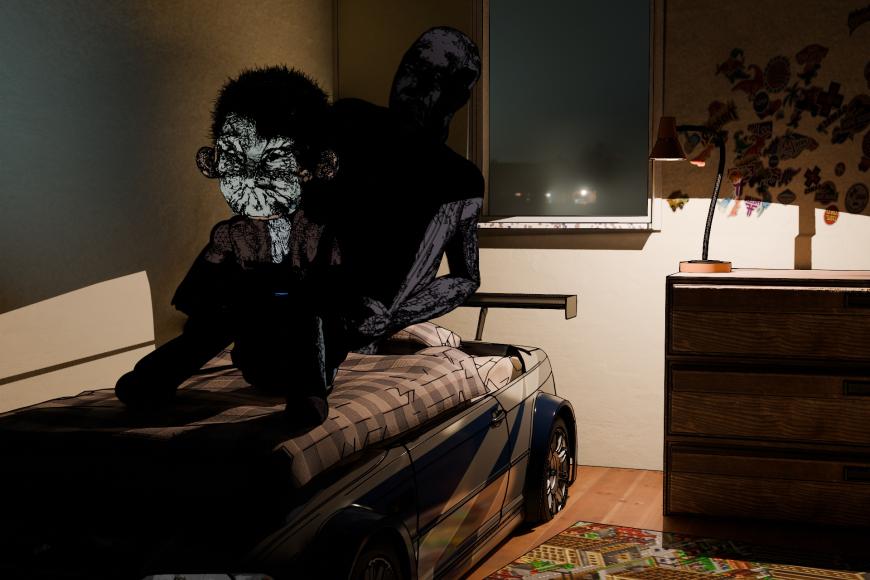
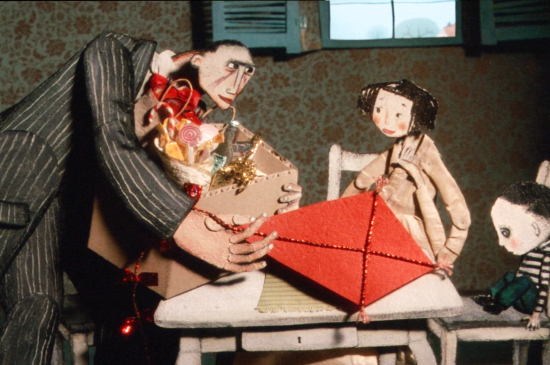
Boi tries to be quiet, but the glasses are shaking in his hand. You must not disturb Papa! Because when Papa is disturbed, the angry man in him wakes up and beats his beloved Mama. In “Angry Man”, there is no hiding from the violence that creeps into every fibre of daily life in the form of nervous anticipation or paralysing panic. Yet despite his fear, Boi does the only right thing: He goes to get help. But Killi’s film is not just the story of a brave boy who breaks the spiral of domestic violence: Her work radiates empathy in every direction, including even the father. Because he has a monster inside him – a drawn one that grows and creeps before it pushes its way out, where it erupts as a cut-out angry man. He needs help, too. “Angry Man”, the adaptation of a picture book by Gro Dahle and Svein Nyhus, conveys in a humanistic and credible manner that people can free themselves and change. All without a romanticising happy end.
Marie Ketzscher
Contains mentions of physical violence, mental health conditions
Contains mentions of death
Contains mentions of murder, racism
Contains depictions of racism
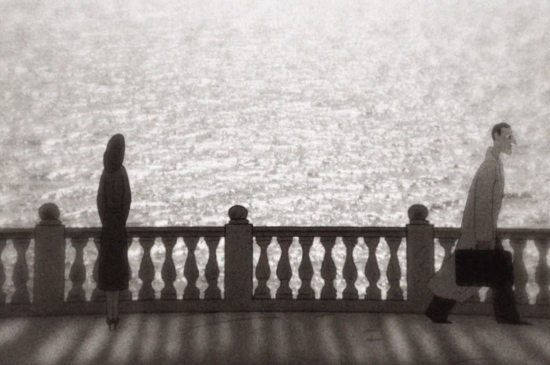
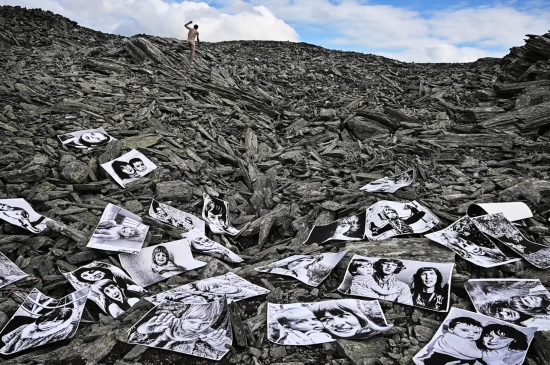
What is left when everything fades away? An old photographer tries to reconstruct people and events by means of old photographs, but they keep slipping away from him, vanishing in the dark, washed away by the waves. In his 2D animated film, rendered in black and white, Anton Dyakov not only shows how memories are lost, but also how they sometimes haunt and overwhelm us – for example in the shape of a disturbing archive fragment of blurred war photos. “Black Box” deals with loss and grief from a personal, yet universal perspective, while referencing the culture of remembrance in the digital age which is increasingly managing – or seeking to manage – without the haptic assurance of a printed photo.
Marie Ketzscher
Contains depictions of drug-use, nudity, physical violence
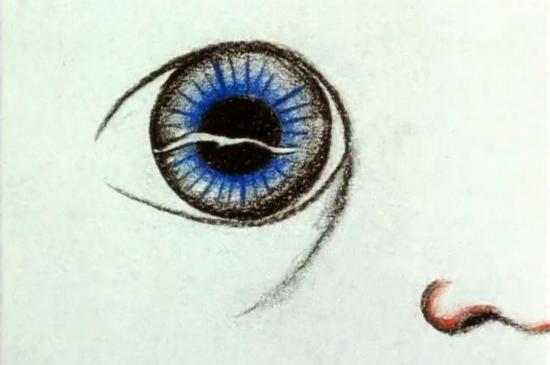
Pesticides wipe out the insects, the oil spills into the ocean, the forests burn: In 1994, director Laila Rakvåg let a bird fly over and through the ecological, human-made hotspots that plague us even today to a far worse extent. Sometimes the bird is able to land in beautiful natural surroundings, but the rest is never permanent, paradise is always on the brink of the next hellish transformation. The further the bird flies, the more human its features become: It becomes a baby that is then actually born – and carries the memories of the bird in its newly opened eyes. We are inseparably linked to nature; what we do to it, we do to ourselves: Rakvåg’s film is an activist plea for more empathy with our planet and a change of thinking, told from the perspective of an expectant mother.

Marie Ketzscher
Contains mentions of discrimination against LGBTQIA2S+ persons
Contains mentions of addiction, drug-use, mental health conditions, explicit sex scenes
Contains mentions of sexual violence
Contains mentions of drug-use, death, murder
Contains depictions of physical violence, torture
Contains mentions of racism, murder
Contains depictions of physical violence
The stories, myths and reality of the Sámi people are always closely linked to reindeer: travelling with them, keeping them as livestock. Where does this close tie come from? Anita Killi takes up – or imagines – a creation myth: Alits, who roams the land and enjoys his idleness, is gifted the close tie to the reindeers in the shape of Joik (yodelling) by the daughter of the sun when she has to leave him again. The singing magically attracts the animals. Killi captures the yearning in these sounds with poetic imagery and in Sámi language: In the embraces of Alits and the daughter of the sun, but also in the moments when they roam the meadows. Everything is interconnected in this sensual and haptic concept of nature.
Marie Ketzscher
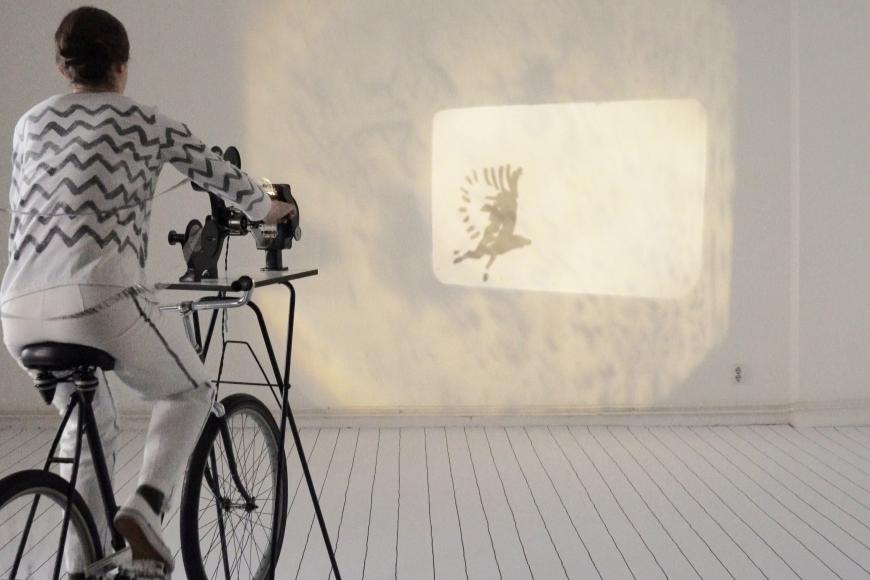
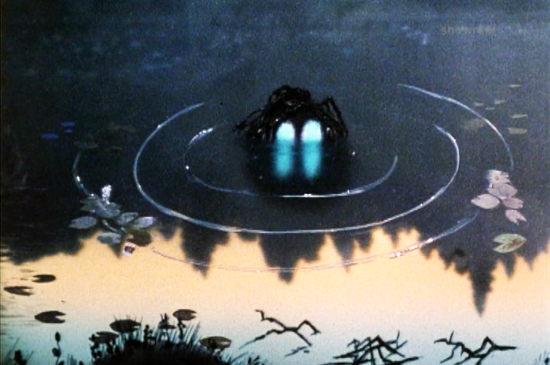
Romantic, mystical, folkloristic: Theodor Kittelsen's (1857–1914) oeuvre as a painter is not just dedicated to nature but also to legends and trolls – and has influenced artists to the present day. Natasha Nikitina for example, whose film takes up Kittelsen's twelve-part series of pictures "Soria Moria Palace" and his eponymous book: The young hero Askeladden sees the golden palace of Soria Moria in the distance and sets out to reach it; an allegory of the golden future that can be earned with a lot of hard work and dedication. In her film, however, Nikitina focuses more on the atmospheric element, letting a troll in a rock wake up and fall asleep again, letting geese and other birds take flight, letting fog and dusk turn into night and back into a glowing morning. A tribute to the artist, but also to the myth-enshrouded Norwegian landscape in general.
Marie Ketzscher
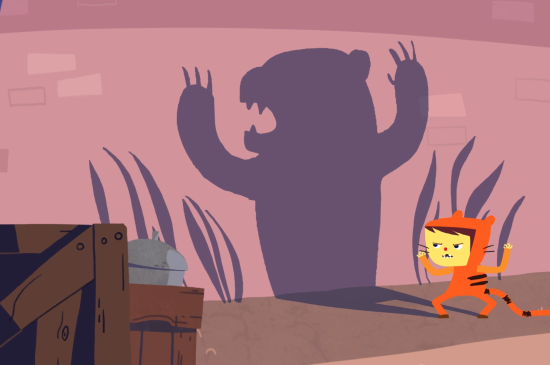
Vanja is a tiger, roaming the jungle, lurking, attacking. But when it gets dark, he is afraid – and when his sister Thea turns on the light, the brave tiger turns into a little boy in a completely leafless apartment. “I’m Not Afraid” is Vanja’s mantra, which he uses to hold his own in everyday life, when fantasy and reality blend seamlessly, when the dark staircase turns into a dungeon and the play of shadows into monsters. But also when he feels excluded by his older sister who does not want him to join in her games. Marita Mayer’s playful 2D animation follows Vanja through all emotional states and imaginary worlds, treats the needs of all children equally. Growing up is hard, being a child often is, too. But when everyone sees and understands the other it gets easier, and often it even becomes proper fun.
Marie Ketzscher
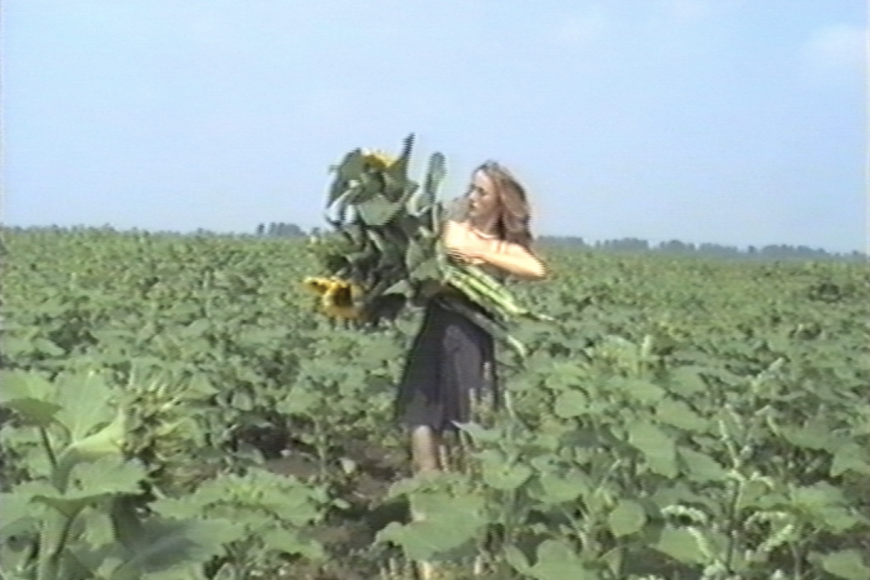
The collaborative artistic work of Menno de Noojer (son), Paul de Noojer (father) and Françoise de Noojer (mother), which oscillated between photography and experimental film, spanned almost fifty years. Rather than allowing posterity to label, categorise and, as the case may be, mothball their work, the three realised a final film together just before Paul de Noojer died, when he was already seriously ill. A last joint film as an exuberant self-homage, in which they combine experimental-documentary storytelling, performance, pixilation and stop motion, funny and sad moments, pathos and trash, a joy of putting on costumes and vulnerable nudity. With “Heaven is Blue? #2”, the Noojers celebrate life as a total work of art in which all processes of becoming human and all symptoms of decline have their place and death is a natural part of the whole.
Marie Ketzscher
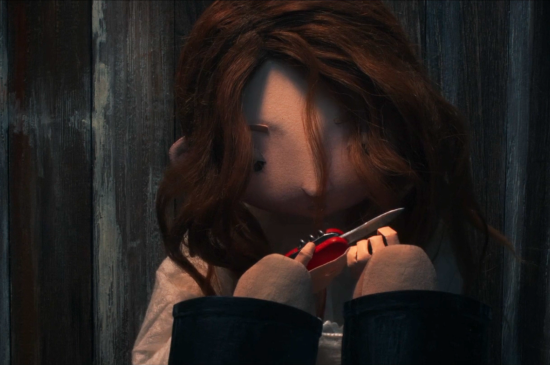
A girl is crying, carving scratches into the wood with a Swiss army knife – exactly as if they were flesh wounds. On top of that, she cuts off her hair. But she is not alone with her sadness: A tender “Nisse” (a household spirit) watches her. When she seems to vanish in the thicket of her dark thoughts, he drops a small injured bird in her way so that both can learn to fly. “Mother Didn’t Know” is a magical and dark tale of childhood depression and of the importance to recognise it and react without delay. The girl’s emotions are given ample space; the camera is close to her and her demons. All around, delicate dust motes float in the air like fairy dust. Killi’s film, though, could also be a tale about the burden of growing up, a burden that becomes unrelatable in retrospect. In any case, there are windows, exits, light – if you only look closely enough.
Marie Ketzscher
Contains depictions of mental health conditions
International Leipzig Festival for Documentary and Animated Film
26 October to 1 November 2026
Leipziger Dok-Filmwochen GmbH
Katharinenstraße 17
04109 Leipzig
Germany
info [at] dok-leipzig [dot] de (info[at]dok-leipzig[dot]de)
+49 (0)341 30864-0