Films A–Z

Programme & Tickets

A-Z
Filters
Filter by
View by

Glossary AZ - Content » fullInternationalTitle

Custom type

Topic

Length

Section

Retrospective
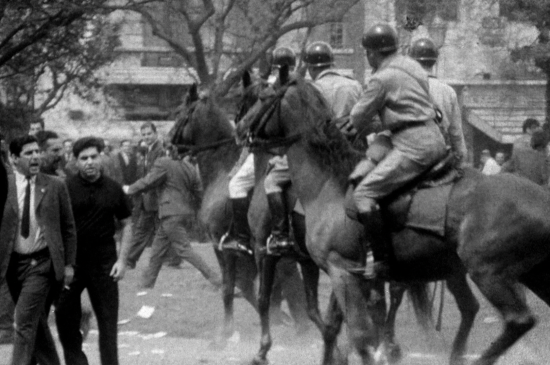
Filmstill La hora de los hornos. Neocolonialismo y violencia
La hora de los hornos. Neocolonialismo y violencia
Fernando E. Solanas
A film like an incendiary device, a radical pamphlet. Like few other films, this call for the liberation of Argentina from oppression and violence moved the 1968 generation across the world.
Filmstill La hora de los hornos. Neocolonialismo y violencia

La hora de los hornos. Neocolonialismo y violencia

La hora de los hornos. Neocolonialismo y violencia
Fernando E. Solanas
Retrospective
Documentary Film
Argentina
1968
88 minutes
Spanish
Subtitles: 
English
No Premiere

A call for radical political change, an agitation pamphlet for the national liberation of Argentina: Like few other films, “La hora de los hornos” stirred the generation of 1968 all over the world. The more than four-hour-long film essay was banned for many years, not just in Argentina. Taking the form of a multilayered documentary collage, it is a masterful exploration of the possibilities of image-sound-editing which unfolds a panorama of the prevailing social and political conditions. “Neocolonialismo y violencia” analyses the colonisation of Latin America, its economic and cultural dependence on the industrialised states of the so-called First World, especially the USA, as well as the omnipresence of violence. The second part, “Acto para la liberación”, delivers a chronicle of Peronism and the resistance after Perón’s fall in 1955. “Violencia y liberación”, the shorter third part, openly advocates armed struggle. After two years of clandestine work by a small team around Fernando E. Solanas and Octavio Gentino, “La hora de los hornos” had its world premiere on 2 June 1968 at the Mostra Internazionale del Cinema Nuovo in Pesaro. The Friends of the German Cinematheque (today: Arsenal Filminstitut) screened the three-part film only a few weeks later on the occasion of the Berlinale. After the opening of the Arsenal cinema in January 1970 on Welserstraße in Berlin-Schöneberg, countless screenings of the distribution prints of the film followed at their own venue and elsewhere.
Florian Wüst

Contains depictions of physical violence, racism

Screenings & Tickets DOK Leipzig Logo

27.10.
#233
CineStar 5
Teil der Kompilation
During Checkout you can apply discounts, your accreditation or season passes
27.10.2026
CineStar 5
#233
Teil der Kompilation
During Checkout you can apply discounts, your accreditation or season passes
Calendar

Credits DOK Leipzig Logo

Director
Fernando E. Solanas
Script
Octavio Getino, Fernando E. Solanas
Cinematographer
Juan Carlos Desanzo
Editor
Juan Carlos Macías, Antonio Ripoll, Norma Torrado
Producer
Grupo Cine Liberación

Contact DOK Leipzig Logo

Main Contact
Victoria Solanas
International Competition Documentary Film
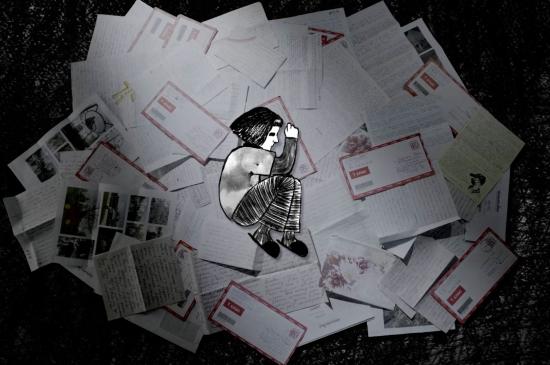
Filmstill Letters from the Silenced Country
Letters from the Silenced Country
Andrei Kutsila
A country in which any type of opposition is persecuted and violently put down. Accounts from Belarus tell of sacrifice, solidarity and the human cost of resistance.
Filmstill Letters from the Silenced Country

Letters from the Silenced Country

Listy
Andrei Kutsila
International Competition Documentary Film
Documentary Film
Poland,
Lithuania,
Germany
2026
72 minutes
Belarusian,
Russian
Subtitles: 
English
German premiere
Information only trickles out sporadically from isolated Belarus. And those held in Belarusian custody seem almost out of reach. Having fled to Poland himself in the wake of state repression, Andrei Kutsila brings the fates of three detainees to light in this film testimony, which is polyphonic at both a narrative and visual level. They represent the more than 65,000 people who have been criminalised and detained since Alexander Lukashenko’s controversial re-election in 2020. There is Kasia, a student who uses her art to find a way to cope with everyday life in captivity. Rendered in dark tones, her drawings offer insights into a harrowing situation, while simultaneously serving to guide the viewer through “Letters from the Silenced Country” in animated form. Then there is the activist Witold Aschurak, who receives photographs from a friend while in prison. Footage from surveillance cameras documents his mistreatment before his eventual death in custody. Meanwhile, former detective Andrei Astapovich is in Poland investigating the crimes committed in his former homeland and compiling evidence for the Belarusian opposition organisation BYPOL. An anonymous man also gets his say; he lives in constant fear of being arrested. Andrei Kutsila’s film is a compilation of true horrors – right in the midst of Europe.

Carolin Weidner

Contains mentions of death

Contains depictions of physical violence

Trailer DOK Leipzig Logo

Screenings & Tickets DOK Leipzig Logo

29.10.
#452
CineStar 7
When the Sea Was Calm + Letters from the Silenced Country
During Checkout you can apply discounts, your accreditation or season passes
29.10.2026
CineStar 7
#452
When the Sea Was Calm + Letters from the Silenced Country
During Checkout you can apply discounts, your accreditation or season passes
Calendar
30.10.
#534
CineStar 5
When the Sea Was Calm + Letters from the Silenced Country
During Checkout you can apply discounts, your accreditation or season passes
30.10.2026
CineStar 5
#534
When the Sea Was Calm + Letters from the Silenced Country
During Checkout you can apply discounts, your accreditation or season passes
Calendar
31.10.
#6C1
Cinémathèque in der naTo
When the Sea Was Calm + Letters from the Silenced Country
During Checkout you can apply discounts, your accreditation or season passes
31.10.2026
Cinémathèque in der naTo
#6C1
When the Sea Was Calm + Letters from the Silenced Country
During Checkout you can apply discounts, your accreditation or season passes
Calendar

Credits DOK Leipzig Logo

Director
Andrei Kutsila
Script
Andrei Kutsila
Cinematographer
Wojciech Weglarz
Editor
Piotr Oginski
Producer
Mirosław Dembiński, Giedrė Žickytė, Gregor Streiber
Sound Design
Saulius Urbanavicius
Animation
Natalia Spychala

Contact DOK Leipzig Logo

Main Contact
Mirosław Dembiński
mirek@studioeverest.pl
Nominated for: Prize of the Interreligious Jury, MDR Film Prize, Leipziger Ring, FIPRESCI Prize