Films A–Z

Programme & Tickets

A-Z
Filters
Filter by
View by
Retrospective
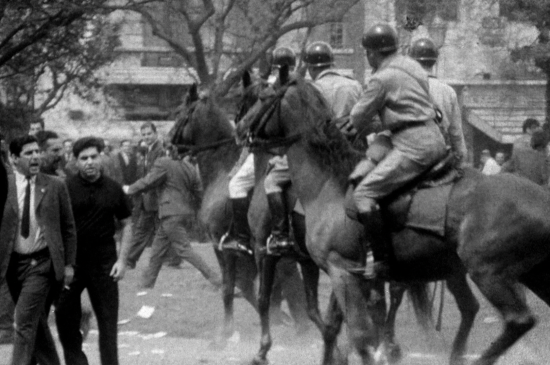
Filmstill La hora de los hornos. Neocolonialismo y violencia
La hora de los hornos. Neocolonialismo y violencia
Fernando E. Solanas
A film like an incendiary device, a radical pamphlet. Like few other films, this call for the liberation of Argentina from oppression and violence moved the 1968 generation across the world.

Filmstill La hora de los hornos. Neocolonialismo y violencia

La hora de los hornos. Neocolonialismo y violencia

La hora de los hornos. Neocolonialismo y violencia
Fernando E. Solanas
Retrospective
Documentary Film
Argentina
1968
88 minutes
Spanish
Subtitles: 
English
No Premiere

A call for radical political change, an agitation pamphlet for the national liberation of Argentina: Like few other films, “La hora de los hornos” stirred the generation of 1968 all over the world. The more than four-hour-long film essay was banned for many years, not just in Argentina. Taking the form of a multilayered documentary collage, it is a masterful exploration of the possibilities of image-sound-editing which unfolds a panorama of the prevailing social and political conditions. “Neocolonialismo y violencia” analyses the colonisation of Latin America, its economic and cultural dependence on the industrialised states of the so-called First World, especially the USA, as well as the omnipresence of violence. The second part, “Acto para la liberación”, delivers a chronicle of Peronism and the resistance after Perón’s fall in 1955. “Violencia y liberación”, the shorter third part, openly advocates armed struggle. After two years of clandestine work by a small team around Fernando E. Solanas and Octavio Gentino, “La hora de los hornos” had its world premiere on 2 June 1968 at the Mostra Internazionale del Cinema Nuovo in Pesaro. The Friends of the German Cinematheque (today: Arsenal Filminstitut) screened the three-part film only a few weeks later on the occasion of the Berlinale. After the opening of the Arsenal cinema in January 1970 on Welserstraße in Berlin-Schöneberg, countless screenings of the distribution prints of the film followed at their own venue and elsewhere.
Florian Wüst

Contains depictions of physical violence, racism

Screenings & Tickets DOK Leipzig Logo

27.10.
#233
CineStar 5
Teil der Kompilation
During Checkout you can apply discounts, your accreditation or season passes
27.10.2026
CineStar 5
#233
Teil der Kompilation
During Checkout you can apply discounts, your accreditation or season passes
Calendar

Credits DOK Leipzig Logo

Director
Fernando E. Solanas
Script
Octavio Getino, Fernando E. Solanas
Cinematographer
Juan Carlos Desanzo
Editor
Juan Carlos Macías, Antonio Ripoll, Norma Torrado
Producer
Grupo Cine Liberación

Contact DOK Leipzig Logo

Main Contact
Victoria Solanas
Retrospective
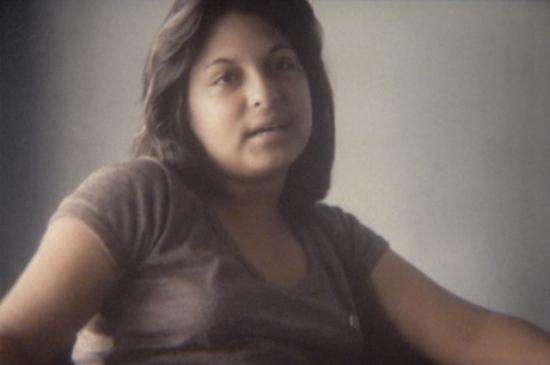
Filmstill La infancia de Marisol
La infancia de Marisol
Bernabé Hernández
A 14-year-old Nicaraguan girl recounts an incredible story: from her involvement in the fight against the dictatorship via imprisonment and torture to her departure into a new life.
Filmstill La infancia de Marisol

La infancia de Marisol

La infancia de Marisol
Bernabé Hernández
Retrospective
Documentary Film
Cuba
1979
14 minutes
Spanish
Subtitles: 
English
No Premiere

Cuban documentary film was never aimed only at its own nation but saw its task as providing information about the events in the so-called Third World. Well-known films by Santiago Álvarez deal with the anti-imperialist struggles in Vietnam and Laos. Starting in the late 1970s, the focus was expanded to include the civil wars in Nicaragua and El Salvador, a shift clearly reflected in the Leipzig festival programmes. Meanwhile, in 1980, Oberhausen screened, in addition to the retrospective “Cinema in Cuba 1959–1979”, Bernabé Hernández’s “La infancia de Marisol”. The film was one of the first Cuban productions made after the victory of the Nicaraguan Revolution in July 1979. It is based on the accounts of 14-year-old Marisol who describes how she joins the Sandinista Liberation Front, fights against the dictatorship, is taken prisoner and, like her father and brother, brutally tortured. The film ends with the prospect of a new life: Marisol’s studies in Cuba.

Florian Wüst

Contains mentions of physical violence, torture

Screenings & Tickets DOK Leipzig Logo

28.10.
#334
CineStar 5
Teil der Kompilation
During Checkout you can apply discounts, your accreditation or season passes
28.10.2026
CineStar 5
#334
Teil der Kompilation
During Checkout you can apply discounts, your accreditation or season passes
Calendar

Credits DOK Leipzig Logo

Director
Bernabé Hernández
Cinematographer
Raúl Rodríguez
Editor
Rolando Baute
Producer
ICAIC – Instituto Cubano del Arte e Industria Cinematográficos
Sound
Leonardo Sorrell, Carlos Fernández

Contact DOK Leipzig Logo

Main Contact
Carsten Spicher
spicher@kurzfilmtage.de