Filmtype
Länge
Custom type
Topic
Length
Ollas populares
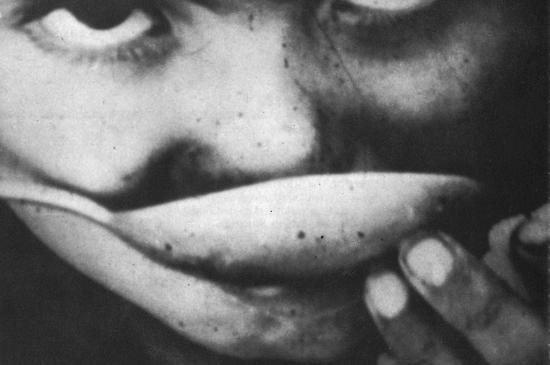
Countless families in the Tucumán province, one of the poorest regions in Argentina, become unemployed after the annual sugar cane harvest. The state installs so-called popular kitchens to combat hunger. Children and old people spoon the thin broth almost apathetically. “These images are stark and elementary. Without commentary, the camera confronts us with conditions of destitution that even the most eloquent pleas are unable to describe”, Peter Kress notes in the report of the 1970 West German Short Film Festival. As a counterpoint to the images, “Ollas populares” is set to the Argentinian national anthem. Can its lyrics only be understood as an expression of cynicism? Maybe it can be interpreted quite differently – as a revolutionary call to arms: “Hear the noise of broken chains. / See noble equality enthroned.” Gerardo Vallejo’s film was made in the constant fear of exposure of its authorship, which is why it is listed anonymously in the Oberhausen programme.
Florian Wüst
Screenings & Tickets
Credits
Contact
Omsorg
The screen is filled with the lightness of a summer’s day. A lake tempts people to swim and have fun, the sun sparkling on the water. A young woman is wavering on its banks, another reaches out her hand to her. The exuberant scenes are overlaid by the narrative of another woman recalling early, painful sexual experiences. At first, the words and the images seem to stand in contrast to each other. But the longer the sun shines, the more the narrative and the images overlap. The offscreen narrator speaks more and more freely, reporting how she suppressed the wishes and needs of her body at first. An encounter with a woman makes her discover her desire and pleasure. The impressions of the lake bring her increasingly beautiful descriptions to life – this day could not have a more romantic ending.
Anke Leweke
Contains mentions of sexual violence
Trailer
Screenings & Tickets
Free entry
Credits
Contact
em.johrden@gmail.com
Otá Layò
The brothers Matheus and José live in Brazil by the rivers of the Kalunga Quilombo, a community of descendants of escaped slaves. The springs and rivers are an important part of their life and they both know how precious and worth protecting these waters are. They love to collect stones there which they use for their artworks. The film follows the brothers on their forays along the water for a bit and tells of their special connection to this place.
Lina Dinkla
Screenings & Tickets
Credits
Contact
contato.acarajefilmes@gmail.com
Out of Bounds
André Eckardt
Trailer
Screenings & Tickets
Credits
Contact
franz.impler@gmail.com