Topic
- Activism
- Animated Documentary
- Archival Footage
- Arts/Culture
- Coming of Age
- Digital Culture
- Eastern German
- Environment
- Experimental
- Family
- Gender
- History
- Human Rights
- Labour/Economy
- LGBTQIA2S+
- Music
- Politics/Current Affairs
- Portrait/Biography
- Psyche/Mind
- Religion/Spirituality
- Science/Technology
- Social Issues
- Sports
- Underrepresented Communities
- War/Conflict
- Youth
Filmtype
Accessibility
Custom type
Topic
- Activism
- Animated Documentary
- Archival Footage
- Arts/Culture
- Coming of Age
- Digital Culture
- Eastern German
- Environment
- Experimental
- Family
- Gender
- History
- Human Rights
- Labour/Economy
- LGBTQIA2S+
- Music
- Politics/Current Affairs
- Portrait/Biography
- Psyche/Mind
- Religion/Spirituality
- Science/Technology
- Social Issues
- Sports
- Underrepresented Communities
- War/Conflict
- Youth
Accessibility
The Class of 1990
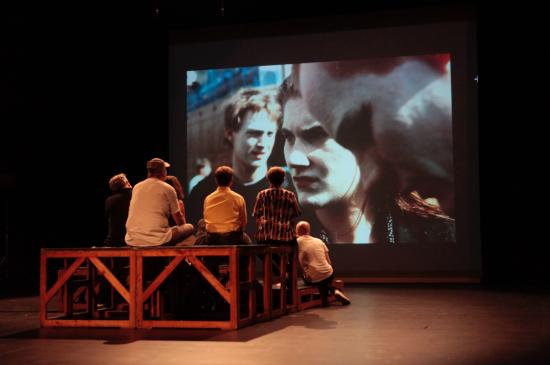
A theatre stage, Hamlet: the "call for freedom": The ones who declaim it have learned their craft. Right here, in Rostock, they had begun their studies a month before the German reunification. 35 years later, they remember. 1990: They come from different backgrounds, from East and West. They are strangers, live in prefabricated homes. And they quickly find themselves in a maelstrom sweeping across the whole of the East: Like the factories around them, the theatre school is to be "phased out". At the same time, the "Sonnenblumenhaus" is burning in Rostock-Lichtenhagen. They must learn to organise themselves. Like pieces of a jigsaw, individual tales, supplemented by archive images and historical rehearsal videos, come together to form a picture of those times. Embodied by today’s students, who re-enact scenes from the past, the past is reflected in the present. The story of the East German student movement of the early 1990s has been almost completely erased from the collective memory today. As in Rostock, nothing at Leipzig University reminds us that the existence of a number of scientific or artistic institutes and institutions is owed solely to their commitment. "Die Klasse von 1990" is an urgently needed corrective to a Western-dominated historiography, and a lesson in self-empowerment and democracy.
Grit Lemke
Screenings & Tickets
Credits
Contact
office@poison-berlin.com
The Core
When an illness brings life to a standstill, everything is suddenly called in question. We are used to functioning – using our body and mind to achieve goals, to fulfil our potential, to be there for others. But how do we react when this supposed normality no longer exists? When life as we knew it threatens to fall apart? “The Core” is a film about the fight against this disintegration and the struggle to answer the question of what constitutes life. Life as a filmmaker, woman and mother. Life that was already complete before the illness appeared and that now competes with the latter – for time and attention. Where is the essential core of a person, what can’t be surrendered without giving up one’s self? This auto-fictional film begins on a very personal note but shows clearly how much our approach to illness is shaped by society and how the insistence on “normality” makes life harder for those who fight for it every day.
Luc-Carolin Ziemann
Contains mentions of mental health conditions
Screenings & Tickets
Credits
Contact
rebecca.zehr@posteo.de
The Divided City of Mitrovica
Marie Ketzscher
Contains mentions of death
Screenings & Tickets
Credits
Contact
pinklayne@gmail.com
The Evidence of the Termites
James Lattimer
Screenings & Tickets
Credits
Contact
robertojaenchacon@gmail.com
The Masturbator – The Adventures of Edgar Hilsenrath
Ola Staszel
Screenings & Tickets
Credits
Contact
antrag@majade.de
The Maternity Ward
Carolin Weidner
Screenings & Tickets
Credits
Contact
contact@ajimatifilms.com
The Miracle
Lina Dinkla
Screenings & Tickets
Credits
Contact
The Nights
James Lattimer
Contains depictions of nudity, explicit sex scenes
Screenings & Tickets
Credits
Contact
There’s No Place Like Rome
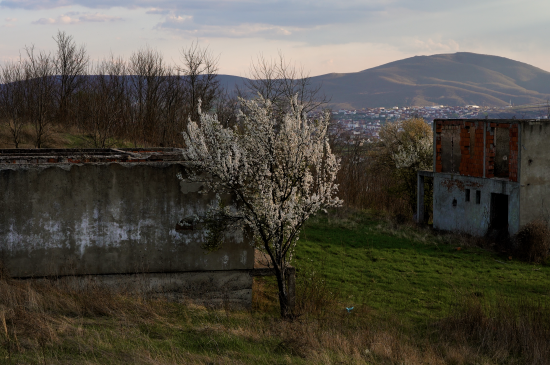
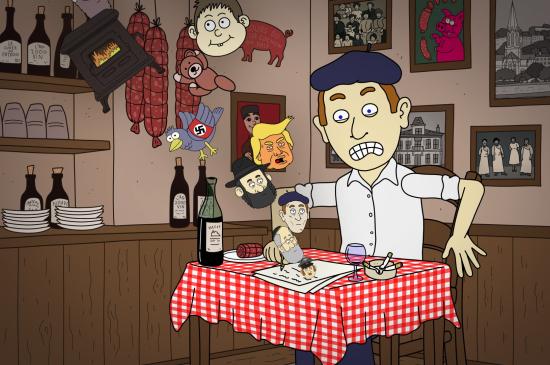
Why are we so fascinated by the ancient world even today? In 2023, the viral hashtag #RomanEmpire brought to light how many people are still captivated by ancient Rome – men above all. For Pinji, the director’s uncle, this fascination has long since become a life project. He lives in an old house in Bulgaria, looks after a collection of antique treasures and has been writing a book about antiquity for years. When his nephew comes to visit, uncle Pinji does not hesitate: With humorous implacability, he launches into a rhetorical "demolition" of the present age. Toddi listens closely and decides to join the fight. He implements himself and Pinji in a computer game, right into the middle of an antique battle. Now the present is battling the past – outcome uncertain.
Luc-Carolin Ziemann
Trailer
Screenings & Tickets
Credits
Contact
t.musev@gmx.de
They’re Here
Carolin Weidner
Contains mentions of racism, murder
Contains depictions of physical violence
Screenings & Tickets
Credits
Contact
Submarine Entertainment
Through the Dust of Time
Anca Păunescu
Trailer
Screenings & Tickets
Credits
Contact
qaz196626@gmail.com
Tire dié
“Tire dié” begins with aerial shots of Santa Fe, Fernando Birri’s hometown. We hear a litany of statistical data that gradually and parodically turn into more and more trivial facts about the city. The camera approaches the town’s outskirts with their informal settlements, drops from its airy heights down to the eye-level of those who talk about their daily struggle for survival. Often it is the children who bring the necessary coins home. Every afternoon, they go begging along the nearby two-kilometre railway bridge. Running barefoot along the train that connects Santa Fe with Buenos Aires, they hold their hands up to the travellers at the windows, incessantly calling “tire dié” (throw a dime). The last third of the film, which marks the birth of the new Latin American cinema, is an equally breathtaking and harrowing montage of this daring endeavour.
Florian Wüst