Films A–Z

Programme & Tickets

A-Z
Filters
Filter by
View by

Glossary AZ - Content » fullInternationalTitle

International Competition Documentary Film
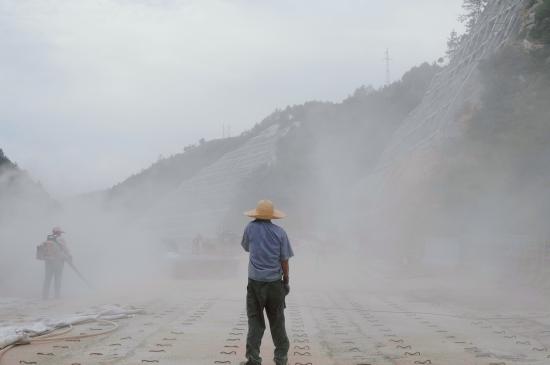
Filmstill Xiangzidian Village: The Stage
Xiangzidian Village: The Stage
Hu Sanshou
Full of quiet beauty and novelistic detail, this longitudinal study of a highway being built in northern China archives the memories of a community as tradition gives way to modernity.

Filmstill Xiangzidian Village: The Stage

Xiangzidian Village: The Stage

Xiangzidian: Wutai
Hu Sanshou
International Competition Documentary Film
Documentary Film
China
2026
150 minutes
Chinese
Subtitles: 
English
European premiere
The planning phase began at the start of the pandemic, for a new highway intended to pass right through the centre of Xiangzidian, a village in Shaanxi province. Born and raised in the village and marooned there by Covid, director Hu Sanshou could thus document the process from the start, in lingering wide shots and gentle pans of an unostentatious beauty, their all-enveloping focus punctuated by comments from the villagers wandering through the frame and Hu’s own voiceover commentary. Compensation notices are posted and graves relocated before construction begins, which stretches over years and numerous changes of season. Once the surface of the road is laid out, it does indeed resemble a stage and the local inhabitants move around on it as if being directed from afar, which is not inaccurate. Yet the great expanse of white pebbles is also akin to the pages of a vast book, which Hu fills with novelistic detail, narrating countless anecdotes about friends, family members and acquaintances that begin in the present and stretch way back into the past, capturing the cadence of that amorphous in-between phase between tradition and modernity which the traffic will soon drown out. If the violence of village life leaves little room for nostalgia, it is a sad story nonetheless. Whether tales of joy, hardship or simple endurance, folk memory and its loss touch us all.

James Lattimer

Trailer DOK Leipzig Logo

Screenings & Tickets DOK Leipzig Logo

28.10.
#353
CineStar 7
Xiangzidian Village: The Stage
During Checkout you can apply discounts, your accreditation or season passes
28.10.2026
CineStar 7
#353
Xiangzidian Village: The Stage
During Checkout you can apply discounts, your accreditation or season passes
Calendar
30.10.
#564
Passage Kinos Astoria
Xiangzidian Village: The Stage
During Checkout you can apply discounts, your accreditation or season passes
30.10.2026
Passage Kinos Astoria
#564
Xiangzidian Village: The Stage
During Checkout you can apply discounts, your accreditation or season passes
Calendar
01.11.
#7B2
Schauburg
Xiangzidian Village: The Stage
During Checkout you can apply discounts, your accreditation or season passes
01.11.2026
Schauburg
#7B2
Xiangzidian Village: The Stage
During Checkout you can apply discounts, your accreditation or season passes
Calendar

Credits DOK Leipzig Logo

Director
Hu Sanshou
Cinematographer
Hu Sanshou
Editor
Hu Sanshou
Producer
Hu Sanshou
Sound
Hu Sanshou

Contact DOK Leipzig Logo

Main Contact
Hu Sanshou
husanshou@qq.com
Nominated for: Prize of the Interreligious Jury, FIPRESCI Prize
Retrospective
Filmstill Yawar Mallku
Yawar Mallku
Jorge Sanjinés
A crime narrated in flashbacks: US development aid workers secretly sterilise indigenous women. A declaration of war against “Yankee imperialism” and Bolivia’s class society.
Filmstill Yawar Mallku

Yawar Mallku

Yawar Mallku
Jorge Sanjinés
Retrospective
Fictional Film
Bolivia
1969
70 minutes
Quechua,
Spanish
Subtitles: 
English
No Premiere

Jorge Sanjinés’ short film “Revolución” (1963) was one of the first Latin American films, beside the Cuban films, to be screened in Leipzig in 1964. With his documentary feature “Yawar Mallku” (Sangre de Condor), Sanjinés took a step towards a cinema that makes history. Told in flashbacks, the film is based on real events: US American development aid workers secretly sterilise indigenous women. The chief of a Quechua community discovers the crime; the village community takes revenge. He is finally shot down by the police and survives, badly injured. He is taken to town, but the rescue attempt fails: There is no money for a blood transfusion. The film challenges both “Yankee Imperialism” and the Bolivian class society. As a consequence of the initially banned public screening, the so-called Peace Corps had to leave the country. “Yawar Mallku” had its premiere in West Berlin as part of the 1970 Berlinale’s “Week of New Cinema: Latin America”. Thereafter the Friends of the German Cinematheque (today: Arsenal Filminstitut) showned Sanjinés’ film multiple times at the Arsenal Cinema over the years, including under the heading “Birth Control as Genocide” in the context of the First International Women’s Film Seminar in November 1973. It enjoyed the same esteem in the East: One of only three Latin American films found in the “Film-Blätter: Kurzmonographien zu klassischen Filmen" (Film Sheets: Brief Monographs on Classical films) of the GDR’s State Film Archive, “Das Blut des Condors” (The Blood of the Condor) is listed under No. 183.

Florian Wüst

Screenings & Tickets DOK Leipzig Logo

31.10.
#633
CineStar 5
Teil der Kompilation
During Checkout you can apply discounts, your accreditation or season passes
31.10.2026
CineStar 5
#633
Teil der Kompilation
During Checkout you can apply discounts, your accreditation or season passes
Calendar

Credits DOK Leipzig Logo

Director
Jorge Sanjinés
Script
Jorge Sanjinés, Óscar Soria
Cinematographer
Antonio Eguino
Editor
Jorge Sanjinés
Producer
Ukamau Ltd.
Score
Alfredo Domínguez, Ignacio Quispe, Alberto Villalpando

Contact DOK Leipzig Logo

Main Contact
Pedro Lijerón Vargas
pedro@ukamau.org