Topic
- Activism
- Animated Documentary
- Archival Footage
- Arts/Culture
- Coming of Age
- Digital Culture
- Eastern German
- Environment
- Experimental
- Family
- Gender
- History
- Human Rights
- Humour
- Labour/Economy
- LGBTQIA2S+
- Music
- Politics/Current Affairs
- Portrait/Biography
- Psyche/Mind
- Religion/Spirituality
- Science/Technology
- Social Issues
- Sports
- Underrepresented Communities
- War/Conflict
- Youth
Filmtype
Accessibility
Custom type
Topic
- Activism
- Animated Documentary
- Archival Footage
- Arts/Culture
- Coming of Age
- Digital Culture
- Eastern German
- Environment
- Experimental
- Family
- Gender
- History
- Human Rights
- Humour
- Labour/Economy
- LGBTQIA2S+
- Music
- Politics/Current Affairs
- Portrait/Biography
- Psyche/Mind
- Religion/Spirituality
- Science/Technology
- Social Issues
- Sports
- Underrepresented Communities
- War/Conflict
- Youth
Accessibility
Apocalypse Yesterday, Today, Tomorrow, and the Day After Tomorrow
Marie Ketzscher
Contains mentions of war scenes
Trailer
Screenings & Tickets
Credits
Contact
anastasiabonadyga@gmail.com
B*tch
Anca Păunescu
Screenings & Tickets
Credits
Contact
Black Box
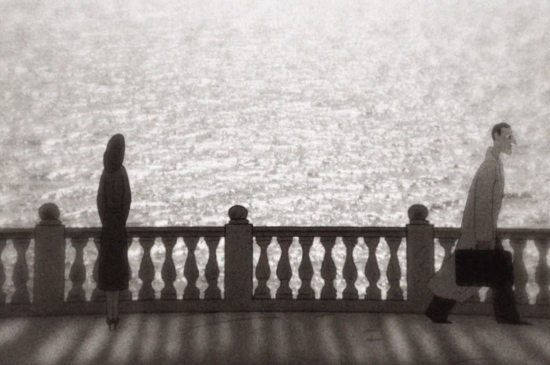
What is left when everything fades away? An old photographer tries to reconstruct people and events by means of old photographs, but they keep slipping away from him, vanishing in the dark, washed away by the waves. In his 2D animated film, rendered in black and white, Anton Dyakov not only shows how memories are lost, but also how they sometimes haunt and overwhelm us – for example in the shape of a disturbing archive fragment of blurred war photos. “Black Box” deals with loss and grief from a personal, yet universal perspective, while referencing the culture of remembrance in the digital age which is increasingly managing – or seeking to manage – without the haptic assurance of a printed photo.
Marie Ketzscher
Screenings & Tickets
Credits
Contact
claus@trollfilm.no
Broken Glass
Franka Sachse
Screenings & Tickets
Credits
Contact
kate.voznytsia@gmail.com
Decay
André Eckardt
Contains mentions of mental health conditions, murder
Photosensitivity warning: Contains flashes of light that may trigger seizures for people with visual sensitivities.
Screenings & Tickets
Credits
Contact
j.gonzalezj@uniandes.edu.co
Division
What does a person’s library say about them? James Paul Dallas doesn’t just create a portrait of a life, but also shows a present in which possession, memory and identity are all becoming shaky. In early 2025, the anonymous protagonist guides the director via mobile phone through his empty apartment in Brooklyn. What can stay and what can go in what was his home for 20 years? The kitchen crockery is first up, then the books. Giacometti and Basquiat can stay in New York. But please pack up everything between Lequeu and Brick. A course is thus tracked through an intimate microcosm. It’s not just one individual’s paths to wisdom that are being measured out here, but also his desires, preferences and guilty pleasures. The footage gives fragmentary glimpses into a private world, piquing the curiosity and sparking the imagination of all those watching: what were all the things that happened in this apartment? What sort of person lived here? And why does he have to give up all these things, and maybe even a part of himself?
Borjana Gaković
Screenings & Tickets
Credits
Contact
jamespauldallas@gmail.com
Eine chilenische Hochzeit
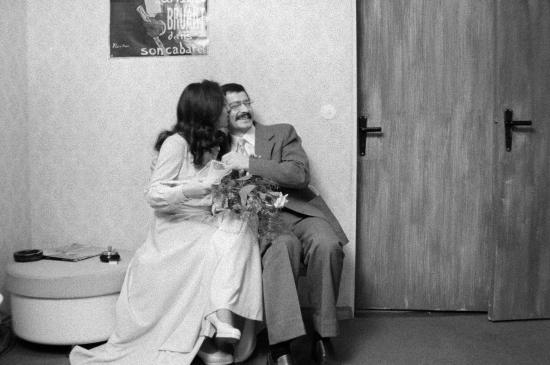
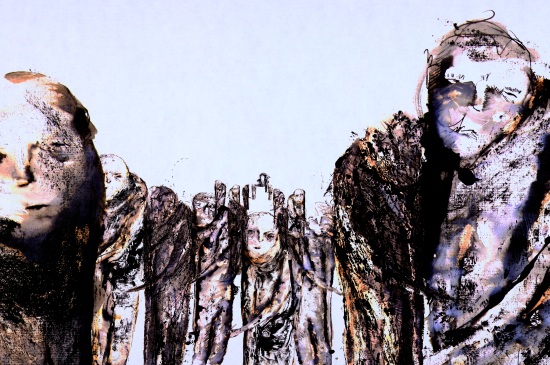
In 1977, Valentin Milanow, a Bulgarian student at the GDR Academy of Film and Television, sat in at the DEFA Studio for Documentary Films. Director Rainer Ackermann was assigned as his mentor. Milanow came up with the idea of portraying the reality of life of exiled Chileans in the GDR. He was friends with a young couple, Alejandra Holzapfel and José Fuica, who lived in the same prefabricated housing estate in Potsdam-Babelsberg. She studied veterinary medicine, he was training to be a teacher of Marxism-Leninism. Milanow was allowed to film their wedding. On the fringes of the seemingly happy celebration, conversations turn to memories of interrogations and torture by the military junta and worries about relatives who were left behind. What the bride herself did not reveal at the time: As a leftist underground fighter she had been exposed to the worst abuse in the “Venda Sexy” prisoners’ camp and others. Today, this place is the memorial site Asociación de Memoria y Derechos Humanos Irán 3030. It is run by Alejandra Holzapfel.
Florian Wüst
Screenings & Tickets
Credits
Contact
defa-filmverleih@deutsche-kinemathek.de
Hello Debus
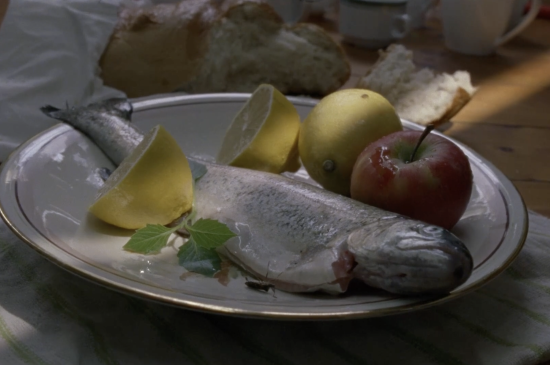
A bizarre still life. Everyday objects lie carefully lined-up around a bed: scissors, keys, audio cassettes. A dead fish on a plate is surrounded by lemons and tomatoes. A young man lies listlessly on the bed – he does not stir even when the telephone rings and the answering machine clicks on. A rigorously choreographed scenery meets the real voice of a father. He seems needy, absurdly asking for anchovies. Suddenly, the son’s body is wrapped in a bubbling bag, only the feet sticking out, a tube supplying water. The father fancies some Roquefort cheese, but the real thing. Personal overload and powerlessness take on an original shape here – and that is far from all.
Anke Leweke
Contains mentions of mental health conditions
Screenings & Tickets
Credits
Contact
rosa.gocht@filmuniversitaet.de
La infancia de Marisol
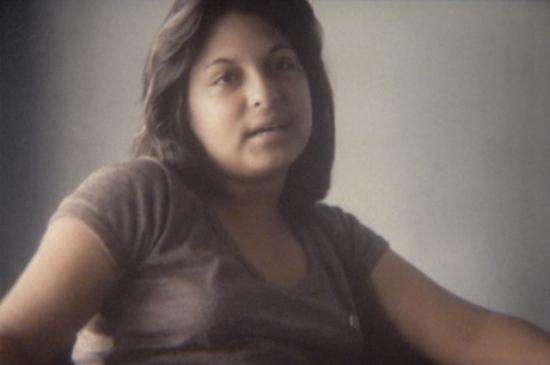
Cuban documentary film was never aimed only at its own nation but saw its task as providing information about the events in the so-called Third World. Well-known films by Santiago Álvarez deal with the anti-imperialist struggles in Vietnam and Laos. Starting in the late 1970s, the focus was expanded to include the civil wars in Nicaragua and El Salvador, a shift clearly reflected in the Leipzig festival programmes. Meanwhile, in 1980, Oberhausen screened, in addition to the retrospective “Cinema in Cuba 1959–1979”, Bernabé Hernández’s “La infancia de Marisol”. The film was one of the first Cuban productions made after the victory of the Nicaraguan Revolution in July 1979. It is based on the accounts of 14-year-old Marisol who describes how she joins the Sandinista Liberation Front, fights against the dictatorship, is taken prisoner and, like her father and brother, brutally tortured. The film ends with the prospect of a new life: Marisol’s studies in Cuba.
Florian Wüst
Contains mentions of physical violence, torture
Screenings & Tickets
Credits
Contact
spicher@kurzfilmtage.de
Light
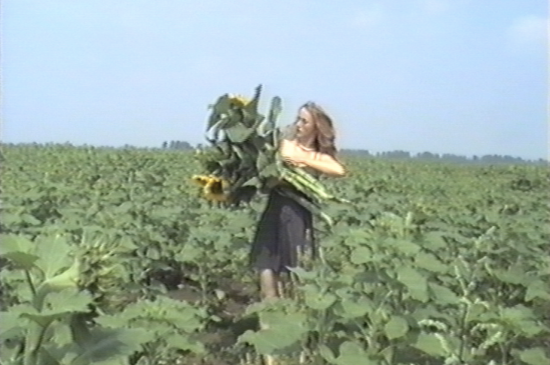
1995. It is the sixth summer since the fall of the Berlin Wall. Artists live, love and work on a farm in East Germany. They film each other with a video camera. They have seen the world, have wondered and learned, became homesick and returned. To where there was space. Fruit hangs from the trees, sparrows chirp, sculptures in the garden. Time and again the camera captures a young woman, her open gaze, her focus. The material which has become fragile today vibrates, gets stuck, freezes. Unperturbed, the narrative evokes the paean of summer, which will not be followed by a seventh for one of them. A white light shines into the present.
Jan Künemund
Contains mentions of death
Screenings & Tickets
Credits
Contact
juliane.ebner@gmx.de
Mum’s Hair
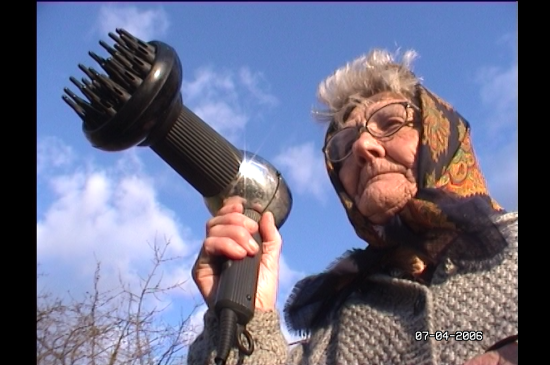
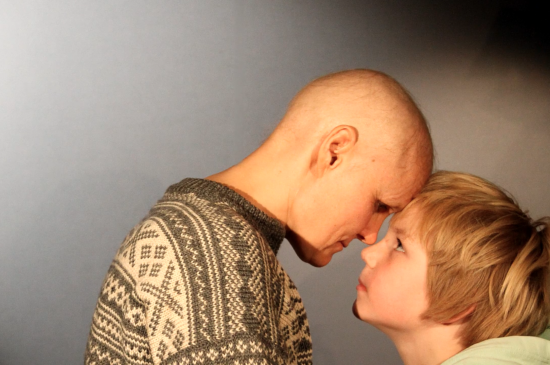
Losing your hair through chemotherapy is a painful experience for many people, not least because a bald head displays one’s new vulnerability so blatantly. But Maja Arnekleiv, the daughter of Norwegian animation director Anita Killi, turns the steps of the transformation – the original mum’s hair, the near-baldness, the new growth which is so different from the pre-chemo hair – into a tribute to resilience, love and family solidarity even in difficult times of illness. In a pixilation documentary produced over a period of two years, she captures in 755 single frames (selected from more than 3,000) how she and her siblings comb, blow-dry, style, braid and spray Anita Killi’s hair, while Killi always has her eyes firmly on the viewers. Sometimes laughing, sometimes serious, always loving. In 2017, Marja Arnekleiv won the Golden Dove for this tender, very touching film which celebrates the mother of four, whatever she looks like.
Marie Ketzscher
Screenings & Tickets
Credits
Contact
claus@trollfilm.no
Nachtcafé
Light is burning in the old Franciscan church. The guests arrive to warm up and sleep. There is soup and Berliner doughnuts. When everyone has been taken care of, the light goes out again. A voice asks the filmmakers: Do you know Cologne well? A few photographs shown in-between a lot of black screen. People, places, Ingo talks. An alternative city tour from the perspective of persons living in the streets. Interesting even when you can’t make out much – possibly even art. At the end of this documentary miniature the light goes on again. And the protagonist steps out onto the street.
Jan Künemund
Contains mentions of drug-use, mental health conditions
Screenings & Tickets
Credits
Contact
ute.dilger@khm.de