Topic
- Activism
- Animated Documentary
- Archival Footage
- Arts/Culture
- Coming of Age
- Digital Culture
- Eastern German
- Environment
- Experimental
- Family
- Gender
- History
- Human Rights
- Humour
- Labour/Economy
- LGBTQIA2S+
- Music
- Politics/Current Affairs
- Portrait/Biography
- Psyche/Mind
- Religion/Spirituality
- Science/Technology
- Social Issues
- Sports
- Underrepresented Communities
- War/Conflict
- Youth
Filmtype
Custom type
Topic
- Activism
- Animated Documentary
- Archival Footage
- Arts/Culture
- Coming of Age
- Digital Culture
- Eastern German
- Environment
- Experimental
- Family
- Gender
- History
- Human Rights
- Humour
- Labour/Economy
- LGBTQIA2S+
- Music
- Politics/Current Affairs
- Portrait/Biography
- Psyche/Mind
- Religion/Spirituality
- Science/Technology
- Social Issues
- Sports
- Underrepresented Communities
- War/Conflict
- Youth
Apocalypse Yesterday, Today, Tomorrow, and the Day After Tomorrow
Marie Ketzscher
Contains mentions of war scenes
Trailer
Screenings & Tickets
Credits
Contact
anastasiabonadyga@gmail.com
Cyclepaths
André Eckardt
Contains depictions of murder, war scenes
Screenings & Tickets
Credits
Contact
antoncla.contact@gmail.com
Eine chilenische Hochzeit
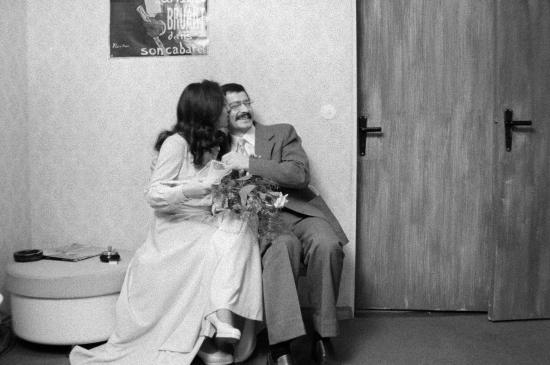
In 1977, Valentin Milanow, a Bulgarian student at the GDR Academy of Film and Television, sat in at the DEFA Studio for Documentary Films. Director Rainer Ackermann was assigned as his mentor. Milanow came up with the idea of portraying the reality of life of exiled Chileans in the GDR. He was friends with a young couple, Alejandra Holzapfel and José Fuica, who lived in the same prefabricated housing estate in Potsdam-Babelsberg. She studied veterinary medicine, he was training to be a teacher of Marxism-Leninism. Milanow was allowed to film their wedding. On the fringes of the seemingly happy celebration, conversations turn to memories of interrogations and torture by the military junta and worries about relatives who were left behind. What the bride herself did not reveal at the time: As a leftist underground fighter she had been exposed to the worst abuse in the “Venda Sexy” prisoners’ camp and others. Today, this place is the memorial site Asociación de Memoria y Derechos Humanos Irán 3030. It is run by Alejandra Holzapfel.
Florian Wüst
Screenings & Tickets
Credits
Contact
defa-filmverleih@deutsche-kinemathek.de
La infancia de Marisol
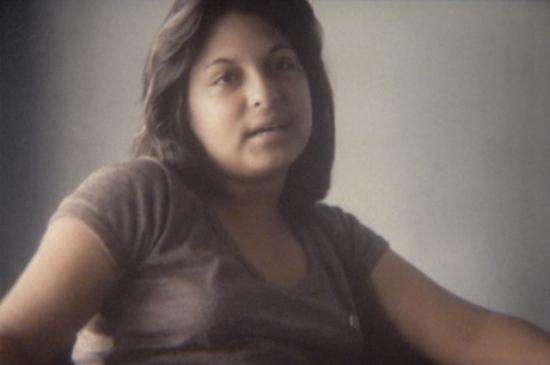
Cuban documentary film was never aimed only at its own nation but saw its task as providing information about the events in the so-called Third World. Well-known films by Santiago Álvarez deal with the anti-imperialist struggles in Vietnam and Laos. Starting in the late 1970s, the focus was expanded to include the civil wars in Nicaragua and El Salvador, a shift clearly reflected in the Leipzig festival programmes. Meanwhile, in 1980, Oberhausen screened, in addition to the retrospective “Cinema in Cuba 1959–1979”, Bernabé Hernández’s “La infancia de Marisol”. The film was one of the first Cuban productions made after the victory of the Nicaraguan Revolution in July 1979. It is based on the accounts of 14-year-old Marisol who describes how she joins the Sandinista Liberation Front, fights against the dictatorship, is taken prisoner and, like her father and brother, brutally tortured. The film ends with the prospect of a new life: Marisol’s studies in Cuba.
Florian Wüst
Contains mentions of physical violence, torture
Screenings & Tickets
Credits
Contact
spicher@kurzfilmtage.de
Maro’s Photo
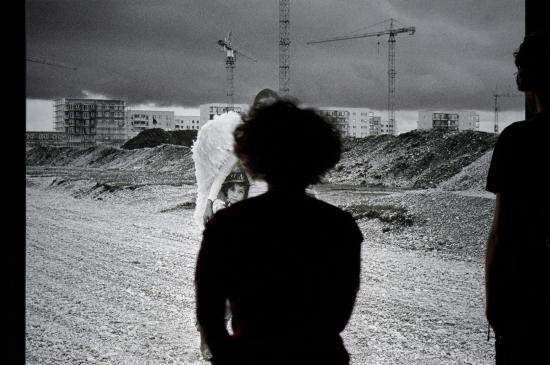
In the early 2000s, Maria Nikolaidou took a photo on Munich’s “Panzerwiese” (tank meadow): Her son Alexandros and another little boy playing war. A woman with angel’s wings wraps her arms protectively around the two of them. Twenty-three years later, mother and son return to the spot where the black and white photo was taken. Alexandros now uses the same camera to make a photo film about the image and also meets with his former playmate. Their voice-over memories and associations reveal different perspectives and moods. The history and stories behind a photograph are being reconstructed: What was overlooked at the time? Why were Alexandros’ grandparents not allowed to give him a gun? Who is the person on the hill in the background? In the end, a new image emerges.
Anke Leweke
Trailer
Screenings & Tickets
Free entry
Credits
Contact
a.murboeck@posteo.de
no_mercy_in_Mexico
André Eckardt
Contains mentions of drug-use, death, murder
Contains depictions of physical violence, torture
Trailer
Screenings & Tickets
Credits
Contact
Patronymic
“What a minor thing to be bothered with in times of invasion. It’s just a bureaucratic record,” scoffs the chorus of critics. Volodymyrivna, Mariia’s patronymic – a middle name derived from that of her father – has disappeared from her international documents. For her, the name is more than just a formality though: it links her to her father and to Ukraine. This personal film playfully combines documentary footage, archive material, official documents and staged re-enactments on a night train. In so doing, it questions the patriarchal concept of the patronymic and sheds light on its postcolonial connections. For Mariia, this is already her third work – following ‘May 9th’ (2015) and ‘Three Windows on South West’ (2023) – in which she grapples with her identity.
Seggen Mikael
Contains mentions of war scenes
Trailer
Screenings & Tickets
Free entry
Credits
Contact
shortsfit@gmail.com
The Divided City of Mitrovica
Marie Ketzscher
Contains mentions of death
Screenings & Tickets
Credits
Contact
pinklayne@gmail.com
The Hedge of Thorns
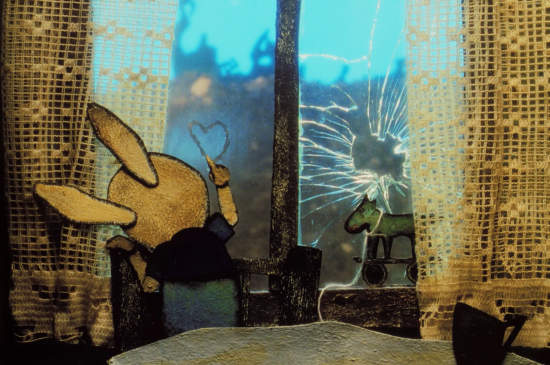
Building bridges over and over again. That is what keeps Florian and Malene busy, because how could it be otherwise: After all, the two children live on opposite sides of a brook but want to play with each other all the time. But then the war comes – and Florian is no longer allowed to visit Malene, because she now lives in enemy country: the brook has become barbed wire. In her child-oriented cut-out adult film (and vice versa!), Anita Killi explores the different ways young and old perceive life, visually inspired by the Norwegian painter Theodor Kittelsen. The microcosms of the little ones are lovingly captured, from playing in the snow to rubbing their noses together, while Killi also directs her attention to the arbitrariness of most conflicts. “War never dies, it just sleeps from time to time”, Florian’s father says, and: It’s the adults who wake it up. But maybe the succeeding generations will come up with something new after all?
Marie Ketzscher
Screenings & Tickets
Credits
Contact
claus@trollfilm.no
You Should Dream of Flying
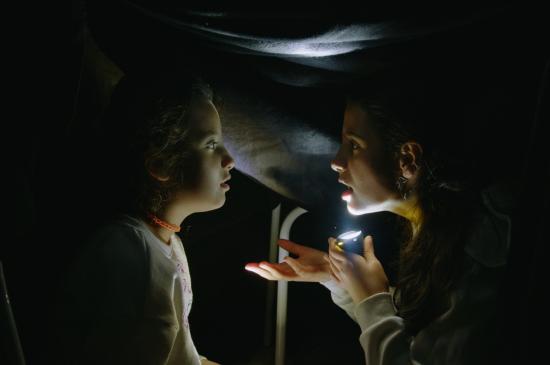
Playing hide and seek, reading out a school essay, taking a driving lesson. These scenes seem casual at first glance, but they turn out to be snapshots of life in exceptional circumstances. Only when the camera pulls back for a long shot does it reveal the refugee homes. The man behind the wheel drives briskly, explaining to the instructor that he obtained his driving license back home long ago. Two girls under a blanket tell each other stories of the time before they fled. What keeps this luminous round of scenes together is the hope of a return to normality.
Anke Leweke
Trailer
Screenings & Tickets
Free entry
Credits
Contact
laura.staab@gmx.de