Topic
- Activism
- Animated Documentary
- Archival Footage
- Arts/Culture
- Coming of Age
- Digital Culture
- Eastern German
- Environment
- Experimental
- Family
- Gender
- History
- Human Rights
- Humour
- Labour/Economy
- LGBTQIA2S+
- Music
- Politics/Current Affairs
- Portrait/Biography
- Psyche/Mind
- Religion/Spirituality
- Science/Technology
- Social Issues
- Sports
- Underrepresented Communities
- War/Conflict
- Youth
Filmtype
Accessibility
Custom type
Topic
- Activism
- Animated Documentary
- Archival Footage
- Arts/Culture
- Coming of Age
- Digital Culture
- Eastern German
- Environment
- Experimental
- Family
- Gender
- History
- Human Rights
- Humour
- Labour/Economy
- LGBTQIA2S+
- Music
- Politics/Current Affairs
- Portrait/Biography
- Psyche/Mind
- Religion/Spirituality
- Science/Technology
- Social Issues
- Sports
- Underrepresented Communities
- War/Conflict
- Youth
Accessibility
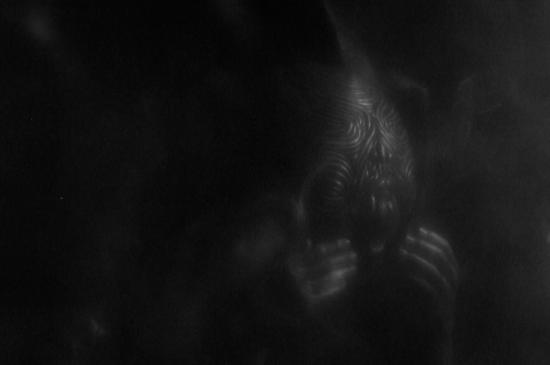
Awaken, My Children
Marie Ketzscher
Screenings & Tickets
Credits
Contact
lyza.jarvis@artun.ee
Black Rain
Created using still and moving images sourced from NASA’s STEREO satellite solar observation mission, “Black Rain” turns unprocessed scientific data into a raw and glitched-out perspective on nearby interplanetary space. Embracing the artefacts, the film gives us an unmanicured and almost voyeuristic view of space, distant from the glamour of sci-fi or the carefully colourised images normally released by NASA to the press, as we track solar winds, coronal mass ejections and passing comets, sometimes recognisable only as blurs of lines and pixels, across a monochrome background of stars and the milky way.
Ben Sassen
Photosensitivity warning: Contains flashes of light that may trigger seizures for people with visual sensitivities.
Screenings & Tickets
Credits
Contact
Cosmonauts
Everyone who longs for tenderness is welcome aboard the Pompelmo Express, a huge pink rocket ship. Together with a number of diverse passengers who shimmer in all the colours of the rainbow, Delfino, Rita and Zenf journey through the cosmos of possibilities. While a party rages on in the spaceship, Zenf discovers a fiery comet through his huge telescope. At an atmospheric tea party, Delfino falls head over heels in love with Carlos, and Rita begins to quarrel with her body. The infinite expanse and warm darkness of space envelop the friends benignly and offer a space to live out the most varied needs. “Say goodbye to your lonely days.”
Franka Sachse
Contains depictions of nudity
Screenings & Tickets
Credits
Contact
Silicon Saxony
Cranes on flat country. A Taiwanese chip giant is building Europe’s biggest semiconductor factory north of Dresden. The “building blocks of modern economy” play a central role against China, the USA, the rest of the world … Yet it is precisely in this place, where the new is grandly heralded, that a “forgotten future” lies buried. This was the centre of GDR semiconductor research, which strove to realise a social utopia by means of microelectronics. Some see the chip as a “weapon” in the fight for economic dominance and profit, others saw it as a political programme on the path to the “new human”. Jonas Meschede mixes neon-coloured images of a futuristic setting from the cleanrooms of the present with GDR science fiction and archive footage, unearthing what was buried. Once more, the promises of a golden future appear at the end. And the certainty that in the ground on which its gleaming factories are built what was declared dead only lies dormant.
Grit Lemke
Trailer
Screenings & Tickets
Credits
Contact
meschedeleon@gmail.com
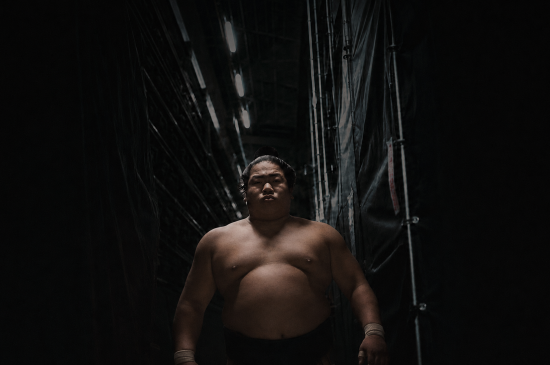
Sumo: Spirit Weighs Nothing
Carolin Weidner
Screenings & Tickets
Credits
Contact
ESPN
Swarm
In November 2013, the European Space Agency (ESA), as part of the SWARM Mission, launched three identical satellites into orbit to study our home planet’s magnetic field more closely. The translation of the measured data into sound makes the fluctuations in the magnetic field of our planet audible. Kamil Czapiga, whose intermedia art project “Cosmodernism”, founded in 2019, is an exploration of a very personal version of abstraction in the micro- and macrocosm, combines these sounds with fascinating material from his moving image universe. Even though they seem alien and unreal, his compositions are made from entirely earthly ingredients like oils, dyed water and magnetic liquids, which are stimulated to undergo chemical reactions in microscopically small film sets. Home-made mechanisms and special lighting enhance the resulting footage to a visual experience that seems out of this world.
Franka Sachse
Created in collaboration with the European Space Agency
Screenings & Tickets
Credits
Contact
hello@cosmodernism.com
The Way We Look at Things
André Eckardt
Trailer
Screenings & Tickets
Credits
Contact
mail@ahelmcke.com
Un día yo pregunté
“A polemical short film lasting only a few minutes which lines up images of the institution from which the underprivileged expect miracles and liberation from their daily misery: the Catholic Church, which is particularly reactionary in Colombia”, Peter B. Schumann writes about “Un día yo pregunté”. Julia de Álvarez and Carlos Álvarez frequently met with hostility for their political work and, along with other filmmakers, were imprisoned, even tortured, in July 1972. Their release from prison in February 1974 may well have been due, to a not inconsiderable extent, to the joint diplomatic efforts of the Friends of the German Cinematheque (today: Arsenal Filminstitut), the West German Short Film Festival in Oberhausen and others. For Leipzig, too, the couple represented an important voice – and an example of how close the German-German connections were regarding safeguarding, copying and distributing the analogue film material of the revolutionary Latin American cinema.
Florian Wüst
Screenings & Tickets
Credits
Contact
juliasabogal1@hotmail.com
White Hole
Where a black hole is characterised by a region of space in which objects become trapped and prevented from escaping, a white hole is a hypothetical region of spacetime which cannot be entered from the outside, but from within which things can emerge and be released. Such is the setting for this visually rich, hypnotically abstract journey into the universe's expansive voids. “White hole” was released towards the end of a period of exceptional creative experimentation for director Toshio Matsumoto, one of Japan’s most highly acclaimed and masterful experimental film and video makers. In contrast to his earlier celluloid work, “White hole” uses video synthesizers and heavy image processing to achieve a salient cinematic experience, reminiscent of Stanley Kubrick’s 'Stargate’ sequence from “2001: A Space Odyssey”, with similar overtones of psychedelic, and perhaps consciousness expanding cosmological exploration.
Ben Sassen
Photosensitivity warning: Contains flashes of light that may trigger seizures for people with visual sensitivities.