Topic
- Activism
- Animated Documentary
- Archival Footage
- Arts/Culture
- Coming of Age
- Digital Culture
- Eastern German
- Environment
- Experimental
- Family
- Gender
- History
- Human Rights
- Humour
- Labour/Economy
- LGBTQIA2S+
- Music
- Politics/Current Affairs
- Portrait/Biography
- Psyche/Mind
- Religion/Spirituality
- Science/Technology
- Social Issues
- Sports
- Underrepresented Communities
- War/Conflict
- Youth
Filmtype
Accessibility
Custom type
Topic
- Activism
- Animated Documentary
- Archival Footage
- Arts/Culture
- Coming of Age
- Digital Culture
- Eastern German
- Environment
- Experimental
- Family
- Gender
- History
- Human Rights
- Humour
- Labour/Economy
- LGBTQIA2S+
- Music
- Politics/Current Affairs
- Portrait/Biography
- Psyche/Mind
- Religion/Spirituality
- Science/Technology
- Social Issues
- Sports
- Underrepresented Communities
- War/Conflict
- Youth
Accessibility
Bára – Diary of a Rockstar
Carolin Weidner
Screenings & Tickets
Credits
Contact
barbora.lochmanova@gmail.com
Dysphasia
André Eckardt
Photosensitivity warning: Contains flashes of light that may trigger seizures for people with visual sensitivities.
Screenings & Tickets
Credits
Contact
antoncla.contact@gmail.com
Illapu – Lied von Freiheit und Liebe
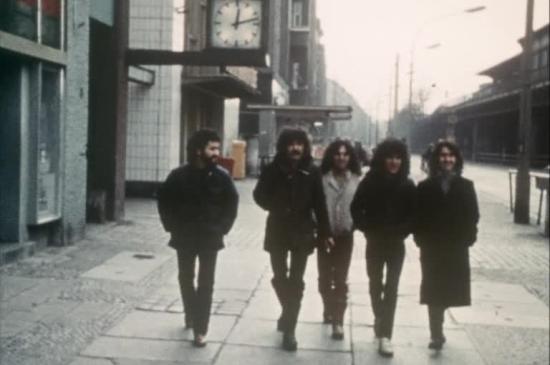
The Chilean folk group Illapu only really became famous under the military dictatorship. The five musicians were allowed to work, but had to “keep a low profile”. When they gradually joined the cultural resistance against the Pinochet regime, they were expelled in 1981. From their French exile, they toured Europe, including East Berlin. This is where Carlos Puccio’s film begins: The Chilean directing student observed Illapu’s rehearsals and concerts for his diploma film project at the Film and Television Academy of the GDR. They talk about their enduring bond with Chile and about what would happen if individual members of the band were given entry permits and Illapu would consequently break up. In 1986, they moved to Mexico together and returned to Chile two years later because of the changing political climate.
Florian Wüst
Screenings & Tickets
Credits
Contact
cristina.marx@filmuniversitaet.de
Kurtág Fragments
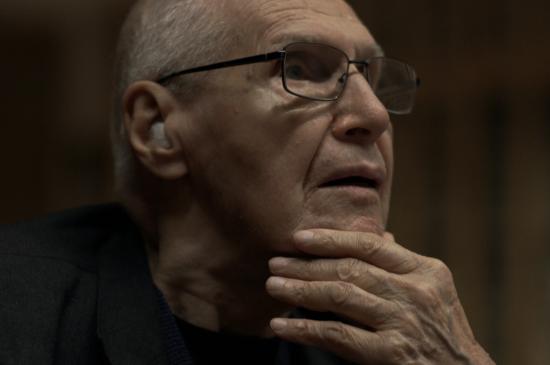
György Kurtág is a renowned Hungarian composer and a major figure of the post-war avant-garde. Born in 1926, he has now reached the age of 100, yet his mind remains wonderfully active. Living in an attic flat of the Budapest Music Center, he continues to work tirelessly with some of the world’s finest musicians who open their creations up to the humbling process of collaboration. Traversing geographies, the film takes us from his birth town of Lugoj to the different places that shaped him, from Transylvania to Budapest to Paris. It traces his early steps into the world of music, which began with dance and four‑hand piano sessions with his mother — something he later continued with his wife and pianist Márta. It then follows his life and many artistic collaborations, including with Icelandic pianist Víkingur Ólafsson and British cellist Steven Isserlis. The film also weaves in the work on his magnum opus “Fin de Partie”. “The map is not the territory; the notes are not music…” To pianists Halla Oddný Magnúsdottir and Ólafsson, Kurtág has “found a way of writing music that is impossible to play without going beyond the notes”. It’s a sentiment shared by Kurtág, who remarks that it’s not about his ideas but about whether the piece, played by a musician, truly “happens” to them. A portrait of a man who lives and breathes music, composing entire worlds brimming with emotion.
Sevara Pan
Trailer
Screenings & Tickets
Credits
Contact
kati.vajda@nfi.hu
Now!
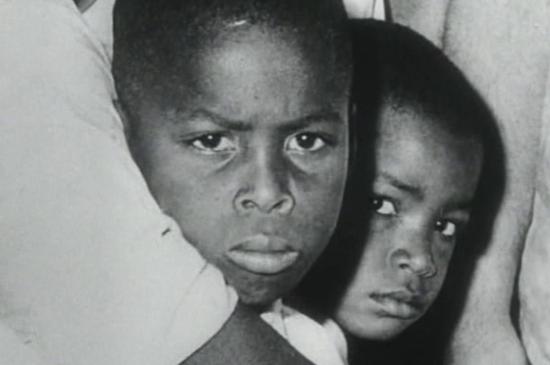
“Still I believe / We are created, free and equal / Now / Now / Now …” US-American singer Lena Horne interpreted the Hebrew song “Hava Nagila” with different lyrics: “Now!” (1963) became an anthem of the civil rights movement in the USA, while Santiago Álvarez’s film of the same name rose to become an agitprop classic. He edited photographs and a few short moving image sequences of racial discrimination, police violence and white terror to the rhythm of Horne’s song. The International Leipzig Documentary and Short Film Week alone screened “Now!” five times in two decades after it had won the Golden Dove in 1965. The presence of Cuban documentary film in Leipzig amounted to a long success story, not least thanks to Álvarez, its best-known exponent. In addition to screenings of his films, he served several times as a member of the International Jury. Even after the controversy surrounding his stance on the Prague Spring 1968, Álvarez continued to be a regular guest.
Florian Wüst
Contains depictions of racism, physical violence
Screenings & Tickets
Credits
Contact
Pingu & Bear
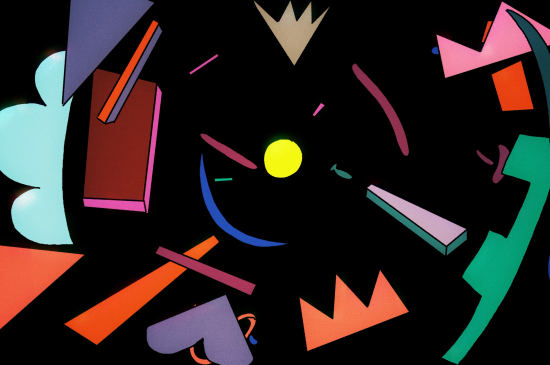
The two friends Pingu and Bear push their bicycle up a mountain, passing through forests, meadows and deserts. They brave ice storms and have to cross fields of lava. After this long, seemingly endless journey they finally reach the highest peak. They gather all their courage for the best descent ever.
Lina Dinkla
Screenings & Tickets
Credits
Contact
Tutaro
André Eckardt
Photosensitivity warning: Contains flashes of light that may trigger seizures for people with visual sensitivities.
Trailer
Screenings & Tickets
Credits
Contact
festivaldistribution@interfilm.de
Valse Muziek: Electricity
André Eckardt
Photosensitivity warning: Contains flashes of light that may trigger seizures for people with visual sensitivities.
Screenings & Tickets
Credits
Contact
antoncla.contact@gmail.com