Topic
- Activism
- Animated Documentary
- Archival Footage
- Arts/Culture
- Coming of Age
- Digital Culture
- Eastern German
- Environment
- Experimental
- Family
- Gender
- History
- Human Rights
- Humour
- Labour/Economy
- LGBTQIA2S+
- Music
- Politics/Current Affairs
- Portrait/Biography
- Psyche/Mind
- Religion/Spirituality
- Science/Technology
- Social Issues
- Sports
- Underrepresented Communities
- War/Conflict
- Youth
Filmtype
Accessibility
Custom type
Topic
- Activism
- Animated Documentary
- Archival Footage
- Arts/Culture
- Coming of Age
- Digital Culture
- Eastern German
- Environment
- Experimental
- Family
- Gender
- History
- Human Rights
- Humour
- Labour/Economy
- LGBTQIA2S+
- Music
- Politics/Current Affairs
- Portrait/Biography
- Psyche/Mind
- Religion/Spirituality
- Science/Technology
- Social Issues
- Sports
- Underrepresented Communities
- War/Conflict
- Youth
Accessibility
Hello Debus
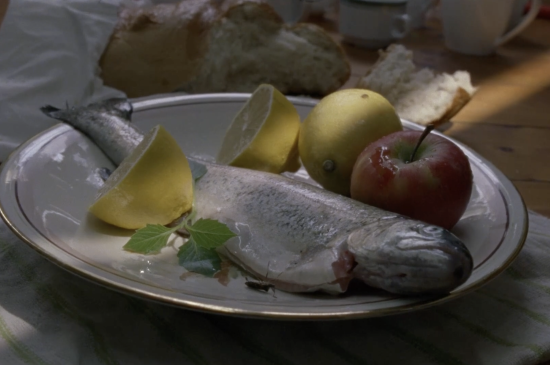
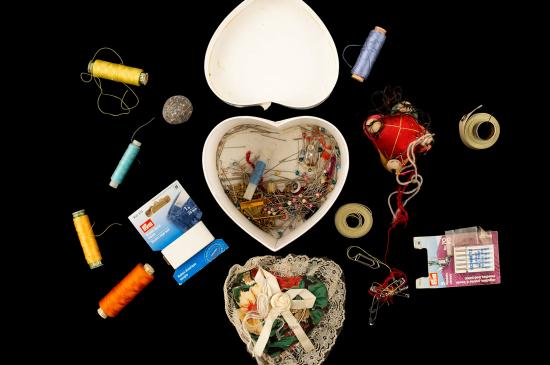
A bizarre still life. Everyday objects lie carefully lined-up around a bed: scissors, keys, audio cassettes. A dead fish on a plate is surrounded by lemons and tomatoes. A young man lies listlessly on the bed – he does not stir even when the telephone rings and the answering machine clicks on. A rigorously choreographed scenery meets the real voice of a father. He seems needy, absurdly asking for anchovies. Suddenly, the son’s body is wrapped in a bubbling bag, only the feet sticking out, a tube supplying water. The father fancies some Roquefort cheese, but the real thing. Personal overload and powerlessness take on an original shape here – and that is far from all.
Anke Leweke
Contains mentions of mental health conditions
Screenings & Tickets
Credits
Contact
rosa.gocht@filmuniversitaet.de
Kurtág Fragments
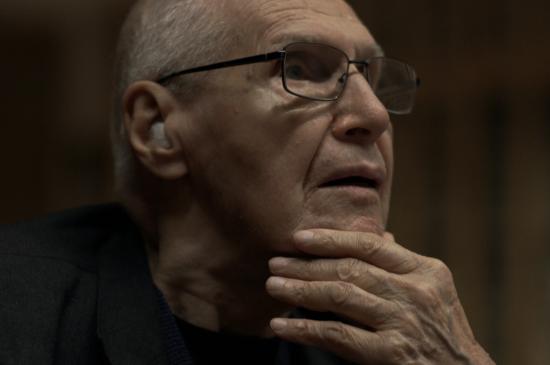
György Kurtág is a renowned Hungarian composer and a major figure of the post-war avant-garde. Born in 1926, he has now reached the age of 100, yet his mind remains wonderfully active. Living in an attic flat of the Budapest Music Center, he continues to work tirelessly with some of the world’s finest musicians who open their creations up to the humbling process of collaboration. Traversing geographies, the film takes us from his birth town of Lugoj to the different places that shaped him, from Transylvania to Budapest to Paris. It traces his early steps into the world of music, which began with dance and four‑hand piano sessions with his mother — something he later continued with his wife and pianist Márta. It then follows his life and many artistic collaborations, including with Icelandic pianist Víkingur Ólafsson and British cellist Steven Isserlis. The film also weaves in the work on his magnum opus “Fin de Partie”. “The map is not the territory; the notes are not music…” To pianists Halla Oddný Magnúsdottir and Ólafsson, Kurtág has “found a way of writing music that is impossible to play without going beyond the notes”. It’s a sentiment shared by Kurtág, who remarks that it’s not about his ideas but about whether the piece, played by a musician, truly “happens” to them. A portrait of a man who lives and breathes music, composing entire worlds brimming with emotion.
Sevara Pan
Trailer
Screenings & Tickets
Credits
Contact
kati.vajda@nfi.hu
La infancia de Marisol
Cuban documentary film was never aimed only at its own nation but saw its task as providing information about the events in the so-called Third World. Well-known films by Santiago Álvarez deal with the anti-imperialist struggles in Vietnam and Laos. Starting in the late 1970s, the focus was expanded to include the civil wars in Nicaragua and El Salvador, a shift clearly reflected in the Leipzig festival programmes. Meanwhile, in 1980, Oberhausen screened, in addition to the retrospective “Cinema in Cuba 1959–1979”, Bernabé Hernández’s “La infancia de Marisol”. The film was one of the first Cuban productions made after the victory of the Nicaraguan Revolution in July 1979. It is based on the accounts of 14-year-old Marisol who describes how she joins the Sandinista Liberation Front, fights against the dictatorship, is taken prisoner and, like her father and brother, brutally tortured. The film ends with the prospect of a new life: Marisol’s studies in Cuba.
Florian Wüst
Contains mentions of physical violence, torture
Screenings & Tickets
Credits
Contact
spicher@kurzfilmtage.de
Light
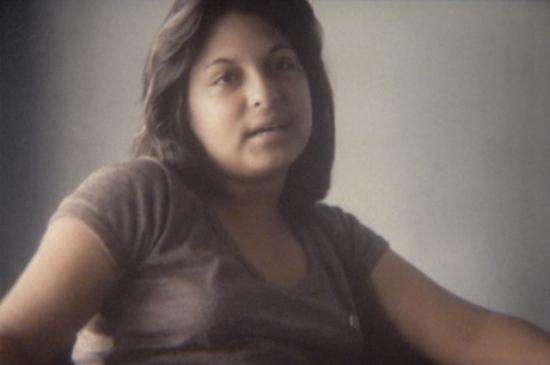
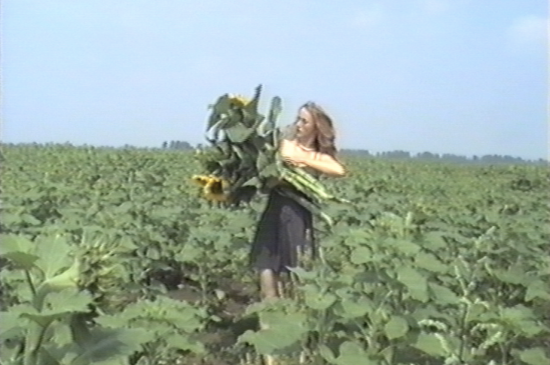
1995. It is the sixth summer since the fall of the Berlin Wall. Artists live, love and work on a farm in East Germany. They film each other with a video camera. They have seen the world, have wondered and learned, became homesick and returned. To where there was space. Fruit hangs from the trees, sparrows chirp, sculptures in the garden. Time and again the camera captures a young woman, her open gaze, her focus. The material which has become fragile today vibrates, gets stuck, freezes. Unperturbed, the narrative evokes the paean of summer, which will not be followed by a seventh for one of them. A white light shines into the present.
Jan Künemund
Contains mentions of death
Screenings & Tickets
Credits
Contact
juliane.ebner@gmx.de
Mum’s Hair
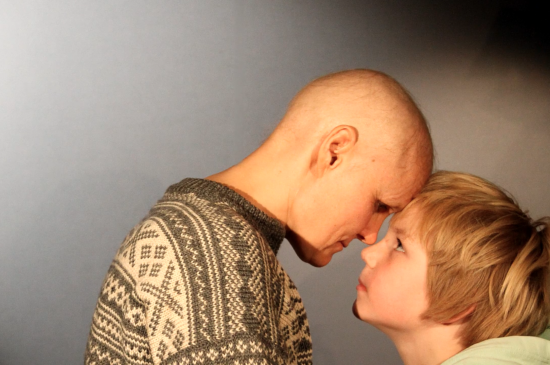
Losing your hair through chemotherapy is a painful experience for many people, not least because a bald head displays one’s new vulnerability so blatantly. But Maja Arnekleiv, the daughter of Norwegian animation director Anita Killi, turns the steps of the transformation – the original mum’s hair, the near-baldness, the new growth which is so different from the pre-chemo hair – into a tribute to resilience, love and family solidarity even in difficult times of illness. In a pixilation documentary produced over a period of two years, she captures in 755 single frames (selected from more than 3,000) how she and her siblings comb, blow-dry, style, braid and spray Anita Killi’s hair, while Killi always has her eyes firmly on the viewers. Sometimes laughing, sometimes serious, always loving. In 2017, Marja Arnekleiv won the Golden Dove for this tender, very touching film which celebrates the mother of four, whatever she looks like.
Marie Ketzscher
Screenings & Tickets
Credits
Contact
claus@trollfilm.no
Nachtcafé
Light is burning in the old Franciscan church. The guests arrive to warm up and sleep. There is soup and Berliner doughnuts. When everyone has been taken care of, the light goes out again. A voice asks the filmmakers: Do you know Cologne well? A few photographs shown in-between a lot of black screen. People, places, Ingo talks. An alternative city tour from the perspective of persons living in the streets. Interesting even when you can’t make out much – possibly even art. At the end of this documentary miniature the light goes on again. And the protagonist steps out onto the street.
Jan Künemund
Contains mentions of drug-use, mental health conditions
Screenings & Tickets
Credits
Contact
ute.dilger@khm.de
Nicole Nicole
Alberte and Nicole are mother and daughter, three decades apart. At 55 and 87, they still live together in a villa by Lake Geneva, having settled into a codependent dynamic: Nicole is reluctant to leave her mother, while Alberte struggles to let her go, fearing living alone. In a house filled with memorabilia, cats, and too many clocks, the familiar feels safe for the mother‑daughter duo who often doze off like synchronised swimmers. However, as time passes, the family grows concerned about Nicole’s autonomy. Nicole is considered neuroatypical, “ambivalent” regarding the perceived condition, and few facilities are equipped to provide adequate support. Nicole’s sister, Danielle, then decides to assist her in a search for a flat and a job. These scenes unfold alongside the family’s daily life and the intimate conversations in front of the camera. Nicole also embarks on a playful creative exercise with her filmmaker niece Lauren, imagining life’s many scenarios.
Sevara Pan
Contains depictions of mental health conditions
Trailer
Screenings & Tickets
Free entry
Credits
Contact
Nonna Lucia
Marie Ketzscher
Contains mentions of death
Trailer
Screenings & Tickets
Credits
Contact
marcelbarelli@bluewin.ch
René
Helena Třeštíková won the 2008 Golden Dove in Leipzig for “René”.
Grit Lemke, DOK Leipzig Catalogue 2008
Screenings & Tickets
Credits
Contact
The Core
When an illness brings life to a standstill, everything is suddenly called in question. We are used to functioning – using our body and mind to achieve goals, to fulfil our potential, to be there for others. But how do we react when this supposed normality no longer exists? When life as we knew it threatens to fall apart? “The Core” is a film about the fight against this disintegration and the struggle to answer the question of what constitutes life. Life as a filmmaker, woman and mother. Life that was already complete before the illness appeared and that now competes with the latter – for time and attention. Where is the essential core of a person, what can’t be surrendered without giving up one’s self? This auto-fictional film begins on a very personal note but shows clearly how much our approach to illness is shaped by society and how the insistence on “normality” makes life harder for those who fight for it every day.
Luc-Carolin Ziemann
Contains mentions of mental health conditions
Screenings & Tickets
Credits
Contact
rebecca.zehr@posteo.de
The Nights
James Lattimer
Contains depictions of nudity, explicit sex scenes
Screenings & Tickets
Credits
Contact
There’s No Place Like Rome
Why are we so fascinated by the ancient world even today? In 2023, the viral hashtag #RomanEmpire brought to light how many people are still captivated by ancient Rome – men above all. For Pinji, the director’s uncle, this fascination has long since become a life project. He lives in an old house in Bulgaria, looks after a collection of antique treasures and has been writing a book about antiquity for years. When his nephew comes to visit, uncle Pinji does not hesitate: With humorous implacability, he launches into a rhetorical "demolition" of the present age. Toddi listens closely and decides to join the fight. He implements himself and Pinji in a computer game, right into the middle of an antique battle. Now the present is battling the past – outcome uncertain.
Luc-Carolin Ziemann
Trailer
Screenings & Tickets
Credits
Contact
t.musev@gmx.de