Topic
- Activism
- Animated Documentary
- Archival Footage
- Arts/Culture
- Coming of Age
- Digital Culture
- Eastern German
- Environment
- Experimental
- Family
- Gender
- History
- Human Rights
- Humour
- Labour/Economy
- LGBTQIA2S+
- Music
- Politics/Current Affairs
- Portrait/Biography
- Psyche/Mind
- Religion/Spirituality
- Science/Technology
- Social Issues
- Sports
- Underrepresented Communities
- War/Conflict
- Youth
Filmtype
Accessibility
Custom type
Topic
- Activism
- Animated Documentary
- Archival Footage
- Arts/Culture
- Coming of Age
- Digital Culture
- Eastern German
- Environment
- Experimental
- Family
- Gender
- History
- Human Rights
- Humour
- Labour/Economy
- LGBTQIA2S+
- Music
- Politics/Current Affairs
- Portrait/Biography
- Psyche/Mind
- Religion/Spirituality
- Science/Technology
- Social Issues
- Sports
- Underrepresented Communities
- War/Conflict
- Youth
Accessibility
Afterlives
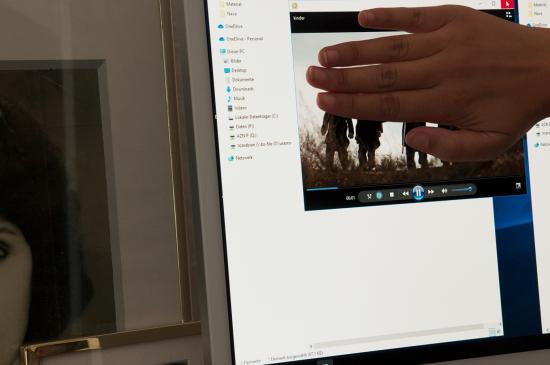
Through numerous video essays in film and media theory, Kevin B. Lee has played a key role in developing the form of the so-called desktop film. The elegant meta-staging reflects the fact that his digital desktop is research tool, media archive and distribution channel at the same time. Lee’s first feature-length film in this style dissects a historical work of propaganda: In 2014, the “Islamic State” terror militia, then at the height of its territorial power, published an elaborately produced film entitled “Flames of War”, which many media outlets compared to the aesthetics of Hollywood blockbusters. Lee manages to abstract and defamiliarize the extreme violence of those images, but comes to the realisation that their ideological power cannot be decoded by the tools of film analysis alone. “Afterlives” broadens the perspective and looks for alternative models in dialogue with experts from the arts, political education and terrorism studies: They reconstruct destroyed cultural assets, develop strategies against extremist radicalisation and study what motivates people to leave terrorist groups. In all this, Lee’s intelligent essay never loses sight of the colonialist western image of the Middle East.
Jan-Philipp Kohlmann
Contains mentions of torture
Contains depictions of war scenes, torture
Trailer
Screenings & Tickets
Credits
Contact
Apocalypse Yesterday, Today, Tomorrow, and the Day After Tomorrow
Marie Ketzscher
Contains mentions of war scenes
Trailer
Screenings & Tickets
Credits
Contact
anastasiabonadyga@gmail.com
Baby Jackfruit Baby Guava
Seggen Mikael
Contains mentions of mental health conditions
Screenings & Tickets
Credits
Contact
tommaso@luminaliafilm.com
Cyclepaths
André Eckardt
Contains depictions of murder, war scenes
Screenings & Tickets
Credits
Contact
antoncla.contact@gmail.com
Eine chilenische Hochzeit
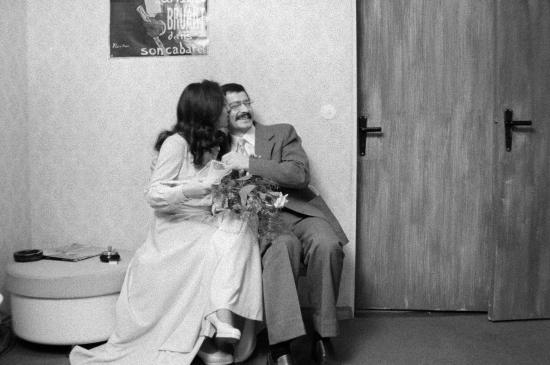
In 1977, Valentin Milanow, a Bulgarian student at the GDR Academy of Film and Television, sat in at the DEFA Studio for Documentary Films. Director Rainer Ackermann was assigned as his mentor. Milanow came up with the idea of portraying the reality of life of exiled Chileans in the GDR. He was friends with a young couple, Alejandra Holzapfel and José Fuica, who lived in the same prefabricated housing estate in Potsdam-Babelsberg. She studied veterinary medicine, he was training to be a teacher of Marxism-Leninism. Milanow was allowed to film their wedding. On the fringes of the seemingly happy celebration, conversations turn to memories of interrogations and torture by the military junta and worries about relatives who were left behind. What the bride herself did not reveal at the time: As a leftist underground fighter she had been exposed to the worst abuse in the “Venda Sexy” prisoners’ camp and others. Today, this place is the memorial site Asociación de Memoria y Derechos Humanos Irán 3030. It is run by Alejandra Holzapfel.
Florian Wüst
Screenings & Tickets
Credits
Contact
defa-filmverleih@deutsche-kinemathek.de
Eine Minute Dunkel macht uns nicht blind
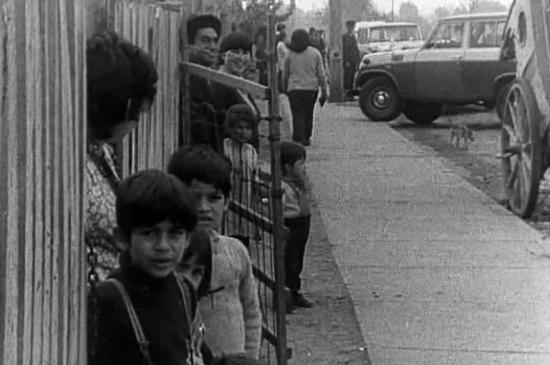
This documentary, whose title is a line from one of Pablo Neruda’s poems, is a snapshot of Chile after two years of military dictatorship. In the agitational Cold War rhetoric typical of Studio H & S, it portrays both representatives of the regime and the victims of the terror, who are beginning to organise themselves as they search for the arrested and disappeared. Walter Heynowski, Gerhard Scheumann and Peter Hellmich had spent several months in Chile in early 1973 to record Allende’s reform efforts as well as the machinations of the far-right forces. Hellmich stayed longer: On 11 September 1973, he managed to film the legendary footage of the bombing of the Presidential Palace, conducted the first interview with General Augusto Pinochet after the coup and filmed political prisoners in the Chacabuco concentration camp in the Atacama Desert. For the extremely risky interviews and filming of “Eine Minute Dunkel macht uns nicht blind”, Studio H & S had to send a West German team – Gerhard Biroth, George Boultwood and Frederico Füllgraf – to Chile. Their true intention behind the transparent pretext of “filming the landscape for the promotion of tourism” and documenting “the economic success of the Pinochet government” remained undetected, as Füllgraf remembers, despite constant surveillance and thanks to all kinds of tricks. This screening is the premiere of the restored and digitized version of the film which was supported by the Förderprogramm Filmerbe (Digitisation of German film heritage funding programme).
Florian Wüst
Screenings & Tickets
Credits
Contact
defa-filmverleih@deutsche-kinemathek.de
For Life
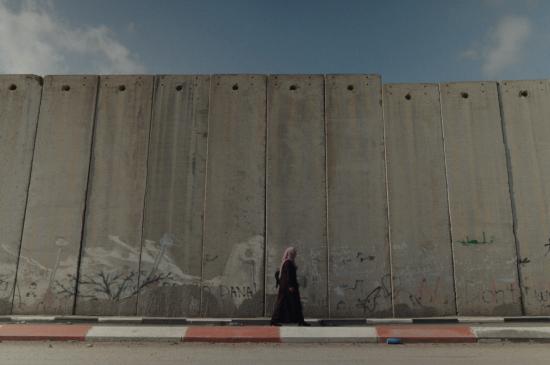
A Palestinian woman, Hind Mashahra, longs for motherhood, but this seems hardly possible as her husband is serving a life sentence in an Israeli prison and is barred from marital visits. Smuggling her husband’s sperm out of prison may be the only chance for her to become a mother again. The documentary follows Hind as she sets out on a risky mission to obtain and deliver her husband’s sample to a fertility clinic. Her repeated attempts are hampered by the traffic, checkpoints, and the short life of semen, perishing within just hours. Unadorned in its language, the film stays close to Hind’s inner experience in the throes of drama, shaped by the reality in the West Bank and East Jerusalem, as well as in quieter moments of waiting that are no less charged. Weaving in accounts of other prisoners’ wives, the documentary chronicles a Palestinian woman’s journey as she pursues motherhood at an extraordinary cost.
Sevara Pan
Contains mentions of death, physical violence
Contains depictions of physical violence, death
Screenings & Tickets
Credits
Contact
benahmetseven@gmail.com
Fracture
James Lattimer
Screenings & Tickets
Credits
Contact
philippe.cotte@cvb.be
Hello Debus
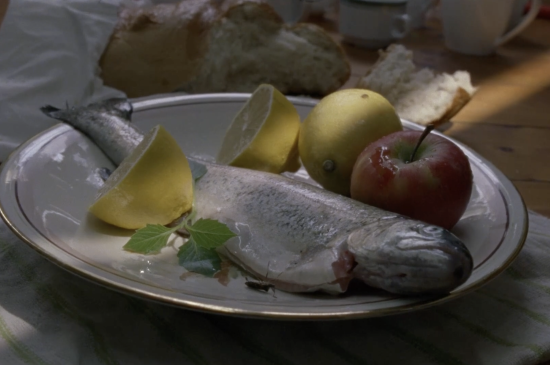
A bizarre still life. Everyday objects lie carefully lined-up around a bed: scissors, keys, audio cassettes. A dead fish on a plate is surrounded by lemons and tomatoes. A young man lies listlessly on the bed – he does not stir even when the telephone rings and the answering machine clicks on. A rigorously choreographed scenery meets the real voice of a father. He seems needy, absurdly asking for anchovies. Suddenly, the son’s body is wrapped in a bubbling bag, only the feet sticking out, a tube supplying water. The father fancies some Roquefort cheese, but the real thing. Personal overload and powerlessness take on an original shape here – and that is far from all.
Anke Leweke
Contains mentions of mental health conditions
Screenings & Tickets
Credits
Contact
rosa.gocht@filmuniversitaet.de
Kitzel
Franka Sachse
Screenings & Tickets
Credits
Contact
mkeil.animation@gmail.com
La hora de los hornos. Neocolonialismo y violencia
A call for radical political change, an agitation pamphlet for the national liberation of Argentina: Like few other films, “La hora de los hornos” stirred the generation of 1968 all over the world. The more than four-hour-long film essay was banned for many years, not just in Argentina. Taking the form of a multilayered documentary collage, it is a masterful exploration of the possibilities of image-sound-editing which unfolds a panorama of the prevailing social and political conditions. “Neocolonialismo y violencia” analyses the colonisation of Latin America, its economic and cultural dependence on the industrialised states of the so-called First World, especially the USA, as well as the omnipresence of violence. The second part, “Acto para la liberación”, delivers a chronicle of Peronism and the resistance after Perón’s fall in 1955. “Violencia y liberación”, the shorter third part, openly advocates armed struggle. After two years of clandestine work by a small team around Fernando E. Solanas and Octavio Gentino, “La hora de los hornos” had its world premiere on 2 June 1968 at the Mostra Internazionale del Cinema Nuovo in Pesaro. The Friends of the German Cinematheque (today: Arsenal Filminstitut) screened the three-part film only a few weeks later on the occasion of the Berlinale. After the opening of the Arsenal cinema in January 1970 on Welserstraße in Berlin-Schöneberg, countless screenings of the distribution prints of the film followed at their own venue and elsewhere.
Florian Wüst
Contains depictions of physical violence, racism
Screenings & Tickets
Credits
Contact
La infancia de Marisol
Cuban documentary film was never aimed only at its own nation but saw its task as providing information about the events in the so-called Third World. Well-known films by Santiago Álvarez deal with the anti-imperialist struggles in Vietnam and Laos. Starting in the late 1970s, the focus was expanded to include the civil wars in Nicaragua and El Salvador, a shift clearly reflected in the Leipzig festival programmes. Meanwhile, in 1980, Oberhausen screened, in addition to the retrospective “Cinema in Cuba 1959–1979”, Bernabé Hernández’s “La infancia de Marisol”. The film was one of the first Cuban productions made after the victory of the Nicaraguan Revolution in July 1979. It is based on the accounts of 14-year-old Marisol who describes how she joins the Sandinista Liberation Front, fights against the dictatorship, is taken prisoner and, like her father and brother, brutally tortured. The film ends with the prospect of a new life: Marisol’s studies in Cuba.
Florian Wüst
Contains mentions of physical violence, torture
Screenings & Tickets
Credits
Contact
spicher@kurzfilmtage.de