Film Archive

Retrospective 2021
Media Name: d98e56f2-f695-4e68-b8c5-122c1e7807e9.png
The Road We Don’t Walk Together
Dominik Graf
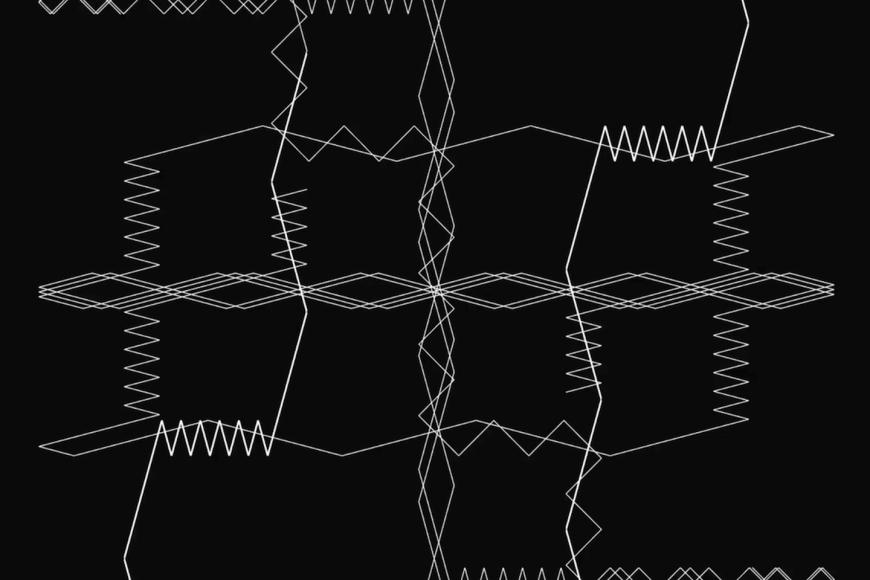
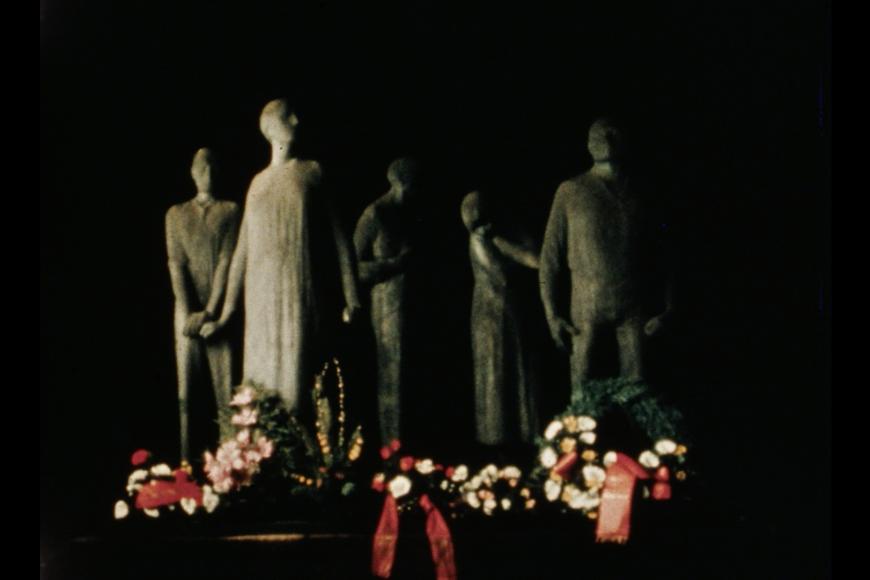
Dominik Graf contributed a reflection on West German post-1945 urban architecture to the anthology film “Germany 09”: improvisations decoratively arranged after 1990.
Media Name: d98e56f2-f695-4e68-b8c5-122c1e7807e9.png

The Road We Don’t Walk Together

Der Weg, den wir nicht zusammen gehen
Dominik Graf
Retrospective 2021
Documentary Film
Germany
2009
13 minutes
German
Subtitles: 
None

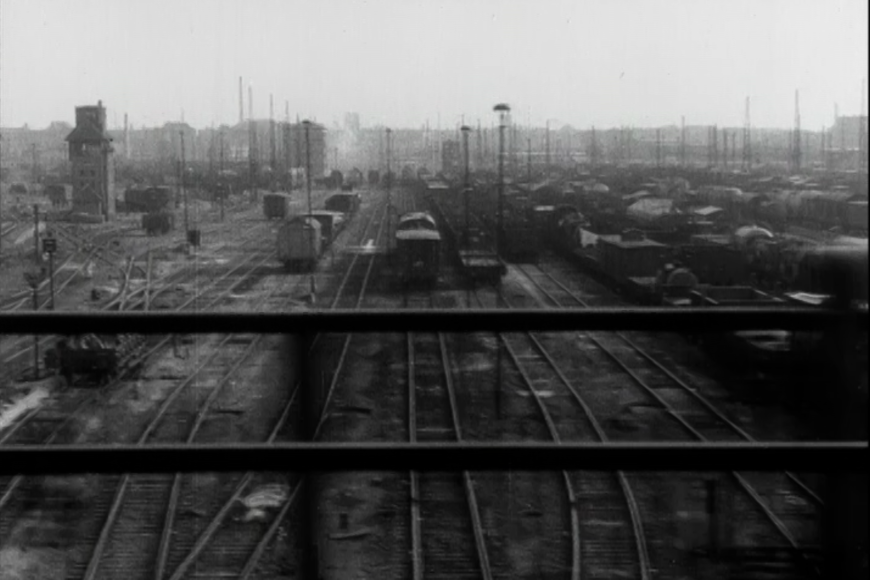
The project “Germany 09” brought the upper league of German auteur filmmakers together to take stock of the Berlin Republic in individual film contributions. Dominik Graf contributed to this collage of the German image a reflection about post-1945 urban architecture shot on old Super8 stock: provisional, slipshod ensembles of pretty-ugly public buildings, fenced-in urban wasteland, draughty storefronts and uninhabited housing blocks in Munich, Duisburg, Frankfurt am Main, West Berlin, all of them testimonies to an unplanned through traffic for social and migrant milieus. A thorn in the side of the reunited mania for cleaning up, renovating and decorating.

Sylvia Görke

Credits DOK Leipzig Logo

Director
Dominik Graf
Script
Dominik Graf
Cinematographer
Martin Gressmann
Editor
Katja Dringenberg
Producer
Dirk Wilutzky, Tom Tykwer
Sound
Andreas Mücke-Niesytka
German Competition Documentary Film 2023
Filmstill The Wind Is Taking Them
The Wind Is Taking Them
Ann Carolin Renninger
The big bang, tardigrades, humanity as a dying breed: A child researcher on a farm by the Baltic Sea has some astonishing thoughts about these things – and his curiosity about the present is infectious.
Filmstill The Wind Is Taking Them

The Wind Is Taking Them

Der Wind nimmt die mit
Ann Carolin Renninger
German Competition Documentary Film 2023
Documentary Film
Germany
2023
25 minutes
German
Subtitles: 
English

It is a stroke of luck when a film manages to simply observe the flow of life and almost casually show us the miracles found in life’s corners. Ann Carolin Renninger approaches people and things with great serenity and a palpable joy of searching for and finding images.

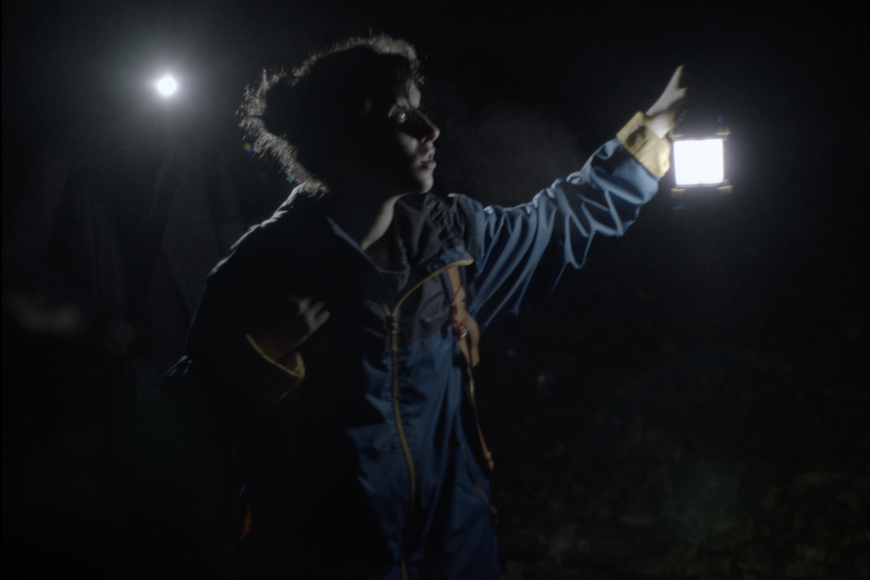
Rovin lives on a remote farm on the Baltic Sea and explores his surroundings with insatiable curiosity. He is interested in the universe, planets, unknown creatures – and in tardigrades, those tiny multicellular organisms that look like dust bags on legs and are real survival artists. Quite unlike humans, as Rovin points out, because the latter are sure to die out one day. He sees this as a logical fact, not a threat. And when you open yourself up to the grainy, earthy images and the calm narrative, you eventually stop wondering, too, why that should be a problem. After all, as long as the wind blows through the trees and scatters the tardigrades, everything is in good order. In addition to the captivatingly alert boy, Renninger meets Marie, who knows everything about rocks, and Christopher, who decorates a place with these rocks. They are all on a quest and every day find a piece of what one cannot hold onto: the present.

Luc-Carolin Ziemann

Credits DOK Leipzig Logo

Director
Ann Carolin Renninger
Cinematographer
Ann Carolin Renninger, René Frölke
Editor
Ann Carolin Renninger
Producer
Ann Carolin Renninger
-
Zane Zlemesa, Miro Denck
German Competition 2020
Media Name: d1ffda28-fe4c-414c-8b0a-3002860b0711.jpg
The Guardian
Martina Priessner
A Syrian Orthodox nun lives in an abandoned estate in south-eastern Turkey. Despite hostilities from the Muslim neighbourhood: she won’t be driven out.
Media Name: d1ffda28-fe4c-414c-8b0a-3002860b0711.jpg

The Guardian

Die Wächterin
Martina Priessner
German Competition 2020
Documentary Film
Germany
2020
87 minutes
Kurdish,
Turkish,
Turoyo
Subtitles: 
German

In a dilapidated village in south-eastern Turkey, a Syrian Orthodox nun endures alone with her animals. However strong the hostility of her predominantly Muslim neighbourhood may be: she won’t be driven out, for she has sworn to protect the church and not to leave the sacred place. This quietly filmed observation of everyday life focuses on an isolated woman who carries the pain of a whole community inside her.

The population of the village was tortured and driven away in the 1990s. The nun Dayrayto came here only afterwards. Today she rarely receives visits from passing believers. She usually spends her days doing maintenance work on the church and taking care of the animals. Right now she is worried about her old dog. Has he been poisoned? What to make of the provocations and threats she talks about? Dayrayto is always vigilant, even when she’s resting. From her elevated dwelling she looks far across the landscape, registering every vehicle, however distant. But she is in no way distracted by the presence of the film crew. The unobtrusive camera follows the nun – not at every turn, but as a constant, protective companion as she endures on her “bastion”. Loneliness, worries and fear shape this sparse life. They made her suspicious, but also fearless.
Annina Wettstein

Credits DOK Leipzig Logo

Director
Martina Priessner
Script
Martina Priessner
Cinematographer
Meryem Yavuz
Editor
Özlem Sarıyıldız
Producer
Gregor Streiber, Friedemann Hottenbacher
Co-Producer
Martina Priessner
Sound
Robert F. Kellner
Winner of: Goethe-Institut Documentary Film Prize
German Competition Short Film 2022
Filmstill The World Is a House and There Are Rules in This House
The World Is a House and There Are Rules in This House
Felix Leffrank
A quite creative reflection of uncreative phases: A story-teller struggles with depression and writer’s block, under the watchful eyes of inner and outer demons.
Filmstill The World Is a House and There Are Rules in This House

The World Is a House and There Are Rules in This House

Die Welt ist ein Haus und es gibt Regeln in diesem Haus
Felix Leffrank
German Competition Short Film 2022
Animated Film
Germany
2022
13 minutes
German
Subtitles: 
English

Felix Leffrank deals with the ups and downs of an artist’s life in colourful, computer-animated images. During his ordeal between depression, writer’s block, anger and urban loneliness, a story-teller is accompanied by three weird birds who sometimes appear as annoying neighbours, sometimes as inner demons. Jung, Freud and the psychologist Dr. Breuer in the shape of a grey cat promote self-reflection, but the most helpful thing is probably a beer with friends.

Borjana Gaković

Credits DOK Leipzig Logo

Director
Felix Leffrank
Editor
Felix Leffrank
Producer
Felix Leffrank
Sound
Christoph Müller
Score
Christoph Müller
Animation
Felix Leffrank
Nominated for: mephisto 97.6 Audience Award, Gedanken Aufschluss Prize
Filmstill The Wild-Tempered Clavier

The Wild-Tempered Clavier

The Wild-Tempered Clavier
Anna Samo
International Competition Animated Film 2024
Animated Film
Germany
2024
7 minutes
without dialogue
Subtitles: 
None

Something is wrong. Something is completely wrong. With the sound and with the image. The notes are crooked, the piano lid squeaks, the movement falters. Corrections are needed to bring everything together in harmony and in tune with Johann Sebastian Bach’s beautiful music.
Six roles of painted toilet paper are worked on by human hands on an editing table, one after the other. The editing device consists of coloured building blocks and a few wooden sticks. It is a game, a trick, it’s entertainment. At the same time, the simple images on the film strip take us deep into the current events of our time. But the material resists sharply delineated representation. It soaks up the paint and blurs the boundaries. It tears. It is limited. Before the story can pick up speed, the roll is unspooled. Narrative is difficult in view of this situation. And yet animation artist Anna Samo manages, with a very light touch, to transform ambivalent feelings, confusion, rigidity and speechlessness into a work of hope and courage.

Franka Sachse

Credits DOK Leipzig Logo

Director
Anna Samo
Producer
Tom Bergmann
Sound Design
Andrea Martignoni
Score
Daniel Regenberg
Animation
Anna Samo
World Sales
Sydney Neter
Nominated for: mephisto 97.6 Audience Award, Gedanken Aufschluss Prize
Filmstill The Woman Who Poked the Leopard

The Woman Who Poked the Leopard

The Woman Who Poked the Leopard
Patience Nitumwesiga
German Competition Documentary Film 2025
Documentary Film
Uganda,
South Africa,
Germany,
USA
2025
107 minutes
English,
Luganda
Subtitles: 
English

When Stella Nyanzi enters a room, action is guaranteed. The Ugandan feminist, gender researcher, anthropologist and poet does not mince her words in her fight against state oppression. She went to prison in 2017 for a vulgar poem in which she ridiculed head of state Yoweri Museveni, who has been in office for almost 40 years. After she was released, Nyanzi ran for Parliament without the necessary funds for a campaign, printing and distributing posters and flyers in the slums of Kampala with her children. Her daughter did her mother’s make-up and hair for public appearances. Sometimes her almost adult children longed for more time for themselves. The family repeatedly faced police violence and finally emigrated to Germany.
Using a mobile handheld camera, the film absorbs its protagonist’s power, its rhythm matching her angry lyrics. The result is the portrait of a woman who has made radicalism and provocation her way of life. We get to know an activist who permanently pushes herself and the people around her to the limits. Still, it is hard not to get infected by Stella Nyanzi’s energy.

Anke Leweke

Credits DOK Leipzig Logo

Director
Patience Nitumwesiga
Cinematographer
Racheal Mambo, Phil Wilmot
Editor
Kristen van Schie
Producer
Rosie Motene, Phil Wilmot, Patience Nitumwesiga
Co-Producer
Natalia Imaz, Menzi Mhlongo
Sound
Penelope Najuna, Carla Walsh
Sound Design
Sean Peevers
Score
Sylvia Babirye
Key Collaborator
Shua Wilmot
Nominated for: DEFA Sponsoring Prize, VER.DI Prize for Solidarity, Humanity and Fairness
Winner of: DEFA Sponsoring Prize, VER.DI Prize for Solidarity, Humanity and Fairness
Doc Alliance Award 2023
Filmstill waking up in silence
waking up in silence
Mila Zhluktenko, Daniel Asadi Faezi
Once German barracks, now accommodation for refugees: Ukrainian children practice a new language, explore strange rooms. A shimmering summer moment between leaving and arriving.
Filmstill waking up in silence

waking up in silence

waking up in silence
Mila Zhluktenko, Daniel Asadi Faezi
Doc Alliance Award 2023
Documentary Film
Germany,
Ukraine
2023
17 minutes
Ukrainian,
English,
Russian
Subtitles: 
English

The calls of the swifts fill the air. A sound that is the epitome of summer. The sun shines down on a chunky building. Surrounded by this shimmering and seemingly carefree atmosphere, children practice German vocabulary, explore empty rooms, and draw with chalk on the ground in front of the house. But not playground designs like hopscotch. Again and again, they write on the curb: “Putin, stop killing people.”

A former Wehrmacht barracks, later used by the U.S. army, this bright yellow complex now serves as accommodation for refugees from Ukraine. The directing duo’s poetic film captures an instant in the lives of these youngsters: a short and yet decisive moment between two worlds, one of them already left behind, not quite arrived yet in the other and a vague future in sight.

Lina Dinkla

Credits DOK Leipzig Logo

Director
Mila Zhluktenko, Daniel Asadi Faezi
Script
Mila Zhluktenko, Daniel Asadi Faezi
Cinematographer
Tobias Blickle
Editor
Mila Zhluktenko, Daniel Asadi Faezi
Producer
Mila Zhluktenko, Daniel Asadi Faezi
Co-Producer
Andrii Kotliar
Sound
Kristina Kilian
Sound Design
Daniel Asadi Faezi, Andrew Mottl
Score
Anton Baibakov
World Sales
Wouter Jansen
German Competition 2022
Filmstill She Chef
She Chef
Gereon Wetzel, Melanie Liebheit
Agnes travels from luxury kitchen to luxury kitchen. We follow the young woman on a culinary journey that lets us experience the craft of cooking from up close.
Filmstill She Chef

She Chef

Wanderjahre
Gereon Wetzel, Melanie Liebheit
German Competition 2022
Documentary Film
Germany,
Austria
2022
100 minutes
German,
English,
Danish,
Spanish
Subtitles: 
English

We’re travelling from luxury kitchen to luxury kitchen with Agnes, from Bergisch Gladbach via Barcelona to the Faroe Islands. The cook’s luggage always includes her backpack containing various knives, cleavers and tweezers. The camera watches over the inquisitive young woman’s shoulder as delicacies are being prepared. Our mouths water. At the same time, we get insights into the different ways of running a restaurant. It’s about team spirit and equality at the stove.

Goethe’s “Wilhelm Meister’s Apprenticeship and Travels” comes to mind, because this observational documentary is also like a novel of development. Agnes is ambitious, knows her craft. She wants to be her own boss one day. She soon finds her way around every new team, takes her place. It’s a sensuous pleasure to watch how the many hands interlock, how culinary creations are lovingly made, delicately plucked salad leaves arranged as decorations. At the same time, Agnes has to struggle against opposition. Her wages are low. A colleague asks her what business she, who has just finished her apprenticeship, has in a three-star restaurant. Agnes is moving in a male domain, in an environment that tends to pass the pressure down. But in the course of her journey, she also comes across collective forms of cooperation and new visions of cooking.
Anke Leweke

Credits DOK Leipzig Logo

Director
Gereon Wetzel, Melanie Liebheit
Cinematographer
Gereon Wetzel
Editor
Stephan Bechinger
Producer
Florian Brüning, Thomas Herberth, Alireza Golafshan
Sound
Melanie Liebheit
Score
Wolf-Maximillian Liebich
World Sales
Georg Gruber
Funder
FilmFernsehFonds Bayern, Filmfonds Wien, ORF Film/Fernsehabkommen, Deutscher Filmförderfonds (DFFF), Österreichisches Filminstitut, BKM – Staatsministerin Kultur und Medien, Filmstandort Austria (FISA)
Nominated for: VER.DI Prize for Solidarity, Humanity and Fairness, Young Eyes Film Award, DEFA Sponsoring Prize
German Competition Documentary Film 2025
Filmstill Smoke over Schwarze Pumpe
White Smoke over Schwarze Pumpe
Martin Gressmann
In 1991, the Schwarze Pumpe energy centre in Lusatia is phased out. Tens of thousands lose their jobs, hoping for better times. Today, the dirt and feelings of the past keep coming up.
Filmstill Smoke over Schwarze Pumpe

White Smoke over Schwarze Pumpe

Weißer Rauch über Schwarze Pumpe
Martin Gressmann
German Competition Documentary Film 2025
Documentary Film
Germany
2025
89 minutes
German
Subtitles: 
English

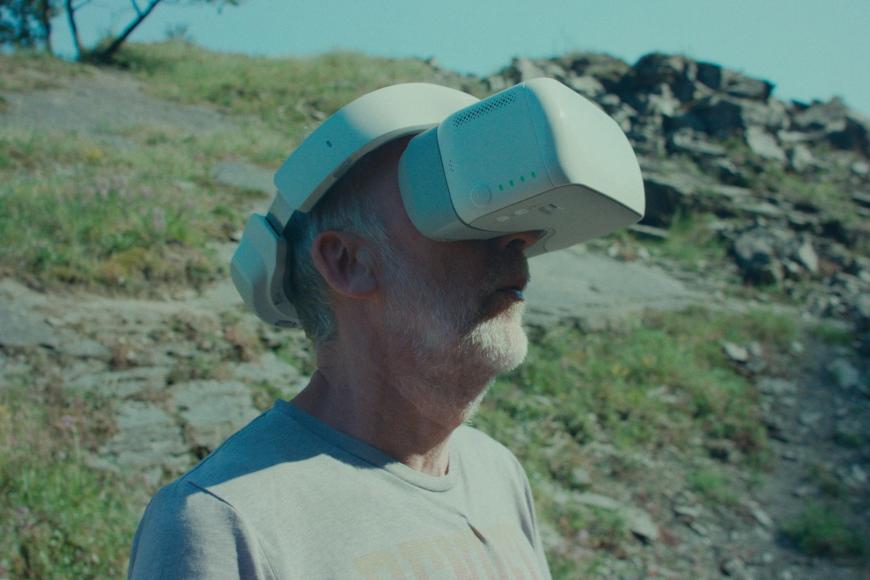
The old shots smell like phenol and brown coal dust. In the spring of 1991, two documentary filmmakers travelled through the former energy triangle of the GDR, centred around the towns of Spremberg, Hoyerswerda and Schwarze Pumpe. In the midst of despair and resignation, they demanded analyses. Those who faced layoffs answered: “When there’s no work, there’s no work.” Or more simply: “Bang, out, gone, that’s it.” Thirty years later, Martin Gressmann and the documentarists from 1991 are not done yet with the fractures and open wounds of the industry liquidations right after reunification.
The comparison between the history – full of murky air and people who hide from the camera – and the apparently appeased present does not lend itself to make-overs; the landscapes that followed brown coal mining are not pretty yet, the river Spree is only halfway cleaned-up, the power plant is still one of the main CO2 emitters in Europe. You often have to look twice to understand that an important leap in time was made in the images. The dirt and the energy of the past keep coming back, and Lusatia continues to “serve and work” in the “subconscious of the distant capital”. Idiosyncratic texts and bold documentary manoeuvres generate an ambivalent mix of surfaces and deep strata, erosion and repair of an industrial landscape.

Jan Künemund

Credits DOK Leipzig Logo

Director
Martin Gressmann
Cinematographer
Peter Badel, Dieter Chill, Martin Gressmann, Anja Simon
Editor
Stefan Oliveira-Pita
Producer
Peter Badel, Martin Gressmann
Sound
Christine Wiegand
Sound Design
Rainer Gerlach
Score
Matthias Rauhe
Nominated for: Gedanken Aufschluss Prize, VER.DI Prize for Solidarity, Humanity and Fairness
Panorama: Central and Eastern Europe 2023
Filmstill Who, If Not Us? The Fight for Democracy in Belarus
Who, If Not Us? The Fight for Democracy in Belarus
Juliane Tutein
The political climate in Belarus is growing more restrictive every day, activists are constantly facing imprisonment. This film is dedicated to three courageous rebels.
Filmstill Who, If Not Us? The Fight for Democracy in Belarus

Who, If Not Us? The Fight for Democracy in Belarus

Wer, wenn nicht wir? Der Kampf für Demokratie in Belarus
Juliane Tutein
Panorama: Central and Eastern Europe 2023
Documentary Film
Germany
2023
77 minutes
Belarusian,
Russian,
Ukrainian
Subtitles: 
English

In 2020, the biggest protests against the government to date formed in Belarus. The protesters were met with violence and restrictions, many of them were given draconian prison sentences. A dangerous climate that sought to nip political activism in the bud took hold. For “Who, If Not Us? The Fight for Democracy in Belarus,” Juliane Tutein filmed and researched for three years in a country that had not seen a change of elites with its supposed independence in 1991. She discovered mainly women at the forefront of the courageous protesters. This portrait is dedicated to three of them: Nina Baginskaya, in her mid-seventies and active in the fight for an open Belarus since the 1980s, Tatsyana “Tanya” Hatsura-Yavorskaya, founder of the human rights film festival “Watch Docs”, and Darya Rublevskaya, the youngest at 22, who works for the “Viasna” human rights centre founded by Nobel Peace Prize laureate Ales Bialiatski. Tutein develops a polyphonic collage in which Minsk’s intimidating architecture has the same haunting impact as Hatsura-Yavorskaya’s escape into a Ukraine attacked by Russia.

Carolin Weidner

Credits DOK Leipzig Logo

Director
Juliane Tutein
Script
Juliane Tutein
Cinematographer
Siarhei Kavaliou, Feline Gerhardt, Juliane Tutein
Editor
Maria Hemmleb
Producer
Ümit Uludağ, Martin Roelly, Erik Winker
Sound
Cécilia Marchat, Sirius Kestel, Juliane Tutein
Sound Design
Andreas Mühlschlegel
Score
Julian Erhardt, Mirko Büchele
Animation
Georg Krefeld
Nominated for: MDR Film Prize, Goethe-Institut Documentary Film Prize, Leipziger Ring
Filmstill Where the Jasmine Always Blooms

Where the Jasmine Always Blooms

Where the Jasmine Always Blooms
Husein Bastouni
International Competition Animated Film 2024
Animated Film
Germany
2024
10 minutes
Arabic,
English
Subtitles: 
English

A dimly lit, scarcely furnished flat, the hissing and buzzing of an open microphone. What follows is an argument in Arabic between mother and son. She complains about his lethargy. He sees no point in school while the country is at war. At last, the boy sets out through the busy streets of his neighbourhood which is a chaotic patchwork of everyday life and the debris of war.
Using 3D graphics software, Husein Bastouni reconstructs from his personal memories the situation in the Palestinian refugee camp of Yarmouk in the south of Damascus when the area found itself between the frontlines in the Syrian war. Visually and acoustically – indeed, almost olfactorily – his film draws you into this world from the first second with terrifying immediacy, and yet poetically. In a moment of shock, the rhythm slows down, the images become sparser, but the protagonist’s reflections become crystal clear. In the silence of thought, the eye glides like a deep-sea diver through a sunken city and a lost home.

André Eckardt

Credits DOK Leipzig Logo

Director
Husein Bastouni
Cinematographer
Johanna Schreiner
Producer
Husein Bastouni
Animation
Husein Bastouni
Nominated for: mephisto 97.6 Audience Award
Filmstill Where Zebus Speak French

Where Zebus Speak French

Sitabaomba
Nantenaina Lova
International Competition Documentary Film 2023
Documentary Film
Burkina Faso,
France,
Germany,
Madagascar
2023
103 minutes
French,
Malagasy
Subtitles: 
English

Does farmer Ly have dealings with the Chinese, who have recently been tampering with the infrastructure of the village of Sitabaomba, not far from the Malagasy capital of Antananarivo, director Nantenaina Lova asks as bluntly as mischievously. Ly denies it. However, it becomes increasingly clear in the course of “Where Zebus Speak French” that the various development measures, often introduced by foreign initiatives and fuelled by corrupted politicians, also affect him.

Focussing on Sitabaomba, Lova shows over several years how the village population attempt to defend their farmland. Their fight is reminiscent of David against Goliath but doesn’t lead to despondence. Because in Madagascar, a very unique form of artistic, especially linguistic expression has always been cultivated which, at its best, allows people to maintain an inner independence. The commentary is therefore spoken in the style of “Kabary.” This polite, rhetorically sophisticated and sometimes mocking form of speech elegantly circumvents criticism, thus stating it all the more clearly. An artist also visits the village repeatedly and makes stones speak with the children, confirming an attitude Nantenaina Lova describes as follows: “Laughing at injustice rather than crying, resisting rather than pitying.”

Carolin Weidner

Credits DOK Leipzig Logo

Director
Nantenaina Lova
Script
Nantenaina Lova, Eva Lova-Bély
Cinematographer
Nantenaina Lova, Nantenaina Fifaliana
Editor
Nantenaina Lova, Emmanuel Roy
Producer
Eva Lova-Bély, Candy Radifera
Co-Producer
Nicole Gehards, Nina Fernandez, Michel Zongo
Sound
Jonathan Narlysh Rafidiarison, Nantenaina Fifaliana
Sound Design
Julien Verstraete
Score
Various Malagasy Music Bands
Animation
Herizo Ramilijaonina
Narrator
Claudia Tagbo
Winner of: Leipziger Ring
Opening Film 2023
Filmstill White Angel – The End of Marinka
White Angel – The End of Marinka
Arndt Ginzel
Summer 2022 in eastern Ukraine: The police evacuate people from the war zone, bodycams record the dramatic events. In 2023, the film team talks to survivors.
Filmstill White Angel – The End of Marinka

White Angel – The End of Marinka

White Angel – Das Ende von Marinka
Arndt Ginzel
Opening Film 2023
Documentary Film
Germany
2023
103 minutes
Ukrainian,
Russian
Subtitles: 
German, English

The small town of Marinka lies in the Ukrainian Donetsk Oblast. Almost 10,000 people lived there, even though the town was under constant attack by pro-Russian separatists since 2014. When the war escalated in the spring of 2022, however, Marinka came under heavy artillery fire and practically all residents had to leave the town by September. The local police helped get them out. One of the policemen is Vasyl, the protagonist of this film. In a white van, soon christened the “white angel” by the population, he and his colleagues pull civilians out of the line of fire, recover the wounded and the dead. Vasyl’s helmet camera records the dramatic events of their missions: evacuating scared people from their cellars, first aid for the seriously injured, the hasty gathering of personal belongings, the painful and permanent partings.

Six months after the end of Marinka, the Leipzig-based investigative journalist Arndt Ginzel and his crew return to eastern Ukraine. They find the survivors, rescued persons and rescuers, and let them comment the action cam images. They speak of losses, of pain and grief, but also of hopes and dreams. “White Angel – The End of Marinka” is more than a film about war. It is a document of humanity and the longing for peace.

Christoph Terhechte

Credits DOK Leipzig Logo

Director
Arndt Ginzel
Cinematographer
Gerald Gerber
Producer
Martin Kraushaar
-
Guntram Schuschke, Beatrix Grundt, Claudia Huber , Nicole Schuschke, Christina Susanne Marx, Annina Wolf
Nominated for: Goethe-Institut Documentary Film Prize, MDR Film Prize
German Competition 2020
Media Name: 097623ed-183d-48d7-9e88-766da1c08354.jpg
We Wanted to Kill All Nasty Ones
Bettina Ellerkamp, Jörg Heitmann
A real-life satire about the incredible acquisition and impossible sale of a bunker mountain – a mixture of serious documentary and bone-dry humorous science fiction.
Media Name: 097623ed-183d-48d7-9e88-766da1c08354.jpg

We Wanted to Kill All Nasty Ones

Wir wollten alle Fiesen killen
Bettina Ellerkamp, Jörg Heitmann
German Competition 2020
Documentary Film
Germany
2020
91 minutes
English,
German
Subtitles: 
English

A jumble of emerging history is contrasted with the present efforts to optimise profit through ventures and ominous business ideas. In the midst of this labyrinth is a duo of artists who only want to make films. Their misfortune: the German film funding system allows only those who work in an artistic-documentary style to realise science fiction films. Cause enough to find true science fiction material on real German soil instead of looking for a fiction.

Rothenstein, south of Jena. A mountain, hollowed out and built on. Labyrinthine corridors cast in concrete spread over a distance of more than five kilometres. The film precisely constructs – stone by stone, image by image – a story which, composed as a mirror of German history, touches on archaeological finds from twelve thousand years ago and at the same time projects into the uncertainties of the future. Bizarre energy fields, myths and tales of dragons, plans of U.S. preppers fleeing from the end of the world meet facticities of National-Socialist exploitation and forced labour, stories of flight from the 1930s, and the military history of the GDR.
Borjana Gaković

Credits DOK Leipzig Logo

Director
Bettina Ellerkamp, Jörg Heitmann
Cinematographer
Stephan Helmut Beier
Editor
Ginan Seidl, Bettina Ellerkamp
Producer
Jörg Heitmann
Sound
Ray Peter Maletzki
Production Company
silent green Kulturproduktionen GmbH + Co KG, home productions GmbH
Panorama: Central and Eastern Europe 2024
Filmstill House with a Voice
House with a Voice
Kristine Nrecaj, Birthe Templin
A portrait of six Albanian “Burrneshas”, women in the social roles of men, who have been going against the grain of the country’s patriarchal structures with wit and courage for decades.
Filmstill House with a Voice

House with a Voice

wo/men
Kristine Nrecaj, Birthe Templin
Panorama: Central and Eastern Europe 2024
Documentary Film
Germany
2024
87 minutes
Albanian,
English
Subtitles: 
English

The six Albanian Burrneshas who tell their stories here want to decide for themselves how they want to live. They realised early on that the patriarchal society severely restricts their freedom. So they became Burrneshas and slipped into the social role of men in order to have agency, be independent and able to support their family economically, to escape forced marriages and harassment. And they have a lot of fun along the way, too. But breaking through gender barriers comes with a price. You stay a Burrnesha for life, sealed by an oath. The price of freedom is usually the renunciation of an openly lived sexuality, children and a family.
The impressive protagonists of this superbly photographed film show how much strength it takes to practise masculine gender stereotypes. Not all of them have enough energy to simultaneously assert and subvert clichés and male claims to power. For the new generation of feminists in Albania, the Burrneshas are role models, but also a warning. Because the goal of emancipation is far from achieved just because an avant-garde of courageous women manage to smuggle themselves into the heart of the patriarchy with a leap. If you are after the system, you must not copy the structures but abolish them.

Luc-Carolin Ziemann

Credits DOK Leipzig Logo

Director
Kristine Nrecaj, Birthe Templin
Cinematographer
Alfred Nrecaj
Editor
Evelyn Rack
Producer
Katrin Springer
Sound
Adrian Guri, Arne Herrmann
Sound Design
Anders Wasserfall
Score
Nico Pavlovic, André Feldhaus, Alfred Nrecaj, Arne Herrmann
World Sales
Tijana Djukic
Nominated for: MDR Film Prize