


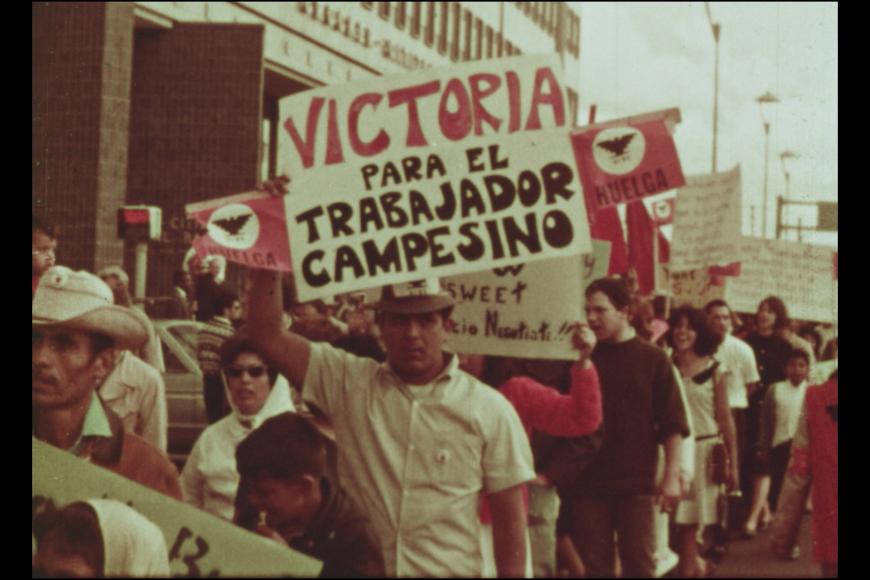
¡Huelga!
Ralph McGrew
An emerging solidarity community on strike: In 1965, Mexican farm workers stood up against the unregulated capitalism in the agricultural sector and the racism of the white land owners.


In 1965, the longest farm workers’ strike in US-American history unrolled in Delano, California. Led by Cesar Chavez, the as yet unorganised Mexican seasonal labourers fought successfully for better working conditions and the right to found a union of their own, the National Farm Workers Association (NFWA). “¡Huelga!” is the partisan portrait of an emerging solidarity group that not only stood up against the unregulated capitalism in the agricultural sector but also declared war on the racism of the white landowners. In addition to depicting the mechanisms of the strike, the mobile camera also makes a point of documenting the degrading living conditions of the people who kept one of the most powerful industries in the country going.

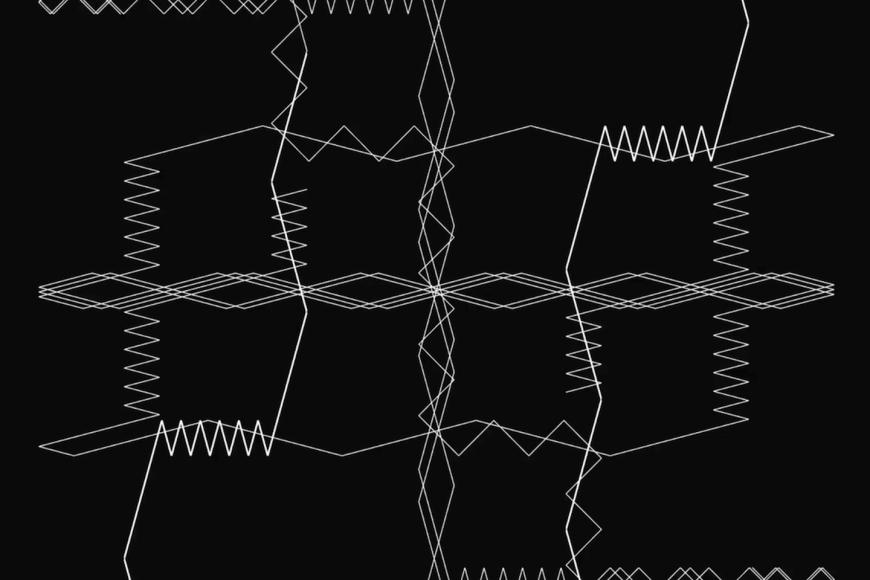
A delicate white ray approaches the frame of a dark picture, bounces off and changes direction. The ray begins to ramify into a geometrical shape. Various algorithms became the co-authors of this generative work that explores the physical laws of reflection. The code-generated soundtrack reacts in real time to the gradually transforming sequences of figures.
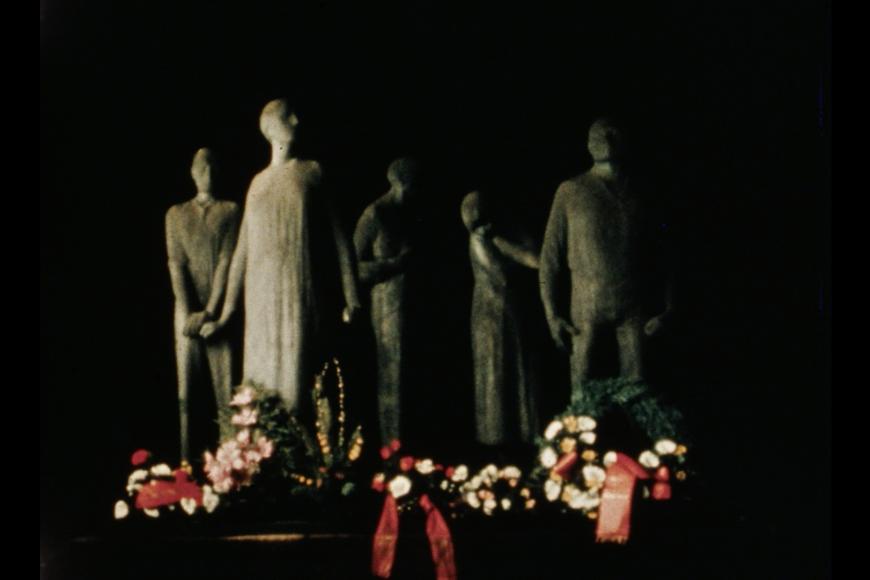
A film is ceremonially screened on the 40th anniversary of the murder of the resistance group around KPD (Communist Party of Germany) functionary Georg Schuman. Present is Horst Schumann, son of the resistance fighter and 1st Secretary of the SED Leipzig District Authority. The filmed document and the documented screening become propaganda accomplices: The GDR present perpetuates the history of NS resistance.

Journalism in the U.S. is in crisis. Jestin Coler, also known as the “fake news king”, most likely contributed to this when headlines from his satirical web page were picked up and believed by the mainstream. Coler describes fake news as a gateway drug and, ironically, as an antidote at the same time. In her film, director Laura Gamse scrolls through news and memes and thereby impressively comments on the state of Western societies.
![Filmstill [Opening speech for the retrospective “Cuban Documentary Film”] [excerpt]](/sites/default/files/styles/stepped_teaser_/public/fiona/films/stills/87e27ec7-a5fa-4f0c-bacb-21a6b6cbc8ec.jpg?h=e23cd095&itok=R0ceOH_i)
In 1974, the GDR and the Leipzig festival celebrated the 25th anniversary of the Cuban Revolution with the “Cuban Documentary Film” retrospective. Santiago Álvarez, vigorous propagandist of documentary film as an art of war against imperialist cinema entertainment, spoke at soporific length at the opening.
One wonders whether, in addition to the invited officials, the “fighting” youth of Leipzig addressed by Álvarez were present at the event. The speech has survived only as an audio document, the images must be imagined. The recording was commissioned by the State Film Documentation, a government agency that was to preserve GDR reality for the future. In 1974, no one in the room could have imagined that this future would one day take place without the GDR.
![Filmstill [An Interview with Ingeborg Tölke]](/sites/default/files/styles/stepped_teaser_/public/fiona/films/stills/6ff3c370-f0ce-42a3-a57e-4f37f285b500.jpg?h=10d202d3&itok=PvOF1hbV)
Ingeborg Tölke recaps her filmic biography, explains its elaborate technical conditions and talks about future core themes. She was presumably responsible for several short intermission films for Deutscher Fernsehfunk as well as a commissioned educational film. Until old age, she explored the possibilities of macro shots and time-lapse technology, which became her trademark.
![Filmstill [Kurt Biedenkopf visits a Soviet tank regiment]](/sites/default/files/styles/stepped_teaser_/public/fiona/films/stills/45138e5f-4fbb-4495-ad4b-2042f249e46f.jpg?h=e66719d7&itok=eN-pcL8e)
The Russian tricolour is already blowing in the background as Saxony’s Minister President Prof. Dr. Kurt Biedenkopf visits a Soviet armoured regiment on Christmas Eve 1991. Those were truly turbulent times – a few months before, tanks had been rolling across Moscow’s Red Square during the August Coup; only days later, Mikhail Gorbachev resigned.
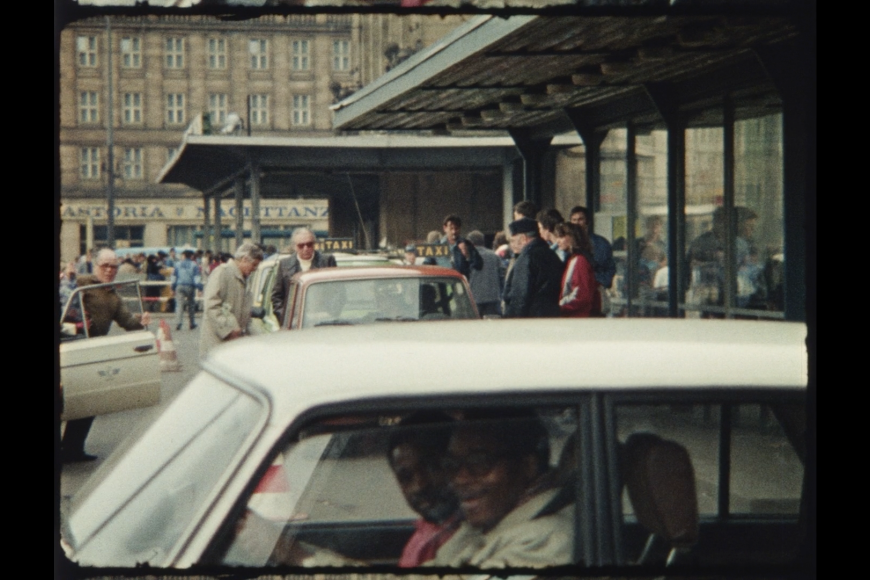
Romantic train rides? Rapid cuts and pans show the profane, hectic everyday life of a big city that has no time for romance. The “last mile” to the place of actual departure is covered at a quick pace – by taxi, streetcar or bus. Serious, tired or withdrawn faces hurry to leave the inhospitable station forecourt behind.
![Filmstill [Posthuman Wombs]](/sites/default/files/styles/stepped_teaser_/public/fiona/films/stills/070b020f-bb2b-4c5b-914f-7021939da925.jpg?h=131411b1&itok=jJhy4Lto)
The stereotypical idea of pregnancy is a challenge for persons who do not define themselves as female only. This auto-theoretical essay explores the future of the family and non-binary reproduction scenarios in which all bodies can become pregnant. We travel into the womb of a posthuman and follow speculations about the de-feminisation of childbearing.
![Filmstill [Sierra Leone]](/sites/default/files/styles/stepped_teaser_/public/fiona/films/stills/c1b8736d-6a68-43e6-8099-84d4ab26cccf.png?h=d1cb525d&itok=6aJgq7LZ)
A mysterious film reel from the “Regional Film Studio Leipzig” holdings: labelled “Sierra Leone”, passed down without sound. After some official speeches, an ensemble from Sierra Leone perform a danced symbolic fight for their GDR hosts. Later, local and international couples sway on the dance floor to live music – non-protocol encounters with independent guests, in both senses of the word.

This film is inspired by the architecture of the M+ Museum in Hong Kong, questioning the conventional definition of a museum as such by taking it out of its context and regarding it as a pure object. A complex interplay of geometrical forms, inspired by the interior of the Hong Kong museum building, refers to the elementary structures that determine our material world.
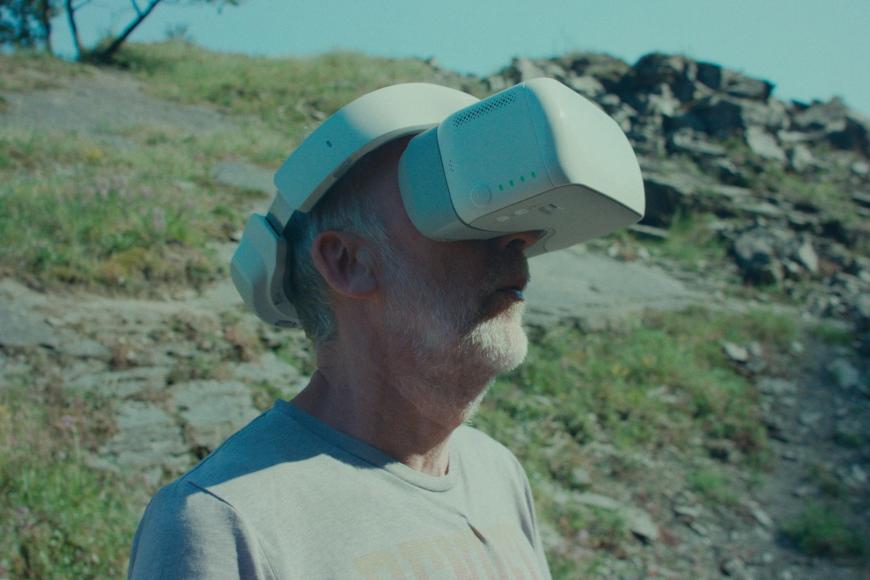
8,500 kilometres lie between the Amazon and the Ardennes. In his home country of Brazil, Diego Quinderé de Carvalho only looks at the inaccessible and menacing forest from the outside. Its Belgian counter piece, however, is easy to explore. Here, everything is laid out by people, neatly ordered and reduced to the essentials. A geologist, a gold miner and an astronomer provide insights for a philosophical exploration of the origin of existence and the future of our planet.
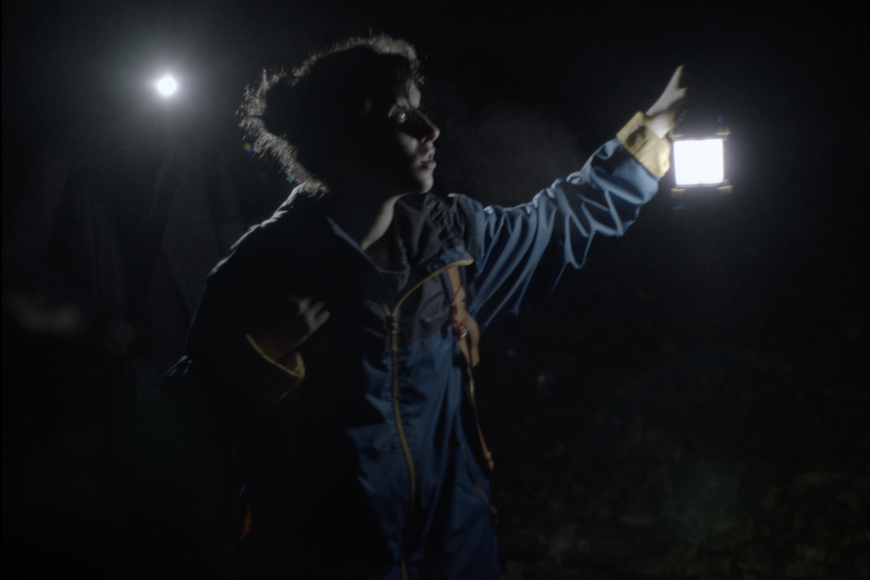
The setting and cast of characters seem like the prelude to an unusual fairy-tale. An elderly man, a hermit living in a remote cabin, is visited by a young woman, almost a girl, who can understand and imitate the language of birds. Deep in the forest, Jean and Mana record and catalogue the calls of the different species day by day, night by night. But then they hear the voice of an unknown animal and set out to find it.
The focus is on birdcalls and their classification. But instead of making the meticulous analysis of sound events look like a quirky hobby, the film inspires us to listen closely. The two scientists’ unperturbed curiosity is catching, and as we watch, we are gradually infected not just with their enthusiasm for their object of research but also with their childlike desire to discover a secret.
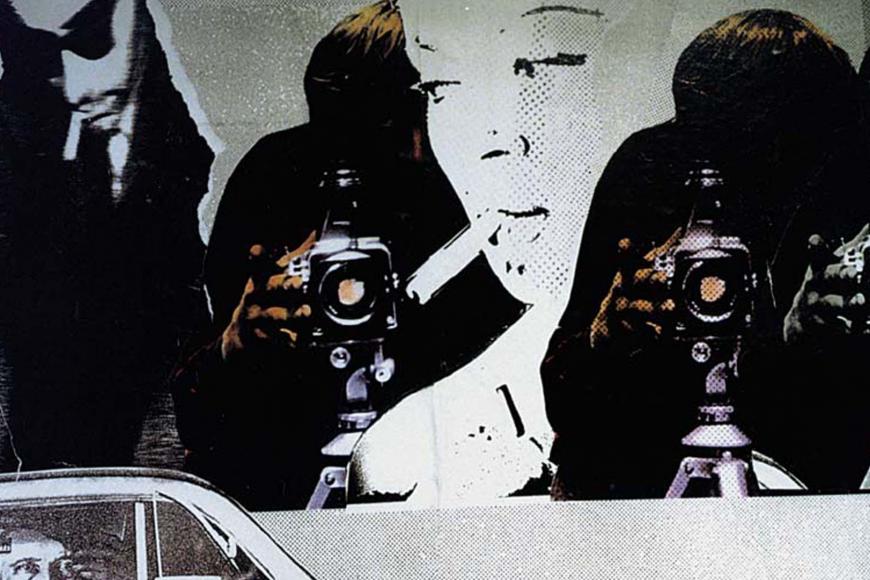
Cinema turned 100. With his homage Heinrich Sabl went one short step further back into the prehistory of cinematography for a run-up. Individual images are set in motion in a praxinoscope, invented by Émile Reynaud in 1877. A pedestrian seizes this illusion as an occasion to walk out of the magic cylinder through scenes from international film history.
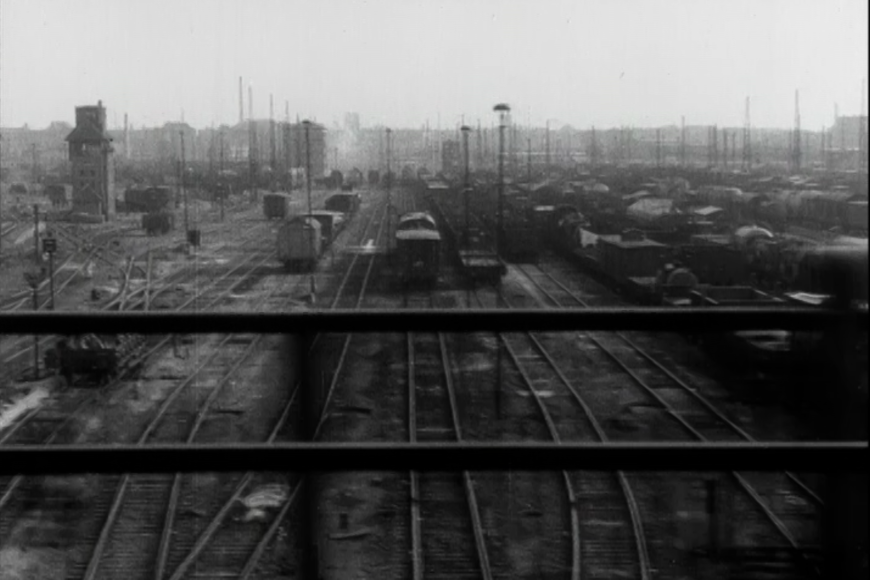
This graduation film by future DEFA documentarian Karlheinz Mund presents a piece of GDR working worlds in the best poetic and earthy Babelsberg school tradition: the everyday life of railway workers – with two women in the electric locomotive driver’s cab.
In 1963, Leipzig audiences were able to get to know Mund’s study in the festival’s university film presentation. At the end, the “Spring Song of the Railwaywoman” can be heard off-screen, sung by Wolf Biermann. The GDR still tolerated the rebellious tormentor. Those who heard him in this film at the time probably only found out later that the authorities had long had him in their sights. In 1963, East Berlin’s Humboldt University refused to grant him a degree in philosophy despite passing his exams. Listening to Biermann’s song today, the words become charged: spring storm, great rain, a land waiting …
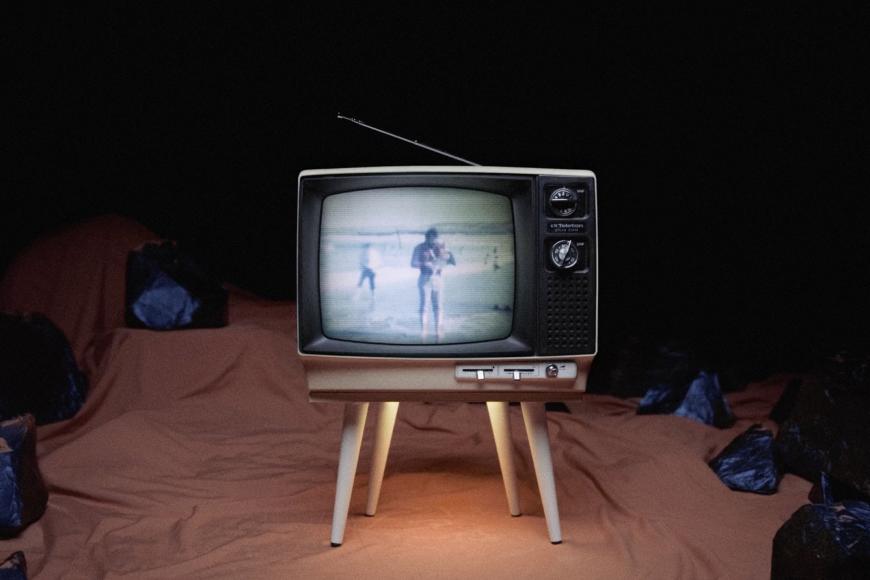
A new father takes his wife and daughter on a journey to his mother’s birthplace in Scotland. It is 1976 – the year in which NASA’s Viking 1 and 2 space probes land on the surface of Mars. They send images of an only vaguely explored area from a great distance, enabling a first look into the history of an alien planet. Like the NASA scientists, the small family are hoping that their journey will give them insights into the past, an understanding of the present situation and perhaps even the chance to anticipate the future.
Texts from the father’s travel diary, photos and video recordings are interwoven with visual and sound material from the NASA archives to form a multilayered narrative that navigates several decades of family history, cosmological questions and philosophical reflections. A filmic multiverse unfolds before us whose elementary particles oscillate between times and worlds, between reality and fiction.




![Filmstill [Opening speech for the retrospective “Cuban Documentary Film”] [excerpt]](/sites/default/files/styles/film_stills_full_content_view/public/fiona/films/stills/87e27ec7-a5fa-4f0c-bacb-21a6b6cbc8ec.jpg?h=e23cd095&itok=qrF8FWaW)
![Filmstill [An Interview with Ingeborg Tölke]](/sites/default/files/styles/film_stills_full_content_view/public/fiona/films/stills/6ff3c370-f0ce-42a3-a57e-4f37f285b500.jpg?h=10d202d3&itok=gegMHUmZ)
![Filmstill [Kurt Biedenkopf visits a Soviet tank regiment]](/sites/default/files/styles/film_stills_full_content_view/public/fiona/films/stills/45138e5f-4fbb-4495-ad4b-2042f249e46f.jpg?h=e66719d7&itok=sLh7IT5d)

![Filmstill [Posthuman Wombs]](/sites/default/files/styles/film_stills_full_content_view/public/fiona/films/stills/070b020f-bb2b-4c5b-914f-7021939da925.jpg?h=131411b1&itok=85csDSab)
![Filmstill [Sierra Leone]](/sites/default/files/styles/film_stills_full_content_view/public/fiona/films/stills/c1b8736d-6a68-43e6-8099-84d4ab26cccf.png?h=d1cb525d&itok=9SGp-Unc)


