Topic
- Activism
- Animated Documentary
- Archival Footage
- Arts/Culture
- Coming of Age
- Digital Culture
- Eastern German
- Environment
- Experimental
- Family
- Gender
- History
- Human Rights
- Humour
- Labour/Economy
- LGBTQIA2S+
- Music
- Politics/Current Affairs
- Portrait/Biography
- Psyche/Mind
- Religion/Spirituality
- Social Issues
- Sports
- Underrepresented Communities
- War/Conflict
- Youth
Filmtype
Accessibility
Custom type
Topic
- Activism
- Animated Documentary
- Archival Footage
- Arts/Culture
- Coming of Age
- Digital Culture
- Eastern German
- Environment
- Experimental
- Family
- Gender
- History
- Human Rights
- Humour
- Labour/Economy
- LGBTQIA2S+
- Music
- Politics/Current Affairs
- Portrait/Biography
- Psyche/Mind
- Religion/Spirituality
- Social Issues
- Sports
- Underrepresented Communities
- War/Conflict
- Youth
Accessibility
Kurtág Fragments
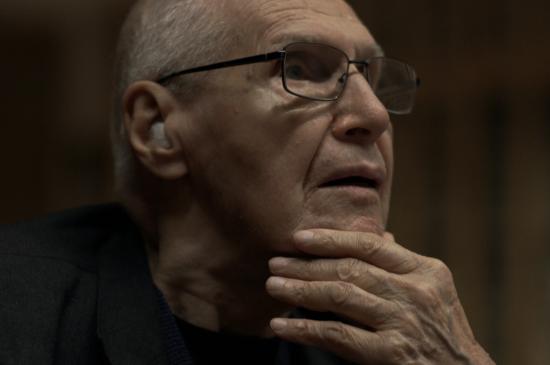
György Kurtág is a renowned Hungarian composer and a major figure of the post-war avant-garde. Born in 1926, he has now reached the age of 100, yet his mind remains wonderfully active. Living in an attic flat of the Budapest Music Center, he continues to work tirelessly with some of the world’s finest musicians who open their creations up to the humbling process of collaboration. Traversing geographies, the film takes us from his birth town of Lugoj to the different places that shaped him, from Transylvania to Budapest to Paris. It traces his early steps into the world of music, which began with dance and four‑hand piano sessions with his mother — something he later continued with his wife and pianist Márta. It then follows his life and many artistic collaborations, including with Icelandic pianist Víkingur Ólafsson and British cellist Steven Isserlis. The film also weaves in the work on his magnum opus “Fin de Partie”. “The map is not the territory; the notes are not music…” To pianists Halla Oddný Magnúsdottir and Ólafsson, Kurtág has “found a way of writing music that is impossible to play without going beyond the notes”. It’s a sentiment shared by Kurtág, who remarks that it’s not about his ideas but about whether the piece, played by a musician, truly “happens” to them. A portrait of a man who lives and breathes music, composing entire worlds brimming with emotion.
Sevara Pan
Trailer
Screenings & Tickets
Credits
Contact
kati.vajda@nfi.hu
Moving Sisters
Sisters Nazieh, Shazieh and Hanieh are from Afghanistan and live with their father at a refugee camp in Athens without any idea of how long they will stay there. Their mother has already arrived in Germany, where a new law now prevents the family from reuniting there as planned. They start growing up in a situation where waiting is the norm. The film accompanies the trio over seven years and shows the fragile normality they establish separately and together in the face of adversity: sport training sessions, language classes and shooting their own film scenes, which are marked by their experiences as refugees. Educator and filmmaker Christos Stefanou got to know the three sisters at the refugee camp, where he worked for five years as a teacher. Aware of the vulnerability of their situation and this phase in life, he follows a collaborative approach in his first feature-length documentary. Drawing on close-up observation, he captures the three sisters’ gestures, thoughts and everyday routines, which reveals their developmental steps and the passing of time not just in physical terms. And while their learning successes sometimes lose any meaning in the face of their constantly changing life situation, one essential question remains: will the family manage to get back together despite all the imponderabilities?
Tina Jany
Screenings & Tickets
Credits
Contact
christef@gmail.com
Nicole Nicole
Alberte and Nicole are mother and daughter, three decades apart. At 55 and 87, they still live together in a villa by Lake Geneva, having settled into a codependent dynamic: Nicole is reluctant to leave her mother, while Alberte struggles to let her go, fearing living alone. In a house filled with memorabilia, cats, and too many clocks, the familiar feels safe for the mother‑daughter duo who often doze off like synchronised swimmers. However, as time passes, the family grows concerned about Nicole’s autonomy. Nicole is considered neuroatypical, “ambivalent” regarding the perceived condition, and few facilities are equipped to provide adequate support. Nicole’s sister, Danielle, then decides to assist her in a search for a flat and a job. These scenes unfold alongside the family’s daily life and the intimate conversations in front of the camera. Nicole also embarks on a playful creative exercise with her filmmaker niece Lauren, imagining life’s many scenarios.
Sevara Pan
Contains depictions of mental health conditions
Trailer
Screenings & Tickets
Free entry
Credits
Contact
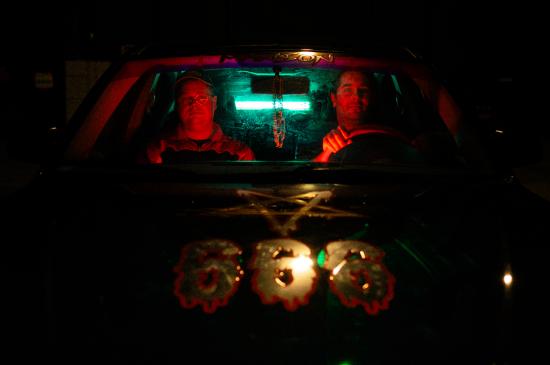
Petrolheads
Martin doesn’t dream of a life full of riches. His greatest wish is a 1994 Honda Civic and a driver’s license. He joined his foster family at five months old. At nine, he received a diagnosis of autism, ADHD, and so-called attachment disorder. Then he met Casper, and the two formed a bond born out of their shared love for cars, Trabant jokes, and an understanding of each other’s struggles, shaped by their disabilities and early days spent in an orphanage that affected their self-esteem. Lensed by his brother, director Emil Langballe, with honesty and care, the film follows Martin as he is caught in a spiral of drug addiction and troubles. All the while, he and Casper continue patching up their Honda Civic. A film about ruptures and repairs, of cars and relationships, support systems, and the tenderness of friendship.
Sevara Pan
Contains depictions of drug-use, mental health conditions
Trailer
Screenings & Tickets
Credits
Contact
jasmina@verita-films.com
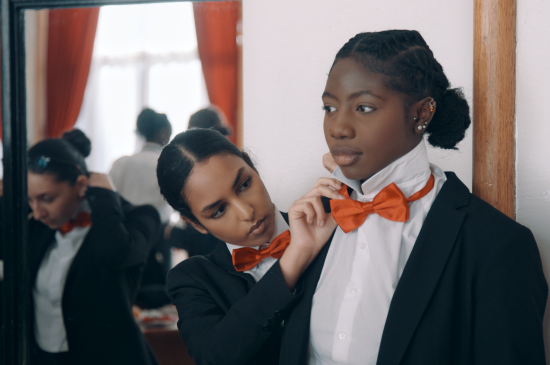
Second Course
At a vocational college for the hotel industry, Alma, Moussa, Chaïli, Sarah and their classmates swap their everyday clothes, smartphones and chewing gum for uniforms and serving trays. At the college restaurant and in the classroom, they learn the rules and precisely processes linked to French restaurant service: a field in which tradition, discipline and perfection are a priority. Strict, yet fair, the teachers convey the value of a profession that demands patience and putting one’s needs to the side above all else. Between teaching sessions and the different components of service, the portrait of a generation confronted with the expectations of the labour market comes into focus: they need to learn a profession and conform while simultaneously looking for recognition and their own path. The film observes these young people in their training routines with sympathy and attentiveness and explores the contrasts between the idealised image of gastronomy and the harsh reality. For them, this training isn’t always a decision based on conviction, but merely one of the few possible paths into professional life. A lively, unadorned look at becoming an adult and looking for one’s place in a future that offers little and demands many compromises.
Lina Dinkla
Screenings & Tickets
Credits
Contact
samy@andanafilms.com
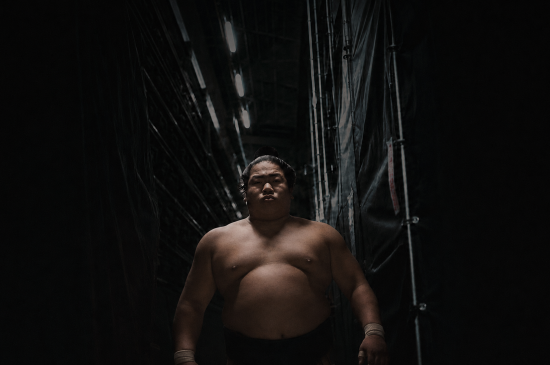
Sumo: Spirit Weighs Nothing
Carolin Weidner
Screenings & Tickets
Credits
Contact
ESPN
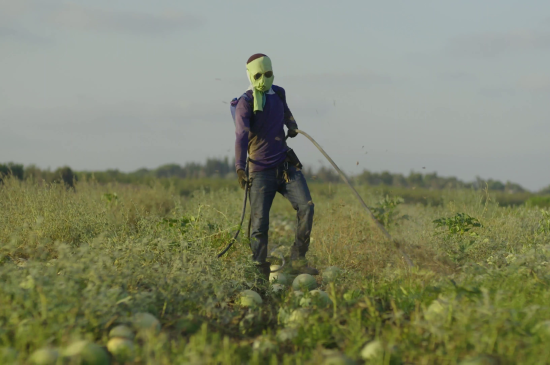
The Snake Charmer
Luscious avocado plantations. Smoke rising on the horizon. Then echoes of explosions. In the “Envelope”, just before the border with Gaza, Yo, Tom, Yan, Piak and Lee work in Israeli fields. Like many other migrant workers, they were recruited from Thailand. They work for below-market wages, often seven days a week, up to 17 hours a day, to support their distant families. They are being observed by a robot snake that crawls through the fields looking for Hamas tunnels beneath the farmland. Bullet casings among the weeds, makeshift shelters in front of the barracks – a psychogeography of fear and vulnerability. Sometimes, in brief moments of leisure, the light-hearted games and the community of young men provide a distraction. On 7 October 2023, the underworld opens up and interrupts the film, which then shifts to the families of the victims. On the banks of the Mekong, the mythical snake god Naga guards the threshold between the living and the dead. An intangible, floating and empathic narrative about precarious labour movements through a military-agrarian complex.
Jan Künemund
Contains mentions of physical violence, war scenes
Contains depictions of death
Screenings & Tickets
Credits
Contact
mel@madeingermany-film.de
The Autoharp Crushing on Hot Guys
Franka Sachse
Contains mentions of mental health conditions
Screenings & Tickets
Free entry
Credits
Contact
festivals@famu.cz
There’s No Place Like Rome
Why are we so fascinated by the ancient world even today? In 2023, the viral hashtag #RomanEmpire brought to light how many people are still captivated by ancient Rome – men above all. For Pinji, the director’s uncle, this fascination has long since become a life project. He lives in an old house in Bulgaria, looks after a collection of antique treasures and has been writing a book about antiquity for years. When his nephew comes to visit, uncle Pinji does not hesitate: With humorous implacability, he launches into a rhetorical "demolition" of the present age. Toddi listens closely and decides to join the fight. He implements himself and Pinji in a computer game, right into the middle of an antique battle. Now the present is battling the past – outcome uncertain.
Luc-Carolin Ziemann
Trailer
Screenings & Tickets
Credits
Contact
t.musev@gmx.de
this, too, will be liquid
Marie Ketzscher
Photosensitivity warning: Contains flashes of light that may trigger seizures for people with visual sensitivities.
Screenings & Tickets
Credits
Contact
info@karolinamalwina.net
Tricontinental, Letter to Open in Case Of
French critic and activist Michèle Firk died at the age of 31 and left little behind: several texts in the film magazine Positif, the draft script for a film never made, diary entries and a farewell letter in case of her death. Taking these writings as a starting point, Laura Cazador traces out her short, radical life in the late 1950s and 1960s. A life that is not just closely connected to film history, but also the left-wing discourses and anti-imperialistic movements of that era. Firk politicised during the Algerian War, got involved in Socialist Cuba and later joined the armed struggle in Guatemala. Ben Barka, Salvador Allende, Fidel Castro and Ché Guevara drift eerily through the fascinatingly dense archival material of this film – everything connected by the idea of the Tricontinental. The Havana conference that Firk worked on was supposed to be held in 1966 and call a new, non-aligned alliance between the countries of Asia, Africa and Latin America into being. Having trained as a film director herself in Cuba, Cazador grasps Firk as a point of contention and of reference for her own filmmaking in the present. The film thus reflects on the connection between cinephilia and political engagement not just based on Firk’s texts, but also with the images of the “Third Cinema”.
Jan-Philipp Kohlmann
Trailer
Screenings & Tickets
Credits
Contact
mrkolexa@gmail.com
Uncle Thuận
He is „always sad“, says Uncle Thuận. Connected via mobile phone with his family who are scattered across the world he sings sentimental songs about spring in Hanoi. Meanwhile, his wife Thúy tirelessly looks after the restaurant that the two have been managing in North Rhine-Westphalia for twenty years. They came to the GDR as contract workers at the age of 19. In conversations with their daughters, life stories unfold in which they were rarely expected to decide anything but always to work hard and to function. A role they accept without complaint and justify even today. But the protective shell accumulated over decades increasingly begins to show cracks. And somewhere in the endless routines and tasks of a restaurant kitchen which also structure the film, a question quietly emerges: the question of happiness. In Minh Anh Nguyễn, a post-migrant generation speaks up who regard contract work and racism in the GDR not as a closed chapter but as part of their history. Casual and very close to her protagonists, she tells of colonial legacies that have inscribed themselves into biographies and across generations. At the same time, she shows how this cycle can be broken: By the daughters asking questions which – even outside the Vietnamese community and above all in the East – are long overdue.
Grit Lemke
Trailer
Screenings & Tickets
Credits
Contact
nguyen.minh-anh@web.de