Filmtype
Custom type
Topic
Camille & Chameleon
Camille, a very small girl, and the Chameleon who is afraid of heights are inseparable and love to play hide-and-seek in the forest. Camille loves to literally call the tune with her whistling. But one day she becomes too cocky and gives Chameleon an idea that will upset everything. Now they are lost in the green thicket. Can they get over their pride and find each other again?
Lina Dinkla
Screenings & Tickets
Credits
Contact
info@lucie-nichelmann.com
Caracas: dos o tres cosas
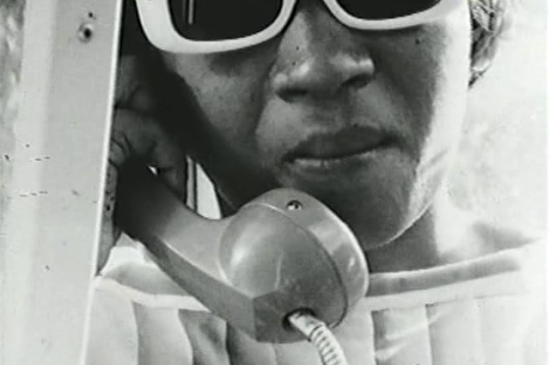
Ugo Ulive left his native Uruguay in 1967 to move to the Venezuelan capital of Caracas, where two years later he realised three short films at the newly founded Centro de Cine Documental de la Universidad de los Andes: “Caracas: dos o tres cosas”, “Diamantes” and “Basta!”. The latter was part of the Leipzig retrospective “Film in the People’s Struggle for Liberation: Latin America” in 1972. Inspired by Antonin Artaud’s concept of the “Theatre of Cruelty”, it stands out for disturbing images of an autopsy that reveal the degree of dehumanisation under the influence of imperialism. In “Caracas: dos o tres cosas”, also in the form of an experimental collage, Ulive, roaming the streets of Caracas with his camera, contrasts the public face of a divided society with audio fragments from radio, advertising and pop music.
Florian Wüst
Screenings & Tickets
Credits
Contact
Changeover
André Eckardt
Screenings & Tickets
Credits
Contact
franz.impler@gmail.com
Chile lebt
The Europe-wide protests against Chile’s military dictatorship were expressed not only by political activism, but by a host of artistic actions. The colourful aesthetics of the Unidad Popular’s street art, popularised by the Ramona Parra Brigades, became a visual trademark. Based on this model, the Brigada Pablo Neruda, for example, whose members included well-known Chilean artists exiled in Paris like José Balmes, Gracia Barrios and Guillermo Núñez, realised a 60-metre-long mural on the fringes of documenta 6 in Kassel in 1977. Its creation was documented in Franz Lehmkuhl’s film “Chilenische Wandmalerei” (1977–80), screened in Leipzig in 1980. In his agitation film “Chile lebt”, co-produced with Michael Börner, the Chilean journalist and filmmaker Juan Forch uses pictures of the Brigada Pablo Neruda to express what keeps hope in his homeland alive: international solidarity. In 1979, Forch returned to Chile from exile in the GDR.
Florian Wüst
Screenings & Tickets
Credits
Contact
defa-filmverleih@deutsche-kinemathek.de
Circle
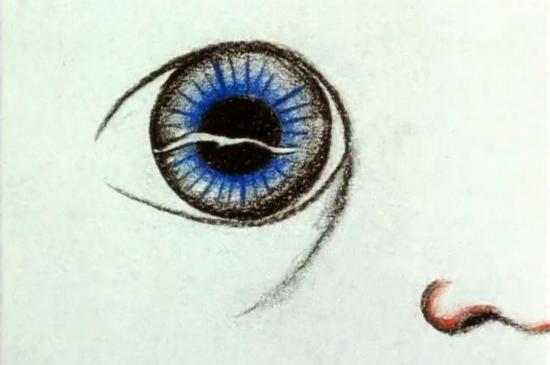
Pesticides wipe out the insects, the oil spills into the ocean, the forests burn: In 1994, director Laila Rakvåg let a bird fly over and through the ecological, human-made hotspots that plague us even today to a far worse extent. Sometimes the bird is able to land in beautiful natural surroundings, but the rest is never permanent, paradise is always on the brink of the next hellish transformation. The further the bird flies, the more human its features become: It becomes a baby that is then actually born – and carries the memories of the bird in its newly opened eyes. We are inseparably linked to nature; what we do to it, we do to ourselves: Rakvåg’s film is an activist plea for more empathy with our planet and a change of thinking, told from the perspective of an expectant mother.
Marie Ketzscher
Screenings & Tickets
Credits
Contact
claus@trollfilm.no
Cosmonauts
Everyone who longs for tenderness is welcome aboard the Pompelmo Express, a huge pink rocket ship. Together with a number of diverse passengers who shimmer in all the colours of the rainbow, Delfino, Rita and Zenf journey through the cosmos of possibilities. While a party rages on in the spaceship, Zenf discovers a fiery comet through his huge telescope. At an atmospheric tea party, Delfino falls head over heels in love with Carlos, and Rita begins to quarrel with her body. The infinite expanse and warm darkness of space envelop the friends benignly and offer a space to live out the most varied needs. “Say goodbye to your lonely days.”
Franka Sachse
Contains depictions of nudity
Screenings & Tickets
Credits
Contact
Cyclepaths
André Eckardt
Contains depictions of murder, war scenes
Screenings & Tickets
Credits
Contact
antoncla.contact@gmail.com