Filmtype
Accessibility
Custom type
Topic
Accessibility
Far Far Away
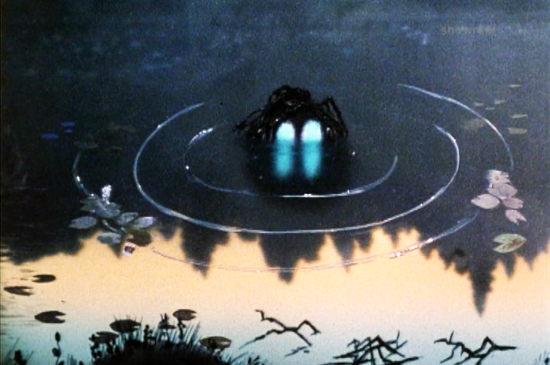
Romantic, mystical, folkloristic: Theodor Kittelsen's (1857–1914) oeuvre as a painter is not just dedicated to nature but also to legends and trolls – and has influenced artists to the present day. Natasha Nikitina for example, whose film takes up Kittelsen's twelve-part series of pictures "Soria Moria Palace" and his eponymous book: The young hero Askeladden sees the golden palace of Soria Moria in the distance and sets out to reach it; an allegory of the golden future that can be earned with a lot of hard work and dedication. In her film, however, Nikitina focuses more on the atmospheric element, letting a troll in a rock wake up and fall asleep again, letting geese and other birds take flight, letting fog and dusk turn into night and back into a glowing morning. A tribute to the artist, but also to the myth-enshrouded Norwegian landscape in general.
Marie Ketzscher
Screenings & Tickets
Credits
Contact
claus@trollfilm.no
Fiddlehead / Happy Mondays: Tart Tart [excerpt]
André Eckardt
Screenings & Tickets
Credits
Contact
antoncla.contact@gmail.com
For Life
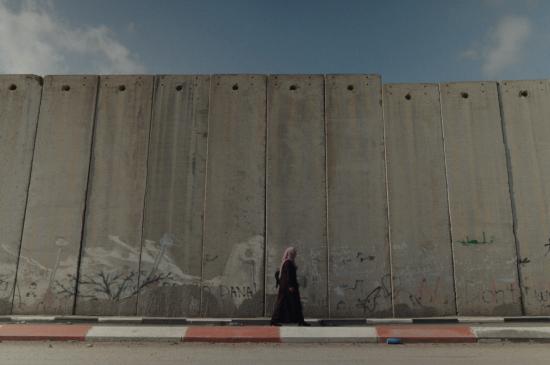
A Palestinian woman, Hind Mashahra, longs for motherhood, but this seems hardly possible as her husband is serving a life sentence in an Israeli prison and is barred from marital visits. Smuggling her husband’s sperm out of prison may be the only chance for her to become a mother again. The documentary follows Hind as she sets out on a risky mission to obtain and deliver her husband’s sample to a fertility clinic. Her repeated attempts are hampered by the traffic, checkpoints, and the short life of semen, perishing within just hours. Unadorned in its language, the film stays close to Hind’s inner experience in the throes of drama, shaped by the reality in the West Bank and East Jerusalem, as well as in quieter moments of waiting that are no less charged. Weaving in accounts of other prisoners’ wives, the documentary chronicles a Palestinian woman’s journey as she pursues motherhood at an extraordinary cost.
Sevara Pan
Contains mentions of death, physical violence
Contains depictions of physical violence, death
Screenings & Tickets
Credits
Contact
benahmetseven@gmail.com
Fracture
James Lattimer
Screenings & Tickets
Credits
Contact
philippe.cotte@cvb.be
Free Zone
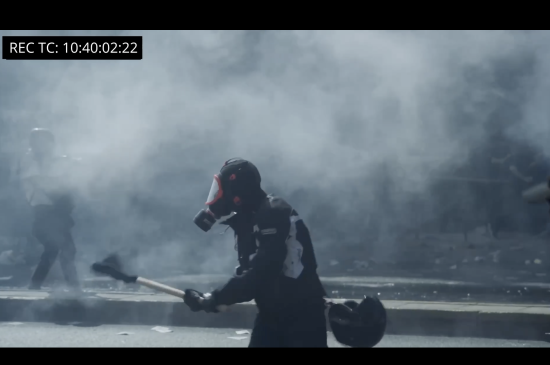
Abtin, a young anarchist from Iran, now lives in Greece after fleeing his own country. Back home he managed an underground library of banned books and was reportedly arrested, detained and tortured because he took part in protests. He continues his political struggle in Athen’s Exarchia district – a place of left-wing utopias and a fiercely contested site of gentrification: He joins the movement for refugees, squats in houses, protests against illegal pushbacks and fights for alternative ways of living, though his own situation is highly precarious, because every contact with the state can jeopardise his residence status. Director Jasmine Alakari follows Abtin over the course of a year, experiences his rage, hope and powerlessness, but also euphoria and solidarity. Time and again, the film returns to the question of how much political activism should be allowed to shape one’s life and what role violence plays in this. Meanwhile, the conflict with the police comes to a head in the street and Abtin finds himself in the crosshairs of the state. Alakari keeps filming but realises that she must also examine her own role. What does it mean to be an observer? How far can a film visualise the fears and hopes of a person who does not have the freedom to escape this situation? “Free Zone” has no easy answer to this question but passes it on. To us – the audience.
Luc-Carolin Ziemann
Contains depictions of physical violence
Screenings & Tickets
Credits
Contact
jasmine.alakari@gmail.com