Filmtype
Accessibility
Custom type
Topic
Accessibility
Child’s Mother
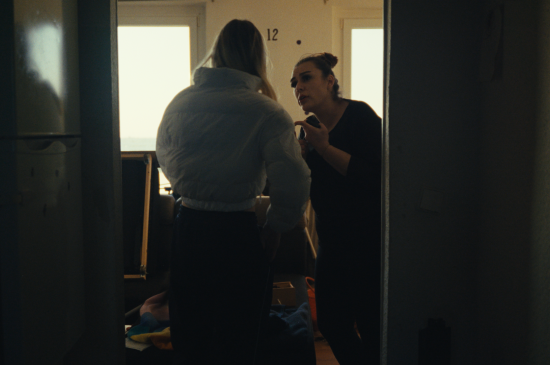
Anne (36) lives in Halle (Saale) and her life is in chaos. An apartment full of moving boxes, a yapping dog. She tells her mother on the phone that the electricity is about to be cut off again. Sometimes her daughter Leonie (14) drops by. Like her mother, she is at risk of slipping into drug addiction. Anne has already lost custody of her two younger children, too. The camera stays purely observational, captures loose scenes from the life of a woman who wants to take responsibility again. The film does not look for psychological explanations but shows Anne as she is. On her drives through the prefabricated housing estate, she seems isolated from her surroundings. Mother and daughter grow closer over an ice cream in a public square. Anne’s visit to her mother provides support but creates pressure, too. We grow ever closer to Anne, sharing her wish that she can become a role model for her daughter.
Anke Leweke
Contains mentions of addiction, death, drug-use
Screenings & Tickets
Credits
Contact
friedemann@inselfilm.de
Kids DOK: Films for All 3+
Films
Tanzpartner
Gefunden!
Wir bauen eine neue Welt, Willi Wiberg
Die stille Ecke
Wolkenfisch
Piccolo Piccolo
Screenings & Tickets
In the Cinemas
Kids DOK: Films for All 5+
Films
Pingu & Bär
Camille & Chamäleon
Hund und Baum
Otá Layò
Nachtschwärmer
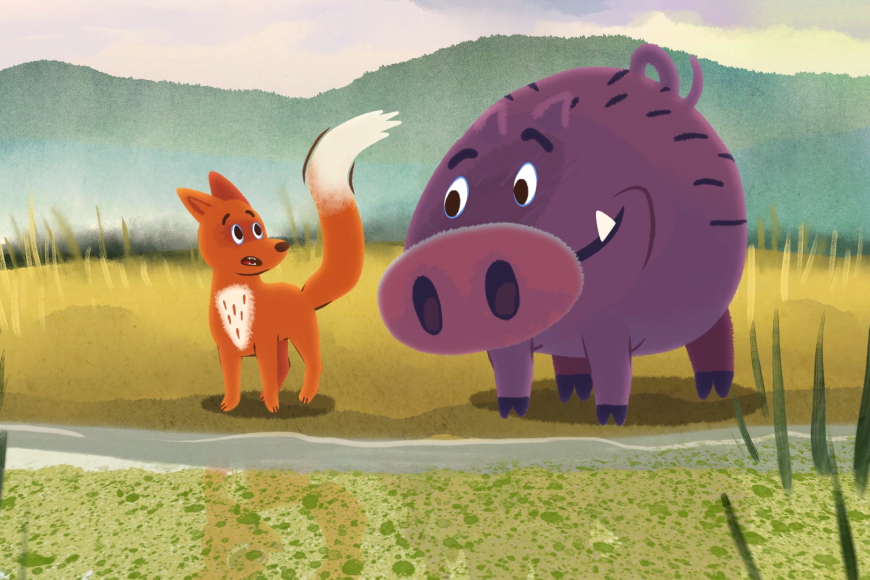
Fuchs und Wildschwein
Screenings & Tickets
In the Cinemas
Kids DOK: Films for All 8+
Films
Zwei Flüsse
Einfach Jools
Der Komet
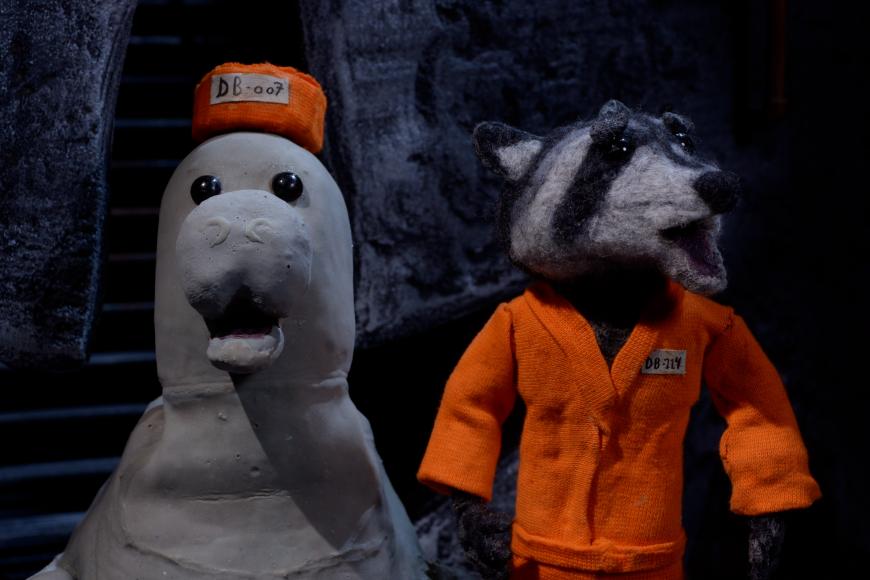
Zellenkumpel
Ich würd dich gern sehen
Der Hund auf dem Papier
Screenings & Tickets
In the Cinemas
kiss kiss bang bang
Carolin Weidner
Contains mentions of mental health conditions
Contains depictions of nudity
Trailer
Screenings & Tickets
Free entry
Free entry
Credits
Contact
purplerayfilm@gmail.com
Kitzel
Franka Sachse
Screenings & Tickets
Credits
Contact
mkeil.animation@gmail.com
Kreislauf
Meike Weimann
Screenings & Tickets
Credits
Contact
Kurtág Fragments
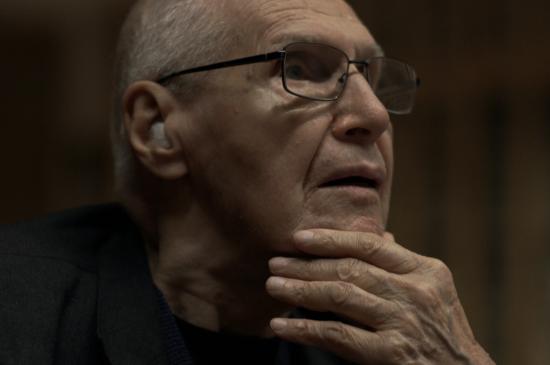
György Kurtág is a renowned Hungarian composer and a major figure of the post-war avant-garde. Born in 1926, he has now reached the age of 100, yet his mind remains wonderfully active. Living in an attic flat of the Budapest Music Center, he continues to work tirelessly with some of the world’s finest musicians who open their creations up to the humbling process of collaboration. Traversing geographies, the film takes us from his birth town of Lugoj to the different places that shaped him, from Transylvania to Budapest to Paris. It traces his early steps into the world of music, which began with dance and four‑hand piano sessions with his mother — something he later continued with his wife and pianist Márta. It then follows his life and many artistic collaborations, including with Icelandic pianist Víkingur Ólafsson and British cellist Steven Isserlis. The film also weaves in the work on his magnum opus “Fin de Partie”. “The map is not the territory; the notes are not music…” To pianists Halla Oddný Magnúsdottir and Ólafsson, Kurtág has “found a way of writing music that is impossible to play without going beyond the notes”. It’s a sentiment shared by Kurtág, who remarks that it’s not about his ideas but about whether the piece, played by a musician, truly “happens” to them. A portrait of a man who lives and breathes music, composing entire worlds brimming with emotion.
Sevara Pan
Trailer
Screenings & Tickets
Credits
Contact
kati.vajda@nfi.hu
The Class of 1990
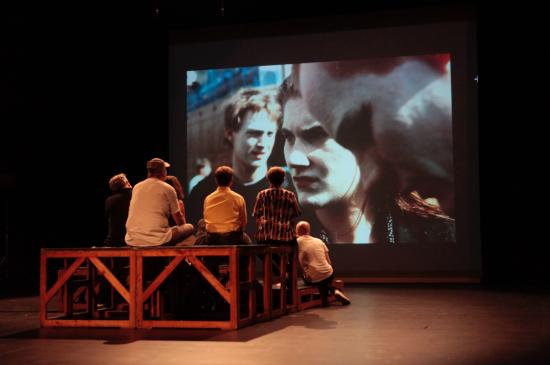
A theatre stage, Hamlet: the "call for freedom": The ones who declaim it have learned their craft. Right here, in Rostock, they had begun their studies a month before the German reunification. 35 years later, they remember. 1990: They come from different backgrounds, from East and West. They are strangers, live in prefabricated homes. And they quickly find themselves in a maelstrom sweeping across the whole of the East: Like the factories around them, the theatre school is to be "phased out". At the same time, the "Sonnenblumenhaus" is burning in Rostock-Lichtenhagen. They must learn to organise themselves. Like pieces of a jigsaw, individual tales, supplemented by archive images and historical rehearsal videos, come together to form a picture of those times. Embodied by today’s students, who re-enact scenes from the past, the past is reflected in the present. The story of the East German student movement of the early 1990s has been almost completely erased from the collective memory today. As in Rostock, nothing at Leipzig University reminds us that the existence of a number of scientific or artistic institutes and institutions is owed solely to their commitment. "Die Klasse von 1990" is an urgently needed corrective to a Western-dominated historiography, and a lesson in self-empowerment and democracy.
Grit Lemke
Screenings & Tickets
Credits
Contact
office@poison-berlin.com
The Comet
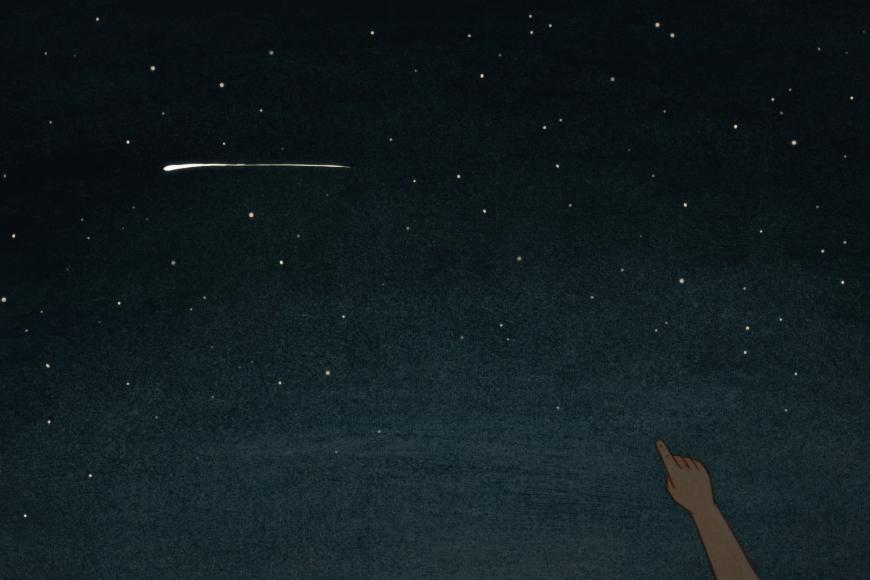
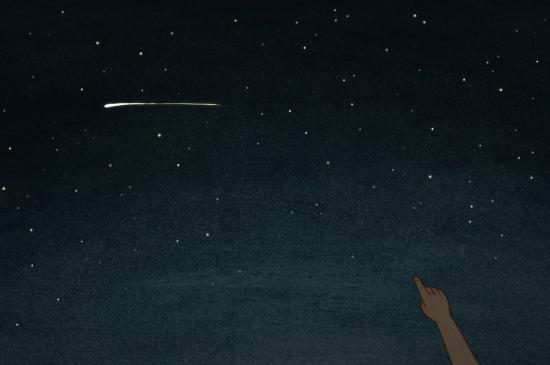
It is summer. Émile and his older sister Françoise are enjoying the last warm days in their holiday home on the edge of the forest, observing the night sky and looking out for comets. But one night the peaceful atmosphere is abruptly disrupted when the two siblings witness a cruel prank played by the neighbourhood boys. In his anger and helplessness, Émile wants to teach the kids a lesson. Afterwards, nothing is the same for him anymore and he has grown a little.
Lina Dinkla
Trailer
Screenings & Tickets
Credits
Contact
serge@ladistributrice.ca
The Core
When an illness brings life to a standstill, everything is suddenly called in question. We are used to functioning – using our body and mind to achieve goals, to fulfil our potential, to be there for others. But how do we react when this supposed normality no longer exists? When life as we knew it threatens to fall apart? “The Core” is a film about the fight against this disintegration and the struggle to answer the question of what constitutes life. Life as a filmmaker, woman and mother. Life that was already complete before the illness appeared and that now competes with the latter – for time and attention. Where is the essential core of a person, what can’t be surrendered without giving up one’s self? This auto-fictional film begins on a very personal note but shows clearly how much our approach to illness is shaped by society and how the insistence on “normality” makes life harder for those who fight for it every day.
Luc-Carolin Ziemann
Contains mentions of mental health conditions
Screenings & Tickets
Free entry
Credits
Contact
rebecca.zehr@posteo.de
The King Who Wanted More Than a Crown
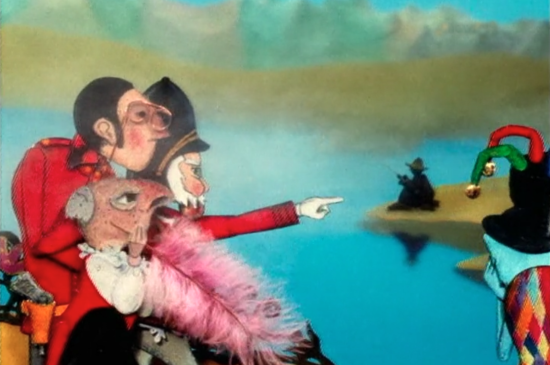
Gosh, how boring and lonely it is here in the castle! That is what the little king thinks and so one day he vanishes. Everyone is desperate and at their wit’s end. The whole staff look for him for six days. No luck. And so the chamberlain, the commander, the jester and the second-in-command set out into the dangerous enchanted forest to find a new king. “The King Who Wanted More Than a Crown” was originally performed as a modern fable for all age groups with live orchestra accompaniment, to inspire a love of classical music especially in children. But even without live elements, Anita Killi's and Randall Meyers' cut-out animation works amazingly well. After all, it is not just brimming with loving detail and lively, colourful characters, but also breathes new life into the old adage “Don’t judge a book by its cover”.
Marie Ketzscher