Topic
- Activism
- Animated Documentary
- Archival Footage
- Arts/Culture
- Coming of Age
- Digital Culture
- Eastern German
- Environment
- Experimental
- Family
- Gender
- History
- Human Rights
- Labour/Economy
- LGBTQIA2S+
- Music
- Politics/Current Affairs
- Portrait/Biography
- Psyche/Mind
- Religion/Spirituality
- Science/Technology
- Social Issues
- Sports
- Underrepresented Communities
- War/Conflict
- Youth
Filmtype
Accessibility
Custom type
Topic
- Activism
- Animated Documentary
- Archival Footage
- Arts/Culture
- Coming of Age
- Digital Culture
- Eastern German
- Environment
- Experimental
- Family
- Gender
- History
- Human Rights
- Labour/Economy
- LGBTQIA2S+
- Music
- Politics/Current Affairs
- Portrait/Biography
- Psyche/Mind
- Religion/Spirituality
- Science/Technology
- Social Issues
- Sports
- Underrepresented Communities
- War/Conflict
- Youth
Accessibility
Bára – Diary of a Rockstar
Carolin Weidner
Screenings & Tickets
Credits
Contact
barbora.lochmanova@gmail.com
Between Summers
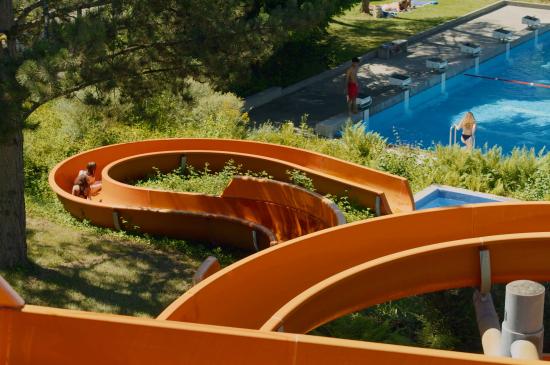
A public swimming pool complex in the middle of a forest which is soon to be renovated: between water slides, French fries, TikTok and sun cream, six teenagers spend the long summer days in the “Badi”, as outdoor pools are called in Swiss German. It is a place to discuss, laugh, try things out and simply hang out together. Whether on the grass, in the water or between the different pools, their conversations revolve around everything that currently moves them. This sun-kissed film accompanies these adolescents at a moment of transition. They talk about the past, think about the future and try to find out who they are and how they will find their place in a changing world. The film stays close to their glances, conversations and encounters, taking an unvarnished look into the inner world of these adolescents – their curiosities, their humour, their contradictions and their insecurities. For one summer long, the Badi becomes a place where childhood and future can exist alongside each other. And while the orange slide is dismantled, the question of what will remain of this summer bubbles up through the water.
Lina Dinkla
Trailer
Screenings & Tickets
Free entry
Credits
Contact
cd@doklab.com
Blossoming
Carolin Weidner
Contains mentions of physical violence, suicide
Contains depictions of mental health conditions, death, child abuse
Screenings & Tickets
Free entry
Credits
Contact
ada@lumisenta.com
Caracas: dos o tres cosas
Ugo Ulive left his native Uruguay in 1967 to move to the Venezuelan capital of Caracas, where two years later he realised three short films at the newly founded Centro de Cine Documental de la Universidad de los Andes: “Caracas: dos o tres cosas”, “Diamantes” and “Basta!”. The latter was part of the Leipzig retrospective “Film in the People’s Struggle for Liberation: Latin America” in 1972. Inspired by Antonin Artaud’s concept of the “Theatre of Cruelty”, it stands out for disturbing images of an autopsy that reveal the degree of dehumanisation under the influence of imperialism. In “Caracas: dos o tres cosas”, also in the form of an experimental collage, Ulive, roaming the streets of Caracas with his camera, contrasts the public face of a divided society with audio fragments from radio, advertising and pop music.
Florian Wüst
Screenings & Tickets
Credits
Contact
Child’s Mother
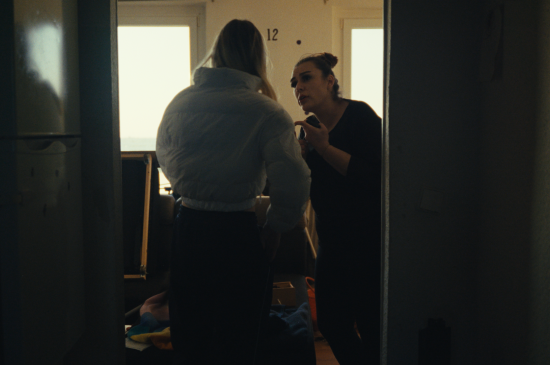
Anne (36) lives in Halle (Saale) and her life is in chaos. An apartment full of moving boxes, a yapping dog. She tells her mother on the phone that the electricity is about to be cut off again. Sometimes her daughter Leonie (14) drops by. Like her mother, she is at risk of slipping into drug addiction. Anne has already lost custody of her two younger children, too. The camera stays purely observational, captures loose scenes from the life of a woman who wants to take responsibility again. The film does not look for psychological explanations but shows Anne as she is. On her drives through the prefabricated housing estate, she seems isolated from her surroundings. Mother and daughter grow closer over an ice cream in a public square. Anne’s visit to her mother provides support but creates pressure, too. We grow ever closer to Anne, sharing her wish that she can become a role model for her daughter.
Anke Leweke
Contains mentions of addiction, death, drug-use
Screenings & Tickets
Credits
Contact
friedemann@inselfilm.de
Closure
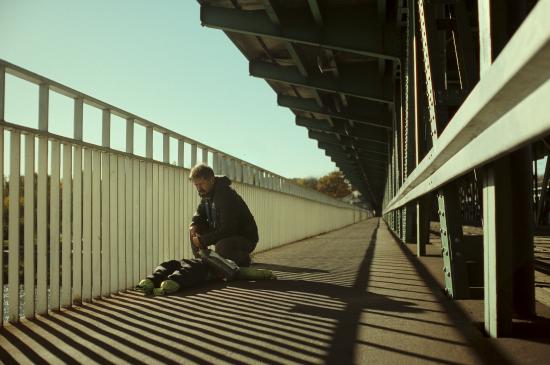
16-year-old Krzysztof was last seen on a bridge over Poland’s Vistula River in 2023. The CCTV camera briefly turned away, and by the time it returned, he had vanished. Following his disappearance, his father Daniel launches a relentless search in Poland’s largest river. As time piles up, the searches persist. Any tech that proves useful gets pulled into it, from drones to metal detectors, trackers, and even loaves of bread, sent floating down the current in the hope of locating the body. The camera matches these rhythms, dredging the river’s depths and combing its banks. The searches, showing the father’s restless energy and the sheer labour of this endeavour, mix with vérité scenes with his family, as well as news snippets about Krzysztof’s alleged sightings. Social media streams are scoured too, providing unsettling insights into the boy’s inner states. Director Michał Marczak – and by extension his camera – accompany Daniel, taking the audience along in a boat and into the heart of a family’s unresolved grief. As closure remains out of reach, Daniel starts assisting other searches, and sombre discoveries are made of other lives lost in the waters.
Sevara Pan
Contains mentions of violence against animals, mental health conditions, suicide
Contains depictions of death, mental health conditions, violence against animals
Photosensitivity warning: Contains flashes of light that may trigger seizures for people with visual sensitivities.
Trailer
Screenings & Tickets
Free entry
Credits
Contact
Cold River: I Am in Leipzig
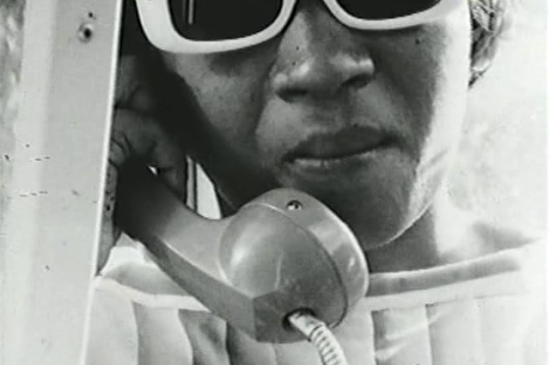
Haiguang dreams. Of his dead grandmother, his birthplace Lěng Shuǐ Jiāng in China, his performances and art projects and his job at a wholesale warehouse in Leipzig. But Haiguang not only dreams, he also films. Himself and his surroundings. Persistent, stoical, sometimes with a handheld camera, sometimes using a tripod – knowing that there is another layer under one’s everyday life that can only be perceived if one dares to search for meaning beyond the visible. If you dare to lie down on a crossing in the park and wait for what happens. If you dare to address the pressure to perform in Chinese society through a performance dragging a car tyre through Beijing. If you dare acknowledge your own fears and doubts and reveal them. Stylistically confident and constantly shifting between places and levels of meaning, Haiguang interlaces his life and dream in eight vignettes in which emotions condense and take on a form that goes beyond the personal. He interweaves the elements of his everyday life between the art academy and his parents’ coal shop in Changsha with equally precise and poetic descriptions. Thus, a puddle by the roadside can become the very place that connects him with his granny across space and time.
Luc-Carolin Ziemann
Trailer
Screenings & Tickets
Credits
Contact
lihaiguang02@gmail.com
Concrete Land
James Lattimer
Contains mentions of physical violence, racism, death, war scenes
Photosensitivity warning: Contains flashes of light that may trigger seizures for people with visual sensitivities.
Screenings & Tickets
Credits
Contact
bk.asmahan@gmail.com
Detention
Carolin Weidner
Screenings & Tickets
Credits
Contact
samy@andanafilms.com
Division
What does a person’s library say about them? James Paul Dallas doesn’t just create a portrait of a life, but also shows a present in which possession, memory and identity are all becoming shaky. In early 2025, the anonymous protagonist guides the director via mobile phone through his empty apartment in Brooklyn. What can stay and what can go in what was his home for 20 years? The kitchen crockery is first up, then the books. Giacometti and Basquiat can stay in New York. But please pack up everything between Lequeu and Brick. A course is thus tracked through an intimate microcosm. It’s not just one individual’s paths to wisdom that are being measured out here, but also his desires, preferences and guilty pleasures. The footage gives fragmentary glimpses into a private world, piquing the curiosity and sparking the imagination of all those watching: what were all the things that happened in this apartment? What sort of person lived here? And why does he have to give up all these things, and maybe even a part of himself?
Borjana Gaković
Screenings & Tickets
Credits
Contact
jamespauldallas@gmail.com
Eine chilenische Hochzeit
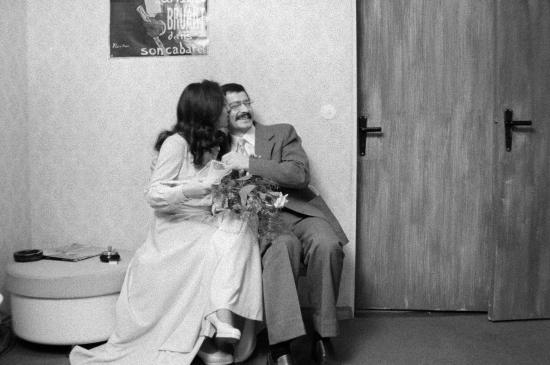
In 1977, Valentin Milanow, a Bulgarian student at the GDR Academy of Film and Television, sat in at the DEFA Studio for Documentary Films. Director Rainer Ackermann was assigned as his mentor. Milanow came up with the idea of portraying the reality of life of exiled Chileans in the GDR. He was friends with a young couple, Alejandra Holzapfel and José Fuica, who lived in the same prefabricated housing estate in Potsdam-Babelsberg. She studied veterinary medicine, he was training to be a teacher of Marxism-Leninism. Milanow was allowed to film their wedding. On the fringes of the seemingly happy celebration, conversations turn to memories of interrogations and torture by the military junta and worries about relatives who were left behind. What the bride herself did not reveal at the time: As a leftist underground fighter she had been exposed to the worst abuse in the “Venda Sexy” prisoners’ camp and others. Today, this place is the memorial site Asociación de Memoria y Derechos Humanos Irán 3030. It is run by Alejandra Holzapfel.
Florian Wüst
Screenings & Tickets
Credits
Contact
defa-filmverleih@deutsche-kinemathek.de
Eine Minute Dunkel macht uns nicht blind
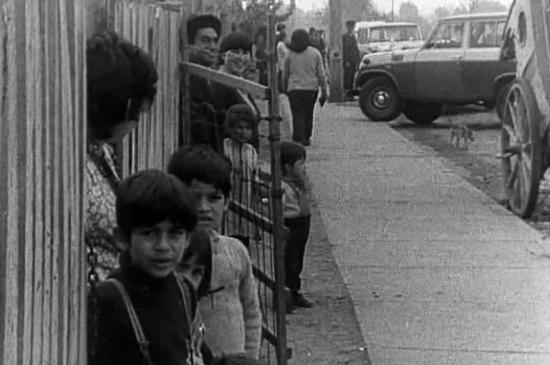
This documentary, whose title is a line from one of Pablo Neruda’s poems, is a snapshot of Chile after two years of military dictatorship. In the agitational Cold War rhetoric typical of Studio H & S, it portrays both representatives of the regime and the victims of the terror, who are beginning to organise themselves as they search for the arrested and disappeared. Walter Heynowski, Gerhard Scheumann and Peter Hellmich had spent several months in Chile in early 1973 to record Allende’s reform efforts as well as the machinations of the far-right forces. Hellmich stayed longer: On 11 September 1973, he managed to film the legendary footage of the bombing of the Presidential Palace, conducted the first interview with General Augusto Pinochet after the coup and filmed political prisoners in the Chacabuco concentration camp in the Atacama Desert. For the extremely risky interviews and filming of “Eine Minute Dunkel macht uns nicht blind”, Studio H & S had to send a West German team – Gerhard Biroth, George Boultwood and Frederico Füllgraf – to Chile. Their true intention behind the transparent pretext of “filming the landscape for the promotion of tourism” and documenting “the economic success of the Pinochet government” remained undetected, as Füllgraf remembers, despite constant surveillance and thanks to all kinds of tricks. This screening is the premiere of the restored and digitized version of the film which was supported by the Förderprogramm Filmerbe (Digitisation of German film heritage funding programme).
Florian Wüst
Screenings & Tickets
Credits
Contact
defa-filmverleih@deutsche-kinemathek.de