Topic
- Activism
- Animated Documentary
- Archival Footage
- Arts/Culture
- Coming of Age
- Digital Culture
- Eastern German
- Environment
- Experimental
- Family
- Gender
- History
- Human Rights
- Humour
- Labour/Economy
- LGBTQIA2S+
- Music
- Politics/Current Affairs
- Portrait/Biography
- Psyche/Mind
- Religion/Spirituality
- Science/Technology
- Social Issues
- Sports
- Underrepresented Communities
- War/Conflict
- Youth
Filmtype
Länge
Accessibility
Section
- Animation Night
- Animation Perspectives
- DEFA Matinee
- Doc Alliance
- DOK Neuland
- Fokus Ost
- German Competition Documentary Film
- Hommage: Helena Třeštíková
- Hommage: Trollfilm
- International Competition Animated Film
- International Competition Documentary Film
- Kids DOK
- Matinee Saxon State Archive
- Retrospective
Custom type
Topic
- Activism
- Animated Documentary
- Archival Footage
- Arts/Culture
- Coming of Age
- Digital Culture
- Eastern German
- Environment
- Experimental
- Family
- Gender
- History
- Human Rights
- Humour
- Labour/Economy
- LGBTQIA2S+
- Music
- Politics/Current Affairs
- Portrait/Biography
- Psyche/Mind
- Religion/Spirituality
- Science/Technology
- Social Issues
- Sports
- Underrepresented Communities
- War/Conflict
- Youth
Length
Accessibility
Section
- Animation Night
- Animation Perspectives
- DEFA Matinee
- Doc Alliance
- DOK Neuland
- Fokus Ost
- German Competition Documentary Film
- Hommage: Helena Třeštíková
- Hommage: Trollfilm
- International Competition Animated Film
- International Competition Documentary Film
- Kids DOK
- Matinee Saxon State Archive
- Retrospective
Omsorg
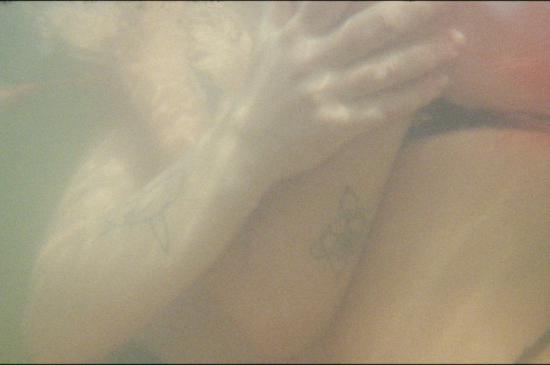
The screen is filled with the lightness of a summer’s day. A lake tempts people to swim and have fun, the sun sparkling on the water. A young woman is wavering on its banks, another reaches out her hand to her. The exuberant scenes are overlaid by the narrative of another woman recalling early, painful sexual experiences. At first, the words and the images seem to stand in contrast to each other. But the longer the sun shines, the more the narrative and the images overlap. The offscreen narrator speaks more and more freely, reporting how she suppressed the wishes and needs of her body at first. An encounter with a woman makes her discover her desire and pleasure. The impressions of the lake bring her increasingly beautiful descriptions to life – this day could not have a more romantic ending.
Anke Leweke
Contains mentions of sexual violence
Trailer
Screenings & Tickets
Credits
Contact
em.johrden@gmail.com
Otá Layò
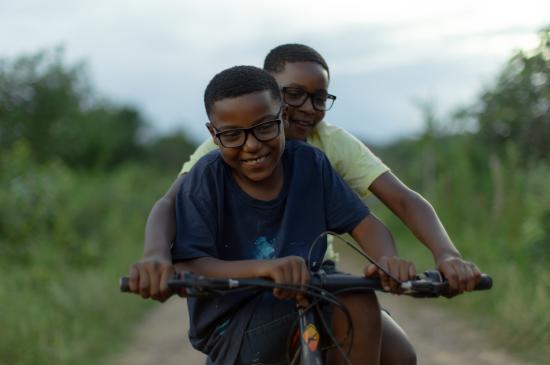
The brothers Matheus and José live in Brazil by the rivers of the Kalunga Quilombo, a community of descendants of escaped slaves. The springs and rivers are an important part of their life and they both know how precious and worth protecting these waters are. They love to collect stones there which they use for their artworks. The film follows the brothers on their forays along the water for a bit and tells of their special connection to this place.

Lina Dinkla
Screenings & Tickets
Credits
Contact
contato.acarajefilmes@gmail.com
Out of Bounds
André Eckardt
Trailer
Screenings & Tickets
Credits
Contact
franz.impler@gmail.com
Patronymic
Seggen Mikael
Contains mentions of war scenes
Trailer
Screenings & Tickets
Credits
Contact
shortsfit@gmail.com
Permanence of Decay
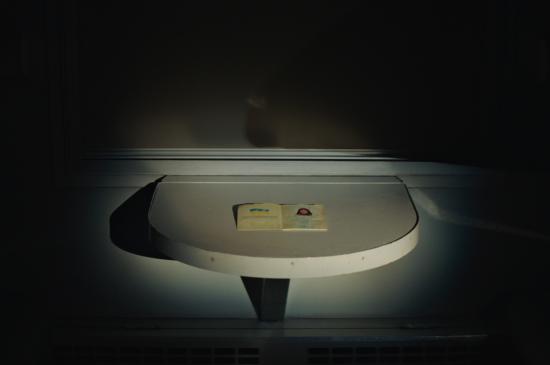
Using photographs from the public domain, the work also calls into question the digital archive. Is the archive a space of permanence or is it merely a state of slow decay? The images are ones of public significance but of no sentimental value to the audience. Therefore the act of decaying images has no personal bearing. This relationship might change, though, once visitors upload their own photographs and become witnesses to their decomposition...
Dana Melaver
Screenings & Tickets
This work is part of our exhibition
DOK Neuland: Landslide
27/10–1/11/2026
Free entry
Find seven works at Kohlrabizirkus.
Tue–Sun | 11:00–18:00
Wed | 12:00–20:00
Taking place at Kohlrabizirkus with one piece situated at the Leipzig Central Station ground-floor and a special performance at Heilandskirche/Westkreuz.
All about the DOK Neuland exhibition
Subject to the General Terms & Conditions of DOK Leipzig. Please be advised that due to a limited number of visitors allowed in the venues longer waiting times are to be expected. Thanks in advance for your patience.
Credits
Contact
Piccolo Piccolo
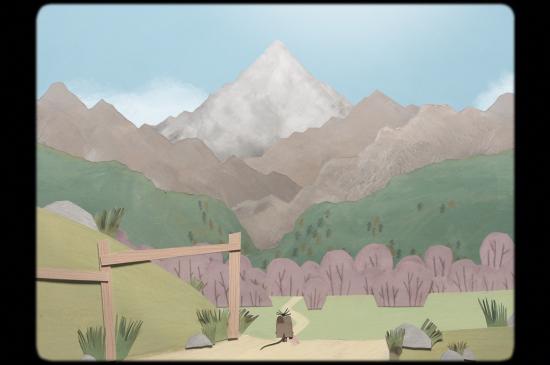
Nothing but trouble with the elder siblings! One day, the smallest mouse decides to stop running after the three ruffians and to go hiking. She wants to climb the high mountain. While the ascent is already laborious, going down proves almost harder … When mist rolls in, the joy of seeing her family again is even greater.
Lina Dinkla
Screenings & Tickets
Credits
Contact
miguel.wasia@gmail.com
Pingu & Bear
The two friends Pingu and Bear push their bicycle up a mountain, passing through forests, meadows and deserts. They brave ice storms and have to cross fields of lava. After this long, seemingly endless journey they finally reach the highest peak. They gather all their courage for the best descent ever.
Lina Dinkla
Screenings & Tickets
Credits
Contact
Pintando con el pueblo
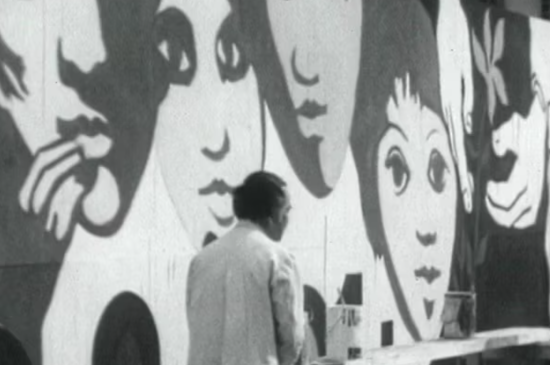
During the Unidad Popular election campaign in 1970, the Ramona Parra Brigades mobilised young activists across the country. They painted political messages on facades and walls using brushes and buckets of paint. In “Brigada Ramona Parra” (1970), Álvaro Ramírez – who continued to work as a filmmaker in exile in the GDR – documents the sometimes daring work of one of these groups. Leonardo Céspedes’ “Pintando con el pueblo” in turn shows the new direction of Chilean cultural politics under Salvador Allende. Artists and art students create a huge mural in front of the presidential palace, La Moneda, in Santiago, under the eyes of passers-by. The site becomes a stage for a rally organized by the Unidad Popular.The film ends with a speech by Allende about art as “an art for all the people”. The 16mm distribution print held by the Arsenal archive is probably the only surviving copy of “Pintando con el pueblo”. It was digitised for this retrospective.
Florian Wüst
Screenings & Tickets
Credits
Contact
Quiet
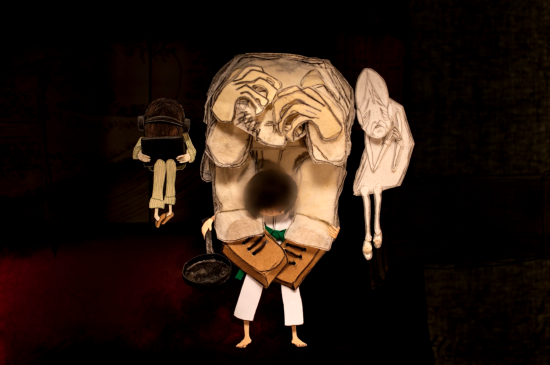
Dramas that many children have to endure play out in silence and hiding: The girl cuddling her dog because her own mother is staggering about with a glass of red wine, probably pregnant again. The boy as a toy ball caught between his aggressive parents who rain their arguments down on him with hacking beaks. Another girl who balances a dangerously wobbling seesaw with her family members on it. With her intimate cut-out animation, Marianne Bundgaard Nielsen metaphorically leafs through the family albums and shows the stories hidden by the staged photos. The adults are dreary puppets, sometimes fading drawings, addressing suicides within the family. The children, on the other hand, are much more lively figures with big accusing eyes, small read hearts and sometimes even coloured butterfly wings. You have to let them flutter and fly instead of unloading so much of your own misery on them.
Marie Ketzscher
Contains mentions of suicide, addiction
Screenings & Tickets
Credits
Contact
claus@trollfilm.no
Silicon Saxony
Cranes on flat country. A Taiwanese chip giant is building Europe’s biggest semiconductor factory north of Dresden. The “building blocks of modern economy” play a central role against China, the USA, the rest of the world … Yet it is precisely in this place, where the new is grandly heralded, that a “forgotten future” lies buried. This was the centre of GDR semiconductor research, which strove to realise a social utopia by means of microelectronics. Some see the chip as a “weapon” in the fight for economic dominance and profit, others saw it as a political programme on the path to the “new human”. Jonas Meschede mixes neon-coloured images of a futuristic setting from the cleanrooms of the present with GDR science fiction and archive footage, unearthing what was buried. Once more, the promises of a golden future appear at the end. And the certainty that in the ground on which its gleaming factories are built what was declared dead only lies dormant.
Grit Lemke
Trailer
Screenings & Tickets
Credits
Contact
meschedeleon@gmail.com
Somos +
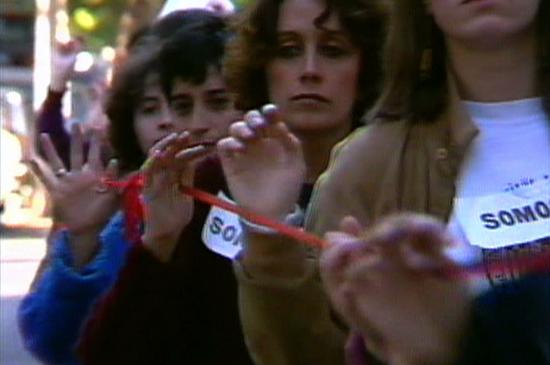
Encouraged by the UN Resolution of 6 November 1974, which condemned the human rights violations of the Chilean military dictatorship, relatives of imprisoned and disappeared persons first began to join forces. Whether in this or other initiatives fighting for a return of democracy to Chile, the resistance was always primarily driven by women. It became more and more visible in the 1980s, not least due to the creativity of their forms of action. One example: On 30 October 1985, the “Mujeres por la vida” organised a protest in the Providencia district of Santiago under the slogan “Somos+” (We are more). The women formed three rows moving towards each other, each holding a ribbon in one of Chile’s national colours. The video documentation of the protest and its violent breakup by the police won multiple awards at the 1986 West German Short Film Festival in Oberhausen.
Florian Wüst
Contains depictions of physical violence
Screenings & Tickets
Credits
Contact
spicher@kurzfilmtage.de
Spray and Pray
Marie Ketzscher
Trailer
Screenings & Tickets
Credits
Contact
studio@venetaandrova.com