Topic
- Activism
- Animated Documentary
- Archival Footage
- Arts/Culture
- Coming of Age
- Digital Culture
- Eastern German
- Environment
- Experimental
- Family
- Gender
- History
- Human Rights
- Humour
- Labour/Economy
- LGBTQIA2S+
- Music
- Politics/Current Affairs
- Portrait/Biography
- Psyche/Mind
- Religion/Spirituality
- Science/Technology
- Social Issues
- Sports
- Underrepresented Communities
- War/Conflict
- Youth
Filmtype
Custom type
Topic
- Activism
- Animated Documentary
- Archival Footage
- Arts/Culture
- Coming of Age
- Digital Culture
- Eastern German
- Environment
- Experimental
- Family
- Gender
- History
- Human Rights
- Humour
- Labour/Economy
- LGBTQIA2S+
- Music
- Politics/Current Affairs
- Portrait/Biography
- Psyche/Mind
- Religion/Spirituality
- Science/Technology
- Social Issues
- Sports
- Underrepresented Communities
- War/Conflict
- Youth
Apocalypse Yesterday, Today, Tomorrow, and the Day After Tomorrow
Marie Ketzscher
Contains mentions of war scenes
Trailer
Screenings & Tickets
Credits
Contact
anastasiabonadyga@gmail.com
in memory of
Carolin Weidner
Screenings & Tickets
Credits
Contact
ciucioflorinda@gmail.com
La infancia de Marisol
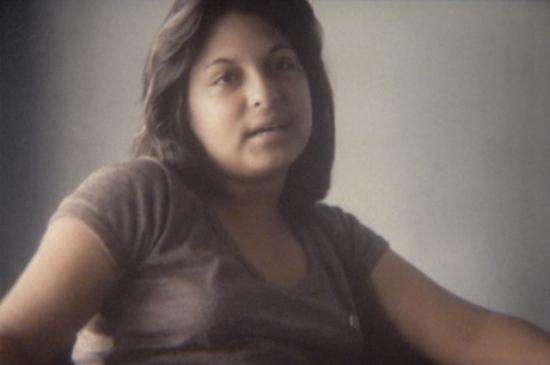
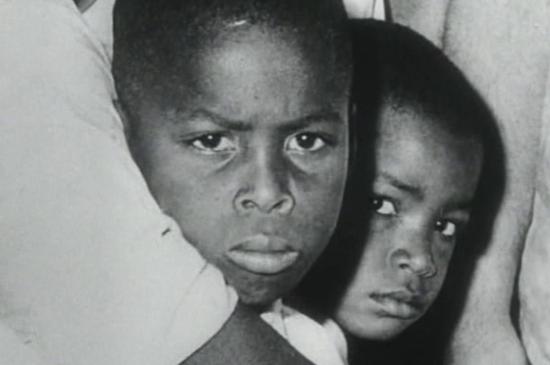
Cuban documentary film was never aimed only at its own nation but saw its task as providing information about the events in the so-called Third World. Well-known films by Santiago Álvarez deal with the anti-imperialist struggles in Vietnam and Laos. Starting in the late 1970s, the focus was expanded to include the civil wars in Nicaragua and El Salvador, a shift clearly reflected in the Leipzig festival programmes. Meanwhile, in 1980, Oberhausen screened, in addition to the retrospective “Cinema in Cuba 1959–1979”, Bernabé Hernández’s “La infancia de Marisol”. The film was one of the first Cuban productions made after the victory of the Nicaraguan Revolution in July 1979. It is based on the accounts of 14-year-old Marisol who describes how she joins the Sandinista Liberation Front, fights against the dictatorship, is taken prisoner and, like her father and brother, brutally tortured. The film ends with the prospect of a new life: Marisol’s studies in Cuba.
Florian Wüst
Contains mentions of physical violence, torture
Screenings & Tickets
Credits
Contact
spicher@kurzfilmtage.de
Lavra Dor
After the military coup in Brazil in March 1964, the new rulers stopped the fairer distribution of land that had already begun. The agrarian reforms implemented instead favoured big land owners and the agribusiness sector; unions were suppressed. Against this backdrop, Paulo Rufino and Ana Carolina address the struggles and hardships of agricultural labourers. In a free and poetical style, they assemble photographs, film sequences, quotes in words and images into an experimental collage that probes the limits of the documentary. In particular, they play with the instrument of repetition – in a kind of non-linear interpretation of “Lavra Dor” (1962) and other poems by Mário Chamie. The film was screened in the “Week of New Cinema: Latin America” section of the 1970 Berlinale which was compiled by Peter B. Schumann. Four years earlier, Schumann had already shown a cross section of the Brazilian “Cinema Novo” in West Berlin as part of the festival’s retrospective.
Florian Wüst
Screenings & Tickets
Credits
Contact
Look, We’re in Europe
Anca Păunescu
Trailer
Screenings & Tickets
Credits
Contact
riad_arfin@hotmail.com
Nothing Happens After Your Absence
Seggen Mikael
Screenings & Tickets
Credits
Contact
Now!
“Still I believe / We are created, free and equal / Now / Now / Now …” US-American singer Lena Horne interpreted the Hebrew song “Hava Nagila” with different lyrics: “Now!” (1963) became an anthem of the civil rights movement in the USA, while Santiago Álvarez’s film of the same name rose to become an agitprop classic. He edited photographs and a few short moving image sequences of racial discrimination, police violence and white terror to the rhythm of Horne’s song. The International Leipzig Documentary and Short Film Week alone screened “Now!” five times in two decades after it had won the Golden Dove in 1965. The presence of Cuban documentary film in Leipzig amounted to a long success story, not least thanks to Álvarez, its best-known exponent. In addition to screenings of his films, he served several times as a member of the International Jury. Even after the controversy surrounding his stance on the Prague Spring 1968, Álvarez continued to be a regular guest.
Florian Wüst
Contains depictions of racism, physical violence
Screenings & Tickets
Credits
Contact
Somos +
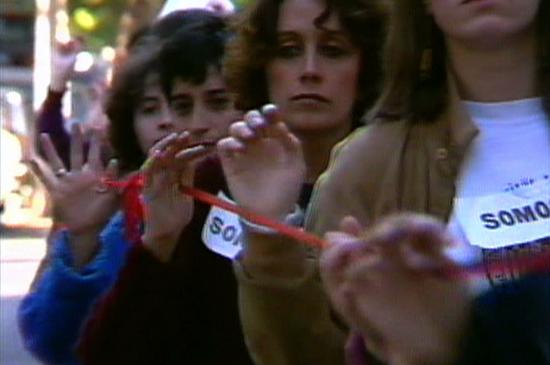
Encouraged by the UN Resolution of 6 November 1974, which condemned the human rights violations of the Chilean military dictatorship, relatives of imprisoned and disappeared persons first began to join forces. Whether in this or other initiatives fighting for a return of democracy to Chile, the resistance was always primarily driven by women. It became more and more visible in the 1980s, not least due to the creativity of their forms of action. One example: On 30 October 1985, the “Mujeres por la vida” organised a protest in the Providencia district of Santiago under the slogan “Somos+” (We are more). The women formed three rows moving towards each other, each holding a ribbon in one of Chile’s national colours. The video documentation of the protest and its violent breakup by the police won multiple awards at the 1986 West German Short Film Festival in Oberhausen.
Florian Wüst
Contains depictions of physical violence
Screenings & Tickets
Credits
Contact
spicher@kurzfilmtage.de
They’re Here
Carolin Weidner
Contains mentions of racism, murder
Contains depictions of physical violence
Screenings & Tickets
Credits
Contact
Submarine Entertainment
Un día yo pregunté
“A polemical short film lasting only a few minutes which lines up images of the institution from which the underprivileged expect miracles and liberation from their daily misery: the Catholic Church, which is particularly reactionary in Colombia”, Peter B. Schumann writes about “Un día yo pregunté”. Julia de Álvarez and Carlos Álvarez frequently met with hostility for their political work and, along with other filmmakers, were imprisoned, even tortured, in July 1972. Their release from prison in February 1974 may well have been due, to a not inconsiderable extent, to the joint diplomatic efforts of the Friends of the German Cinematheque (today: Arsenal Filminstitut), the West German Short Film Festival in Oberhausen and others. For Leipzig, too, the couple represented an important voice – and an example of how close the German-German connections were regarding safeguarding, copying and distributing the analogue film material of the revolutionary Latin American cinema.
Florian Wüst
Screenings & Tickets
Credits
Contact
juliasabogal1@hotmail.com