Topic
- Activism
- Animated Documentary
- Archival Footage
- Arts/Culture
- Coming of Age
- Digital Culture
- Eastern German
- Environment
- Experimental
- Family
- Gender
- History
- Human Rights
- Humour
- Labour/Economy
- LGBTQIA2S+
- Music
- Politics/Current Affairs
- Portrait/Biography
- Psyche/Mind
- Religion/Spirituality
- Science/Technology
- Social Issues
- Sports
- Underrepresented Communities
- War/Conflict
- Youth
Filmtype
Custom type
Topic
- Activism
- Animated Documentary
- Archival Footage
- Arts/Culture
- Coming of Age
- Digital Culture
- Eastern German
- Environment
- Experimental
- Family
- Gender
- History
- Human Rights
- Humour
- Labour/Economy
- LGBTQIA2S+
- Music
- Politics/Current Affairs
- Portrait/Biography
- Psyche/Mind
- Religion/Spirituality
- Science/Technology
- Social Issues
- Sports
- Underrepresented Communities
- War/Conflict
- Youth
Abastecimiento
Raúl Ruiz was part of the militant cinema movement that put itself in the service of the Chilean Popular Front, but remained an outsider. He employed experiment and irony to dissect social contradictions. In “Abastecimiento”, Ruiz addresses the supply problems under the Unidad Popular government, confronting the views of a woman from a bourgeois background with those of the socialist Minister for Economic Affairs. He follows this with a depiction of the activities of the Juntas de Abastecimiento y Precios (JAP), locally organised committees for the control and just distribution of food and everyday goods. The provocative juxtaposition paints a picture of an impossible dialogue. The film was banned at the time and was believed lost for ages. It was only recently rediscovered. Leipzig was not the place for the feature film director who emigrated to Paris after the military coup, but Ruiz was a frequent guest at the Berlinale Forum.
Florian Wüst
Screenings & Tickets
Credits
Contact
marcelo.morales@patrimoniocultural.gob.cl
Angry Man
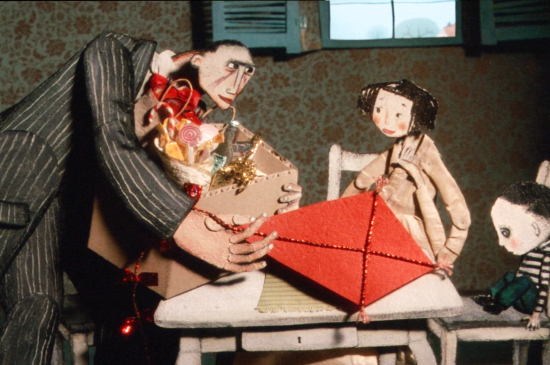
Boi tries to be quiet, but the glasses are shaking in his hand. You must not disturb Papa! Because when Papa is disturbed, the angry man in him wakes up and beats his beloved Mama. In “Angry Man”, there is no hiding from the violence that creeps into every fibre of daily life in the form of nervous anticipation or paralysing panic. Yet despite his fear, Boi does the only right thing: He goes to get help. But Killi’s film is not just the story of a brave boy who breaks the spiral of domestic violence: Her work radiates empathy in every direction, including even the father. Because he has a monster inside him – a drawn one that grows and creeps before it pushes its way out, where it erupts as a cut-out angry man. He needs help, too. “Angry Man”, the adaptation of a picture book by Gro Dahle and Svein Nyhus, conveys in a humanistic and credible manner that people can free themselves and change. All without a romanticising happy end.
Marie Ketzscher
Contains mentions of physical violence, mental health conditions
Screenings & Tickets
Credits
Contact
claus@trollfilm.no
Camille & Chameleon
Camille, a very small girl, and the Chameleon who is afraid of heights are inseparable and love to play hide-and-seek in the forest. Camille loves to literally call the tune with her whistling. But one day she becomes too cocky and gives Chameleon an idea that will upset everything. Now they are lost in the green thicket. Can they get over their pride and find each other again?
Lina Dinkla
Screenings & Tickets
Credits
Contact
info@lucie-nichelmann.com
El tigre saltó y mató, pero morirá... morirá...
Five days after the coup, Chile’s most famous singer-songwriter, Víctor Jara, was brutally murdered. In recognition of his oeuvre, his political stance and also of the “victims of the fascist sadism perpetrated by the military and the CIA in Chile after 11 September 1973”, Santiago Álvarez immediately created a cinematic “report in four songs”. The musical and rhythmic structure and the simultaneous reportage style arising from found news footage and recordings of Jara reflect the agitprop language that is so typical of Álvarez. The title of the film is taken from the poem “Nuestra América” (1891) by Cuban poet José Martí. The end, too, alludes to the continuity of the anti-colonial struggle: A collage of international examples of state repression against insurgents from Puerto Rico to Vietnam and Indonesia is followed by depictions of legendary battles of liberation in 19th century South America.
Florian Wüst
Contains depictions of physical violence
Screenings & Tickets
Credits
Contact
Herminda de la Victoria
In a large-scale operation, a group of homeless families occupy some wasteland on the outskirts of Santiago in March 1967. When the police attempt to evict them, a little girl, Herminda, dies in her mother’s arms. The eviction is called off, the people are allowed to stay and, without any existing infrastructure, build the settlement that exists to this day: Herminda de la Victoria. “Full of errors and mistakes, [the film] is my first approach to cinema, albeit to a ‘new cinema’, a Latin American cinema marked by underdevelopment. Nonetheless, the cinematic process, editing and sound represent a fully valid experience to me. ‘Herminda de la Victoria’ champions the interests of the homeless in Chile, suffers with them, is both testimony and a ‘document’ that forces you to take sides.” (Douglas Hübner)
Florian Wüst
Screenings & Tickets
Credits
Contact
How to Catch a Butterfly
Carolin Weidner
Contains mentions of murder, racism
Contains depictions of racism
Screenings & Tickets
Credits
Contact
purplerayfilm@gmail.com
I’d Love to See You
Documentary films for children rarely venture to this place: prison. Four kids in Belgium take us there. They show us the way from the entrance to the visiting area, where they visit their mother or father, usually twice a week. Prisons are definitely not designed for children and yet there are many who regularly enter them. In Belgium alone, more than 16,000 children have a parent behind bars. This film gives a voice to children of prison inmates who tell us how they cope with a situation they did not choose.
Lina Dinkla
Screenings & Tickets
Credits
Contact
sebastien@dokma.be
Kitzel
Franka Sachse
Screenings & Tickets
Credits
Contact
mkeil.animation@gmail.com
Líber Arce, liberarse
Líber Arce was the name of a communist student who was shot dead by the police at a protest on the university campus of Montevideo. The film documents the events before and after his burial, its title transforming the name of the victim into a call for action: liberarse, to liberate oneself. The fact that the film is silent and the indictment of the social and economic conditions as well as US imperialism is spelled out in intertitles turns the lack of resources for a soundtrack into an aesthetic quality. We look more closely because there is nothing to hear. Mario Handler is a cofounder of the “Cinemateca Tercer del Mundo” (1969-1974) film collective, which sought to build its own cinema of counter-information and published a magazine. Above all, however, it screened the militant films from the other Latin American countries and popularised them far beyond the circles of bourgeois culture in Uruguay.
Florian Wüst
Contains depictions of physical violence
Screenings & Tickets
Credits
Contact
Melk
André Eckardt
Contains depictions of violence against animals, murder, physical violence
Screenings & Tickets
Credits
Contact
Nachtcafé
Light is burning in the old Franciscan church. The guests arrive to warm up and sleep. There is soup and Berliner doughnuts. When everyone has been taken care of, the light goes out again. A voice asks the filmmakers: Do you know Cologne well? A few photographs shown in-between a lot of black screen. People, places, Ingo talks. An alternative city tour from the perspective of persons living in the streets. Interesting even when you can’t make out much – possibly even art. At the end of this documentary miniature the light goes on again. And the protagonist steps out onto the street.
Jan Künemund
Contains mentions of drug-use, mental health conditions
Screenings & Tickets
Credits
Contact
ute.dilger@khm.de
no_mercy_in_Mexico
André Eckardt
Contains mentions of drug-use, death, murder
Contains depictions of physical violence, torture