Topic
- Activism
- Animated Documentary
- Archival Footage
- Arts/Culture
- Coming of Age
- Digital Culture
- Eastern German
- Environment
- Experimental
- Family
- Gender
- History
- Human Rights
- Humour
- Labour/Economy
- LGBTQIA2S+
- Music
- Politics/Current Affairs
- Portrait/Biography
- Psyche/Mind
- Religion/Spirituality
- Science/Technology
- Social Issues
- Sports
- Underrepresented Communities
- War/Conflict
- Youth
Filmtype
Accessibility
Custom type
Topic
- Activism
- Animated Documentary
- Archival Footage
- Arts/Culture
- Coming of Age
- Digital Culture
- Eastern German
- Environment
- Experimental
- Family
- Gender
- History
- Human Rights
- Humour
- Labour/Economy
- LGBTQIA2S+
- Music
- Politics/Current Affairs
- Portrait/Biography
- Psyche/Mind
- Religion/Spirituality
- Science/Technology
- Social Issues
- Sports
- Underrepresented Communities
- War/Conflict
- Youth
Accessibility
A Fire There
Felix Mende
Trailer
Screenings & Tickets
Free entry
Credits
Contact
michaela@filmotor.com
Afterlives
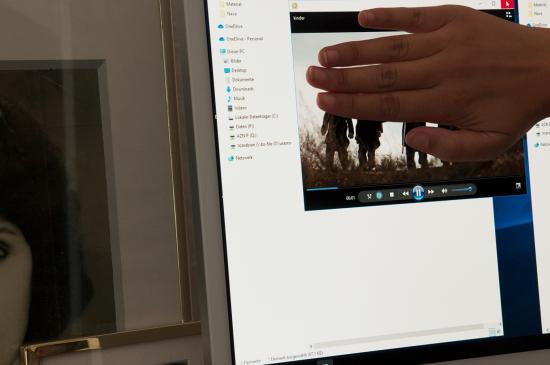
Through numerous video essays in film and media theory, Kevin B. Lee has played a key role in developing the form of the so-called desktop film. The elegant meta-staging reflects the fact that his digital desktop is research tool, media archive and distribution channel at the same time. Lee’s first feature-length film in this style dissects a historical work of propaganda: In 2014, the “Islamic State” terror militia, then at the height of its territorial power, published an elaborately produced film entitled “Flames of War”, which many media outlets compared to the aesthetics of Hollywood blockbusters. Lee manages to abstract and defamiliarize the extreme violence of those images, but comes to the realisation that their ideological power cannot be decoded by the tools of film analysis alone. “Afterlives” broadens the perspective and looks for alternative models in dialogue with experts from the arts, political education and terrorism studies: They reconstruct destroyed cultural assets, develop strategies against extremist radicalisation and study what motivates people to leave terrorist groups. In all this, Lee’s intelligent essay never loses sight of the colonialist western image of the Middle East.
Jan-Philipp Kohlmann
Contains mentions of torture
Contains depictions of war scenes, torture
Trailer
Screenings & Tickets
Credits
Contact
Apocalypse Yesterday, Today, Tomorrow, and the Day After Tomorrow
Marie Ketzscher
Contains mentions of war scenes
Trailer
Screenings & Tickets
Credits
Contact
anastasiabonadyga@gmail.com
Between Summers
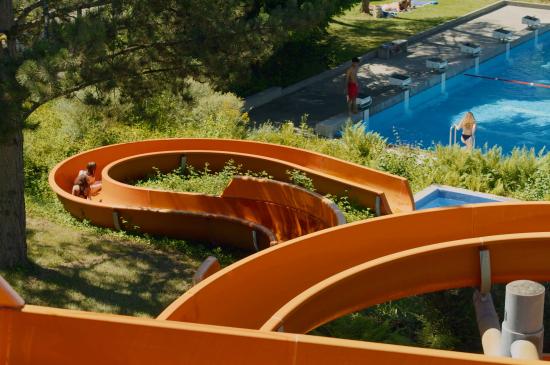
A public swimming pool complex in the middle of a forest which is soon to be renovated: between water slides, French fries, TikTok and sun cream, six teenagers spend the long summer days in the “Badi”, as outdoor pools are called in Swiss German. It is a place to discuss, laugh, try things out and simply hang out together. Whether on the grass, in the water or between the different pools, their conversations revolve around everything that currently moves them. This sun-kissed film accompanies these adolescents at a moment of transition. They talk about the past, think about the future and try to find out who they are and how they will find their place in a changing world. The film stays close to their glances, conversations and encounters, taking an unvarnished look into the inner world of these adolescents – their curiosities, their humour, their contradictions and their insecurities. For one summer long, the Badi becomes a place where childhood and future can exist alongside each other. And while the orange slide is dismantled, the question of what will remain of this summer bubbles up through the water.
Lina Dinkla
Trailer
Screenings & Tickets
Free entry
Credits
Contact
cd@doklab.com
Cyclepaths
André Eckardt
Contains depictions of murder, war scenes
Screenings & Tickets
Credits
Contact
antoncla.contact@gmail.com
Eine chilenische Hochzeit
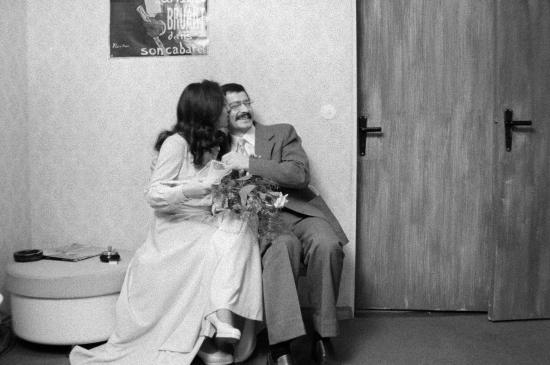
In 1977, Valentin Milanow, a Bulgarian student at the GDR Academy of Film and Television, sat in at the DEFA Studio for Documentary Films. Director Rainer Ackermann was assigned as his mentor. Milanow came up with the idea of portraying the reality of life of exiled Chileans in the GDR. He was friends with a young couple, Alejandra Holzapfel and José Fuica, who lived in the same prefabricated housing estate in Potsdam-Babelsberg. She studied veterinary medicine, he was training to be a teacher of Marxism-Leninism. Milanow was allowed to film their wedding. On the fringes of the seemingly happy celebration, conversations turn to memories of interrogations and torture by the military junta and worries about relatives who were left behind. What the bride herself did not reveal at the time: As a leftist underground fighter she had been exposed to the worst abuse in the “Venda Sexy” prisoners’ camp and others. Today, this place is the memorial site Asociación de Memoria y Derechos Humanos Irán 3030. It is run by Alejandra Holzapfel.
Florian Wüst
Screenings & Tickets
Credits
Contact
defa-filmverleih@deutsche-kinemathek.de
Eine Minute Dunkel macht uns nicht blind
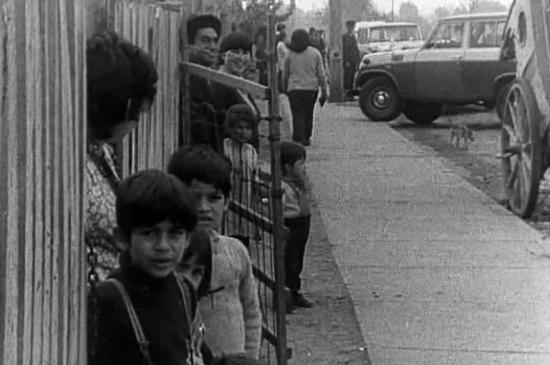
This documentary, whose title is a line from one of Pablo Neruda’s poems, is a snapshot of Chile after two years of military dictatorship. In the agitational Cold War rhetoric typical of Studio H & S, it portrays both representatives of the regime and the victims of the terror, who are beginning to organise themselves as they search for the arrested and disappeared. Walter Heynowski, Gerhard Scheumann and Peter Hellmich had spent several months in Chile in early 1973 to record Allende’s reform efforts as well as the machinations of the far-right forces. Hellmich stayed longer: On 11 September 1973, he managed to film the legendary footage of the bombing of the Presidential Palace, conducted the first interview with General Augusto Pinochet after the coup and filmed political prisoners in the Chacabuco concentration camp in the Atacama Desert. For the extremely risky interviews and filming of “Eine Minute Dunkel macht uns nicht blind”, Studio H & S had to send a West German team – Gerhard Biroth, George Boultwood and Frederico Füllgraf – to Chile. Their true intention behind the transparent pretext of “filming the landscape for the promotion of tourism” and documenting “the economic success of the Pinochet government” remained undetected, as Füllgraf remembers, despite constant surveillance and thanks to all kinds of tricks. This screening is the premiere of the restored and digitized version of the film which was supported by the Förderprogramm Filmerbe (Digitisation of German film heritage funding programme).
Florian Wüst
Screenings & Tickets
Credits
Contact
defa-filmverleih@deutsche-kinemathek.de
For Life
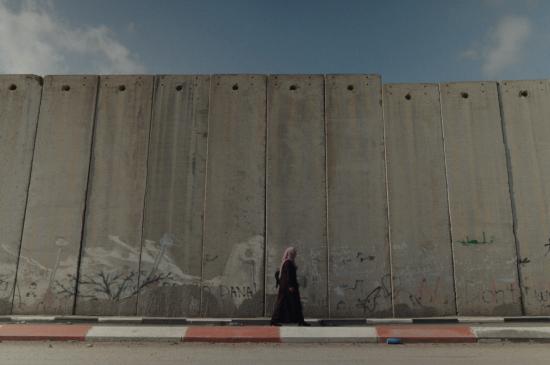
A Palestinian woman, Hind Mashahra, longs for motherhood, but this seems hardly possible as her husband is serving a life sentence in an Israeli prison and is barred from marital visits. Smuggling her husband’s sperm out of prison may be the only chance for her to become a mother again. The documentary follows Hind as she sets out on a risky mission to obtain and deliver her husband’s sample to a fertility clinic. Her repeated attempts are hampered by the traffic, checkpoints, and the short life of semen, perishing within just hours. Unadorned in its language, the film stays close to Hind’s inner experience in the throes of drama, shaped by the reality in the West Bank and East Jerusalem, as well as in quieter moments of waiting that are no less charged. Weaving in accounts of other prisoners’ wives, the documentary chronicles a Palestinian woman’s journey as she pursues motherhood at an extraordinary cost.
Sevara Pan
Contains mentions of death, physical violence
Contains depictions of physical violence, death
Screenings & Tickets
Credits
Contact
benahmetseven@gmail.com
Fracture
James Lattimer
Screenings & Tickets
Credits
Contact
philippe.cotte@cvb.be
Growing Up
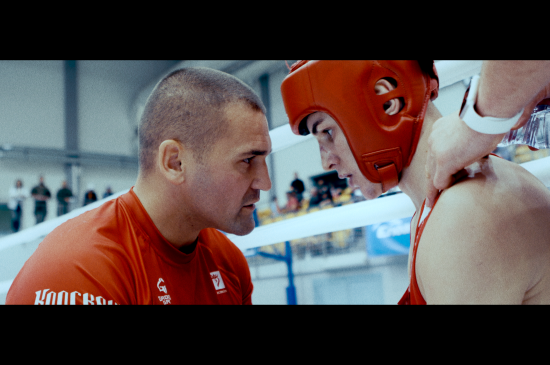
Łukasz dreams of becoming a professional boxer. His mother Monika supports him as much as she can. But the fact that this means he has to move to a sport boarding school over 500 kilometres away is something she can’t fathom. For who will do his washing there and make sure that he turns up to training on time? For Łukasz, the move is a step towards independence, but also a test of his abilities among like-minded people. Between hard training, new friendships and first love, the boarding school doesn’t just become a springboard for his sporting career, but also the place where he comes of age. Over five years, Adam Roszkowski accompanies his taciturn protagonist on his way to the Polish junior championships. In a blend of observation and discreet staging, everyday training routines, family moments and a first date come together to form a narrative that is so close to its characters that the documentary format almost melts into the background. Entirely indebted to the principle of show, don’t tell, “Growing Up” also gives an account of the dedication needed for competitive sport and the price it carries as well as of the silent battles needed to go one’s own way.
Tina Jany
Trailer
Screenings & Tickets
Credits
Contact
jhan@wajdaschool.pl
Hi Mom :O
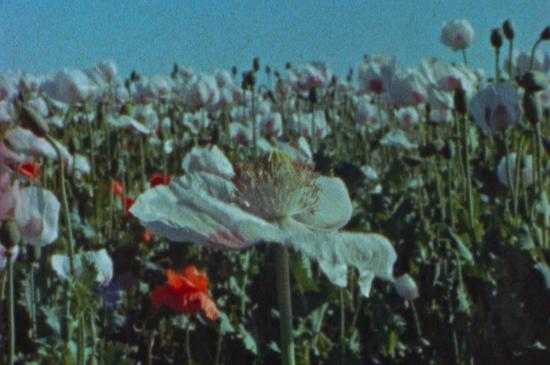
The mother’s film archive raises questions. What did she see in the many doll’s faces staring at us through her camera? Why so many shots of flowers? When she herself is in the picture, she is always moving. Was she trying to get away from something? The narrator wants to find their own motifs. But where? It is easy for the mother to say: Film your own reality! Sounds great, but how, when you feel that you are different? As the material is questioned, more and more own images find their way into the film. Integrating themselves. Perhaps they ask the same questions of the world.
Jan Künemund
Trailer
Screenings & Tickets
Free entry
Credits
Contact
peer.langenheim@zhdk.ch
Joeri is verliefd (maar...) + Zijn hart ligt op de grond (maar...)
André Eckardt
Screenings & Tickets
Credits
Contact
antoncla.contact@gmail.com