Topic
- Activism
- Animated Documentary
- Archival Footage
- Arts/Culture
- Coming of Age
- Digital Culture
- Eastern German
- Environment
- Experimental
- Family
- Gender
- History
- Human Rights
- Humour
- Labour/Economy
- LGBTQIA2S+
- Music
- Politics/Current Affairs
- Portrait/Biography
- Psyche/Mind
- Religion/Spirituality
- Science/Technology
- Social Issues
- Sports
- Underrepresented Communities
- War/Conflict
- Youth
Filmtype
Accessibility
Custom type
Topic
- Activism
- Animated Documentary
- Archival Footage
- Arts/Culture
- Coming of Age
- Digital Culture
- Eastern German
- Environment
- Experimental
- Family
- Gender
- History
- Human Rights
- Humour
- Labour/Economy
- LGBTQIA2S+
- Music
- Politics/Current Affairs
- Portrait/Biography
- Psyche/Mind
- Religion/Spirituality
- Science/Technology
- Social Issues
- Sports
- Underrepresented Communities
- War/Conflict
- Youth
Accessibility
A Song Without Home
“My life is a prison”, Adelina says. The young woman is smoking and looking into the camera, her parents sitting on the sofa to her right and left. In black and white and the narrow 4:3 ratio, this family scene feels oppressive: Adeline spent eleven years under house arrest here, with a father who refuses to accept her identity and a mother who seems loving but powerless. In Georgia, there is neither freedom nor security for trans persons like Adelina. Anti-queer attacks happen in broad daylight; the legal situation of the LGBTQ community has recently deteriorated further. When the protagonist at last leaves her parents’ village to go to Vienna, the style of Rati Tsiteladze’s debut film also changes. The lipstick glows red, the lights of the big city neon yellow. A different, freer life seems possible. But the freedom brings new challenges: financial and health problems, communicating in a foreign language – and loneliness. “A Song Without Home” is the intimate, impressionistic long-term portrait of a person who wants to define herself and clings to an unshakeable conviction: “No law can erase who we are.”
Jan-Philipp Kohlmann
Contains mentions of discrimination against LGBTQIA2S+ persons
Contains depictions of discrimination against LGBTQIA2S+ persons
Screenings & Tickets
Free entry
Credits
Contact
olyaslusareva@gmail.com
Apocalypse Yesterday, Today, Tomorrow, and the Day After Tomorrow
Marie Ketzscher
Contains mentions of war scenes
Trailer
Screenings & Tickets
Credits
Contact
anastasiabonadyga@gmail.com
Atlas of Disappearance
Seggen Mikael
Contains mentions of murder, death
Trailer
Screenings & Tickets
Credits
Contact
internacional@agenciafreak.com
Changeover
André Eckardt
Screenings & Tickets
Credits
Contact
franz.impler@gmail.com
For Life
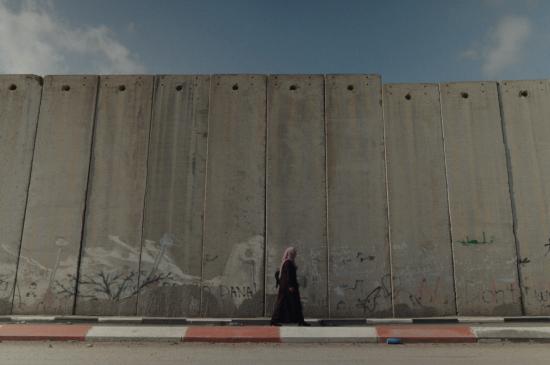
A Palestinian woman, Hind Mashahra, longs for motherhood, but this seems hardly possible as her husband is serving a life sentence in an Israeli prison and is barred from marital visits. Smuggling her husband’s sperm out of prison may be the only chance for her to become a mother again. The documentary follows Hind as she sets out on a risky mission to obtain and deliver her husband’s sample to a fertility clinic. Her repeated attempts are hampered by the traffic, checkpoints, and the short life of semen, perishing within just hours. Unadorned in its language, the film stays close to Hind’s inner experience in the throes of drama, shaped by the reality in the West Bank and East Jerusalem, as well as in quieter moments of waiting that are no less charged. Weaving in accounts of other prisoners’ wives, the documentary chronicles a Palestinian woman’s journey as she pursues motherhood at an extraordinary cost.
Sevara Pan
Contains mentions of death, physical violence
Contains depictions of physical violence, death
Screenings & Tickets
Credits
Contact
benahmetseven@gmail.com
Growing Up
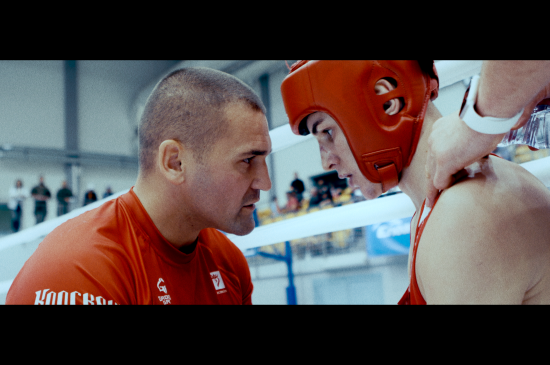
Łukasz dreams of becoming a professional boxer. His mother Monika supports him as much as she can. But the fact that this means he has to move to a sport boarding school over 500 kilometres away is something she can’t fathom. For who will do his washing there and make sure that he turns up to training on time? For Łukasz, the move is a step towards independence, but also a test of his abilities among like-minded people. Between hard training, new friendships and first love, the boarding school doesn’t just become a springboard for his sporting career, but also the place where he comes of age. Over five years, Adam Roszkowski accompanies his taciturn protagonist on his way to the Polish junior championships. In a blend of observation and discreet staging, everyday training routines, family moments and a first date come together to form a narrative that is so close to its characters that the documentary format almost melts into the background. Entirely indebted to the principle of show, don’t tell, “Growing Up” also gives an account of the dedication needed for competitive sport and the price it carries as well as of the silent battles needed to go one’s own way.
Tina Jany
Trailer
Screenings & Tickets
Credits
Contact
jhan@wajdaschool.pl
Hope Is a Word
Thick smoke clouds rise at the horizon. Oil bubbles from the ground. The gills of a dead fish are black. A sonorous voice recites a poem about blood, anger and the oil-contaminated landscape of the Niger Delta. A crowd of people join in for the refrain. Writer and activist Nnimmo Bassey has been protesting for decades again the oil extraction in the south of Nigeria and its consequences for humans, nature and agriculture. The Ogoni, an ethnic minority from the region, are particularly affected, with their whole basis for life under existential threat as a result. In the 1990s, they organised a powerful political movement, which was violently put down by the military government – also in the interest of Western oil concerns. How is it possible to put up political resistance in such circumstances? “Hope Is a Word” is the portrait of a man who believes in the power of poetic language. With his workshops, Nnimmo Bassey manages to mobilise a new generation of rhetorically and literarily gifted activists. When they read, rap or recite, the film puts their words into the frame in demonstrative fashion. Poetry becomes a political tool here. For a call can come from a verse, a call that others then follow.
Jan-Philipp Kohlmann
Screenings & Tickets
Credits
Contact
anita@smau.no
in memory of
Carolin Weidner
Screenings & Tickets
Credits
Contact
ciucioflorinda@gmail.com
Just Jools
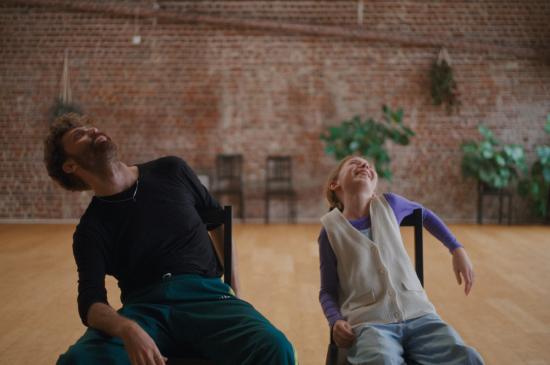
To simply dancefreely and confidently on stage … That is 12-year-old Jools’s dream. She learns to accept her physical handicaps and overcome her own limitations with the help of choreographer Yorrith. Very slowly, in one-to-one lessons, Yorrith encourages Jools to dance in her own way and gives her the strength not to be influenced by other people’s judgements. A captivating story about the fact that there is no right or wrong when it comes to dancing, and the impressive portrait of a girl who no longer wants to be merely looked at but truly seen.
Lina Dinkla
Screenings & Tickets
Credits
Contact
magalie@timescapes.be
La hora de los hornos. Neocolonialismo y violencia
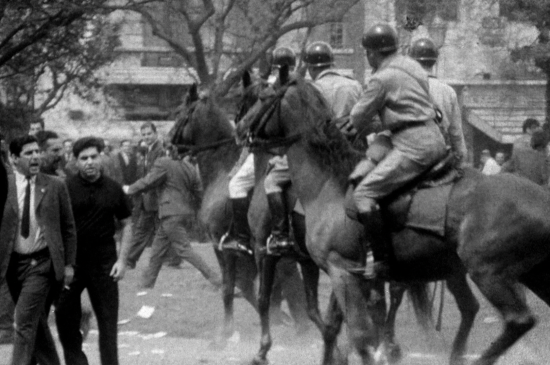
A call for radical political change, an agitation pamphlet for the national liberation of Argentina: Like few other films, “La hora de los hornos” stirred the generation of 1968 all over the world. The more than four-hour-long film essay was banned for many years, not just in Argentina. Taking the form of a multilayered documentary collage, it is a masterful exploration of the possibilities of image-sound-editing which unfolds a panorama of the prevailing social and political conditions. “Neocolonialismo y violencia” analyses the colonisation of Latin America, its economic and cultural dependence on the industrialised states of the so-called First World, especially the USA, as well as the omnipresence of violence. The second part, “Acto para la liberación”, delivers a chronicle of Peronism and the resistance after Perón’s fall in 1955. “Violencia y liberación”, the shorter third part, openly advocates armed struggle. After two years of clandestine work by a small team around Fernando E. Solanas and Octavio Gentino, “La hora de los hornos” had its world premiere on 2 June 1968 at the Mostra Internazionale del Cinema Nuovo in Pesaro. The Friends of the German Cinematheque (today: Arsenal Filminstitut) screened the three-part film only a few weeks later on the occasion of the Berlinale. After the opening of the Arsenal cinema in January 1970 on Welserstraße in Berlin-Schöneberg, countless screenings of the distribution prints of the film followed at their own venue and elsewhere.
Florian Wüst
Contains depictions of physical violence, racism
Screenings & Tickets
Credits
Contact
La infancia de Marisol
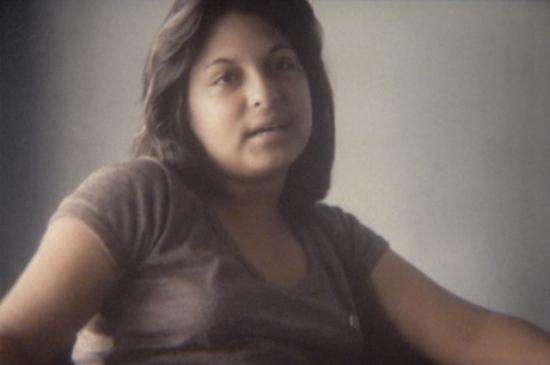
Cuban documentary film was never aimed only at its own nation but saw its task as providing information about the events in the so-called Third World. Well-known films by Santiago Álvarez deal with the anti-imperialist struggles in Vietnam and Laos. Starting in the late 1970s, the focus was expanded to include the civil wars in Nicaragua and El Salvador, a shift clearly reflected in the Leipzig festival programmes. Meanwhile, in 1980, Oberhausen screened, in addition to the retrospective “Cinema in Cuba 1959–1979”, Bernabé Hernández’s “La infancia de Marisol”. The film was one of the first Cuban productions made after the victory of the Nicaraguan Revolution in July 1979. It is based on the accounts of 14-year-old Marisol who describes how she joins the Sandinista Liberation Front, fights against the dictatorship, is taken prisoner and, like her father and brother, brutally tortured. The film ends with the prospect of a new life: Marisol’s studies in Cuba.
Florian Wüst
Contains mentions of physical violence, torture
Screenings & Tickets
Credits
Contact
spicher@kurzfilmtage.de
Last Round
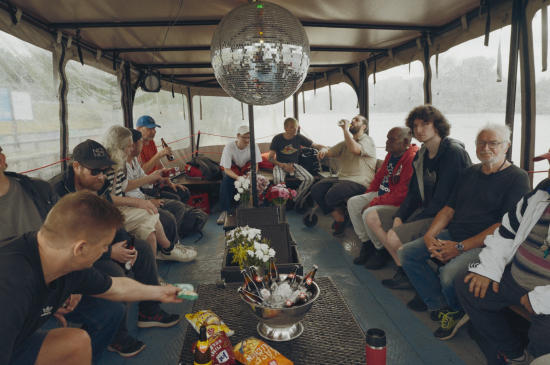
Schnapps is carefully poured into hip flasks and handed to the men. Their faces are marked by the traces of homeless life. A housing project in Berlin Kreuzberg gives them more than a roof over their head. The people who work here listen to them, accompany them to the doctor and hand out controlled amounts of alcohol. The project’s approach is consistently addiction-accepting – without the enforcement of abstinence and with the goal of relieving the affected persons from existential pressure. In this protected space, the men can breathe freely again after many years of living in the streets, rediscover their own personality and dignity. The camera follows some of the residents and social workers over several years, always at eye-level, showing the work of this institution and leaving space for the men’s personal stories. A fragile community emerges in front of the lens.
Anke Leweke
Contains mentions of addiction, death, mental health conditions, drug-use
Contains depictions of addiction
Screenings & Tickets
Free entry
Credits
Contact
kuehn@realfictionfilme.de