Topic
- Activism
- Animated Documentary
- Archival Footage
- Arts/Culture
- Coming of Age
- Digital Culture
- Eastern German
- Environment
- Experimental
- Family
- Gender
- History
- Human Rights
- Humour
- Labour/Economy
- LGBTQIA2S+
- Music
- Politics/Current Affairs
- Portrait/Biography
- Psyche/Mind
- Religion/Spirituality
- Science/Technology
- Social Issues
- Sports
- Underrepresented Communities
- War/Conflict
- Youth
Filmtype
Accessibility
Custom type
Topic
- Activism
- Animated Documentary
- Archival Footage
- Arts/Culture
- Coming of Age
- Digital Culture
- Eastern German
- Environment
- Experimental
- Family
- Gender
- History
- Human Rights
- Humour
- Labour/Economy
- LGBTQIA2S+
- Music
- Politics/Current Affairs
- Portrait/Biography
- Psyche/Mind
- Religion/Spirituality
- Science/Technology
- Social Issues
- Sports
- Underrepresented Communities
- War/Conflict
- Youth
Accessibility
A Wish
André Eckardt
Screenings & Tickets
Credits
Contact
franz.impler@gmail.com
Afterlives
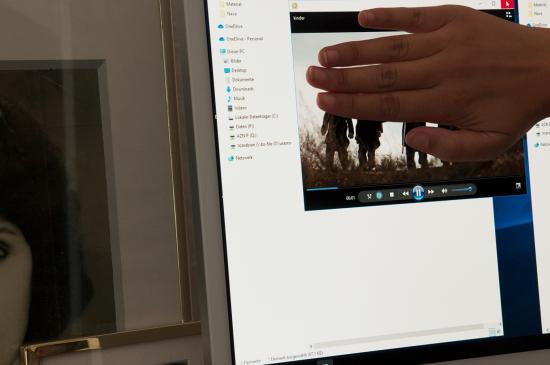
Through numerous video essays in film and media theory, Kevin B. Lee has played a key role in developing the form of the so-called desktop film. The elegant meta-staging reflects the fact that his digital desktop is research tool, media archive and distribution channel at the same time. Lee’s first feature-length film in this style dissects a historical work of propaganda: In 2014, the “Islamic State” terror militia, then at the height of its territorial power, published an elaborately produced film entitled “Flames of War”, which many media outlets compared to the aesthetics of Hollywood blockbusters. Lee manages to abstract and defamiliarize the extreme violence of those images, but comes to the realisation that their ideological power cannot be decoded by the tools of film analysis alone. “Afterlives” broadens the perspective and looks for alternative models in dialogue with experts from the arts, political education and terrorism studies: They reconstruct destroyed cultural assets, develop strategies against extremist radicalisation and study what motivates people to leave terrorist groups. In all this, Lee’s intelligent essay never loses sight of the colonialist western image of the Middle East.
Jan-Philipp Kohlmann
Contains mentions of torture
Contains depictions of war scenes, torture
Trailer
Screenings & Tickets
Credits
Contact
Apocalypse Yesterday, Today, Tomorrow, and the Day After Tomorrow
Marie Ketzscher
Contains mentions of war scenes
Trailer
Screenings & Tickets
Credits
Contact
anastasiabonadyga@gmail.com
Breaking the Law
André Eckardt
Screenings & Tickets
Credits
Contact
franz.impler@gmail.com
Camille & Chameleon
Camille, a very small girl, and the Chameleon who is afraid of heights are inseparable and love to play hide-and-seek in the forest. Camille loves to literally call the tune with her whistling. But one day she becomes too cocky and gives Chameleon an idea that will upset everything. Now they are lost in the green thicket. Can they get over their pride and find each other again?
Lina Dinkla
Screenings & Tickets
Credits
Contact
info@lucie-nichelmann.com
Cell Buddies
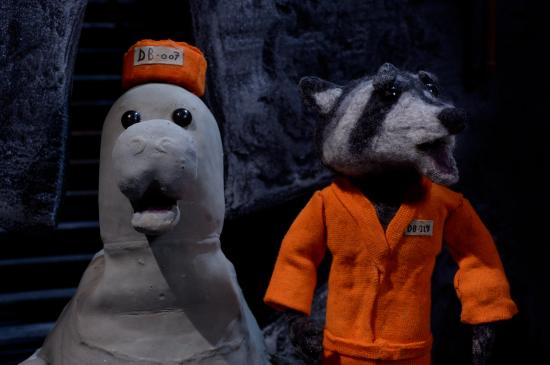
Sam, a grumpy raccoon, must share a prison cell with Bob, a loveable, but somewhat slow-witted manatee. Their chaotic prison break gradually reveals Sam’s soft core, while Bob remains unfailingly loyal to Sam. Will they manage to escape? Suddenly, that no longer matters so much, since together they have already experienced something much better: solidarity. A cute plasticine animation you will absolutely love.
Lina Dinkla
Screenings & Tickets
Credits
Contact
Changeover
André Eckardt
Screenings & Tickets
Credits
Contact
franz.impler@gmail.com
Cosmonauts
Everyone who longs for tenderness is welcome aboard the Pompelmo Express, a huge pink rocket ship. Together with a number of diverse passengers who shimmer in all the colours of the rainbow, Delfino, Rita and Zenf journey through the cosmos of possibilities. While a party rages on in the spaceship, Zenf discovers a fiery comet through his huge telescope. At an atmospheric tea party, Delfino falls head over heels in love with Carlos, and Rita begins to quarrel with her body. The infinite expanse and warm darkness of space envelop the friends benignly and offer a space to live out the most varied needs. “Say goodbye to your lonely days.”
Franka Sachse
Contains depictions of nudity
Screenings & Tickets
Credits
Contact
Cyclepaths
André Eckardt
Contains depictions of murder, war scenes
Screenings & Tickets
Credits
Contact
antoncla.contact@gmail.com
Dancing Friend
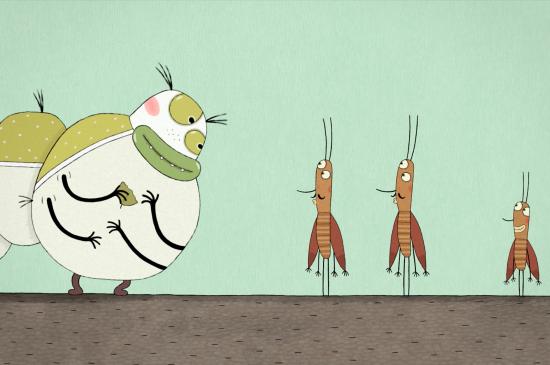
Three butterflies are absorbed in their graceful ballet routine, skilfully turning one pirouette after the other. They ignore the clumsy caterpillar that would really love to dance with them. Only the smallest butterfly reaches out a hand. What a surprise when the caterpillar pupates and hatches! Another episode of the KiKA show “Lenas Farm”.
Lina Dinkla
Trailer
Screenings & Tickets
Credits
Contact
studio@filmbilder.de
Eine chilenische Hochzeit
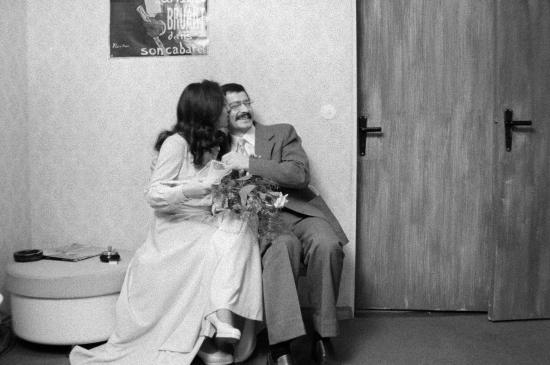
In 1977, Valentin Milanow, a Bulgarian student at the GDR Academy of Film and Television, sat in at the DEFA Studio for Documentary Films. Director Rainer Ackermann was assigned as his mentor. Milanow came up with the idea of portraying the reality of life of exiled Chileans in the GDR. He was friends with a young couple, Alejandra Holzapfel and José Fuica, who lived in the same prefabricated housing estate in Potsdam-Babelsberg. She studied veterinary medicine, he was training to be a teacher of Marxism-Leninism. Milanow was allowed to film their wedding. On the fringes of the seemingly happy celebration, conversations turn to memories of interrogations and torture by the military junta and worries about relatives who were left behind. What the bride herself did not reveal at the time: As a leftist underground fighter she had been exposed to the worst abuse in the “Venda Sexy” prisoners’ camp and others. Today, this place is the memorial site Asociación de Memoria y Derechos Humanos Irán 3030. It is run by Alejandra Holzapfel.
Florian Wüst
Screenings & Tickets
Credits
Contact
defa-filmverleih@deutsche-kinemathek.de
Eine Minute Dunkel macht uns nicht blind
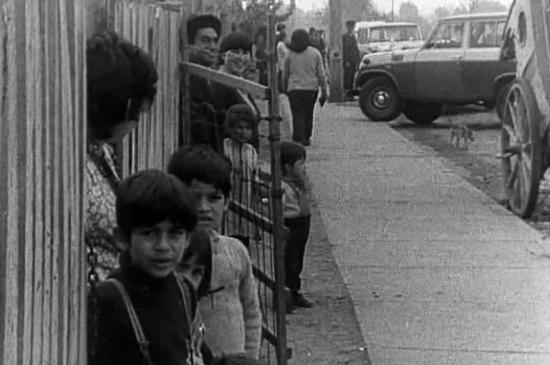
This documentary, whose title is a line from one of Pablo Neruda’s poems, is a snapshot of Chile after two years of military dictatorship. In the agitational Cold War rhetoric typical of Studio H & S, it portrays both representatives of the regime and the victims of the terror, who are beginning to organise themselves as they search for the arrested and disappeared. Walter Heynowski, Gerhard Scheumann and Peter Hellmich had spent several months in Chile in early 1973 to record Allende’s reform efforts as well as the machinations of the far-right forces. Hellmich stayed longer: On 11 September 1973, he managed to film the legendary footage of the bombing of the Presidential Palace, conducted the first interview with General Augusto Pinochet after the coup and filmed political prisoners in the Chacabuco concentration camp in the Atacama Desert. For the extremely risky interviews and filming of “Eine Minute Dunkel macht uns nicht blind”, Studio H & S had to send a West German team – Gerhard Biroth, George Boultwood and Frederico Füllgraf – to Chile. Their true intention behind the transparent pretext of “filming the landscape for the promotion of tourism” and documenting “the economic success of the Pinochet government” remained undetected, as Füllgraf remembers, despite constant surveillance and thanks to all kinds of tricks. This screening is the premiere of the restored and digitized version of the film which was supported by the Förderprogramm Filmerbe (Digitisation of German film heritage funding programme).
Florian Wüst
Screenings & Tickets
Credits
Contact
defa-filmverleih@deutsche-kinemathek.de