Topic
- Activism
- Animated Documentary
- Archival Footage
- Arts/Culture
- Coming of Age
- Digital Culture
- Eastern German
- Environment
- Experimental
- Family
- Gender
- History
- Human Rights
- Humour
- Labour/Economy
- LGBTQIA2S+
- Music
- Politics/Current Affairs
- Portrait/Biography
- Psyche/Mind
- Religion/Spirituality
- Science/Technology
- Social Issues
- Sports
- Underrepresented Communities
- War/Conflict
- Youth
Filmtype
Accessibility
Section
- Animation Night
- Animation Perspectives
- Audience Competition
- DEFA Matinee
- Doc Alliance
- DOK im Knast
- DOK Neuland
- Fokus Ost
- German Competition Documentary Film
- Hommage: Helena Třeštíková
- Hommage: Trollfilm
- International Competition Animated Film
- International Competition Documentary Film
- Kids DOK
- Matinee Saxon State Archive
- MDR Special Screening
- Opening Film
- Positions
- Retrospective
- Short Film Reel
- Young Eyes
Custom type
Topic
- Activism
- Animated Documentary
- Archival Footage
- Arts/Culture
- Coming of Age
- Digital Culture
- Eastern German
- Environment
- Experimental
- Family
- Gender
- History
- Human Rights
- Humour
- Labour/Economy
- LGBTQIA2S+
- Music
- Politics/Current Affairs
- Portrait/Biography
- Psyche/Mind
- Religion/Spirituality
- Science/Technology
- Social Issues
- Sports
- Underrepresented Communities
- War/Conflict
- Youth
Accessibility
Section
- Animation Night
- Animation Perspectives
- Audience Competition
- DEFA Matinee
- Doc Alliance
- DOK im Knast
- DOK Neuland
- Fokus Ost
- German Competition Documentary Film
- Hommage: Helena Třeštíková
- Hommage: Trollfilm
- International Competition Animated Film
- International Competition Documentary Film
- Kids DOK
- Matinee Saxon State Archive
- MDR Special Screening
- Opening Film
- Positions
- Retrospective
- Short Film Reel
- Young Eyes
Neighborhood Autobahn
A cinematic observation of a landscape shaped and still marked by borders. Even 35 years after reunification, borders are still present in Marienborn. There is the memorial recalling the violence of the SED regime. Just a stone’s throw away, new borders have been added. Refugees now live in the former NVA barracks, which have been converted into a collective accommodation centre. To get here, they, too, had to cross borders, often clandestinely and at the risk of their lives. Now another border separates them from the outside world: a combination of wall and fence that inevitably brings to mind the former border security facilities of the GDR. In long tracking shots whose wide-angle view makes them seem almost otherworldly, the film observes this coexistence of opening and delineation. While the images make continuities visible, the sound brings out the subtle differences between the various locations.
Luc-Carolin Ziemann
Contains mentions of racism
Trailer
Screenings & Tickets
Credits
Contact
luci.schwingen@gmail.com
Nicole Nicole
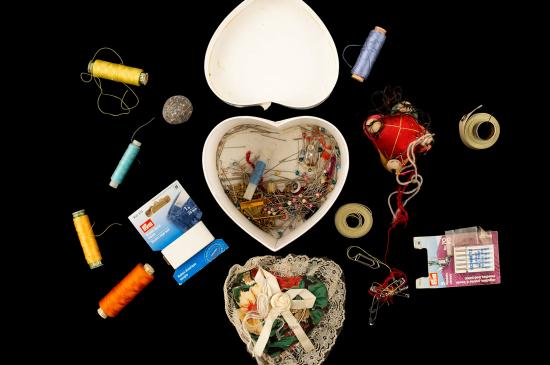
Alberte and Nicole are mother and daughter, three decades apart. At 55 and 87, they still live together in a villa by Lake Geneva, having settled into a codependent dynamic: Nicole is reluctant to leave her mother, while Alberte struggles to let her go, fearing living alone. In a house filled with memorabilia, cats, and too many clocks, the familiar feels safe for the mother‑daughter duo who often doze off like synchronised swimmers. However, as time passes, the family grows concerned about Nicole’s autonomy. Nicole is considered neuroatypical, “ambivalent” regarding the perceived condition, and few facilities are equipped to provide adequate support. Nicole’s sister, Danielle, then decides to assist her in a search for a flat and a job. These scenes unfold alongside the family’s daily life and the intimate conversations in front of the camera. Nicole also embarks on a playful creative exercise with her filmmaker niece Lauren, imagining life’s many scenarios.
Sevara Pan
Contains depictions of mental health conditions
Trailer
Screenings & Tickets
Free entry
Credits
Contact
no_mercy_in_Mexico
André Eckardt
Contains mentions of drug-use, death, murder
Contains depictions of physical violence, torture
Trailer
Screenings & Tickets
Credits
Contact
Nonna Lucia
Marie Ketzscher
Contains mentions of death
Trailer
Screenings & Tickets
Credits
Contact
marcelbarelli@bluewin.ch
Nothing Happens After Your Absence
Seggen Mikael
Screenings & Tickets
Credits
Contact
Nothing to Expect
André Eckardt
Photosensitivity warning: Contains flashes of light that may trigger seizures for people with visual sensitivities.
Screenings & Tickets
Credits
Contact
franz.impler@gmail.com
Nothing to see here
In a unique approach to immersion, the piece not only toys with our own feeling of body and the shape of reality, but as well with the body and shape of virtual reality. By extending virtual immersion into the shape of a reflecting sculpture (rather than a headset), the work opens the door to portals of many shapes and sizes. Keep an eye out for the not-so-familiar and slide into the unexpected.
Dana Melaver
Screenings & Tickets
This work is part of our exhibition
DOK Neuland: Landslide
27/10–1/11/2026
Free entry
Find seven works at Kohlrabizirkus.
Tue–Sun | 11:00–18:00
Wed | 12:00–20:00
Taking place at Kohlrabizirkus with one piece situated at the Leipzig Central Station ground-floor and a special performance at Heilandskirche/Westkreuz.
All about the DOK Neuland exhibition
Subject to the General Terms & Conditions of DOK Leipzig. Please be advised that due to a limited number of visitors allowed in the venues longer waiting times are to be expected. Thanks in advance for your patience.
Credits
Contact
Now!
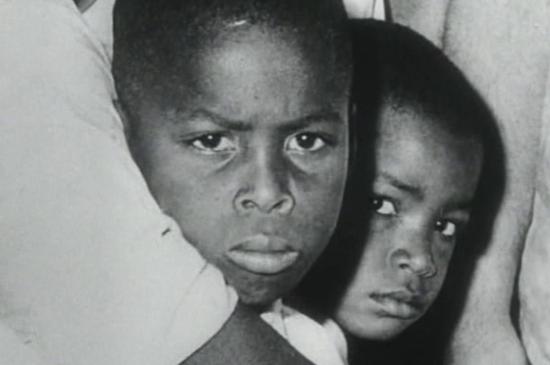
“Still I believe / We are created, free and equal / Now / Now / Now …” US-American singer Lena Horne interpreted the Hebrew song “Hava Nagila” with different lyrics: “Now!” (1963) became an anthem of the civil rights movement in the USA, while Santiago Álvarez’s film of the same name rose to become an agitprop classic. He edited photographs and a few short moving image sequences of racial discrimination, police violence and white terror to the rhythm of Horne’s song. The International Leipzig Documentary and Short Film Week alone screened “Now!” five times in two decades after it had won the Golden Dove in 1965. The presence of Cuban documentary film in Leipzig amounted to a long success story, not least thanks to Álvarez, its best-known exponent. In addition to screenings of his films, he served several times as a member of the International Jury. Even after the controversy surrounding his stance on the Prague Spring 1968, Álvarez continued to be a regular guest.
Florian Wüst
Contains depictions of racism, physical violence
Screenings & Tickets
Credits
Contact
Nuestra voz de tierra, memoria y futuro
Marta Rodríguez and Jorge Silva made their first appearance in Leipzig in 1972, with “Planas, testimonio de un etnocidio” (1971) in the retrospective “Film in the People’s Struggle for Freedom: Latin America” as well as in the television competition and in the cinema competition with “Chircales” (1972). Both films were awarded Golden Doves, Rodríguez and Silva became instant stars of the festival. In 1975, “Campesinos” brought them back to Leipzig. This film marks the beginning of their exploration of the centuries-old oppression of indigenous communities in the Cauca region in southwestern Colombia and their equally long resistance against colonial exploitation and dispossession. Years later, the theme culminated in “Nuestra voz de tierra, memoria y futuro”, in which they used some shots from “Campesinos”. Rodríguez and Silva document the process of political organisation in the Coconuco community during the land reform movement of the 1970s, with extensive critical collaboration by their protagonists. At the same time, it was an attempt to leave the naturalism of the documentary format behind and approach the subconscious mind of the indigenous culture, “to depict its magical world in all its complexity and beauty”, as Silva put it in a conversation with Peter B. Schumann in the information leaflet of the 1982 Berlinale Forum. The film re-celebrated its world premiere in its restored digital version at the 2019 Forum.
Florian Wüst
Screenings & Tickets
Credits
Contact
Ollas populares
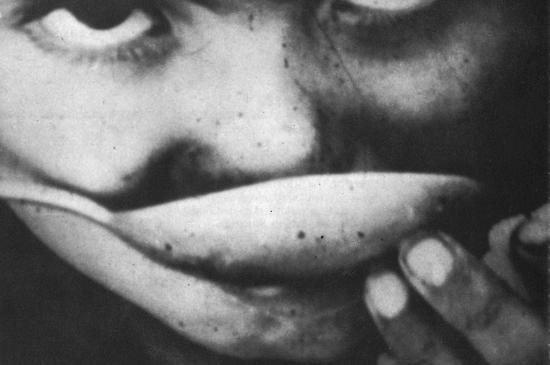
Countless families in the Tucumán province, one of the poorest regions in Argentina, become unemployed after the annual sugar cane harvest. The state installs so-called popular kitchens to combat hunger. Children and old people spoon the thin broth almost apathetically. “These images are stark and elementary. Without commentary, the camera confronts us with conditions of destitution that even the most eloquent pleas are unable to describe”, Peter Kress notes in the report of the 1970 West German Short Film Festival. As a counterpoint to the images, “Ollas populares” is set to the Argentinian national anthem. Can its lyrics only be understood as an expression of cynicism? Maybe it can be interpreted quite differently – as a revolutionary call to arms: “Hear the noise of broken chains. / See noble equality enthroned.” Gerardo Vallejo’s film was made in the constant fear of exposure of its authorship, which is why it is listed anonymously in the Oberhausen programme.
Florian Wüst
Screenings & Tickets
Credits
Contact
Omsorg
The screen is filled with the lightness of a summer’s day. A lake tempts people to swim and have fun, the sun sparkling on the water. A young woman is wavering on its banks, another reaches out her hand to her. The exuberant scenes are overlaid by the narrative of another woman recalling early, painful sexual experiences. At first, the words and the images seem to stand in contrast to each other. But the longer the sun shines, the more the narrative and the images overlap. The offscreen narrator speaks more and more freely, reporting how she suppressed the wishes and needs of her body at first. An encounter with a woman makes her discover her desire and pleasure. The impressions of the lake bring her increasingly beautiful descriptions to life – this day could not have a more romantic ending.
Anke Leweke
Contains mentions of sexual violence
Trailer
Screenings & Tickets
Credits
Contact
em.johrden@gmail.com
Otá Layò
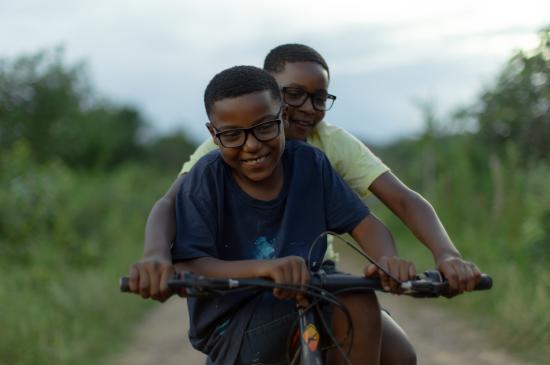
The brothers Matheus and José live in Brazil by the rivers of the Kalunga Quilombo, a community of descendants of escaped slaves. The springs and rivers are an important part of their life and they both know how precious and worth protecting these waters are. They love to collect stones there which they use for their artworks. The film follows the brothers on their forays along the water for a bit and tells of their special connection to this place.
Lina Dinkla
Screenings & Tickets
Credits
Contact
contato.acarajefilmes@gmail.com