Topic
- Activism
- Animated Documentary
- Archival Footage
- Arts/Culture
- Coming of Age
- Digital Culture
- Eastern German
- Environment
- Experimental
- Family
- Gender
- History
- Human Rights
- Humour
- Labour/Economy
- LGBTQIA2S+
- Music
- Politics/Current Affairs
- Portrait/Biography
- Psyche/Mind
- Religion/Spirituality
- Science/Technology
- Social Issues
- Sports
- Underrepresented Communities
- War/Conflict
- Youth
Filmtype
Accessibility
Section
- Animation Night
- Animation Perspectives
- Audience Competition
- DEFA Matinee
- Doc Alliance
- DOK im Knast
- DOK Neuland
- Fokus Ost
- German Competition Documentary Film
- Hommage: Helena Třeštíková
- Hommage: Trollfilm
- International Competition Animated Film
- International Competition Documentary Film
- Kids DOK
- Matinee Saxon State Archive
- MDR Special Screening
- Opening Film
- Positions
- Retrospective
- Short Film Reel
- Young Eyes
Custom type
Topic
- Activism
- Animated Documentary
- Archival Footage
- Arts/Culture
- Coming of Age
- Digital Culture
- Eastern German
- Environment
- Experimental
- Family
- Gender
- History
- Human Rights
- Humour
- Labour/Economy
- LGBTQIA2S+
- Music
- Politics/Current Affairs
- Portrait/Biography
- Psyche/Mind
- Religion/Spirituality
- Science/Technology
- Social Issues
- Sports
- Underrepresented Communities
- War/Conflict
- Youth
Accessibility
Section
- Animation Night
- Animation Perspectives
- Audience Competition
- DEFA Matinee
- Doc Alliance
- DOK im Knast
- DOK Neuland
- Fokus Ost
- German Competition Documentary Film
- Hommage: Helena Třeštíková
- Hommage: Trollfilm
- International Competition Animated Film
- International Competition Documentary Film
- Kids DOK
- Matinee Saxon State Archive
- MDR Special Screening
- Opening Film
- Positions
- Retrospective
- Short Film Reel
- Young Eyes
Eine chilenische Hochzeit
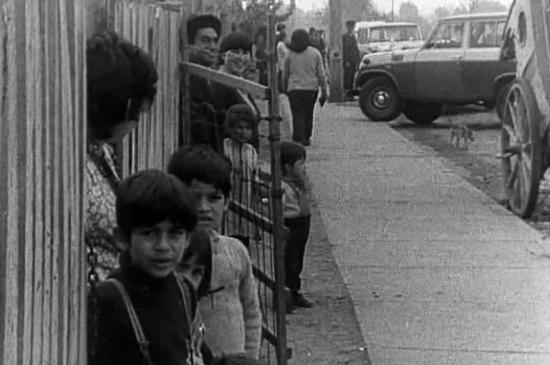
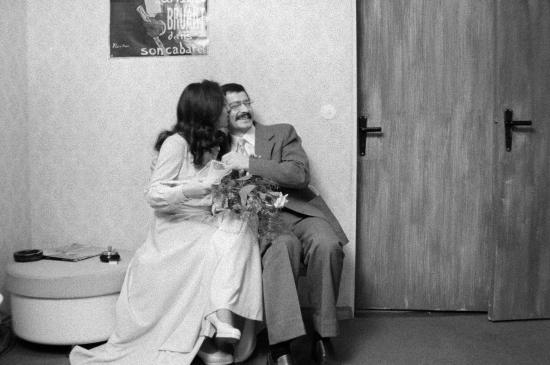
In 1977, Valentin Milanow, a Bulgarian student at the GDR Academy of Film and Television, sat in at the DEFA Studio for Documentary Films. Director Rainer Ackermann was assigned as his mentor. Milanow came up with the idea of portraying the reality of life of exiled Chileans in the GDR. He was friends with a young couple, Alejandra Holzapfel and José Fuica, who lived in the same prefabricated housing estate in Potsdam-Babelsberg. She studied veterinary medicine, he was training to be a teacher of Marxism-Leninism. Milanow was allowed to film their wedding. On the fringes of the seemingly happy celebration, conversations turn to memories of interrogations and torture by the military junta and worries about relatives who were left behind. What the bride herself did not reveal at the time: As a leftist underground fighter she had been exposed to the worst abuse in the “Venda Sexy” prisoners’ camp and others. Today, this place is the memorial site Asociación de Memoria y Derechos Humanos Irán 3030. It is run by Alejandra Holzapfel.
Florian Wüst
Screenings & Tickets
Credits
Contact
defa-filmverleih@deutsche-kinemathek.de
Eine Minute Dunkel macht uns nicht blind
This documentary, whose title is a line from one of Pablo Neruda’s poems, is a snapshot of Chile after two years of military dictatorship. In the agitational Cold War rhetoric typical of Studio H & S, it portrays both representatives of the regime and the victims of the terror, who are beginning to organise themselves as they search for the arrested and disappeared. Walter Heynowski, Gerhard Scheumann and Peter Hellmich had spent several months in Chile in early 1973 to record Allende’s reform efforts as well as the machinations of the far-right forces. Hellmich stayed longer: On 11 September 1973, he managed to film the legendary footage of the bombing of the Presidential Palace, conducted the first interview with General Augusto Pinochet after the coup and filmed political prisoners in the Chacabuco concentration camp in the Atacama Desert. For the extremely risky interviews and filming of “Eine Minute Dunkel macht uns nicht blind”, Studio H & S had to send a West German team – Gerhard Biroth, George Boultwood and Frederico Füllgraf – to Chile. Their true intention behind the transparent pretext of “filming the landscape for the promotion of tourism” and documenting “the economic success of the Pinochet government” remained undetected, as Füllgraf remembers, despite constant surveillance and thanks to all kinds of tricks. This screening is the premiere of the restored and digitized version of the film which was supported by the Förderprogramm Filmerbe (Digitisation of German film heritage funding programme).
Florian Wüst
Screenings & Tickets
Credits
Contact
defa-filmverleih@deutsche-kinemathek.de
El primer año
“El primer año” documents the first year of the Unidad Popular: the rude awakening of the ruling classes of Chile as they are faced with the democratically elected socialist government. From the immediate economic sabotage of the right wing through celebrating workers, the situation of the Mapuche, the agrarian reform, the nationalisation of coal and copper mining and Fidel Castro’s visit, up to the “March of the Pots” by bourgeois women crying for bread, of which they have plenty, the cycle of achievements and difficulties is complete. Besides their journalistic interest, Patricio Guzmán and his collaborators sought to capture the atmospheric aspect of the departure towards a fairer society under Salvador Allende, which is what makes “El primer año” such a moving document of its time. Chris Marker offered to produce a French version with the help of the SLON film collective, which is preceded by photographs by Raymond Depardon, accompanied by a foreword on the history of Chile. Guzmán continued his work on the chronicle of events until he was forced to leave the country after the military coup of 11 September 1973. It was only in Cuban exile that he was able to successively finish his masterpiece “La Batalla de Chile” (1975-79) together with Pedro Chaskel. Each of its three parts was acclaimed at the International Leipzig Documentary and Short Film Week and the Berlinale Forum.
Florian Wüst
Screenings & Tickets
Credits
Contact
alexandra@bfdistribution.cl
El tigre saltó y mató, pero morirá... morirá...
Five days after the coup, Chile’s most famous singer-songwriter, Víctor Jara, was brutally murdered. In recognition of his oeuvre, his political stance and also of the “victims of the fascist sadism perpetrated by the military and the CIA in Chile after 11 September 1973”, Santiago Álvarez immediately created a cinematic “report in four songs”. The musical and rhythmic structure and the simultaneous reportage style arising from found news footage and recordings of Jara reflect the agitprop language that is so typical of Álvarez. The title of the film is taken from the poem “Nuestra América” (1891) by Cuban poet José Martí. The end, too, alludes to the continuity of the anti-colonial struggle: A collage of international examples of state repression against insurgents from Puerto Rico to Vietnam and Indonesia is followed by depictions of legendary battles of liberation in 19th century South America.
Florian Wüst
Contains depictions of physical violence
Screenings & Tickets
Credits
Contact
Elegy of Time
André Eckardt
Photosensitivity warning: Contains flashes of light that may trigger seizures for people with visual sensitivities.
Screenings & Tickets
Credits
Contact
antoncla.contact@gmail.com
Errabonda
Marie Ketzscher
Trailer
Screenings & Tickets
Credits
Contact
emma92harris@gmail.com
Extinction Story
André Eckardt
Screenings & Tickets
Credits
Contact
Far Far Away
Romantic, mystical, folkloristic: Theodor Kittelsen's (1857–1914) oeuvre as a painter is not just dedicated to nature but also to legends and trolls – and has influenced artists to the present day. Natasha Nikitina for example, whose film takes up Kittelsen's twelve-part series of pictures "Soria Moria Palace" and his eponymous book: The young hero Askeladden sees the golden palace of Soria Moria in the distance and sets out to reach it; an allegory of the golden future that can be earned with a lot of hard work and dedication. In her film, however, Nikitina focuses more on the atmospheric element, letting a troll in a rock wake up and fall asleep again, letting geese and other birds take flight, letting fog and dusk turn into night and back into a glowing morning. A tribute to the artist, but also to the myth-enshrouded Norwegian landscape in general.
Marie Ketzscher
Screenings & Tickets
Credits
Contact
claus@trollfilm.no
Fiddlehead / Happy Mondays: Tart Tart [excerpt]
André Eckardt
Screenings & Tickets
Credits
Contact
antoncla.contact@gmail.com
For Life
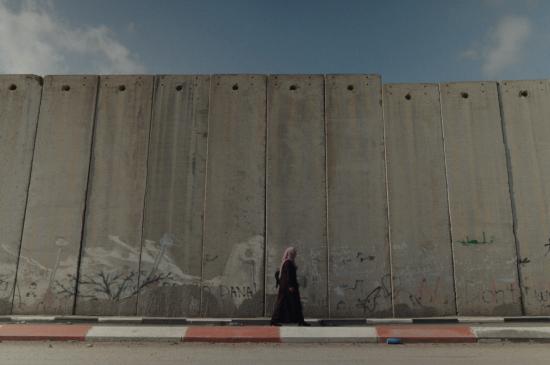
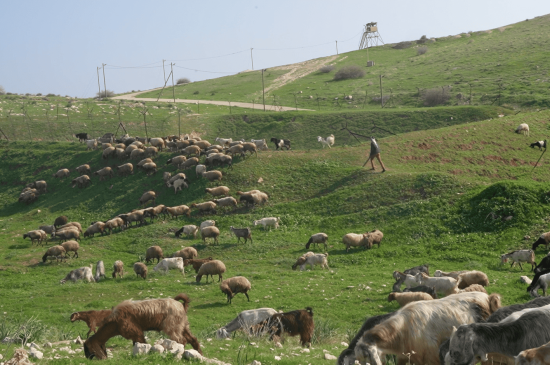
A Palestinian woman, Hind Mashahra, longs for motherhood, but this seems hardly possible as her husband is serving a life sentence in an Israeli prison and is barred from marital visits. Smuggling her husband’s sperm out of prison may be the only chance for her to become a mother again. The documentary follows Hind as she sets out on a risky mission to obtain and deliver her husband’s sample to a fertility clinic. Her repeated attempts are hampered by the traffic, checkpoints, and the short life of semen, perishing within just hours. Unadorned in its language, the film stays close to Hind’s inner experience in the throes of drama, shaped by the reality in the West Bank and East Jerusalem, as well as in quieter moments of waiting that are no less charged. Weaving in accounts of other prisoners’ wives, the documentary chronicles a Palestinian woman’s journey as she pursues motherhood at an extraordinary cost.
Sevara Pan
Contains mentions of death, physical violence
Contains depictions of physical violence, death
Screenings & Tickets
Credits
Contact
benahmetseven@gmail.com
Found!
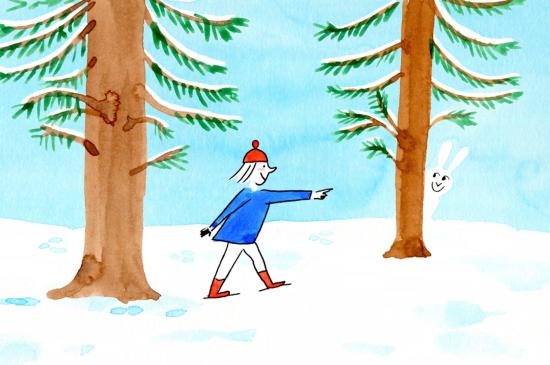
Anna is lured outside by a lively flurry of snow. As she wanders through the snow she comes across an unexpected playmate. A snow hare – or is it just her imagination after all? After playing, she settles down comfortably on the sofa with a hot cup of cocoa. A poetic film about the joys of winter, drawn in clear colours.
Lina Dinkla
Screenings & Tickets
Credits
Contact
miguel.wasia@gmail.com
Fracture
James Lattimer
Screenings & Tickets
Credits
Contact
philippe.cotte@cvb.be