Topic
- Activism
- Animated Documentary
- Archival Footage
- Arts/Culture
- Coming of Age
- Digital Culture
- Eastern German
- Environment
- Experimental
- Family
- Gender
- History
- Human Rights
- Humour
- Labour/Economy
- LGBTQIA2S+
- Music
- Politics/Current Affairs
- Portrait/Biography
- Psyche/Mind
- Religion/Spirituality
- Science/Technology
- Social Issues
- Sports
- Underrepresented Communities
- War/Conflict
- Youth
Filmtype
Accessibility
Section
- Animation Night
- Animation Perspectives
- Audience Competition
- DEFA Matinee
- Doc Alliance
- DOK im Knast
- DOK Neuland
- Fokus Ost
- German Competition Documentary Film
- Hommage: Helena Třeštíková
- Hommage: Trollfilm
- International Competition Animated Film
- International Competition Documentary Film
- Kids DOK
- Matinee Saxon State Archive
- MDR Special Screening
- Opening Film
- Positions
- Retrospective
- Short Film Reel
- Young Eyes
Custom type
Topic
- Activism
- Animated Documentary
- Archival Footage
- Arts/Culture
- Coming of Age
- Digital Culture
- Eastern German
- Environment
- Experimental
- Family
- Gender
- History
- Human Rights
- Humour
- Labour/Economy
- LGBTQIA2S+
- Music
- Politics/Current Affairs
- Portrait/Biography
- Psyche/Mind
- Religion/Spirituality
- Science/Technology
- Social Issues
- Sports
- Underrepresented Communities
- War/Conflict
- Youth
Accessibility
Section
- Animation Night
- Animation Perspectives
- Audience Competition
- DEFA Matinee
- Doc Alliance
- DOK im Knast
- DOK Neuland
- Fokus Ost
- German Competition Documentary Film
- Hommage: Helena Třeštíková
- Hommage: Trollfilm
- International Competition Animated Film
- International Competition Documentary Film
- Kids DOK
- Matinee Saxon State Archive
- MDR Special Screening
- Opening Film
- Positions
- Retrospective
- Short Film Reel
- Young Eyes
Heralds of the Monsoon
Marie Ketzscher
Screenings & Tickets
Credits
Contact
k.meera28@gmail.com
Herminda de la Victoria
In a large-scale operation, a group of homeless families occupy some wasteland on the outskirts of Santiago in March 1967. When the police attempt to evict them, a little girl, Herminda, dies in her mother’s arms. The eviction is called off, the people are allowed to stay and, without any existing infrastructure, build the settlement that exists to this day: Herminda de la Victoria. “Full of errors and mistakes, [the film] is my first approach to cinema, albeit to a ‘new cinema’, a Latin American cinema marked by underdevelopment. Nonetheless, the cinematic process, editing and sound represent a fully valid experience to me. ‘Herminda de la Victoria’ champions the interests of the homeless in Chile, suffers with them, is both testimony and a ‘document’ that forces you to take sides.” (Douglas Hübner)
Florian Wüst
Screenings & Tickets
Credits
Contact
Hi Mom :O
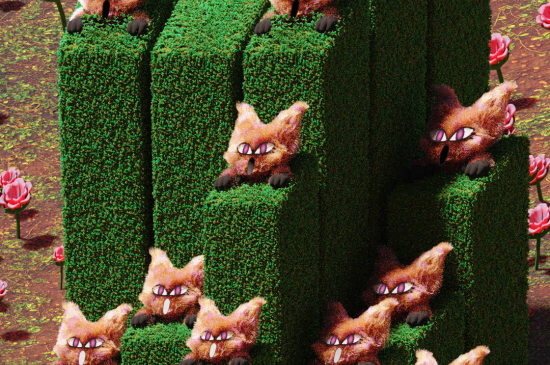
The mother’s film archive raises questions. What did she see in the many doll’s faces staring at us through her camera? Why so many shots of flowers? When she herself is in the picture, she is always moving. Was she trying to get away from something? The narrator wants to find their own motifs. But where? It is easy for the mother to say: Film your own reality! Sounds great, but how, when you feel that you are different? As the material is questioned, more and more own images find their way into the film. Integrating themselves. Perhaps they ask the same questions of the world.
Jan Künemund
Trailer
Screenings & Tickets
Credits
Contact
peer.langenheim@zhdk.ch
Hidden Message
André Eckardt
Screenings & Tickets
Credits
Contact
franz.impler@gmail.com
Holy Wood Dust
“Trees are life itself”, renowned botanist Stefano Mancuso says, leading a band of kids through what was once a densely wooded area. This becomes the setting for Victor Kossakovsky and Mancuso’s cinematically sprawling journey across Europe, even reaching Vatican City, following the fates of trees. In the Dolomites, trees stand like ghosts after the Storm Vaia devastated the forests. They became more vulnerable due to a planted monoculture of economically valuable fir trees. More damage then followed after the storm, as weakened and fallen trees became breeding ground for bark beetles. What do trees think or feel? Delving into their depths, the camera captures life that’s still sprouting and persisting. However, as winter matures, trees might not make it through the festivities. Chainsaws work tirelessly at fir-tree farms. Like strange cocoons, they are now packed in nets and bundled tightly, waiting for their send-off to homes and public squares. But people’s affection for them might be short-lived.
Sevara Pan
Screenings & Tickets
Credits
Contact
Hope Is a Word
Thick smoke clouds rise at the horizon. Oil bubbles from the ground. The gills of a dead fish are black. A sonorous voice recites a poem about blood, anger and the oil-contaminated landscape of the Niger Delta. A crowd of people join in for the refrain. Writer and activist Nnimmo Bassey has been protesting for decades again the oil extraction in the south of Nigeria and its consequences for humans, nature and agriculture. The Ogoni, an ethnic minority from the region, are particularly affected, with their whole basis for life under existential threat as a result. In the 1990s, they organised a powerful political movement, which was violently put down by the military government – also in the interest of Western oil concerns. How is it possible to put up political resistance in such circumstances? “Hope Is a Word” is the portrait of a man who believes in the power of poetic language. With his workshops, Nnimmo Bassey manages to mobilise a new generation of rhetorically and literarily gifted activists. When they read, rap or recite, the film puts their words into the frame in demonstrative fashion. Poetry becomes a political tool here. For a call can come from a verse, a call that others then follow.
Jan-Philipp Kohlmann
Screenings & Tickets
Credits
Contact
anita@smau.no
Hotel Utopia
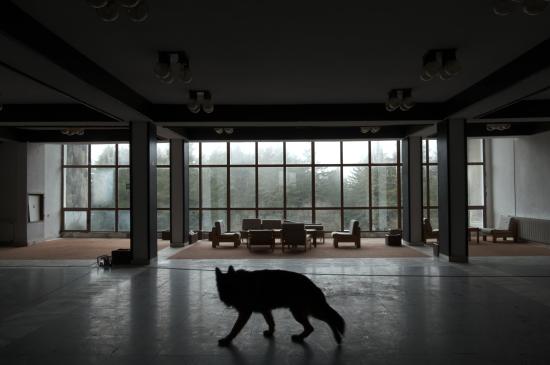
They develop software, work as lifestyle coaches, own marketing agencies or an Amazon shop, travel around the world without paying for accommodation: digital nomads for whom a laptop on a suitcase is sometimes enough of a workplace. Some of their aspirations fall by the wayside in the process and become the project of an enterprising Munich-based developer: Mathias is courting rootless individualists and clever investors to become backers of a project that is to turn a deserted former luxury hotel in the Bulgarian mountains into a hip coworking space. He promises a sense of community, intense human connections and few taxes, an outdoor pool and a campfire idyll. While the nomads who dream of home are waiting for the utopia to become reality, the residents of the surrounding villages sense a new “Wind of Change” with some scepticism. A brilliant structural analysis of a business model that capitalises on modern longings and knows how to carve out the necessary space.
Jan Künemund
Screenings & Tickets
Credits
Contact
hannahbuhr@outlook.de
How to Catch a Butterfly
Carolin Weidner
Contains mentions of murder, racism
Contains depictions of racism
Screenings & Tickets
Credits
Contact
purplerayfilm@gmail.com
I’d Love to See You
Documentary films for children rarely venture to this place: prison. Four kids in Belgium take us there. They show us the way from the entrance to the visiting area, where they visit their mother or father, usually twice a week. Prisons are definitely not designed for children and yet there are many who regularly enter them. In Belgium alone, more than 16,000 children have a parent behind bars. This film gives a voice to children of prison inmates who tell us how they cope with a situation they did not choose.
Lina Dinkla
Screenings & Tickets
Credits
Contact
sebastien@dokma.be
I’m Not Afraid!
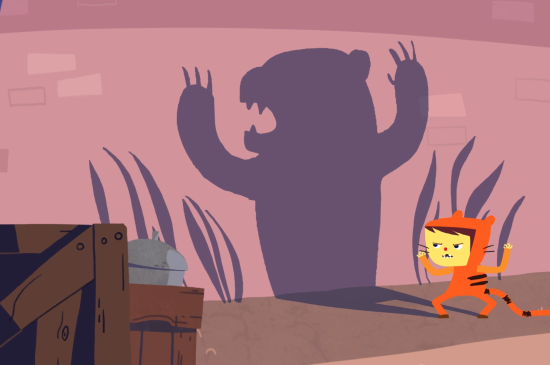
Vanja is a tiger, roaming the jungle, lurking, attacking. But when it gets dark, he is afraid – and when his sister Thea turns on the light, the brave tiger turns into a little boy in a completely leafless apartment. “I’m Not Afraid” is Vanja’s mantra, which he uses to hold his own in everyday life, when fantasy and reality blend seamlessly, when the dark staircase turns into a dungeon and the play of shadows into monsters. But also when he feels excluded by his older sister who does not want him to join in her games. Marita Mayer’s playful 2D animation follows Vanja through all emotional states and imaginary worlds, treats the needs of all children equally. Growing up is hard, being a child often is, too. But when everyone sees and understands the other it gets easier, and often it even becomes proper fun.
Marie Ketzscher
Trailer
Screenings & Tickets
Credits
Contact
festivaldistribution@interfilm.de
I’m Painting a Self-Portrait, but All I See Is My Sister’s Face
Carolin Weidner
Trailer
Screenings & Tickets
Free entry
Credits
Contact
hela.stanczyk@gmail.com
Illapu – Lied von Freiheit und Liebe
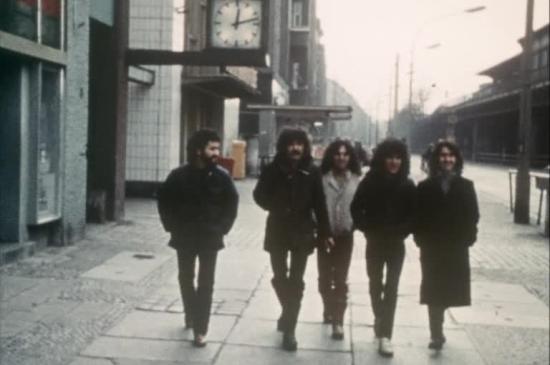
The Chilean folk group Illapu only really became famous under the military dictatorship. The five musicians were allowed to work, but had to “keep a low profile”. When they gradually joined the cultural resistance against the Pinochet regime, they were expelled in 1981. From their French exile, they toured Europe, including East Berlin. This is where Carlos Puccio’s film begins: The Chilean directing student observed Illapu’s rehearsals and concerts for his diploma film project at the Film and Television Academy of the GDR. They talk about their enduring bond with Chile and about what would happen if individual members of the band were given entry permits and Illapu would consequently break up. In 1986, they moved to Mexico together and returned to Chile two years later because of the changing political climate.
Florian Wüst
Screenings & Tickets
Credits
Contact
cristina.marx@filmuniversitaet.de