Film Archive

Retrospective 2024
Filmstill [Opening speech for the retrospective “Cuban Documentary Film”] [excerpt]
[Opening speech for the retrospective “Cuban Documentary Film”] [excerpt]
Santiago Álvarez
Cuban documentarist Santiago Álvarez speaks to GDR cultural officials and the “fighting” youth of Leipzig: about documentary film as a weapon against imperialism and colonialism.
Filmstill [Opening speech for the retrospective “Cuban Documentary Film”] [excerpt]

[Opening speech for the retrospective “Cuban Documentary Film”] [excerpt]

[Eröffnungsrede zur Retrospektive „Kubanischer Dokumentarfilm“] [Ausschnitt]
Santiago Álvarez
Retrospective 2024
Acoustical Film
GDR
1974
15 minutes
German,
Spanish
Subtitles: 
German (Overvoice)

In 1974, the GDR and the Leipzig festival celebrated the 25th anniversary of the Cuban Revolution with the “Cuban Documentary Film” retrospective. Santiago Álvarez, vigorous propagandist of documentary film as an art of war against imperialist cinema entertainment, spoke at soporific length at the opening.
One wonders whether, in addition to the invited officials, the “fighting” youth of Leipzig addressed by Álvarez were present at the event. The speech has survived only as an audio document, the images must be imagined. The recording was commissioned by the State Film Documentation, a government agency that was to preserve GDR reality for the future. In 1974, no one in the room could have imagined that this future would one day take place without the GDR.

Sylvia Görke

Credits DOK Leipzig Logo

Director
Santiago Álvarez
Producer
Staatliche Filmdokumentation
Retrospective 2024
Filmstill 15.000 Volt
15.000 Volt
Karlheinz Mund
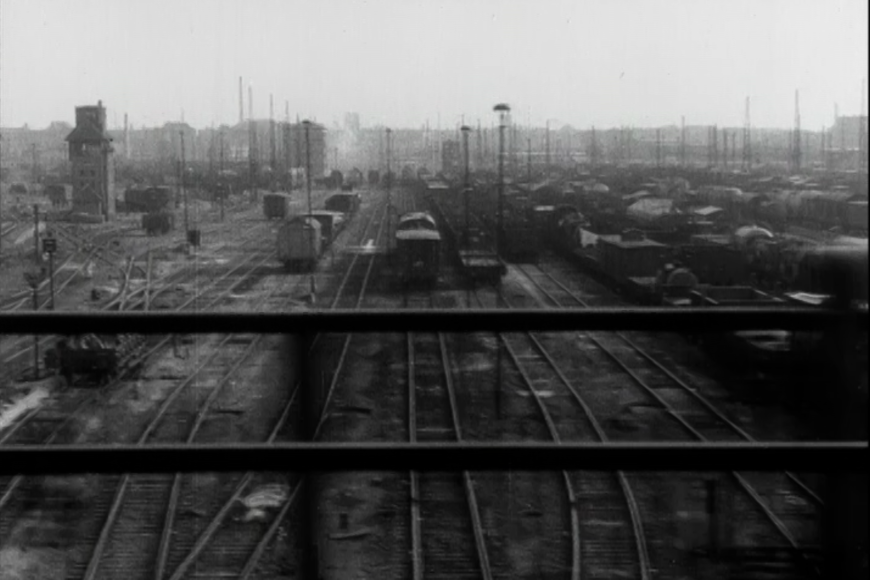
On the overhead wire 15,000 volts, underneath everyday working life on an electric locomotive. On the soundtrack a passenger who the GDR will throw overboard in 1976: Wolf Biermann.
Filmstill 15.000 Volt

15.000 Volt

15.000 Volt
Karlheinz Mund
Retrospective 2024
Documentary Film
GDR
1963
18 minutes
German
Subtitles: 
None

This graduation film by future DEFA documentarian Karlheinz Mund presents a piece of GDR working worlds in the best poetic and earthy Babelsberg school tradition: the everyday life of railway workers – with two women in the electric locomotive driver’s cab.
In 1963, Leipzig audiences were able to get to know Mund’s study in the festival’s university film presentation. At the end, the “Spring Song of the Railwaywoman” can be heard off-screen, sung by Wolf Biermann. The GDR still tolerated the rebellious tormentor. Those who heard him in this film at the time probably only found out later that the authorities had long had him in their sights. In 1963, East Berlin’s Humboldt University refused to grant him a degree in philosophy despite passing his exams. Listening to Biermann’s song today, the words become charged: spring storm, great rain, a land waiting …

Sylvia Görke

Credits DOK Leipzig Logo

Director
Karlheinz Mund
Cinematographer
Hans-Jürgen Reinecke, Gerhard Gläser, Werner Kohlert, Eberhard Teich-Grüber
Editor
Gisela Hoffmann
Producer
Roland Paul
Sound
Günter Grossmann
Score
Gerhard Rosenfeld
Narrator
Dorothea Richter
Retrospective 2022
Filmstill Ablinga
Ablinga
Dagnija Osite-Krüger
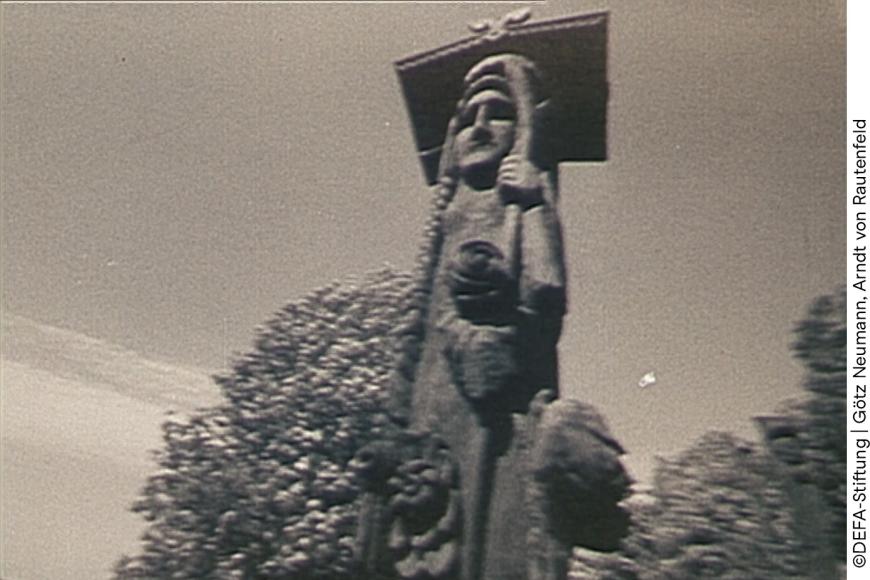
A Lithuanian village destroyed by the Wehrmacht is reborn as a forest of sculptures. This film poem commemorates the murdered ones and calls for peace.
Filmstill Ablinga

Ablinga

Ablinga
Dagnija Osite-Krüger
Retrospective 2022
Documentary Film
GDR
1977
13 minutes
German
Subtitles: 
None

Nothing is left of the Lithuanian village of Ablinga. Destroyed by Wehrmacht soldiers in 1941, a forest of sculptures was erected in 1972 to commemorate those who once lived here. Larger than life, the carved wooden monuments rise to the sky. In national poet Justinas Marcinkevičius’s poem they wake up again, share some last secrets and become connecting links on a timeline that knows violence and dreams of peace. Dagnija Osite-Krüger’s montage is bold, playful and sometimes brutal, her concern credible and strong. Within a few minutes, “Ablinga” puts a spell on us, becoming a monument to German guilt and the memory of the murdered ones.

Carolin Weidner

Credits DOK Leipzig Logo

Director
Dagnija Osite-Krüger
Script
Dagnija Osite-Krüger
Cinematographer
Leonid Krainenkow
Editor
Werner Wendt
Producer
DEFA-Studio für Dokumentarfilme
Sound Design
Peter Gotthardt
Retrospective 2024
Filmstill Aida
Aida
Marwan Salamah
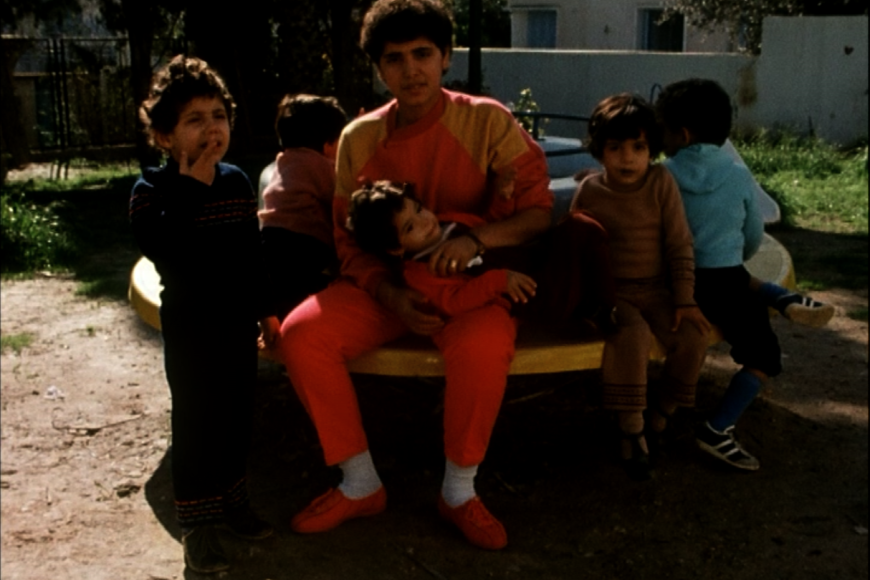
Marwan Salamah was delegated by the Palestine Liberation Organization to study in Babelsberg. As a one-man team, he realised this portrait of a young educator in a PLO orphanage in Tunis.
Filmstill Aida

Aida

Aida
Marwan Salamah
Retrospective 2024
Documentary Film
GDR
1985
22 minutes
Arabic
Subtitles: 
German (Overvoice)

Words of the poet Mahmoud Darwish float through this film: “Tell me. Perhaps I will remember my home whose perfume is only on my lips.” A 17-year-old Palestinian introduces herself: Aida, the returning one. When her father was killed in battle, her mother was already dead, killed by a bomb. When she was eight, she was sent to a PLO orphanage in Beirut, then to an orphanage in Damascus, then to an orphanage in Tunis. Here she takes care of new orphans. The portrait of a girl expands: countless children who will forget their homeland and origin. There is nothing but war left in their drawings. The PLO had assigned its collaborator Marwan Salamah to study cinematography at Babelsberg. Here, he is also the director. In 1985, “Aida” won the Prize of the World Federation of Democratic Youth in Leipzig.

Sylvia Görke

Credits DOK Leipzig Logo

Director
Marwan Salamah
Script
Marwan Salamah, Elke Schieber
Editor
Karin Geiß
Producer
Hochschule für Film und Fernsehen der DDR
Retrospective 2021
Media Name: 3b2d1331-941c-4092-9b29-c1ab7865ad61.png
Operation J
Walter Heynowski
A polemical biographical research of Adenauer’s Chief of Staff of the Chancellery Globke: Nazi administrative lawyer, Eichmann confidant, accomplice to the racist declassification of Jews.
Media Name: 3b2d1331-941c-4092-9b29-c1ab7865ad61.png

Operation J

Aktion J
Walter Heynowski
Retrospective 2021
Documentary Film
GDR
1961
103 minutes
German
Subtitles: 
None

Heynowski’s biographical research in the guise of an exposé film was part of a campaign coordinated by SED functionary Albert Norden to unmask the FRG as a fascist state. Documents and commentaries trace the career of Adenauer’s Chief of Staff of the Chancellery, Hans Globke, who had collaborated in the systematic marking and racist declassification of Jews as a Nazi administrative lawyer and Eichmann confidant. The facts had been on the table for some time, but acquired new propaganda value in view of the impending Eichmann trial. In 1961, “Operation J” was awarded a main prize at the International Leipzig Documentary and Short Film Week.

Sylvia Görke

Credits DOK Leipzig Logo

Director
Walter Heynowski
Script
Walter Heynowski
Cinematographer
Rolf Sperling
Editor
Bert Schultz
Producer
Deutscher Fernsehfunk (DFF)
Retrospective 2021
Media Name: 2f55af86-cd4d-441f-b4ef-1e3e390d2af5.jpg
Berlin-Totale XIV. 2. d) Almstadtstraße
Karl-Heinz Wegner
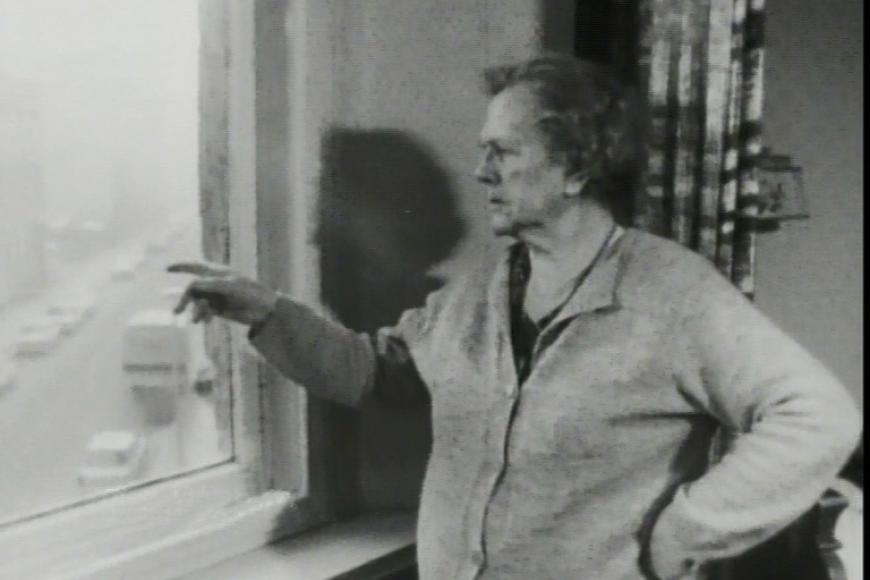
A production of the State Film Documentation, which was set up to preserve uncensored GDR reality: Long-term residents look back on the German-Jewish history of “their” street.
Media Name: 2f55af86-cd4d-441f-b4ef-1e3e390d2af5.jpg

Berlin-Totale XIV. 2. d) Almstadtstraße

Berlin-Totale XIV. 2. d) Almstadtstraße
Karl-Heinz Wegner
Retrospective 2021
Documentary Film
GDR
1979
35 minutes
German
Subtitles: 
None

Why this film document about a street in East Berlin is the way it is, why it conveys an almost touching, basically unformed honesty and perplexity, is due to the specific institution it was made for. The State Film Documentation was founded to provide the GDR with uncensored testimonies of its own reality. Three long-time residents look, through notoriously draughty windows, at the notoriously chilly German-Jewish history: Herr Miegel, former pub owner, Frau Kramp, former cinema employee, Mischket Liebermann, writer and GDR cultural politician. They have been neighbours in their district forever. They will probably remain strangers to each other forever.

Sylvia Görke

Credits DOK Leipzig Logo

Director
Karl-Heinz Wegner
Cinematographer
Roland Worel, Dieter Schönberg
Sound
Dieter Harms
Commissioning Editor
Veronika Otten
Retrospective 2021
Media Name: fcc9300e-e989-4e86-a1c4-b950c44da978.jpg
Buchenwald
Günter Weschke
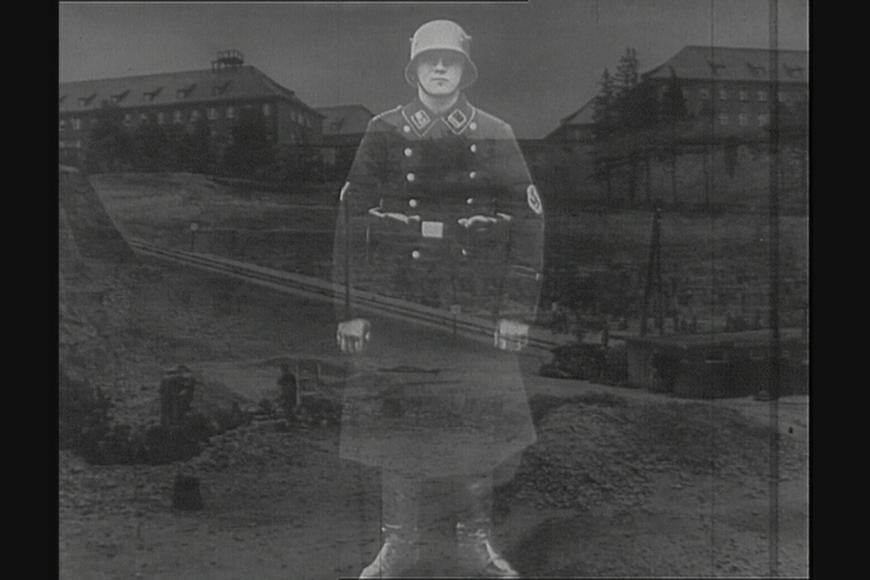
The Buchenwald Memorial was the first national memorial of the GDR. From 1961 to 1975, every memorial tour began with this introductory film, in which the Jewish victims are barely mentioned.
Media Name: fcc9300e-e989-4e86-a1c4-b950c44da978.jpg

Buchenwald

Buchenwald
Günter Weschke
Retrospective 2021
Documentary Film
GDR
1961
26 minutes
German
Subtitles: 
None

The inauguration of the “National Buchenwald Memorial”, the first national memorial of the GDR, took place in 1958. The monumental site was also meant to demonstrate the state-supporting importance of a selective culture of remembrance, commemorating the communist resistance fighters – and omitting the fact that the graves were mainly filled with Jewish victims. In 1961, DEFA completed this “introductory film”, commissioned by the Buchenwald committee, which talks about Goethe, Schiller, Thälmann, but only very marginally about Jews. Every visitor’s memorial tour started with this until 1975. Its scriptwriter and production manager was the playwright Heiner Müller, a fact that was not known until 2004.

Sylvia Görke

Credits DOK Leipzig Logo

Director
Günter Weschke
Script
Günter Weschke, Heiner Müller
Cinematographer
Günter Weschke
Producer
DEFA-Studio für Wochenschau und Dokumentarfilme
Sound
Heinz Reusch, Kurt Wolfram
Narrator
Sergio Günther, Ekkehard Schall, Wolfgang Heinz
Retrospective 2024
Filmstill Chile
Chile
Juan Forch, Jörg Herrmann
Exiled Chilean Juan Forch and Dresden-based silhouette film specialist Jörg Herrmann call for battle against Pinochet and his imperialist allies: with singing and organ music.
Filmstill Chile
Filmstill Chile

Chile

Chile
Juan Forch, Jörg Herrmann
Retrospective 2024
Animated Film
GDR
1975
2 minutes
German,
Spanish
Subtitles: 
English

In 1973, General Pinochet, with the support of the US secret service, staged a coup against the democratically elected Marxist-Socialist President of Chile, Salvador Allende. Pinochet’s military junta murdered and tortured their way across the country. Juan Forch, Santiago-born journalist and filmmaker, managed to escape the terror via Mexico to the GDR and continued his opposition work from here until his return in 1979: as a director at the DEFA Studio for Animation Film in Dresden. With silhouette film specialist Jörg Herrmann he realised this animated agitation miniature, in which the dictator and his allies dance to the caustic artist’s tune – and to organ music.

Sylvia Görke

Credits DOK Leipzig Logo

Director
Juan Forch, Jörg Herrmann
Script
Juan Forch
Cinematographer
Peter Pohler
Editor
Heidrun Sünderhauf
Producer
DEFA-Studio für Trickfilme
Sound
Horst Philipp
Score
Addy Kurth
Animation
Juan Forch
Retrospective 2022
Filmstill The First Birthday
The First Birthday
Gabriele Hochneder
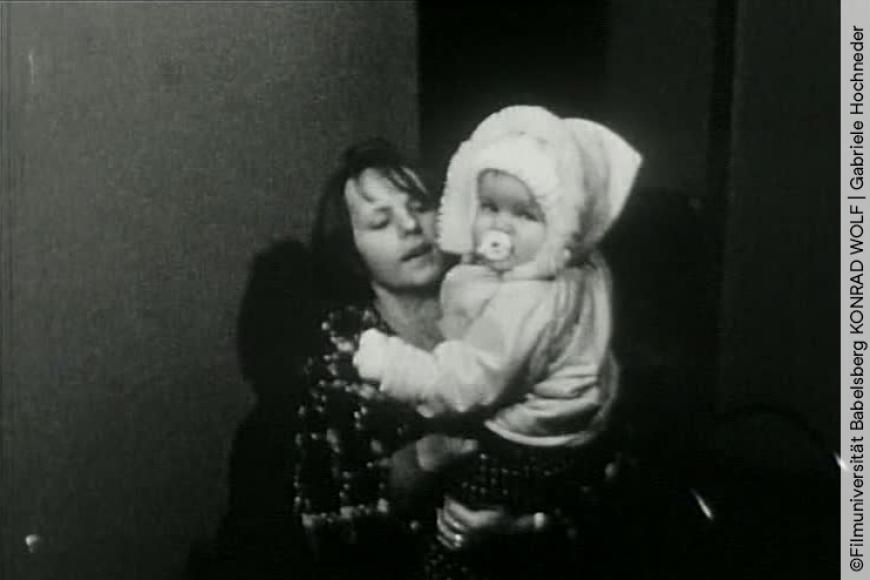
Silvia, single mother, celebrates her daughter’s first birthday. A matter-of-fact and occasionally sobering portrait that revolves around a sanguine woman.
Filmstill The First Birthday

The First Birthday

Der erste Geburtstag
Gabriele Hochneder
Retrospective 2022
Documentary Film
GDR
1978
17 minutes
German
Subtitles: 
None

Silvia Szuprizinski has lived alone with her little daughter for a year now: time to take stock. The young woman talks, her stories commented by Gabriele Hochneder’s pictures of everyday life that tell of efforts. Silvia, leaning against the tiled stove, talks about the failed relationship with the child’s father with detachment, but also with a certain degree of regret. At least her own family are present, all of them at the door in time for the first birthday. Still, Silvia spends her nights alone with herself – and the television. The fact that Hochneder’s film, despite the adversities, does not become a lament is at least partly owing to its sanguine main protagonist.

Carolin Weidner

Credits DOK Leipzig Logo

Director
Gabriele Hochneder
Cinematographer
Jürgen Lubosch
Editor
Ilona Thiel
Producer
Hochschule für Film und Fernsehen der DDR
Retrospective 2022
Filmstill Dialogue
Dialogue
Róża Berger-Fiedler
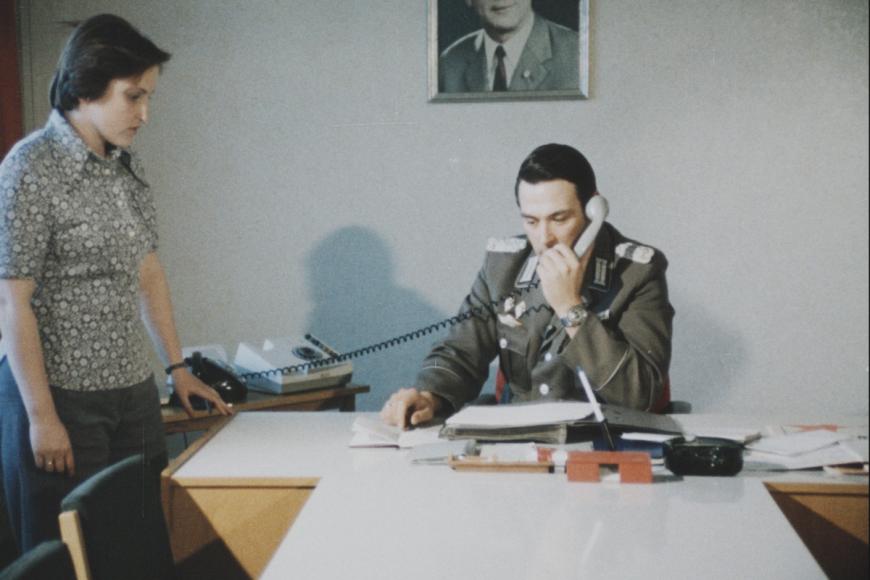
A young officer opens the doors to the National People’s Army and to his close family. While his life is full of variety, others must play second fiddle.
Filmstill Dialogue

Dialogue

Dialog
Róża Berger-Fiedler
Retrospective 2022
Documentary Film
GDR
1978
27 minutes
German
Subtitles: 
None

“Won’t make it today, hope you don’t mind.” A casual call, the husband will be late again, not to be expected before eight. He is an officer in the National People’s Army, still young, but with a lot of postings under his belt, always accompanied by his wife. She has resigned herself to her fate, while he flourishes enviably in his profession. Róża Berger-Fiedler spends most of the time by his side, following him in brisk cuts from appointment to appointment. Talking is required and demanded constantly: to representatives of the Soviet armed forces, young recruits, subordinates. Words come easy to him, but not everything runs smoothly.

Carolin Weidner

Credits DOK Leipzig Logo

Director
Róża Berger-Fiedler
Script
Róża Berger-Fiedler
Cinematographer
Hans-Eberhard Leupold
Producer
DEFA-Studio für Dokumentarfilme
Score
Peter Gotthardt
Retrospective 2022
Filmstill Kollwitz and Her Children
Kollwitz and Her Children
Christa Mühl
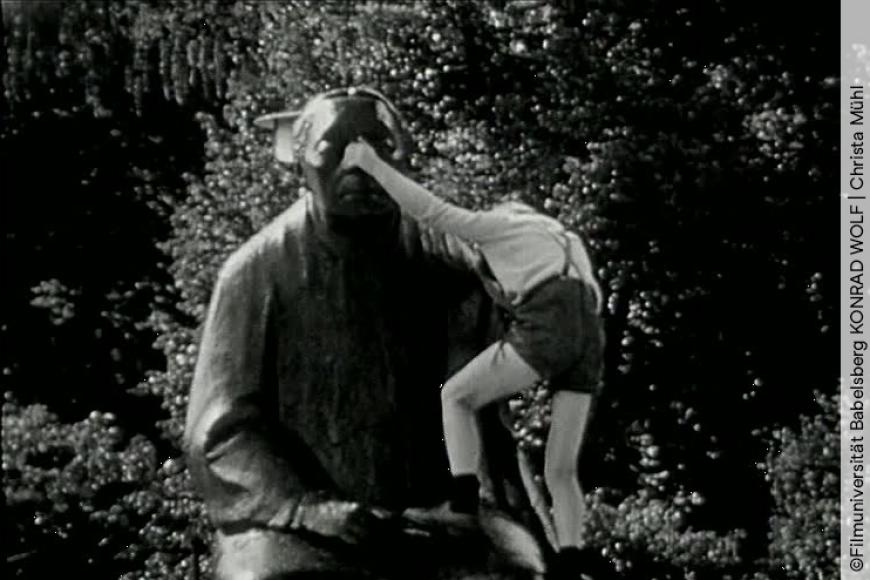
What to think of children playing on the Kollwitz sculpture? An exchange of letters with its sculptor inspired Christa Mühl to a shrewd and subtle miniature.
Filmstill Kollwitz and Her Children

Kollwitz and Her Children

Die Kollwitz und ihre Kinder
Christa Mühl
Retrospective 2022
Documentary Film
GDR
1971
10 minutes
German
Subtitles: 
None

Kollwitzplatz, Prenzlauer Berg: Children are playing and climbing all over the monument to Käthe Kollwitz, frowning adults are watching them. What would Gustav Seitz, the creator of the sculpture, say? Christa Mühl has asked him but reveals his answer only when the adults have finally disappeared. Until then, she constructs explosive matter as light as a feather, set to Belgian cembalo jazz and with the perky montage style that characterises her early documentary work. After Karl-Eduard von Schnitzler himself had the most controversial scene cut, the film could be broadcast on television and triggered a lively discussion about the practical value of art.

Felix Mende

Credits DOK Leipzig Logo

Director
Christa Mühl
Script
Werner Hecht, Christa Mühl
Cinematographer
Christiane Kunow
Editor
Karin Döring
Producer
Hochschule für Film und Fernsehen der DDR
Sound
Wolfgang Hasse
Retrospective 2023
Filmstill Ballad of the Matches
Ballad of the Matches
Johannes Hempel
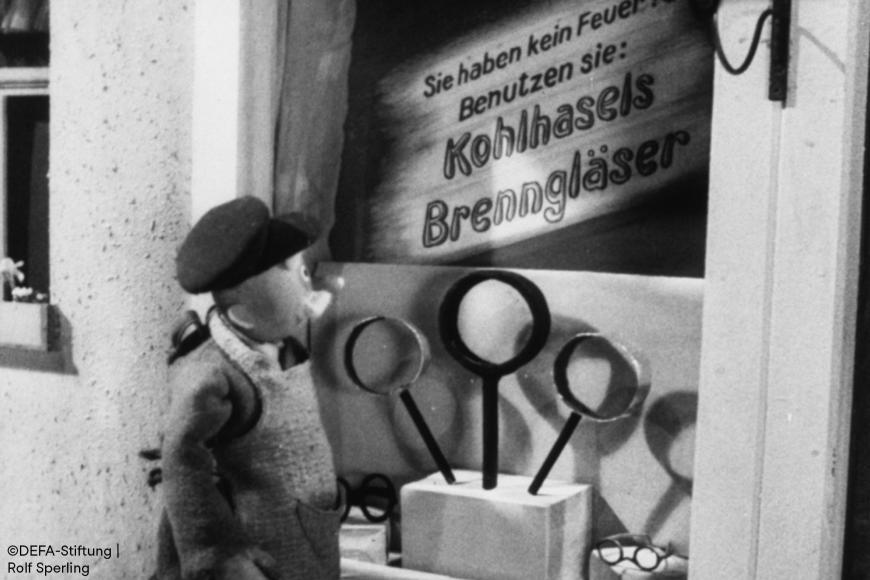
Matches are out in the GDR! The workers threaten to go to the barricades. A harmless puppet animation? The satire was made just after the uprising of 17 June 1953.
Filmstill Ballad of the Matches

Ballad of the Matches

Die Streichholzballade
Johannes Hempel
Retrospective 2023
Animated Film
GDR
1953
16 minutes
German
Subtitles: 
None

The people, among them an astonishing number of workers, react with visible anger to the sudden lack of matches – and threaten to go to the barricades. The problem is solved, of course. But does it mean the population’s anger is placated? Puppet animation director Johannes Hempel created this satire based on a draft by Wolfgang Kohlhaase – at the same time as the uprising of 17 June 1953.

Katharina Franck, Andreas Kötzing

Credits DOK Leipzig Logo

Director
Johannes Hempel
Script
Wolfgang Kohlhase, Johannes Hempel
Cinematographer
Rolf Sperling
Editor
Manfred Porsche
Producer
DEFA-Studio für populärwissenschaftliche Filme
Score
H. W. Wiemann
Animation
Johannes Hempel, Herbert K. Schulz, Rosemarie Küssner
Retrospective 2021
Media Name: e613bfde-aa61-4e79-8966-86b9a8e18502.jpg
The Stormers
Dagobert Loewenberg, Peter Voigt
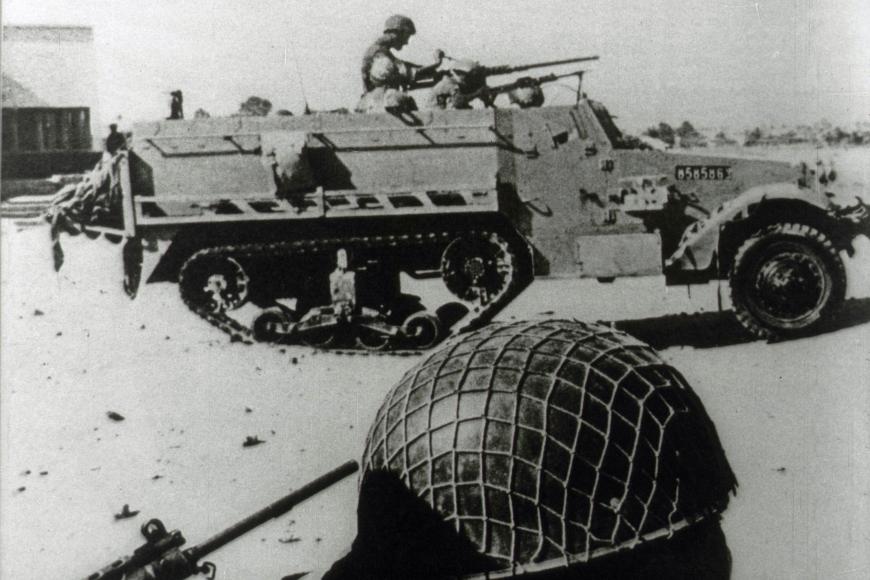
An outraged film pamphlet takes the West German coverage of the Six-Day War as an occasion to launch a sweeping verbal blow against the Bonn Republic.
Media Name: e613bfde-aa61-4e79-8966-86b9a8e18502.jpg

The Stormers

Die Stürmer
Dagobert Loewenberg, Peter Voigt
Retrospective 2021
Documentary Film
GDR
1967
10 minutes
German
Subtitles: 
None

“If you want to storm, you use stormer methods”, to quote a direct reference to the infamous anti-Semitic smear sheet of the Nazi era. Set to shrill trumpet sounds, this outraged film pamphlet dissects, or so it seems, the drastic jargon of the “West German monopoly press”, especially the publications of the Springer publishing house, in their coverage of the Six-Day War between Israel and the Arab coalition of Egypt, Jordan and Syria. At the same time, it uses the reviled style for its own argumentation. Under the auspices of the DEFA newsreel editors of “Der Augenzeuge” (The Eyewitness), a sweeping blow against the Bonn Republic arises from news images and superimposed newspaper articles.

Sylvia Görke

Credits DOK Leipzig Logo

Director
Dagobert Loewenberg, Peter Voigt
Script
Dagobert Loewenberg
Cinematographer
Dieter Frycia
Producer
DEFA-Studio für Dokumentarfilme
Score
Kurt Zander
Retrospective 2022
Filmstill Diary of a German Woman
Diary of a German Woman
Michael Englberger, Hans-Joachim Funk, Manfred Krause, Andrew Thorndike, Annelie Thorndike
Annelie Thorndike’s diary entries unfold into a passionate ode to the country and people of the GDR. Occasionally, the eye strays westwards with horror and nostalgia.
Filmstill Diary of a German Woman

Diary of a German Woman

Du bist min. Ein deutsches Tagebuch
Michael Englberger, Hans-Joachim Funk, Manfred Krause, Andrew Thorndike, Annelie Thorndike
Retrospective 2022
Documentary Film
GDR
1969
111 minutes
German
Subtitles: 
None

The core of this most personal of the Thorndikes’ projects are Annelie’s diary entries: Her story is to be the starting point for a kind of all-German ‘Heimatfilm’ that praises the utopian power of the GDR and sharply condemns Federal German wrongs, but finds transcendent beauty on both sides of the wall. Over the course of production, however, the visionary dimension of the project was progressively trimmed down, though it’s still tangible everywhere in the compromised final version: The intensity of its pathos is both oppressive and enchanting; some historical simplifications and ideological twists and bends may be hair-raising, but they still achieve the desired effect.

Felix Mende

Credits DOK Leipzig Logo

Director
Michael Englberger, Hans-Joachim Funk, Manfred Krause, Andrew Thorndike, Annelie Thorndike
Script
Annelie Thorndike, Andrew Thorndike
Cinematographer
Ernst Oeltze, Hermann Ihde, Christian Lehmann, Siegfried Mogel, Günter Ost, Siegfried Oschatz, Alexander Westlin
Editor
Christa Bramann
Producer
DEFA-Gruppe 67
Sound
Werner Klein
Score
Hans-Dieter Hosalla
Retrospective 2022
Filmstill Remembering Means Living
Remembering Means Living
Róża Berger-Fiedler
A walk across the Jewish Cemetery in Berlin-Weißensee and through the Jewish history of the city. The private and the historical, past and present flow into each other.
Filmstill Remembering Means Living

Remembering Means Living

Erinnern heißt Leben
Róża Berger-Fiedler
Retrospective 2022
Documentary Film
GDR
1987
59 minutes
German
Subtitles: 
None

Róża Berger-Fiedler’s walk through the Jewish Cemetery in Berlin-Weißensee in search of her grandmother’s grave turns into a walk through the chequered Jewish history of the whole city. Interspersed are impressions of Chanukah celebrations at the “Restaurant of Nationalities” Café Moskau in Karl-Marx-Allee in East Berlin, light-drenched and devout. The film artfully interweaves the past and present of active Jewish life with memories of expulsion and annihilation, brings private and historical perspectives together and thus creates a sensitive approach where in the GDR formal distance was long dominant.

Felix Mende

Credits DOK Leipzig Logo

Director
Róża Berger-Fiedler
Script
Róża Berger-Fiedler
Cinematographer
Karl-Heinz Müller
Editor
Róża Berger-Fiedler
Producer
DEFA-Studio für Dokumentarfilme
Sound
Eberhard Schwarz
Retrospective 2022
Filmstill Women in Neuruppin
Women in Neuruppin
Karola Hattop
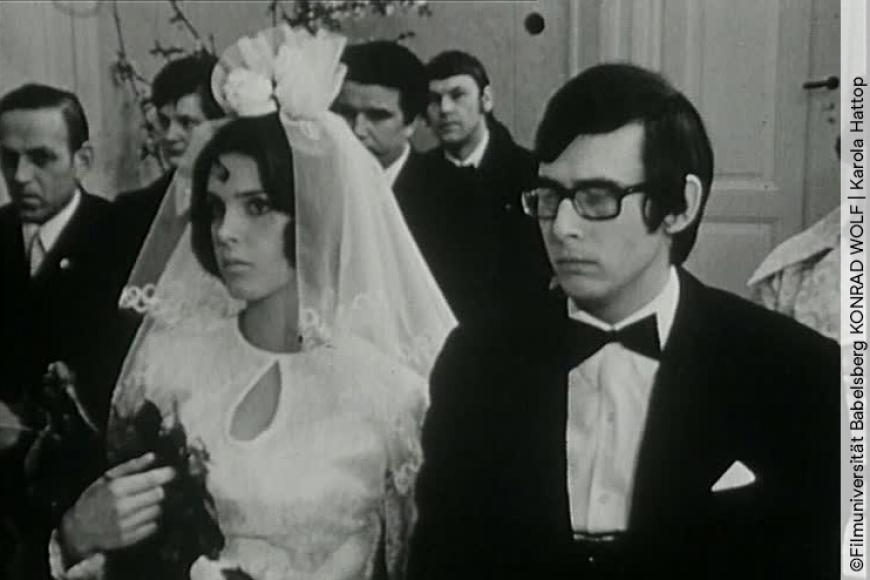
A naïve and pushy reporter travels to the provinces to find out about the state of equal rights in practice. A film curiosity of enlightening absurdity.
Filmstill Women in Neuruppin

Women in Neuruppin

Frauen in Neuruppin
Karola Hattop
Retrospective 2022
Documentary Film
GDR
1972
29 minutes
German
Subtitles: 
None

Karola Hattop juxtaposes the many media images of confident working women and the men who support them with a naïve reporter who finds out that in practice equal rights are often quite a different matter. Somewhat pushy, he seeks out women at the hairdresser’s and in the maternity wear department, joins functionaries in their cars, crashes wedding parties and sneaks into museum tours for children. A revelatory curiosity full of the casually captured mundane drabness that was often revealed more clearly in student films than in comparable DEFA productions.

Felix Mende

Credits DOK Leipzig Logo

Director
Karola Hattop
Producer
Hochschule für Film und Fernsehen der DDR